FRP access-panel review
Temporary Access Panels in FRP Grating: Restraint and Removal
A removable panel needs positive restraint when closed, a controlled release and lift sequence when opened, and a verified reinstatement before the route returns to service. The grating can provide the piece and agreed hardware; the project still owns open-hole protection and operating procedures.
Prepared by
Dengtai Industry
Published
·
Reviewed

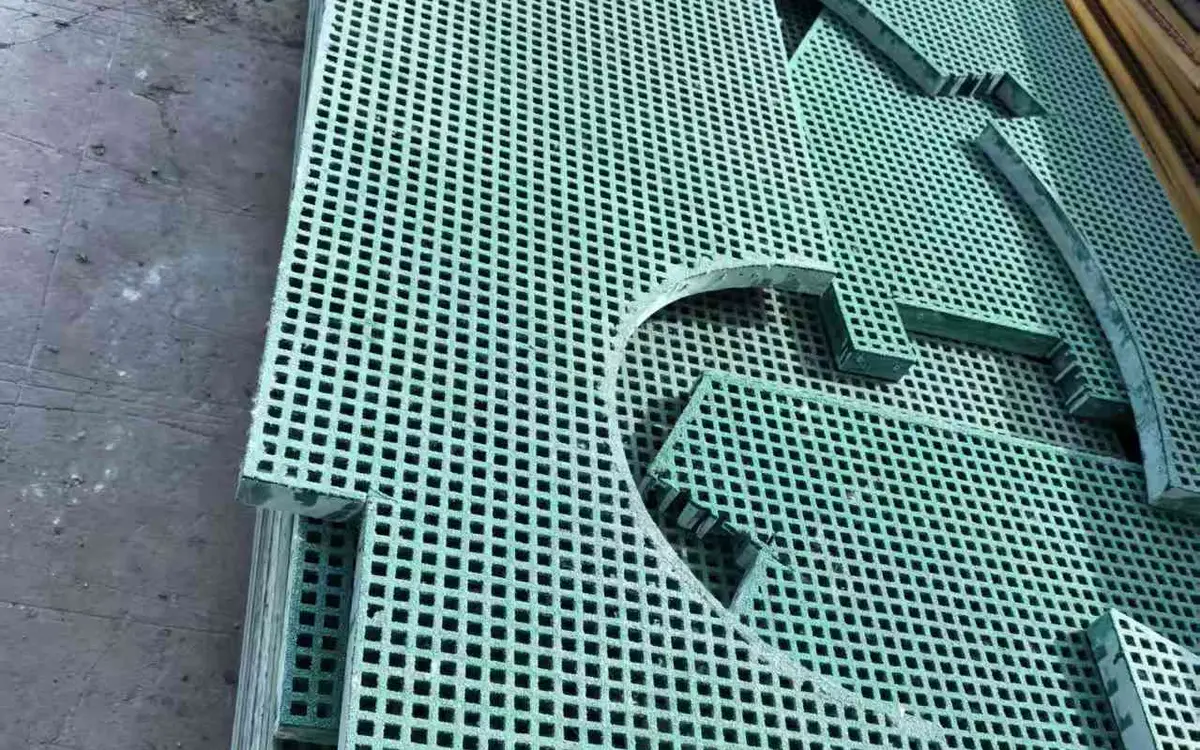
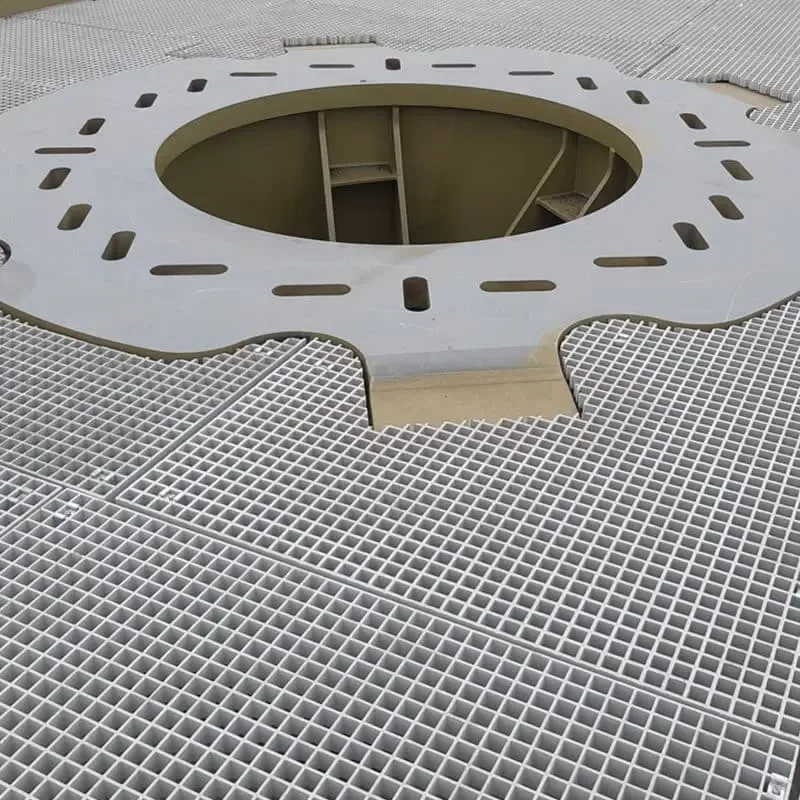
A removable access panel must seat, release and refit in a controlled sequence. Photo: Dengtai Industry.
A Removable Panel Is a Three-State System
The panel is only one object in the access arrangement.
When closed, it must sit on the intended frame or supports and be restrained against sliding or lifting. When open, the exposed area must be controlled under the project’s procedure. When restored, the correct panel and hardware must be refitted and inspected before people use the route again.
Calling a panel “temporary” does not remove any of those requirements. It describes how the access condition changes; it does not mean the panel can remain loose or that a spare grate can be placed over an opening.

Separate a Service Panel From a Construction Cover
“Temporary” can describe two different objects.
A removable service panel is part of the finished platform. It is designed to be opened and reinstated repeatedly for maintenance. Its frame, piece ID, fixing and reinstatement sequence remain part of the permanent installation.
A temporary construction cover is a short-term measure used while work is incomplete. It still needs a defined opening, adequate support, fixation, marking and a responsible person, but its life cycle and acceptance may be governed by the construction plan rather than the permanent platform schedule.
The same spare grating panel can serve neither role safely by assumption. A service panel that is too difficult to lift should not become a loose construction cover after handover. A construction cover taken from unused material does not become an approved maintenance access panel because it fits the opening.
State the intended use at RFQ. The panel dimensions, edge treatment, lifting feature, hardware and documentation can then match the actual service life.
Start From the Access Task
Define what the opening is for before choosing the panel:
- a valve or instrument;
- electrical conduit or a junction box;
- a pipe connection;
- a drain or cleanout;
- a sample point;
- maintenance access to equipment below; or
- temporary construction access.
Record the frequency and the normal user. A daily tool access panel differs from one opened during annual maintenance. A small cover inspected from above differs from a large panel that needs two people to lift and set aside.
The access task determines the clear opening, lift direction, handling mass and storage position. A panel that fits the hole but cannot be removed safely does not meet the purpose.
Identify the Closed Restraint
The closed panel should be held positively to the frame or support against the conditions the project expects: foot traffic, vibration, wind, equipment movement or accidental contact.
Possible components include:
- hold-down clips at supports;
- removable fasteners;
- hinges with a locking or captive closed position;
- edge restraints or stops; and
- an approved removable cover system.
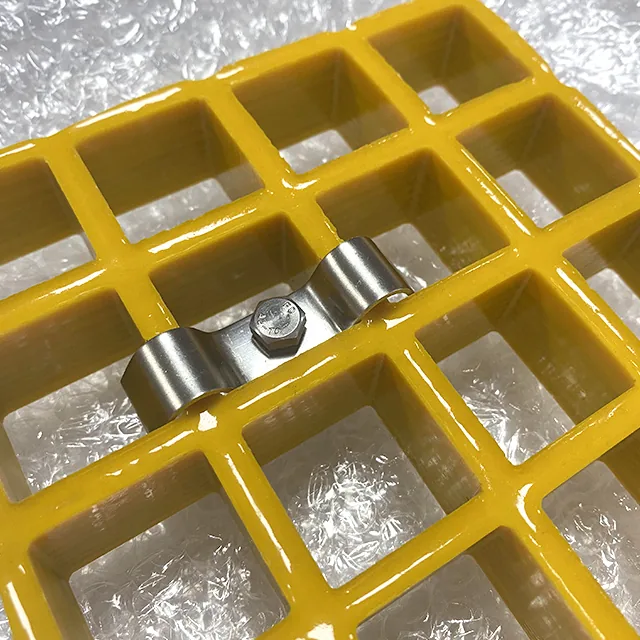
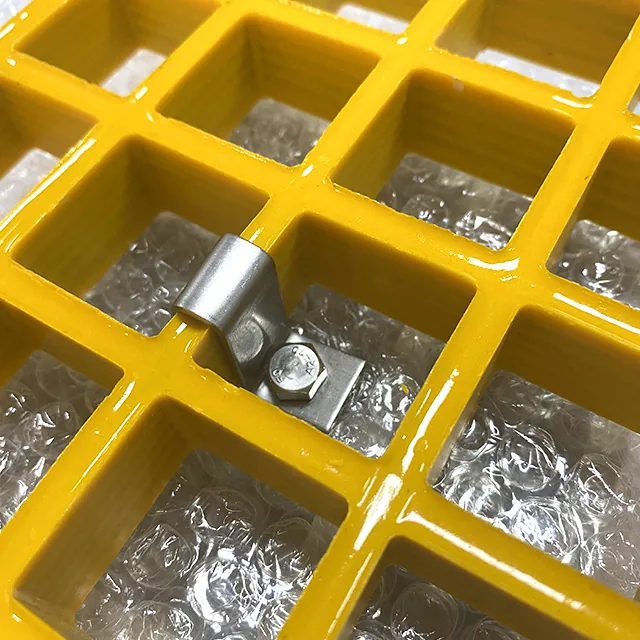
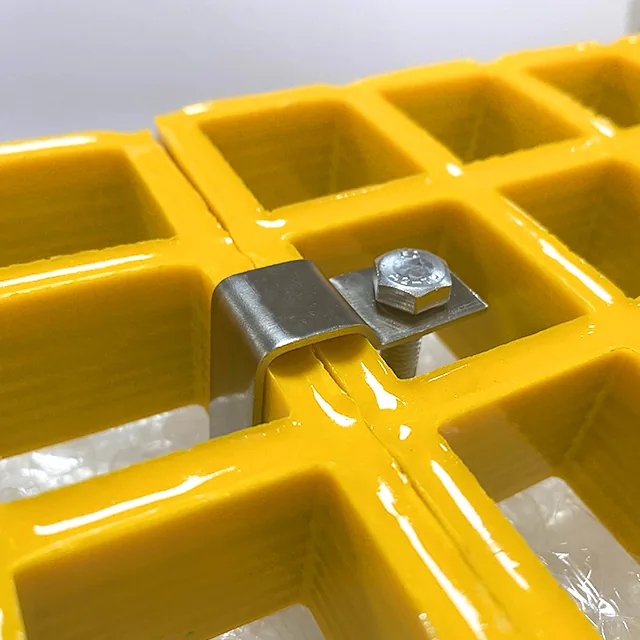
These are not interchangeable. A C-style panel connector joins adjacent edges. A separate hold-down or frame connection keeps the removable piece attached to its supports. The grating clips guide shows why the letter and task have to be checked together.
The Wiberg hold-down clip page describes the same functional purpose as anti-lift or anti-shift retention. The OSHA hole-protection duty and secured-cover criteria address the wider system: covers must support at least twice the maximum intended load and be secured against accidental displacement in the applicable U.S. general-industry context. Adding a clip to an unverified panel or frame does not prove the complete cover arrangement meets that requirement.
Separate the Release From the Connector
A removable panel may have several hardware tasks:
- hold the panel to its support;
- join it to an adjacent panel;
- provide a handle or lift point;
- keep the hardware attached while released; and
- secure a hinge or stay-open condition.
The drawing should name each task and device. Do not count every visible clip as a hold-down, or assume that removing one edge connector frees a panel that is still restrained elsewhere.
The covered grating cutout guide applies the same logic to a cover and base assembly. The complete assembly has to lift as intended, without leaving the cover or fixing hardware behind.
Choose Lift-Out or Hinged From the Task
A frequent-access point is not automatically a hinged panel, and an occasional-access point is not automatically a loose lift-out piece. Select the operating method first:
ACCESS FREQUENCY
Lift-out: suitable when the piece can be lifted and stored efficiently.
Hinged: useful where repeated opening would make separate storage impractical.
STORAGE AND ROUTE
Lift-out: needs a defined place to set the removed piece.
Hinged: avoids separate storage, but the raised leaf can obstruct the route.
HANDLING AND HOLD-OPEN
Lift-out: needs controlled mass, grip, lift path and a locating aid.
Hinged: needs a defined hinge base, swing, stay-open and closing method.
CONTROL AND REINSTATEMENT
Lift-out: the lock or restraint controls removal; the correct piece and hardware must return.
Hinged: the latch controls opening; the seat, hardware and closing condition still require verification.
Choose from the actual route, not from a product catalogue label. A heavy panel may be unsuitable for either method until lifting assistance or a different piece division is designed. A hinged panel may be the better operating concept but still fail if its arc hits a pipe, guard, wall or carried tool.

On a hinged cover, the frame and hinge require their own structural interface. Do not let a hinge pin or small bracket carry a load path that belongs to the panel and support. Define the hold-open or temporary stay method, closing control, finger and hand clearance, and the latch or lock position. A gas strut, spring or counterweight is a project-specific aid, not an automatic inclusion.
Hardware exposure belongs in the same decision. A coated carbon-steel fastener may suit a dry protected installation, while wet, coastal, wastewater or chemical service can require a documented stainless grade and compatible clip, screw and washer set. Do not mix an unspecified plated fastener with a stainless hold-down and call the material claim complete. The stainless-steel clip guide explains the chloride, finish and compatibility checks.
Apply the Same Discipline to a Hinged Panel
A hinged access panel changes the removal method but not the system question.
The hinge needs a defined base, fastener and pivot. The panel must clear the opening through its full arc. A stay-open device or temporary hold-open method may be needed so the panel does not fall back while a worker reaches below. The closed position still needs positive restraint.
Fully open panels need to check:
- hinge orientation;
- swing clearance;
- interference with the guard, pipe or equipment;
- support during opening;
- temporary hold-open control;
- finger and hand clearance;
- closing force and pinch points; and
- the reinstated seat and fastening.
Do not call a handle a hinge system. Do not assume that a hinged cover is self-supporting or that an open cover stays open without a designed method.
Size the Piece for Real Handling
The factory can cut a panel to the opening, but the project has to make removal practical. Check:
- piece mass;
- width and hand position;
- lift direction;
- headroom;
- obstacles above the opening;
- the place where the removed panel will rest; and
- whether one person or a defined two-person/mechanical method will be used.
An access opening near a pipe, guard or wall can prevent the panel from lifting even when the plan outline is correct. Mark the lift path on the drawing and preserve the panel’s orientation and ID.
Control the Open Condition
Once the panel is removed, the remaining frame is an exposed opening. The operating site should define how the area is protected before the first maintenance event.
That control may involve a temporary cover, fixed or removable guard, barrier, gate, signage or a controlled access procedure. The applicable rule depends on the location, exposed sides, traffic and height below.
The platform edge guide explains how the frame and adjacent levels make the open condition visible. It does not replace the project’s fall-protection or opening-control design.
Do not rely on an unattached spare panel laid over the opening. It can move, be removed by another worker or be mistaken for a secured cover.
Coordinate an Access Opening Near the Route Edge
An inward access opening can still sit close to a guard, a walkway edge or a change in level. Removing the panel changes both the floor opening and the route around it.
Check the distance from the opening to:
- an exposed edge or guard;
- a doorway or stair landing;
- a pipe or equipment obstruction;
- the normal walking line; and
- the temporary barrier or cover position.
The person opening the panel needs room to stand, lift and place the piece outside the remaining route. Another person may still use the platform during the task. The opening and the temporary control should not force movement beyond the protected area.
This is why the platform edge transition guide belongs beside the access-panel review. The route and the opening share the same finished floor and guarding interfaces.
Control the Hardware
The release sequence creates loose objects. Fasteners can fall into the equipment, opening or drain below. Nuts and washers are easily lost and replaced with the wrong grade.
Define:
- the complete hardware set per removable panel;
- spare quantity;
- whether captive or tethered fasteners are required;
- the tool needed;
- where the hardware is stored during access; and
- how missing items prevent release to service.
Record the fastener material and size on the drawing and packing list. Mixing a stainless clip with an unrecorded plated bolt makes the material claim incomplete.
The DF Grating installation checklist makes a useful peer point for the drawing: mark each removable area and any hinge, handle, lock or lifting point, then keep the fixing type and hardware with the panel and packing records. The page addresses steel grating, so its product details do not transfer directly, but the coordination principle does.
Build a Complete Access Kit
A controlled access panel should leave the factory as a related set:
- the marked removable panel;
- its frame or interface if supplied;
- the hold-downs or hinges;
- the panel connectors;
- the correct fasteners and washers;
- lift or handle hardware where specified;
- label or identification components;
- spare fasteners in the agreed quantity; and
- packing that keeps the parts with the panel.
The packing list should show the same piece, opening and accessory IDs used on the drawing. If the panel and hardware arrive in different packages, the receiving team should be able to match them without relying on memory.
For repeat access, consider a small controlled spares set. The set does not replace the fixing schedule; it prevents a missing washer from becoming an undocumented substitution.
Reinstate in a Repeatable Order
Refitting the panel is not finished when the last screw is turned.
Check:
- correct panel ID and orientation;
- frame and bearing free of debris or tools;
- panel fully seated;
- all hold-downs and edge connectors fitted;
- fasteners of the correct type and length;
- joint gap and finished level acceptable;
- no temporary cover, barrier or tool left in the route; and
- access record closed.
A panel with one missing clip may look closed while no longer providing the reviewed restraint. A panel returned upside down may fit but present the wrong surface or direction.
What to Do When the Panel Does Not Refit
A panel that no longer seats should be held out of service rather than forced into place.
Check for:
- debris or tools on the bearing;
- a shifted frame or support;
- deformed grating or hardware;
- the wrong panel orientation;
- a damaged edge or joint;
- missing spacer, washer or gasket;
- thermal movement or a changed clearance; and
- work completed below that changed the opening.
If the piece has been modified, connect the change to the field modification and traceability process rather than relabelling the panel informally. Stopping use, identifying the object and assigning an authorised next step is safer than tightening harder.
Inspect the Closed Panel During Service
Add the removable piece to maintenance inspection:
- movement or rocking under normal use;
- a raised edge or changed joint;
- missing or loose hardware;
- damaged clip or frame;
- corrosion of the exposed metal;
- blocked lift path;
- worn or broken grating; and
- damaged panel ID.
The maintenance guide explains how to record fixing and panel findings. A temporary panel that repeatedly loosens needs a design review, not another tightening cycle.
Our Factory View
We can supply a defined removable panel, agreed cutouts, marks and the fixing family included in the quotation. We can flag an unmanageable piece, inaccessible clip or unclear lift path before production.
We do not certify fall protection, open-hole guarding or a site’s operating procedure. We also do not treat an unfastened panel as a complete access design. The project must define those interfaces and the reinstatement approval.
Access review
Send the Opening, Panel and Operating State
Include the access task, frequency, mass, lift path and who protects the open condition.
- Show how the panel is restrained when closed
- Define how it is lifted and stored
- Name who protects the open condition
Access conditions
Which Temporary FRP Grating Panel Detail Fits the Task?
Frequency, mass, lift path and the open condition determine more than the panel dimensions.
| Access type | What must be defined | What is not safe by assumption |
|---|---|---|
| Frequently lifted service panel | Manageable mass, repeatable release, lift path and refit sequence | A loose panel that is easy to grab |
| Occasional access panel | Stored tools, hardware control, correct panel ID and documented removal | A panel that fits after the fasteners are lost |
| Hinged cover | Hinge or pivot, stay-open control, clear swing and restraint | A handle added without a hinge design |
| Removable grating strip | Frame support, hold-down, lift clearance and reinstated gap | A long strip balanced by one worker |
| Temporary construction cover | Project safety plan, load, marking, fixation and responsible party | A spare grating panel placed over the hole |
| Fixed panel | Permanent bearing, clip and edge detail | Loose screws called maintenance access |
Access register
Temporary Panel Restraint and Open-Close Checklist
These fields connect the panel, frame, access task, release hardware and restored condition.
| Access record | Required value | Why it matters |
|---|---|---|
| Opening ID | Unique opening and frame reference | Connects the panel, route and equipment below |
| Panel ID | Unique removable-piece mark | Prevents fitting an identical-looking piece in the wrong place |
| Access purpose | Equipment, valve, instrument, cleaning or inspection task | Defines required clear opening |
| Frequency | Daily, monthly, shutdown or emergency | Changes hardware, handling and procedure needs |
| Users and route | Workers, tools and people crossing the area | Defines uplift, traffic and open-state exposure |
| Panel mass | Actual removable-piece mass | Establishes lifting method and handling limit |
| Release hardware | Hold-down, connector, hinge, handle and fasteners | Keeps the closed panel and access tools controlled |
| Opening method | Lift-out, hinged, multi-leaf or other defined operation | Determines storage, swing clearance and lifting assistance |
| Lift or hold-open aid | Handle, recessed grip, lifting point, gas strut, spring or stay | Must suit mass, frequency and the person’s operating position |
| Positive restraint | Locations and devices preventing slide and uplift | Distinguishes restraint from edge joining |
| Lift path | Direction, clearance and temporary storage | Prevents removal collisions and panel damage |
| Open-state protection | Cover, guard, barrier, gate or procedure | Grating supply does not imply fall protection |
| Lock and access control | Latch, captive bolt, padlock hasp or controlled-access method | Prevents unintended or unauthorized opening |
| Hardware finish | Coating, base metal and fastener grade | The exposed hardware must suit the project environment |
| Reinstatement | Seat, orientation, hardware, gap and level checks | Restores the controlled walking surface |
| Release | Inspector, photo and open items | Closes the operational state |
Access readiness
When a Removable FRP Grating Panel Is Ready to Quote
Release the panel only when handling, closed restraint and open-area control are all defined.
Specify this if…
- The opening and removable piece have IDs.
- The access purpose and frequency are known.
- Panel mass and lift path are within the agreed handling method.
- Positive restraint is defined for the closed state.
- Lift-out or hinged operation is selected from access, storage and swing clearance.
- Lifting aids, hold-open control, locking and unauthorized-opening requirements are stated.
- Release hardware and spare fasteners are controlled.
- Open-state protection is owned by the site.
- Reinstatement checks are defined.
Look elsewhere if…
- The panel is called removable because it is not fixed down.
- A clip schedule has no release or refit sequence.
- The panel cannot be lifted without twisting or overreaching.
- A heavy panel is called hinged without a rated hinge, swing and hold-open design.
- Locking or restricted access is needed but no opening-control method is stated.
- The open condition has no cover, guard or procedure.
- Fasteners can fall into the equipment below.
- The panel is stored loose with no ID.
- The grating supplier is assumed to approve fall protection.
RFQ checklist
What to Send for an FRP Temporary Access Panel
The listed records make the removable piece and its operating states reviewable.
- Opening and frame — IDs, support, bearing, clear opening and adjacent equipment.
- Removable piece — Panel ID, product, dimensions, orientation and actual mass.
- Access task — What is reached below, how often and by which maintenance group.
- Route users — People or equipment crossing while the panel is closed.
- Closed restraint — Hold-down devices, locations and resistance to slide or uplift.
- Edge connector — C clip or other joining detail where panel edges meet.
- Lift method — Handles, lifting points, clearance, tool access and temporary panel storage.
- Hinge and hold-open — Hinge base, load path, full swing, stay-open control, closing and pinch points.
- Lock and access control — Latch, lock, captive fastener or restricted-opening requirement.
- Hardware control — Fastener quantities, spares, tethering and loss prevention.
- Open state — Cover, guard, gate, barrier, marking and responsible owner.
- Reinstatement — Seat, orientation, hardware, gap, level and clean frame.
- Inspection — Panel ID, movement, seating, missing hardware and route condition.
- Release — Record, photographs, approver and open items.
Temporary FRP Grating Access Panel Questions
What makes an FRP grating panel temporary or removable?
What keeps a temporary access panel from sliding or lifting?
Can M, L or C clips be used on a removable panel?
Is a temporary panel allowed to sit loose over an inspection opening?
Should an FRP access panel be removable or hinged?
What should a hinged FRP access cover specify?
Who provides protection while the panel is removed?
How much should a removable panel weigh?
How should loose clips and fasteners be controlled?
How do I know the correct panel has been refitted?
Can a cover or grate be marked as an open hole by the factory?
What should be sent for a removable-panel review?
Final release rule
Control the Panel When Closed, Open and Restored
A removable panel is complete only when all three operating states are controlled.
- Final access control rule — Identify the opening and panel, restrain the closed piece, define the release and lift path, protect the open condition and verify reinstatement before return to service.
- Do not equate a clip with a system — A clip can restrain a panel, but it does not establish the frame capacity, cover performance, fall protection or the site’s opening procedure.
- Hold-down reference — Wiberg describes hold-downs as anti-lift and anti-shift devices for panels exposed to movement or wind. Open the Wiberg hold-down clip page
- Removable-panel drawing reference — DF Grating notes that removable areas, release hardware, handles and lifting points belong on the panel drawing. Open the DF Grating fixing guide
- Removable versus hinged reference — CSSP Grating compares access frequency, storage, opening obstruction, lifting assistance, locks and hold-open requirements. Compare removable and hinged covers
- U.S. hole-protection duty — OSHA 1910.28 addresses protection from falling into or stepping through holes. Open OSHA 1910.28
- Secured-cover criteria — OSHA 1910.29 requires walking-surface covers to support at least twice the maximum intended load and prevent accidental displacement. Open OSHA 1910.29
This content was prepared and reviewed by Dengtai Industry’s technical and production team using the project conditions, available product data and applicable documents. Limits that require design, testing or approval are identified in the content. Content last checked: