Surface selection guide
FRP Grating Surface Options: Which Surface Fits the Application?
Start with how people walk, what falls on the surface and how it is cleaned. Concave, grit, milled, covered and anti-static formats solve different problems — and none of them changes the panel's load rating or resin duty.

A grit surface on a molded sample, with the cut edge visible. Photo: Dengtai Industry.
Definitions
FRP Grating Surface Terms, Defined
Eight terms that stop a surface discussion from turning into a catalogue-name exchange.
- Walking surface
- The top profile or layer that a foot, wheel or cleaning tool contacts. It is separate from the panel's mesh, thickness, resin and load path. A surface decision can change grip, drainage, cleaning and wear without changing what the panel can carry.
- Concave (meniscus) surface
- A shallow concave profile molded into the top of each bar. It is the standard walking finish on many open molded panels. "Meniscus" describes the shape, not a measured slip-resistance class.
- Grit surface
- Abrasive particles bonded to the walking surface to give the foot or wheel something to engage. Grit can be incorporated during molding or applied as a bonded layer afterwards; the process, grit type and coverage are confirmed for the format quoted.
- Inlaid grit
- Grit placed into the surface layer during molding so the grains are held within the resin-rich top rather than sitting only on top. The edges and the depth of grit coverage still depend on the mold and the production method.
- Milled top
- A top machined flat after cure, usually so trolleys, trays and cleaning equipment can move across it. It removes the original molded profile and creates a new surface that has to be checked, finished and protected.
- Covered or solid top
- A more continuous walking surface over the mesh, made by bonding or fixing a cover layer to a grating, or by using a flat patterned plate. It changes drainage, weight, cleaning and wheel contact, so the assembly is specified rather than the base panel alone.
- Anti-static format
- A conductive filler in the resin or a dedicated conductive surface layer, connected to an earthing system. The resistance target, test method, earthing points and continuity of the installation are part of the requirement. A dark color is not evidence of anti-static behavior.
- Slip resistance
- A measured property of a specific sample under a stated method and condition, not another word for grit or concave. If a project needs a value, state the test method and acceptance threshold before the surface is quoted.
Surface formats
Eight FRP Grating Surface and Format Options
The formats we work with, what each one is for, and the point that still has to be confirmed.

Concave (meniscus) surface
A shallow groove molded into the top of each bar, with the mesh left open. This is the standard molded walking profile for general access, and it drains with the panel rather than relying on a separate layer.
Grit surface
Mineral grit at the walking surface gives the foot or wheel a coarser layer to engage. It is the first format to examine for wash-down, oily or sloped areas; the grit type, coverage, bond and wear are confirmed for the order.

Inlaid grit
Grit placed into the surface layer during molding, so the grains are held within the resin-rich top. The process is different from a grit layer bonded after cure, and the edge and wear behavior should be compared before approval.
Milled flat top
A top machined flat after cure for trolleys, trays and easier squeegee cleaning. The original profile is removed, so the remaining thickness, exposed surface and wet grip have to be checked as part of the order.
Covered grating
A cover layer bonded or fixed over a base grating to produce a more continuous walking surface. It changes drainage, weight, joints and the load behavior of the assembly, so the cross-section is part of the specification.
Checked plate or grit flat plate
A flat patterned or gritted plate rather than an open mesh. It gives a continuous surface and a defined texture, but drainage, support, plate thickness and jointing are different from an open panel.
Double-layer mini mesh
A small upper mesh over a wider lower mesh. The mesh reduces what can fall through; it is not a walking surface, so the concave, grit or other finish is chosen separately.
Anti-static format
A conductive formulation or conductive surface layer connected to earth. The resistance target, test method, earthing points and continuity are stated as a system; a dark color is not evidence of anti-static behavior.
Selection table
Matching an FRP Grating Surface to the Working Condition
Start from the condition, then check the format, the reason and the evidence.
| Working condition | Format to look at first | Why | Confirm before ordering |
|---|---|---|---|
| Ordinary access, open mesh kept | Concave surface | Keeps the standard walking profile and the drainage of an open panel | Actual profile, wet grip, cleaning and whether a slip test is required |
| Frequently wet, oily or sloped | Grit or inlaid grit surface | Adds a coarse layer where the foot needs mechanical engagement | Grit type and process, wear, cleaning, edge condition and test method |
| Trolleys, trays or easy cleaning | Milled top or covered format | Gives a flatter contact surface and fewer places for a wheel to catch | Remaining surface layer, drainage, weight, load and wet grip |
| Small items must not fall through | Double-layer mini mesh | Reduces the upper opening while keeping an open mesh | Net opening against the object, drainage, cleaning and the surface finish |
| A continuous walking surface | Covered grating or checked plate | Closes the panel so the surface is continuous | Jointing, drainage, added mass, repair and how the assembly carries load |
| Static dissipation | Conductive formulation or conductive surface layer | Provides a path for charge to leave the surface | Resistance target, test method, earthing points and continuity after installation |
| Outdoor color and UV exposure | Stabilised resin, pigment and surface protection | Addresses chalking, color change and fiber exposure rather than walking grip | Exposure, color expectation, maintenance and whether a sample is required |
Project inputs
What a Surface Specification Has to Record
Eight inputs that decide whether the surface is suitable before price is discussed.
- Who walks on it, and with what — Footwear, bare feet, trolleys, pallets or cleaning equipment change the surface requirement as much as the material does. State the traffic instead of asking for a generic "anti-slip" finish.
- What gets onto the surface — Rain, wash-down water, oil mist, grease, process spillage, condensation, dust, leaves or ice. The contaminant and how often it is present decide whether a coarse grit is useful or whether a flatter, easier-clean surface is the better starting point.
- How the area is cleaned — Hose, brush, squeegee, pressure washer, steam or a cleaning chemical. Grit can trap fine debris and a strong jet can wear the bond; a covered surface needs a drainage detail. Cleaning is part of the surface choice.
- Slope and drainage — A sloped walkway, a flat roof, a trench cover and a pool surround drain differently. Open mesh, a milled top and a covered panel do not handle water in the same way, and a cover turns drainage into a design detail.
- Slip-resistance evidence — If the project requires a number, name the test method, the wet or dry condition, the acceptance threshold and the report required. "Grit" and "concave" describe a format; they do not prove a test result.
- Color and visibility — Yellow is often used where the walkway should stand out, while green, grey, blue and black are common industrial choices. Color is confirmed with the order and is not an indicator of resin or slip performance.
- Functional requirements — Anti-static resistance and earthing, UV exposure, fire and smoke behavior, or a food-contact requirement. Each is a separate specification with its own evidence; a surface texture does not imply any of them.
- Sample and approval — A sample lets the buyer compare color, grit size, profile and edge finish. It does not by itself prove a slip, resistance or fire value. Agree what the sample is approving and what the production order will be checked against.
Selection path
How to Choose an FRP Grating Surface
A six-step path from the walking condition to a surface named in the quotation.
Write down the panel type, thickness, mesh, resin and support layout first. Then choose the walking surface. A grit top does not make a light panel carry more load, and a covered top does not replace a structural review.
Use plain conditions: "wash-down twice a day", "oil mist around the press", "poolside, barefoot", "sloped access to a roof". The condition is more useful than a product name because it points to the mechanism that matters.
For most projects the shortlist is concave against grit, or milled against covered. Two options are enough to compare grip, cleaning, drainage and cost without turning the selection into a catalogue exercise.
Ask who cleans the area, with what, and how often. Then ask what will wear the surface: foot traffic, trolley wheels, grit carried in on boots, chemical attack or repeated high-pressure washing.
If a slip or resistance test is required, agree the method and acceptance value before the order. If it is not required, record that the surface was selected by condition and sample rather than by an implied rating.
The quotation, drawing and packing list should all use the same surface description, color and test scope. A surface named only in an email is easy to lose when the order is repeated.
What to verify
What the Surface Claim Has to Prove
Six boundaries that separate a surface description from a performance claim.
A surface name is not a slip rating
Concave, grit and milled describe how the top is made. A slip result belongs to a sample, a method and a condition. Ask for the report rather than converting a product name into an R class or a coefficient.
Grit has a wear path
Grains can flatten, polish or detach under traffic and cleaning. The rate depends on the grit, the bond, the contaminant and the cleaning method. Inspect the surface and compare it with the original sample.
A flat top changes water behavior
Milling or covering removes the molded profile. The panel may still be open, but water, debris and wheels meet a different surface; drainage and wet grip have to be checked again.
Anti-static is a system
A conductive layer only works with a continuous path to earth. The resistance target, test points, earthing arrangement and repair method are part of the specification, not an accessory.
Color is not a performance grade
Pigment changes appearance, not load or chemical duty. UV stabilisers and surface protection slow chalking and color change; they do not create a permanent color guarantee.
The surface is not the resin
Chemical resistance is confirmed for the resin and laminate, and the surface presented to the medium may be a grit layer, a cover or a cut edge. Treat the exposed material as part of the duty.

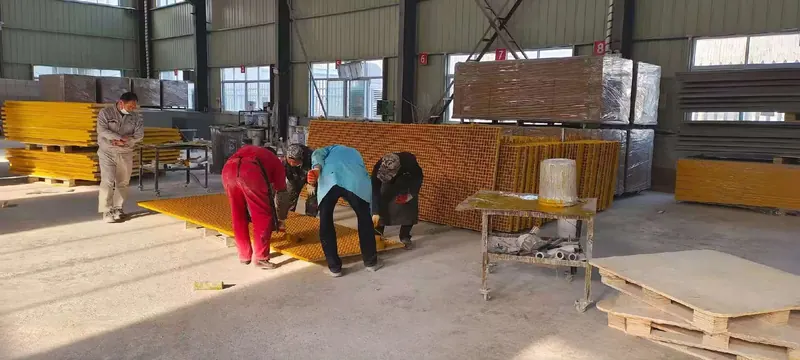
Panel finishing in the works. The regular check is visual; dimensional or surface testing is a separate order scope. Photo: Dengtai Industry.
Commercial drivers
What Drives the Price of an FRP Grating Surface
The surface is part of the panel quotation; these are the items that change it.
Standard profile or added surface
A concave top is the base molded finish. Grit adds grit, resin or adhesive and an extra production step; inlaid grit can add more handling; a milled top adds machining; a cover adds a second layer and a joint detail. The quote shows the surface as part of the panel, not as a hidden extra.
Functional grade and evidence
Anti-static adds a conductive formulation or layer, earthing details and testing. UV stabilisation, a custom color or a fire requirement can add a batch or setup cost. A slip test or third-party report is quoted as its own scope.
Order shape and quantity
Panel size, cut list, color, sample, packing and the number of pieces all affect the commercial answer. Small or custom batches may have a minimum; the exact surface, color and test scope are confirmed in writing before production.
Send the walking condition, cleaning method, color, test requirement and quantity. We will confirm the surface format and explain the price drivers in the quotation rather than quoting a generic "anti-slip" upgrade.
Surface, Structure and Function Are Three Separate Decisions
FRP grating is often described with one phrase — “anti-slip grating”, “gritted grating”, “covered grating” — as if that phrase defined the whole product. It does not. A complete panel description contains at least four separate things: the construction (molded or pultruded), the mesh and thickness, the resin system, and the walking surface. A functional requirement such as anti-static, UV or fire behavior is a fifth layer.
The walking surface is the part a foot, a wheel or a cleaning tool touches. The structure is what carries the load to the supports. The resin is what resists the chemical environment. A surface can improve grip or make cleaning easier, and a cover can change the section and the drainage, but a grit top does not turn a light panel into a heavy-duty one. Keeping these decisions apart prevents the most common specification mistake: buying a surface name and assuming the load, resin and evidence come with it.
This guide focuses on molded open-grid and covered formats, because that is where most surface enquiries start. Pultruded grating is made by a different route, so its surface options are confirmed with the pultruded product rather than copied from a molded panel. The same rule applies to both: the surface is confirmed on the actual configuration.
Concave (Meniscus) Surface: The Standard Molded Walking Profile
A concave surface is formed by the mold. The top of each bar carries a shallow groove, and the mesh stays open. It is not a coating and it does not add a separate layer; the profile is part of the panel. This is why concave is often the standard walking finish on molded grating: there is no extra grit to wear off, and the open mesh continues to drain.
The groove interrupts a continuous flat surface and gives the foot edges to engage. On a clean, wet walkway that can be enough. It is also the finish many buyers expect when they ask for a “standard” molded panel, and it keeps the panel easy to hose and brush. The limitation is that a shallow profile does not create a deep mechanical key. Where oil, grease or a heavy biofilm sits on the surface, or where the walkway is steep, a grit format is usually the next thing to examine.
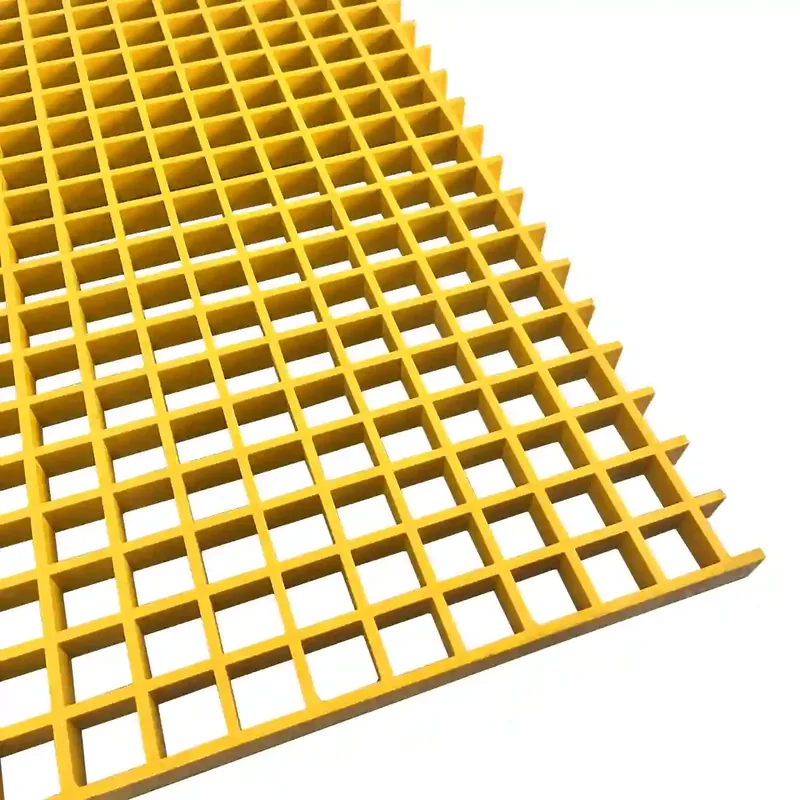
Concave is not a slip-resistance class. Two panels with the same profile can behave differently if the bar width, the resin surface or the contamination differs. If the project needs a result, test the actual product under the agreed method. If it does not, describe the surface as concave and record the cleaning and contamination assumptions.
Cleaning a concave panel is usually straightforward: remove loose debris, brush the grooves, hose or wash with a compatible detergent, and rinse. Fine mud or organic matter can sit in the groove, so the cleaning method still matters. A pressure washer can be used only within a method confirmed for the panel and surface; a jet that is too aggressive can damage the resin-rich top.
Grit Surface: What It Adds, and What It Does Not
A grit surface puts abrasive particles at the top of the panel. The foot or wheel meets a coarse layer instead of a smooth resin profile, which is why grit is considered first for wash-down areas, oily machine surroundings, sloped access and outdoor walkways. The grit does not change the load path, the resin’s chemical resistance or the mesh opening. It changes the contact layer.
The useful questions are about the grit, not the label. What mineral is used, what size is it, how densely is it covered, and how is it held? A coarse grit gives a more aggressive texture; a fine grit is less aggressive underfoot but can still improve wet grip. The right answer depends on footwear, bare feet, wheels, cleaning and the contaminant. A sample is often more informative than a description, especially where comfort matters.
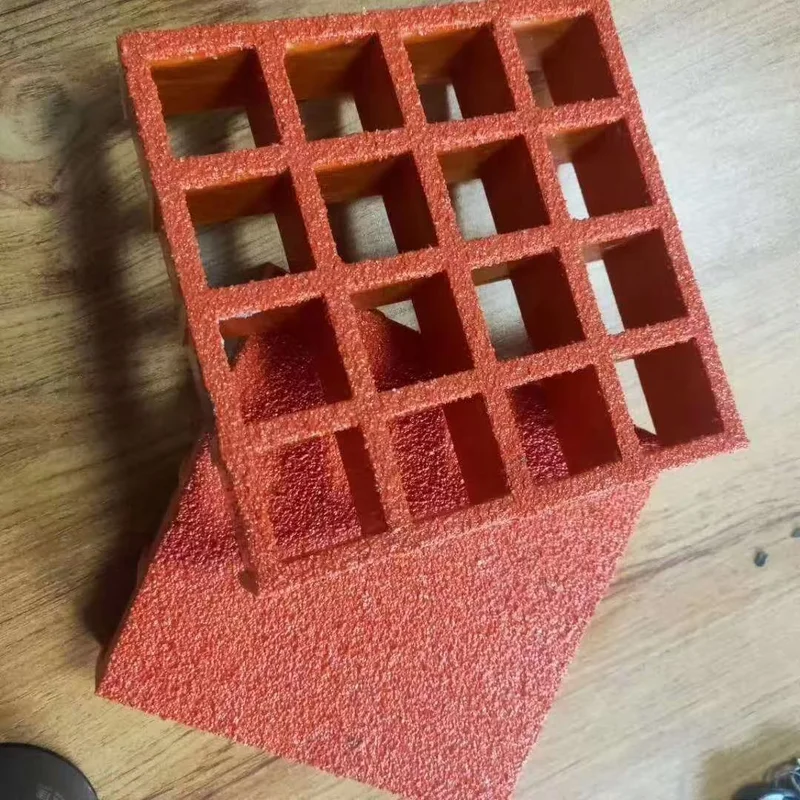
Grit has a wear path. Under foot traffic, trolley wheels and cleaning, the grains can flatten, polish or detach. The rate depends on the grit, the bond, the contaminant and the cleaning method. A surface that is cleaned with an aggressive jet, or that carries abrasive dust, may wear faster than one in a clean pedestrian area. Inspect the surface against the original sample and decide whether it can be restored or should be replaced; a coat of paint is not a grit repair.
Grit can also trap fine debris. In a food area, a grit surface may be harder to clean than a milled or covered surface, even though it gives better grip when wet. In a pool area, a coarse grit may be uncomfortable underfoot. Those are not contradictions; they are the reason the surface has to be chosen against the whole duty, not against a single word.
Inlaid Grit vs Bonded Grit
There are two broad ways to hold grit at the surface. Inlaid grit is placed into the surface layer during molding, so the grains are embedded in the resin-rich top as the panel forms. Bonded grit is applied after molding with a compatible resin or adhesive, so the grit sits as a layer on the finished surface. Both can produce a usable grip surface, and both have to be judged on the actual product.
The difference shows up at the edges, in the depth of coverage and in how the surface wears. Inlaid grit is part of the molded surface, but the grains at a cut edge still end where the cut is made. Bonded grit can be applied over a wider area, but the bond line and the surface preparation matter; a poorly bonded layer can detach. Neither process is automatically better. Ask which process is being quoted, what grit is used, how coverage is checked, and what happens at a cut or a repaired area.
For a project that repeats, keep the process in the specification. “Grit surface” alone does not tell the next buyer whether the panel is inlaid or bonded, and a sample approved from one process is not a reliable approval of the other. If the surface is part of a warranty or acceptance discussion, the process and the test report should be named together.
Milled Flat Top: A Machining Decision
A milled top is machined flat after the panel is cured. The reason is usually mechanical: trolleys, trays, carts and cleaning equipment move more easily over a flat surface, and a squeegee or brush does not have to follow a molded groove. A milled open panel still has openings, so it is not the same as a covered panel; it is a flat top on an open mesh.
Machining removes the original profile and creates a new surface. That surface has to be inspected for exposed fiber, resin richness and edge quality, and it may need a compatible finish or seal. The remaining thickness also matters: a top that is machined too far is not the panel that was designed. The quotation should state the starting panel, the finished top and the inspection that applies.
Wet grip is the trade-off to check. A flat top can be easier to clean but may offer less mechanical engagement than a grit top, especially where a water or oil film is present. If the area is wet and sloped, compare the milled finish with a grit format rather than assuming that “flat” means “safer”. Drainage also changes: the open mesh still drains, but water sits differently on a flat bar top.
Covered Grating and Checked Plate: Closing the Surface
Covered grating puts a more continuous surface over a base grating. The cover can be a layer bonded or fixed to the panel, or the product can be a flat patterned plate such as a checked plate. The two are not always interchangeable. A cover on a mesh base and a solid plate can have different weight, stiffness, joint details and repair methods, so the cross-section has to be part of the specification.
Closing the surface solves some problems and creates others. Small items no longer fall through, wheels have a continuous surface, and the deck can be easier to sweep. Water no longer falls through the mesh, so drainage has to be designed with falls, joints and edge details. The assembly is heavier than the open panel, and the load and deflection have to be confirmed for the complete build rather than assumed from the base grating.
Cleaning is a mixed picture. A flat cover is easier to squeegee, but it also shows standing water and fine dirt. Joints and edges need attention, and a damaged cover may need a repair method that matches the cover material. If the reason for covering is containment, hygiene or wheel traffic, say so; the same “covered” label can lead to different constructions. The covered grating guide develops the cover, checked plate and solid-top differences.
Mini Mesh Is a Mesh, Not a Surface
Mini mesh is a small upper mesh over a wider lower mesh. It reduces the opening so small objects, heels or bare feet are less likely to pass through, but it does not describe the walking surface. A mini-mesh panel can have a concave, grit or other finish, and the mesh choice and the surface choice have to be made separately.
This matters because buyers sometimes ask for “mini mesh anti-slip grating” as one product. The mesh answers “what falls through”, while the surface answers “what the foot meets”. A fine mesh with a coarse grit and a fine mesh with a concave profile are different walking experiences. Check the net opening against the object that must not pass, then choose the surface against the wet, oily or barefoot condition. The mini mesh page covers the opening and panel configuration.
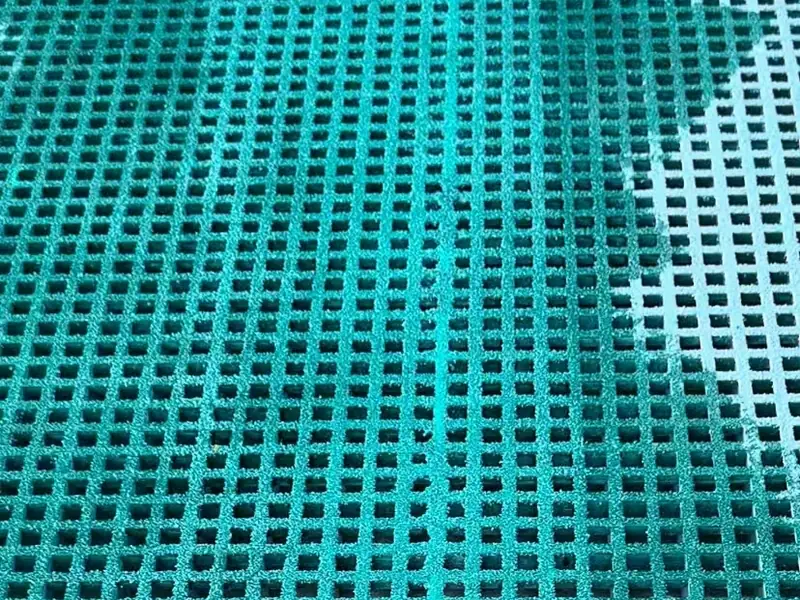
Anti-Static FRP Grating: A Conductive System, Not a Color
FRP is normally an electrical insulator. Static dissipation therefore comes from a deliberate conductive system: a conductive filler dispersed in the resin, a dedicated conductive surface layer, or another arrangement confirmed for the product. The surface then has to be connected to earth through a continuous path. A black panel, a carbon-looking finish or a “conductive” label is not enough.
The specification should state the resistance target in ohms, the test method and electrodes, the earthing points, and how continuity will be checked after installation. The environment matters too: cleaning agents, abrasion, coatings and repairs can change the surface path. If a repair is needed, the repair material has to preserve the conductive layer rather than cover it with an insulating resin or paint.
Anti-static is a functional requirement, not a walking-surface texture. It can be combined with a concave, grit or other format where the product allows, but the combination is confirmed for the configuration. A test report applies to the sample and method tested; it is not a universal property of every panel with the same color. The resin selection guide explains how electrical, chemical and fire requirements are kept separate.
UV, Color and Chalking: What Changes Outdoors
Outdoor exposure affects the resin surface. UV stabilisers, pigments and a surface-rich layer or compatible coating can slow chalking, color change and fiber exposure. They improve durability; they do not make the panel immune to weathering, and they do not create a permanent color guarantee. A dark color can absorb more heat, and a light color can show dirt differently, but neither is a performance grade.
Standard colors include yellow, green, blue, grey and black, with custom colors discussed against a RAL or other reference. Yellow is often used where a walkway should be visible; green and grey are common in industrial and municipal settings. Color is confirmed with the resin and surface selection, and a custom batch may have a minimum quantity. A sample is the reliable way to approve a match.
Chalking is a surface effect, not a structural failure. It should be recorded and inspected, and the cleaning method should be checked so that it does not polish or damage the surface. A panel that looks unchanged is not proven sound either; the structure and fixings still have to be inspected. The maintenance guide separates surface appearance from bar cracks and fixing problems.
Slip Resistance: How to Ask for Evidence
Slip resistance can be assessed with a pendulum test (for example BS 7976-2), a ramp test (for example DIN 51130) or a coefficient-of-friction method. Each produces a different kind of result, and the result depends on the sample, the contaminant, the direction of the surface and whether the test is wet or dry. A report should identify the sample, the method, the condition and the result. A surface name is not a substitute for that report.
If a project requires a value, put the method and acceptance threshold in the inquiry before the surface is quoted. The sample should be the actual product, surface and color, because a test on a different grit, resin or cover is not automatically transferable. If the project uses an R class from a ramp test, treat it as a property of the tested sample under that method, not as a universal class that can be copied from one panel to another.
Where no test is required, say so. The surface can still be selected by condition and sample, but the record should describe it as “concave” or “grit” rather than implying a tested rating. This is more honest and more useful at handover: the maintenance team knows what it has, and the next order knows what to repeat.
Cleaning and Maintenance by Surface Type
Concave is the easiest to describe: brush the grooves, hose or wash with a compatible detergent, and rinse. Fine debris can settle in the profile, so a routine brush matters. Grit needs a softer approach: remove loose material first, use a compatible cleaner, and avoid a pressure jet that can erode the bond. Oil and grease should be identified before a cleaning agent is chosen, because the wrong solvent can attack the resin or the surface layer.
Milled and covered surfaces are easier to squeegee, but water and fine dirt can show more readily. Covered panels need the drainage path checked, including joints and edges. Anti-static surfaces need cleaning that does not leave an insulating film, and continuity should be rechecked after a repair or a change in the earthing arrangement. None of these methods is universal; the resin, the surface and the cleaning chemical have to be compatible.
Inspection should separate surface effects from structural ones. Worn grit, chalking, color change and a dull top are surface observations. A crack in a bar, a broken bar, a loose fixing or a panel that rocks is a structural or installation observation. The two lead to different actions. The maintenance page sets out the triage, and the quality page explains what the regular factory check does and does not cover.
Surface Defects and Factory Inspection
The surface defects worth looking for are dry spots where the resin has not wet the reinforcement, exposed fiber, resin-rich pools, blisters, cracks, color streaks, bald patches in the grit and debonding at a cover edge. They can come from mold release, resin distribution, cure, grit coverage, trimming or handling. A visual check catches many of them; a dimensional check or a surface test is a different scope.
Our regular factory check covers appearance, including surface flatness, cracks and blowholes. Where the order includes color matching, grit coverage, a dimensional record or a test report, that requirement is written into the order and checked against the agreed sample or drawing. We do not describe a visual check as a slip test, a resistance test or a third-party certificate. Those are separate evidence, and they should be named as such in the quotation.
Cutting, Edges and Repairs
Cutting a grit, covered or conductive panel is not only a dimensional operation. The cut exposes a new edge, and the surface layer at that edge has to be sealed where the specification requires it. Grit can chip at the cut, a cover can need an edge detail, and a conductive layer can lose continuity if the cut is not part of the earthing plan. The cutting and sealing guide covers the cut list, openings and edge sealing.
A local grit repair may be possible with a compatible resin and grit, but it is a product-specific method. Paint or an unrelated resin can restore color without restoring grip. A cover repair has to match the cover material and its attachment. A crack in a bearing bar is not a surface repair; it is assessed as structural damage. Keep the original surface sample and the order description so a later repair or repeat order can be compared with what was supplied.
Application Notes: The Same Surface, Different Problems
In a wastewater plant, the surface is often wet and washed down, and the resin may also have to resist the process medium. Grit is considered for the walking route, while concave remains the simpler open-mesh finish where the surface stays cleaner. The wastewater page puts the resin, surface and cleaning together.
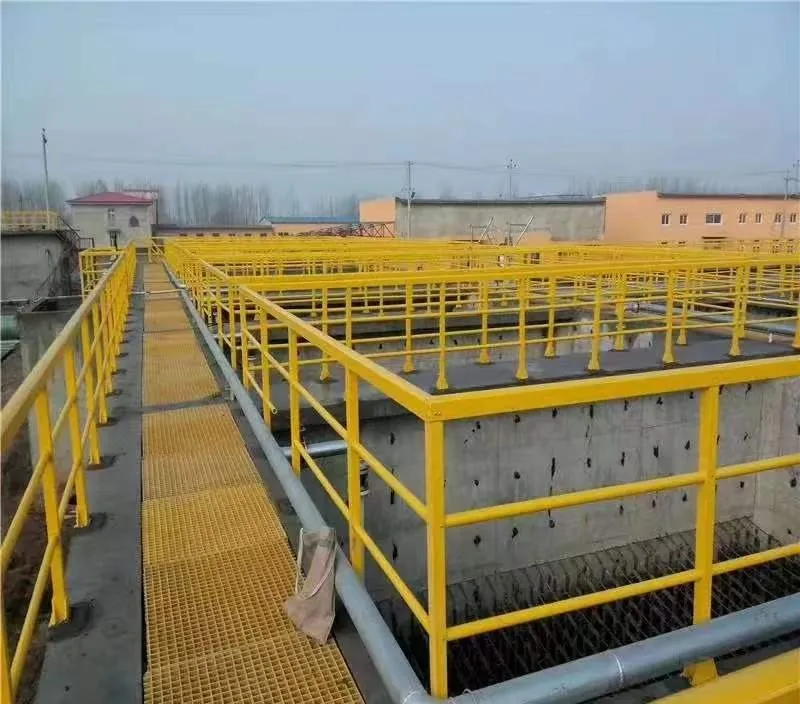
In a chemical plant, the resin and the exposed material come first. A grit top does not make an unsuitable resin suitable, and a cover or a cut edge presents a different material to the medium. Start with the chemical resistance guide, then confirm the surface.
In a food or beverage area, cleaning and hygiene often pull toward a flatter, easier-clean surface, while wet floors pull toward grip. The cleaning chemical, the food-contact requirement and the accepted cleaning method have to be confirmed before the texture is chosen. A grit surface that traps debris may be the wrong answer even if it feels safer underfoot.
A poolside or dock walkway is usually barefoot, permanently wet and exposed to chlorine or salt. A fine grit or concave surface is considered with the mesh, drainage and fixings, and a sample is more useful than a description. The pool and dock guide covers the barefoot and chemical side.
On an offshore platform, the surface may be combined with fire, anti-static or slip requirements. Each has its own test and document, and the surface is confirmed with the resin and the structural review. The offshore page sets out the separate requirements.
A solar walkway often uses a yellow grit surface because the route should be visible and the walking condition is outdoor. The color and the grit are separate decisions; neither replaces a slip test if the project requires one. The solar walkway page covers the application.
Stair treads and trench covers are assemblies. A tread usually needs a defined nosing and a grip surface; a trench cover may need a continuous top or a grit surface that still drains. The stair tread page and the trench cover page show how the surface is confirmed with the profile and support.
Applications
FRP Grating Surfaces by Application
The same surface name meets a different problem in a treatment plant, a pool and a solar walkway.
Wastewater and treatment walkways
Wet, frequently washed and sometimes chemically exposed. Grit or concave is selected against the actual spillage and cleaning, while the resin is chosen for the medium. Open mesh keeps drainage simple.
Chemical and process areas
The resin and exposed surface come first; a grit top does not make an unsuitable resin suitable. Where a spill, concentration or temperature is aggressive, the surface layer and cut edges are part of the review.
Food and beverage areas
Cleaning and hygiene usually pull toward a flatter, easier-clean surface, while wet floors pull toward grip. Confirm the cleaning chemicals, the food-contact requirement and whether a covered or milled format is accepted before choosing the texture.

Poolside and dock walkways
Barefoot contact, permanent wetness and chlorine or salt change the balance. A fine grit or concave surface is considered with the mesh and drainage, and a sample is more useful than a description underfoot.

Solar walkways and roof access
Outdoor exposure, visible walkways and maintenance access often point to a yellow grit surface. The color helps the route stand out; the grit is selected for the walking condition, not as a substitute for a test.

Stair treads and trench covers
Stair treads usually need a defined nosing and a grip surface; trench covers may need a continuous top or a grit surface that still drains. Both are assemblies, so the surface is confirmed with the profile and support.
Factory record
A Yellow Grit Surface in a Solar Walkway Order
A real configuration record, with the limits of the record stated.
A solar walkway order for Indonesia used 25 mm molded grating with a 38 × 38 mm mesh, unsaturated polyester resin, a yellow grit surface and pieces cut to 400 × 2000 mm. The panels were laid on the customer's track supports and connected with M clips.
The surface choice was practical: yellow made the walkway visible in an outdoor installation, and grit gave the walking route a texture that a smooth top would not have. The support layout, clear span and load were the customer's design and were not part of the grating order.
The record is useful as a configuration reference, not as a performance certificate. It does not contain a site photograph, a slip test report, a load calculation or a written customer authorisation to publish the project. The photo below shows export packing at the works, not the Indonesian site.

Order path
From Surface Inquiry to Packed Order
Six steps that keep the sample, the quotation and the production check aligned.
Tell us where the panel is used, who walks on it, what falls on it and how it is cleaned. A photo of the area and a sample of the contaminant are more useful than a generic surface name.
We compare the condition with the formats that can be made for the panel, then explain the trade-offs in grip, cleaning, drainage and price. Where the answer is not clear, the shortlist stays at two options.
A sample lets you compare color, grit size, profile and edge finish. A standard sample can be arranged; custom color or surface samples are quoted. The sample approval is recorded against the order.
Lock the panel type, thickness, mesh, resin, color and any anti-static, UV or fire requirement. If a slip or resistance test is required, agree the method, laboratory and acceptance value before production.
The regular factory check covers appearance, including surface flatness, cracks and blowholes. Where the order includes color, grit coverage, dimensional inspection or a test report, that check is written into the production and inspection scope.
Grit and covered surfaces are protected against rubbing, and cut pieces are identified against the packing list where numbering is ordered. The packing method and piece marks are confirmed with the order.
RFQ checklist
Surface RFQ Checklist
Ten items that let us recommend a format without guessing.
- Application and traffic — Walkway, platform, stair, trench cover, pool surround or roof access; feet, trolleys, pallets or cleaning equipment.
- Contaminants — Water, oil, grease, process spillage, dust, leaves, ice or cleaning chemicals, and how often they are present.
- Cleaning method — Hose, brush, squeegee, pressure washer, steam or solvent, and who carries out the cleaning.
- Slope and drainage — Where the water goes, whether the area is flat or sloped, and whether a covered surface would trap it.
- Slip or resistance test — The method, condition, acceptance value, sample and report required, if any.
- Color and visibility — Standard yellow, green, grey, blue or black, a custom color, and whether the walkway must stand out.
- Functional requirements — Anti-static resistance and earthing, UV exposure, fire and smoke behavior, or food-contact criteria.
- Panel and support — Molded or pultruded, thickness, mesh, resin, panel size, support layout and clear span.
- Cutting and edges — Cut list, openings, edge sealing, fixing holes and whether the grit or cover reaches the edge.
- Sample and documents — The sample to approve, the color reference, and any inspection record, test report or certificate required.
Request a quote
Send Your Surface Requirements
Describe the walking and cleaning conditions, the color and any test requirement.
- Molded and pultruded grating produced in house
- Full panels or factory cut-to-size pieces
- No fixed minimum order quantity
FRP Grating Surface Questions
What is the difference between a concave and a grit surface?
Which surface is best for wet or oily areas?
Does a grit surface make the grating slip-resistant in every condition?
What is inlaid grit?
Can grit be applied after the panel is molded?
Does grit wear out?
Can worn grit be repaired?
Is a grit surface comfortable for barefoot areas?
Does grit trap dirt?
Can I pressure-wash a grit surface?
What is a milled top?
When should I use covered grating?
Is mini mesh a surface finish?
How is anti-static grating specified?
Does color affect slip resistance?
Does UV treatment stop color fade?
Does the surface change the load rating?
Can you match a RAL color?
Can you provide a sample before ordering?
What do you need to quote a surface?
Content last checked: