Resources
FRP Grating Technical Resources by Task
Five entries — specification, load and span, resin, surfaces, and installation — plus what the factory can issue for an order. Each entry states what the material covers and where its limits are.
Resource entries
Technical FRP Grating Resources by Task
Pick the task you are working on rather than reading a general introduction.

Specification and sizes
Panel thickness, bar pitch, panel sizes, mass per unit area and the standard specification range the factory covers.
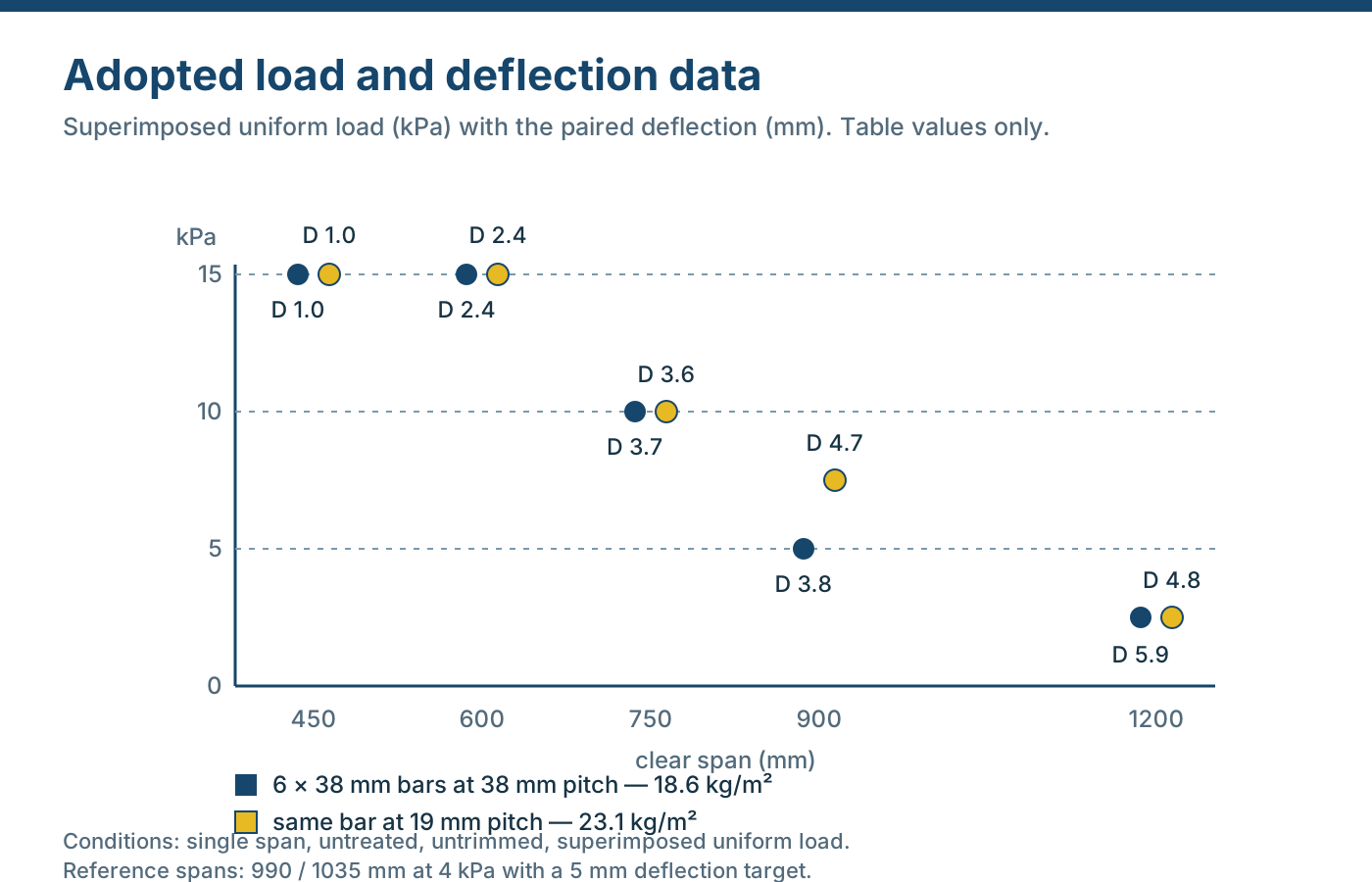
Load, span and deflection
How to read a load table, the adopted data held for two structures, and the support and load values the factory needs.
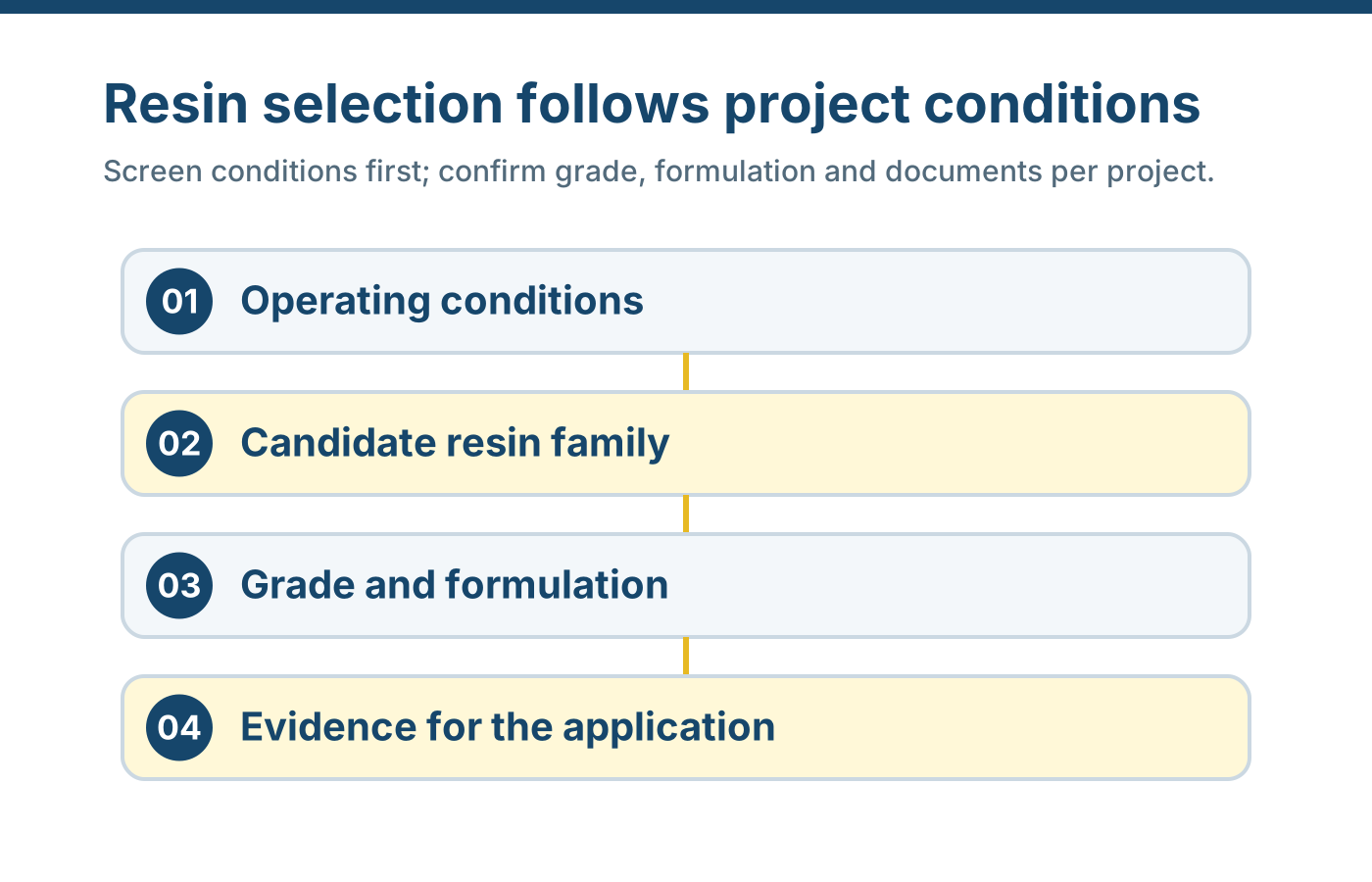
Resin and chemical duty
Polyester, vinyl ester, epoxy and phenolic directions compared by medium, concentration, temperature and exposure type.
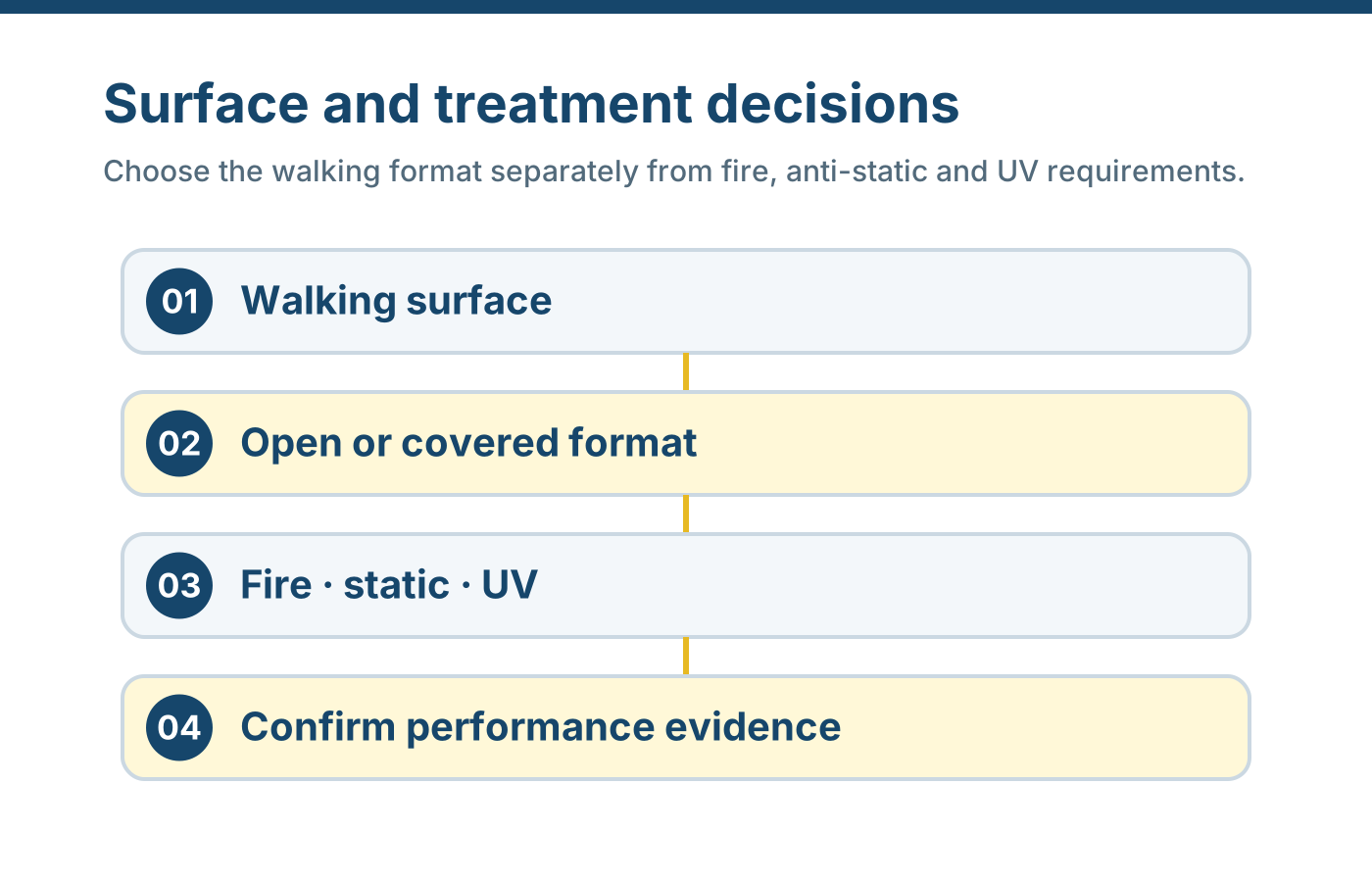
Surfaces and functional options
Concave, grit, inlaid grit, milled, plate and mini mesh formats, with anti-static and UV treatment handled separately.
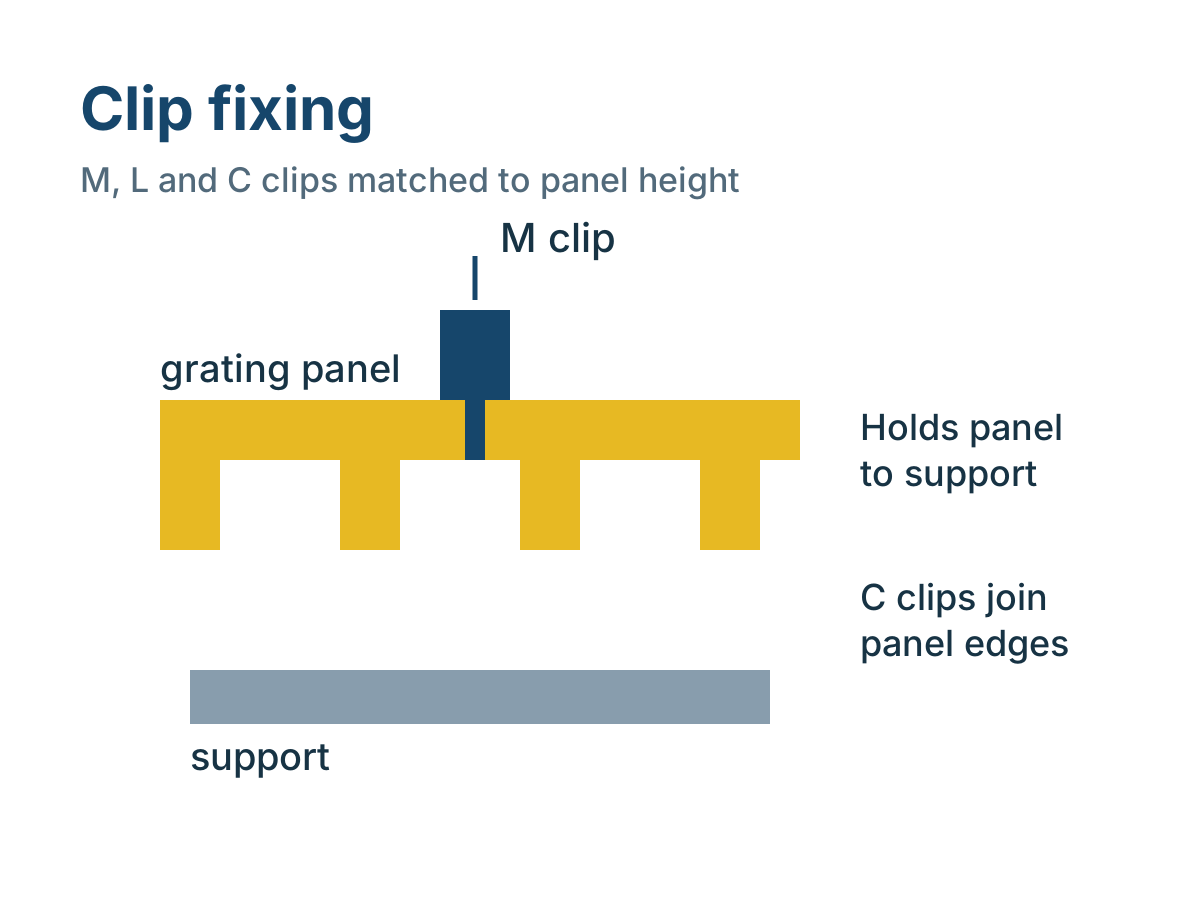
Installation and fixings
Support layout, panel fixing, openings and edge sealing, plus the clip families used to fix and join panels.
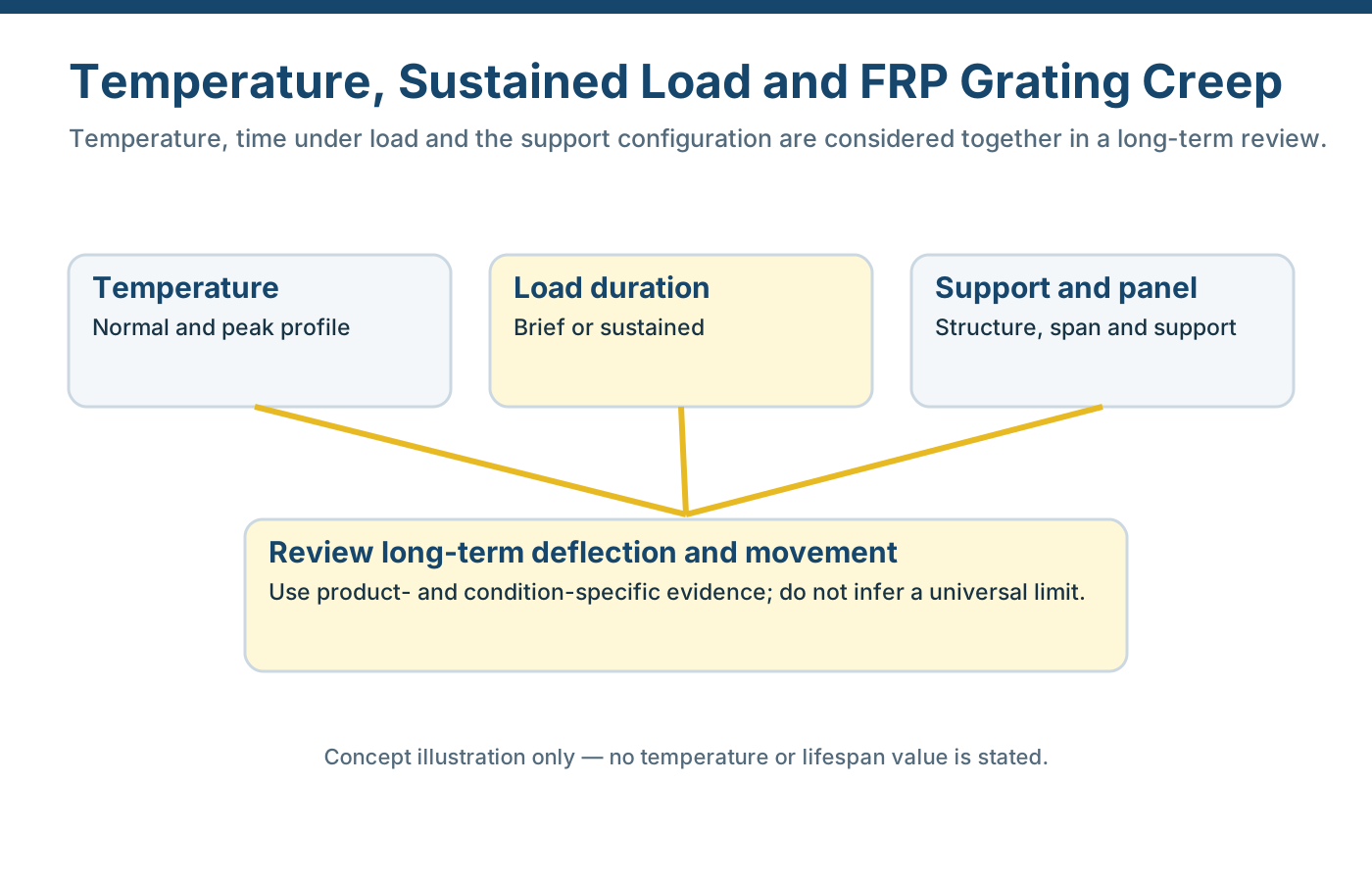
Temperature, creep and thermal movement
Why a deflection temperature is not a service temperature, and what a project has to provide for long-term load and movement.
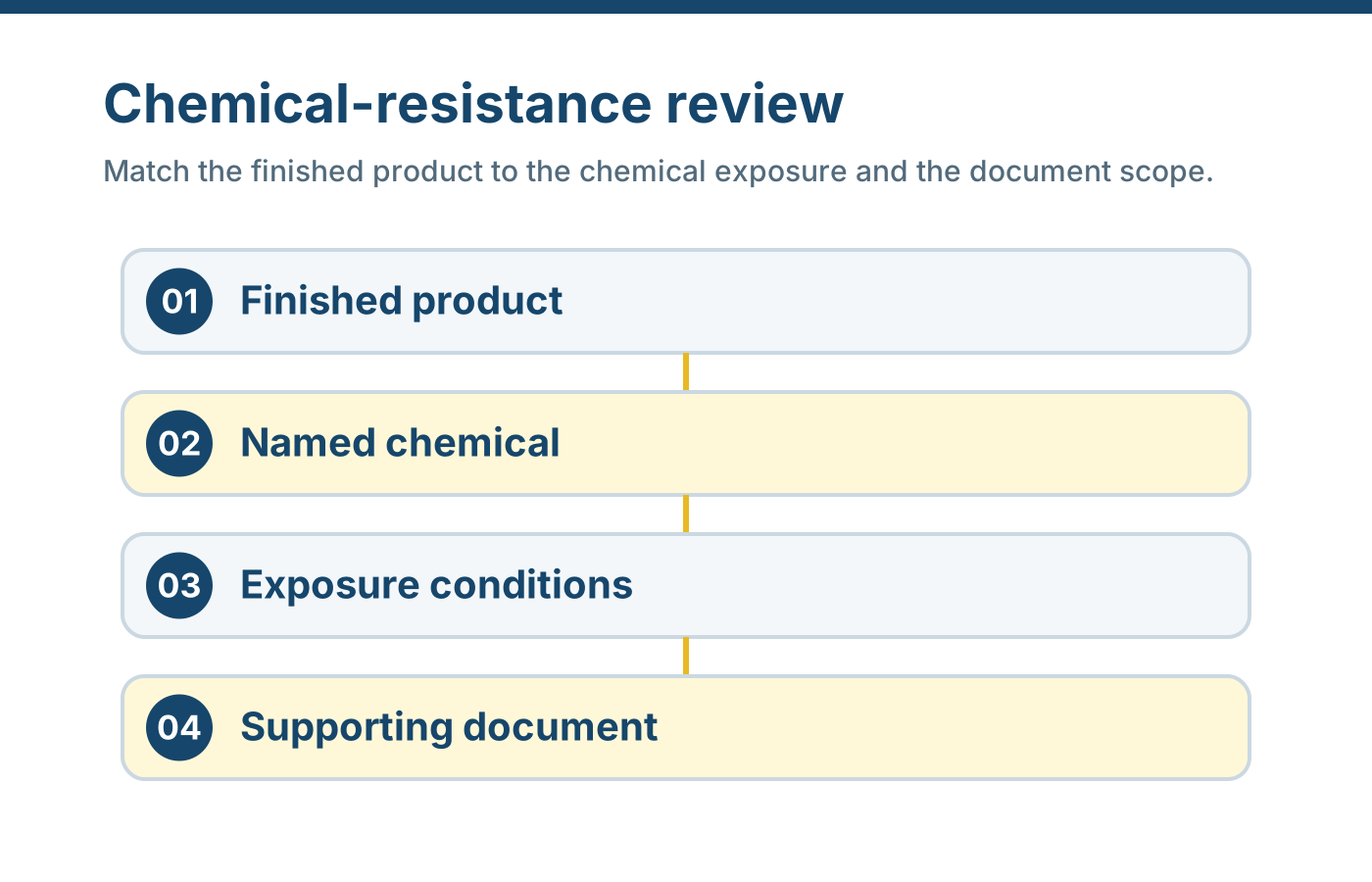
Chemical resistance
Product, resin grade, medium, concentration, temperature and exposure type, and how to read the document that supports a claim.
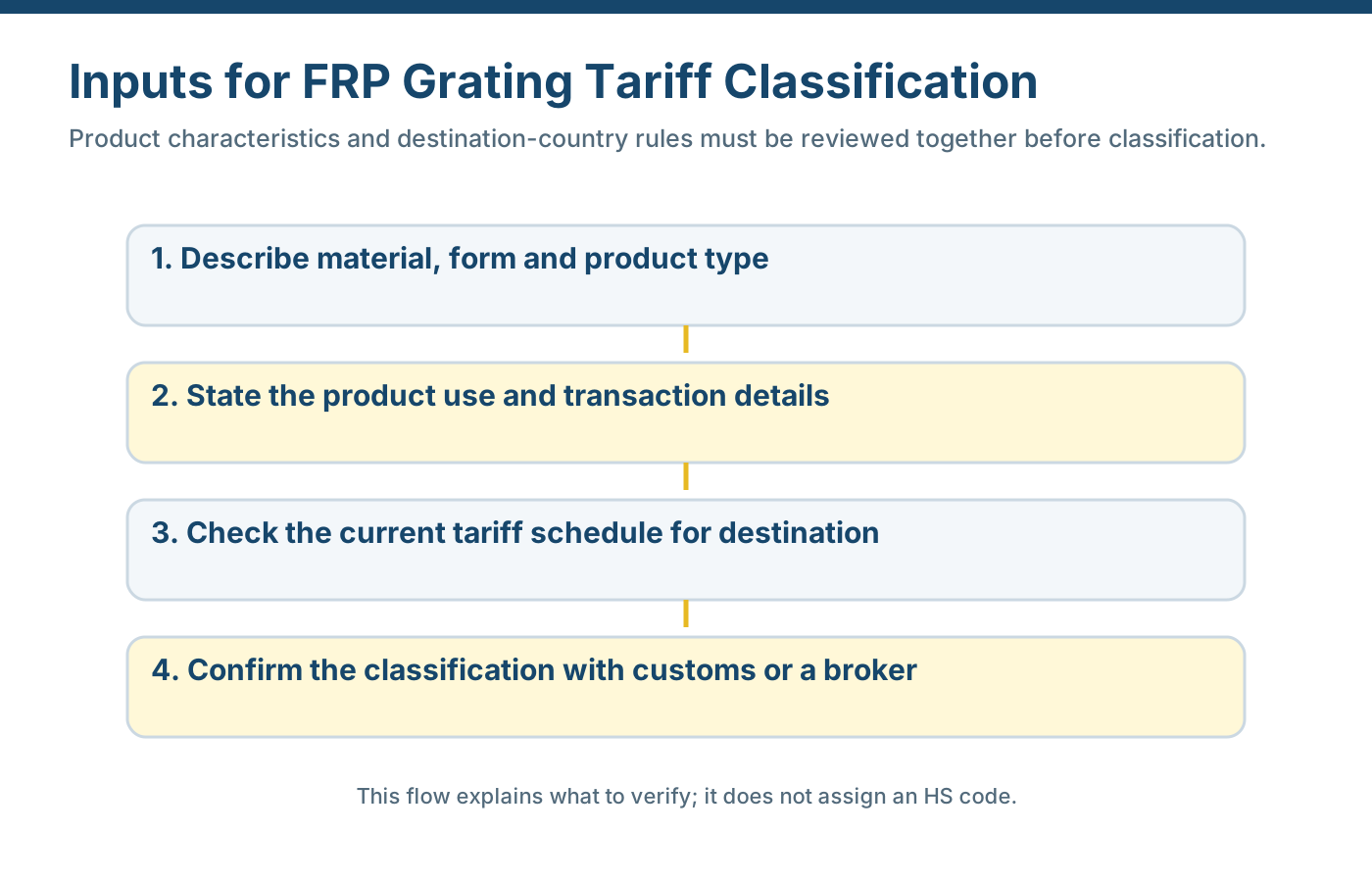
Export classification information
The product and transaction facts to prepare for customs classification, and why no single HS code is published here.
Before you ask
What to Send With a Technical Request
Four items that let us answer with a document instead of a question.
- Name the task — Tell us whether you are checking a specification, matching load data, choosing a resin or a surface, planning installation, or assembling documents for a tender.
- Send the configuration — Thickness, mesh, resin, surface and panel sizes where known, plus the application the material is needed for.
- State the project conditions — Medium, temperature, support layout, load and deflection limit — approximate values are more useful than nothing.
- Say which documents are required — Test report, certificate of conformity, drawing or data sheet, and the stage at which they are needed.
Documents
Which FRP Grating Documents Exist Today
What is issued, what is arranged case by case, and what is still missing.
| Item | Status | Covers |
|---|---|---|
| Product test report | Issued by the factory | Model and item coverage is confirmed against your configuration |
| Certificate of conformity | Issued by the factory | Follows the batch, configuration and order |
| Third-party testing | Arranged case by case | Scope, laboratory, lead time and cost agreed before the test |
| Adopted load and deflection data | Two molded structures | 6 × 38 mm bars at 38 mm and 19 mm pitch, with the source conditions |
| Standard specification range | Available for reference | JC/T 1026-2007 Table 1 and Table 2 rows; internal drawings still being mapped |
| Dimension and mesh illustrations | Published on this site | Our own definition diagrams, marked as illustrative rather than manufacturing drawings |
| Factory and project photographs | Published on relevant product and application pages | The photograph must match the application it is captioned for and must not be used as a product rating |
Request material
Ask for the FRP Grating Material You Need
Tell us the task and the configuration; we will confirm what can be issued and when.
- Molded and pultruded grating produced in house
- Full panels or factory cut-to-size pieces
- No fixed minimum order quantity
Technical Resource Questions
Can I download a datasheet?
Are the diagrams on this site manufacturing drawings?
Which load data can you send?
What is the difference between a test report and a certificate of conformity?
Can you help write a specification?
Continue From Technical Resources
Product types and configurations
Specifications and configuration fields for each grating type.
Load and span guidance
Reading load data, and the values the factory needs from the project.
Resin selection
Resin directions compared by medium, temperature and exposure.
Surfaces and treatments
Walking surfaces, anti-static formats and UV treatment.
Pricing and quote guide
How configuration, cut-to-size supply and delivery are quoted.
FRP grating product overview
Start with the molded and pultruded product range, then open the technical guide for the configuration you need.
FRP Grating Selection Guide
A decision path from application and operating conditions to a candidate FRP grating configuration, with the values that still have to be confirmed.
FRP Grating Sizes and Mesh
FRP grating panel sizes, thicknesses and mesh definitions, including how metric and imperial sizes are converted and where tolerances come from.
FRP Grating Weight
How FRP grating weight is stated — mass per unit area, panel net weight and gross package weight, and why none of them is a load rating.
Cutting and Sealing FRP Grating
How FRP grating is cut, drilled and sealed — factory cut-to-size against site cutting, opening support and edge sealing, with what cutting does not fix.
FRP Grating Maintenance and Service Life
FRP grating maintenance — cleaning by soil type, triaging surface damage, bar cracks and breaks, and what our own service-life experience does and does…
FRP Grating Quality and Documentation
FRP grating quality inspection and order documents — the factory appearance check, what a test report and a certificate of conformity each cover, and…
Molded vs Pultruded FRP Grating
Molded and pultruded FRP grating compared by structure, load direction, spans, openings, resin and cost scope — without declaring one universally better.
FRP Grating vs Steel Grating
FRP and steel grating compared on the same duty — corrosion, spans, weight, static and fire requirements, fabrication and total cost.
How to Use These Resources
Each entry on this page answers one kind of question. The specification material tells you what can be supplied and in which structure. The load and span material explains how to read the data and which values have to come from your project. The resin material compares directions against the operating conditions. The surface material separates the walking surface from functional treatments. The installation material covers supports, fixings, openings and edge sealing.
Reading them in that order is usually fastest, because each step narrows the next: environment narrows resin, support layout decides product type, and fabrication decides price. If a project has a fixed deadline or a tender submission, tell us that at the start — the document that matters may not be the one you would read first.
What We Do Not Publish
Two categories are deliberately kept separate. The first is any document we do not actually hold: where a report or drawing is not published, there is no download, and claiming otherwise would waste a buyer’s time. The second is borrowed material — photographs and drawings from other manufacturers that are passed off as our own. The illustrations on this site carry their own explanation, and they are the reason the values on the pages can be read without guessing at the source.
When to Ask Instead of Read
Ask us directly whenever the answer depends on a value we cannot publish. A chemical duty with a specific medium and temperature, a span with an unusual support layout, an opening that cuts bars, or a document with a specific format all fall into that category. Send the configuration and the conditions, and the answer becomes specific — which is more useful than a general statement that has to be interpreted.
Content last checked: