Maintenance
FRP Grating Maintenance, Inspection and Service Life
FRP grating does not corrode like steel, but it still has a surface, a structure and fixings to check. Cleaning depends on the soil, and a cracked or broken bar is a structural observation rather than a cosmetic one.
Routine
How to Maintain and Inspect FRP Grating
Six steps that keep the record, the surface and the structure in step.
Retain the configuration, resin and surface, the installation layout and any earlier repairs, so a change can be compared with the original.
Loose debris, ordinary dirt and oily deposits need different methods, and the method has to suit the resin, the surface layer and any conductive coating.
Look for worn grit, exposed fiber, color change, cracks in bars, deformation, and loosened or corroded fixings.
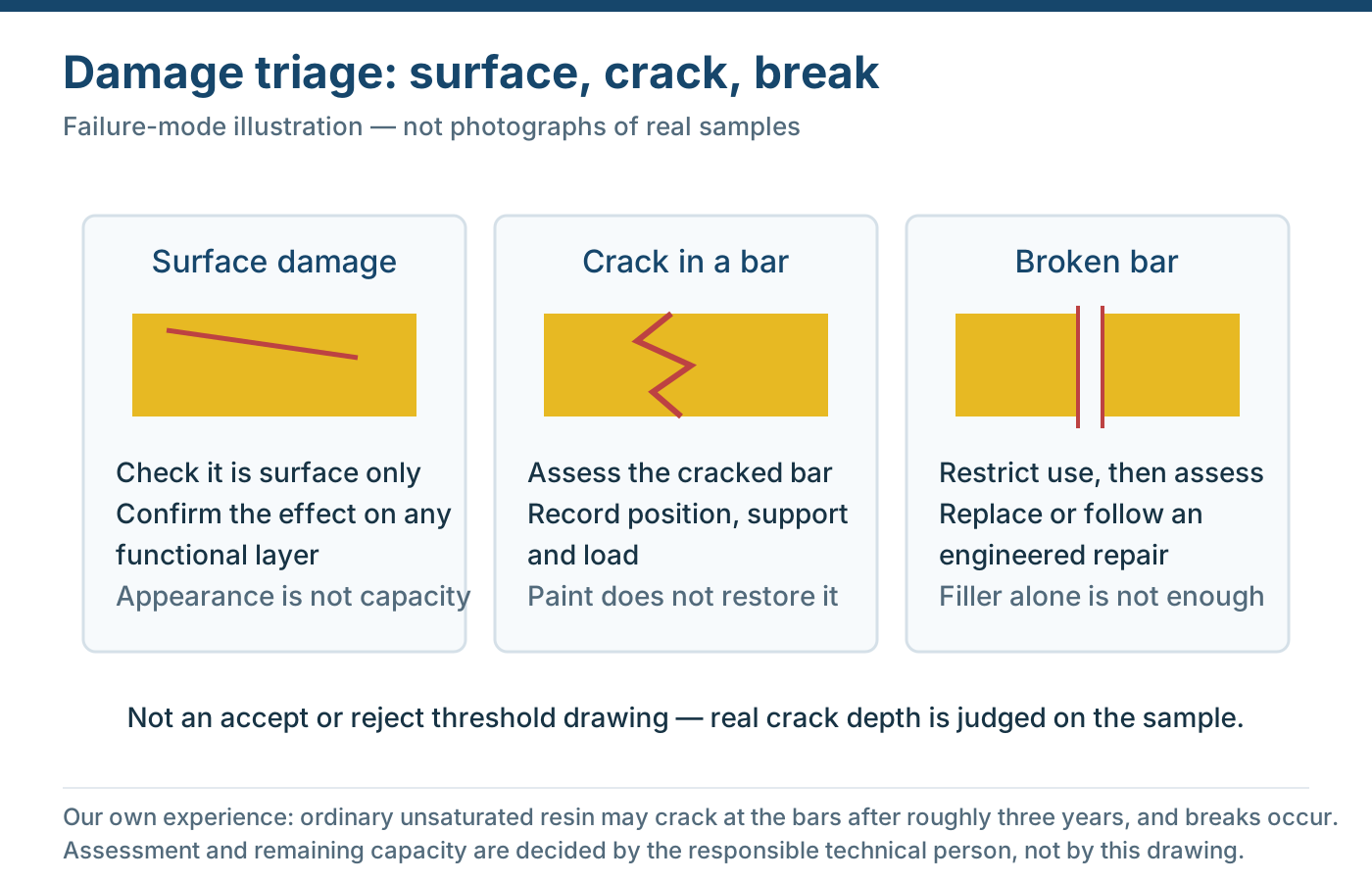
Separate surface effects from bar cracks and breaks, because the two lead to different actions — observation and cleaning against restriction and assessment.
Surface repairs follow compatible materials; structural damage is assessed and either repaired under an engineered method or replaced.
Note what was found, what was done and when it should be checked again, so the next inspection starts from facts.
Damage triage
What You See and What It Calls For
Seven observations, and the action each one leads to.
| Observation | What to check first | Action |
|---|---|---|
| Grit worn or flattened | Where the wear is, how the area is cleaned, and whether a surface layer or conductive layer is involved | Record it and compare with the original surface; restore or replace under the product requirement rather than by appearance alone |
| White fiber bloom or exposed fiber | Whether the protective layer has worn through and whether the bars are affected | Limit the area, assess the layer, and decide between surface restoration and replacement |
| Fine or deep crack in a bar | Depth and extent, impact history, support condition and actual load | Do not cover it with filler and call it accepted; assess the panel and its remaining capacity |
| Broken bar | How many bars, where they are, and what the panel carries | Restrict use, then replace or follow an engineered repair |
| Color change or chalking | Original color, sun and chemical exposure, and any accompanying damage | Record with photographs and inspect the surface — appearance alone neither proves nor disproves capacity |
| Rocking or abnormal deflection | Frame, bearing edges, clips, loading direction and support positions | Check the installation and support first; do not proof-load the panel on site to test it |
| Loose or corroded clips | Clip material, environment and the removal history of the panel | Adjust or replace to the application requirement, then re-check panel position and support |
Boundaries
Three Boundaries on FRP Grating Service Life
What our own experience covers, and what it does not.
- Our service-life experience is conditional — Our own experience is that ordinary unsaturated polyester may crack at the bars after roughly three years in demanding conditions, while better resins — for example epoxy or vinyl ester — have lasted more than ten years. Continuous load and compression shorten service life. No structure, medium or report was documented with those examples, so they guide the resin direction rather than promising a period.
- Service life, design life and warranty are different things — Experience describes what happened in other projects; design life is what the project requires; the warranty is what the order states. Our after-sales position follows the actual order, and a ten-year experience example is not a ten-year warranty.
- FRP grating is not maintenance-free — The material does not need repainting to resist corrosion, but surfaces wear, fixings loosen and structures have to be inspected. A maintenance plan for FRP looks different from a repainting plan; it is not an absence of one.
Records
What to Keep for Each FRP Grating Area
Five records that make the next inspection useful.
- Product record — Configuration, resin, surface, color and the batch or order reference where available.
- Installation record — Layout drawing, support positions, fixing arrangement and any deviations recorded at installation.
- Operating conditions — Chemicals, temperature, cleaning agents and frequency, and the loads the area sees.
- Inspection interval — How often the area is inspected, and whether the interval is set by the project or by experience.
- Findings and actions — Photographs, measurements, actions taken and the date of the next check, held per panel or per area.
Request advice
Send What You Have Found
Photographs and the operating conditions usually answer the first questions.
- Molded and pultruded grating produced in house
- Full panels or factory cut-to-size pieces
- No fixed minimum order quantity
FRP Grating Maintenance Questions
How long does FRP grating last?
How should FRP grating be cleaned?
Can a cracked bar be repaired?
Does the color fading mean the panel has failed?
Continue With Maintenance
Resin selection
Resin direction chosen from the medium, temperature and exposure.
Surfaces and treatments
Walking surfaces and functional layers, and how they wear.
Quality and documentation
The appearance check and the documents an order can include.
FRP versus steel grating
How maintenance compares between the two materials.
Technical resources
The technical material behind this maintenance guidance.
FRP Grating Installation Planning
Plan FRP grating supports, panel layout, fixings and openings before delivery, so the panels that arrive match the structure they sit on.
Cutting and Sealing FRP Grating
How FRP grating is cut, drilled and sealed — factory cut-to-size against site cutting, opening support and edge sealing, with what cutting does not fix.
Cleaning Is Decided by the Soil, Not by the Material
“How do I clean FRP grating?” has no single answer, because the product is designed to resist the environment and the soil is what varies. Leaf litter and dust are removed mechanically. Ordinary dirt comes off with water, a mild detergent and a soft brush. Oil, chemical deposits and unknown stains have to be identified first, because the wrong solvent can attack the resin or lift a functional layer, and because the washings usually go somewhere else in the plant.
High-pressure cleaning is a good example of a method that needs a confirmed answer rather than a general one. Pressure, nozzle distance and angle all affect whether the surface is cleaned or damaged, and the acceptable figures depend on the configuration and the surface layer. Where a surface is gritted or has a conductive layer, cleaning also has to avoid grinding the functional part of the surface away.
What Each Finding Means
The table above is the practical core of this page. Surface damage — worn grit, a chalking surface, a bloom of exposed fiber — is dealt with by recording it, checking the layer and deciding whether the surface can be restored or the panel should be replaced. Cracks and breaks at the bars are structural: they are assessed, and the panel is repaired under an engineered method or replaced.
Two habits prevent trouble. First, inspect the fixings and supports at the same time as the panel, because a rocking panel is usually a frame or clip observation rather than a grating one. Second, keep the record: a surface that has worn over four years tells you something about the environment only if you know what it looked like at the start.
Content last checked: