Applications
FRP Grating Applications and Project Conditions
Each page below is an application we can describe from our own supply experience, written around the conditions that have to be confirmed. Nothing here is generated from an industry name alone.
Applications
FRP Grating Applications and Selection Starting Points
Five applications with a real starting configuration, plus the product directory.

Construction walkways
Ground-level pedestrian access, and the point where a temporary crossing over a trench stops being a walkway and becomes a structure.
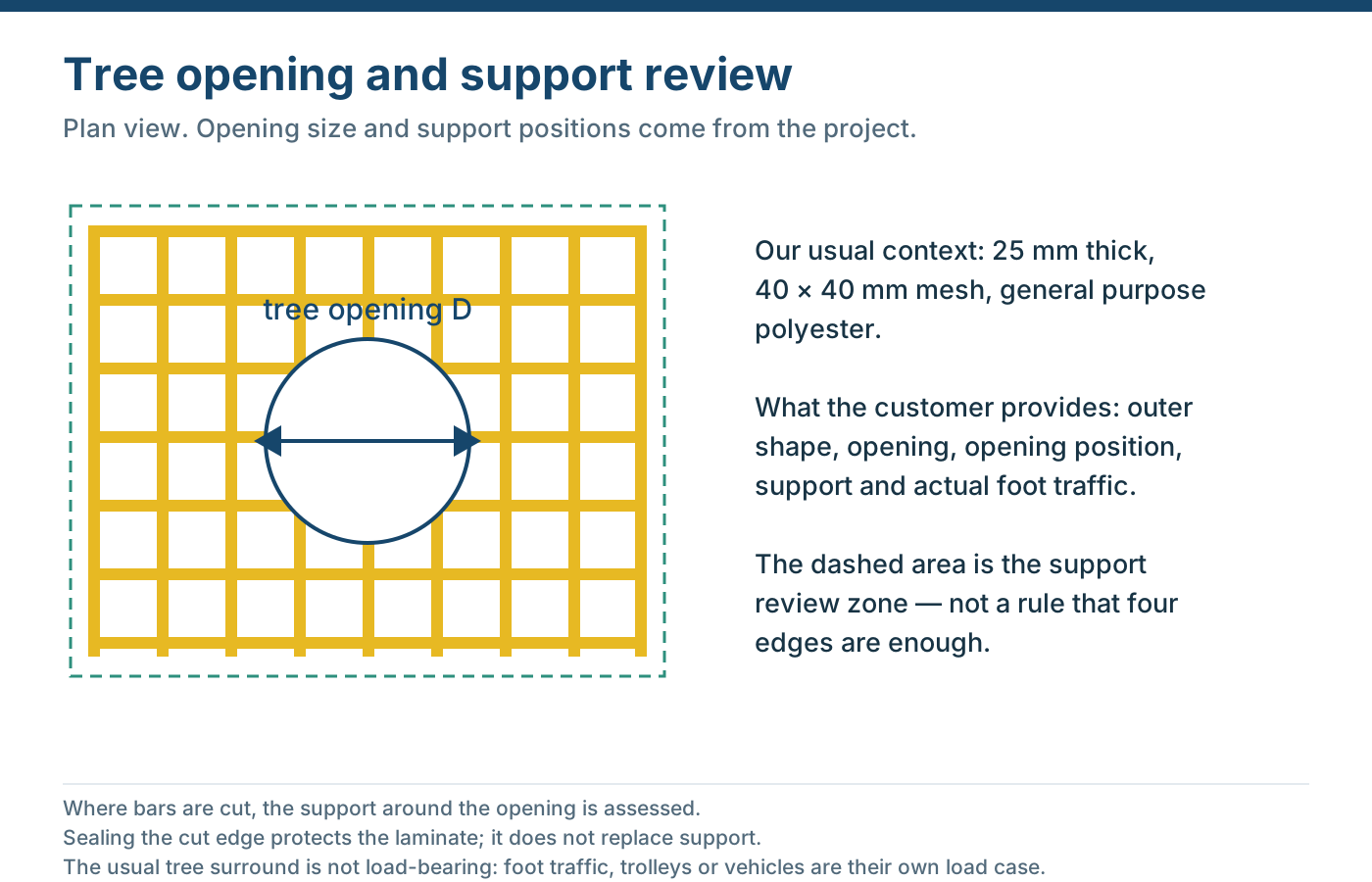
Tree grates and surrounds
Our usual starting configuration for tree pits — 25 mm, 40 × 40 mm mesh in isophthalic unsaturated polyester resin with alumina filler — with the tree opening cut to the site.

Wastewater treatment areas
Vinyl ester as our usual resin direction, selected per process area rather than for the plant as a whole.

Solar walkways
Solar walkway panels can be planned around existing track supports, project cut sizes and clips matched to the rail layout.

Trench covers and inspection covers
Drainage, object retention, removable access and edge support, decided as separate requirements.
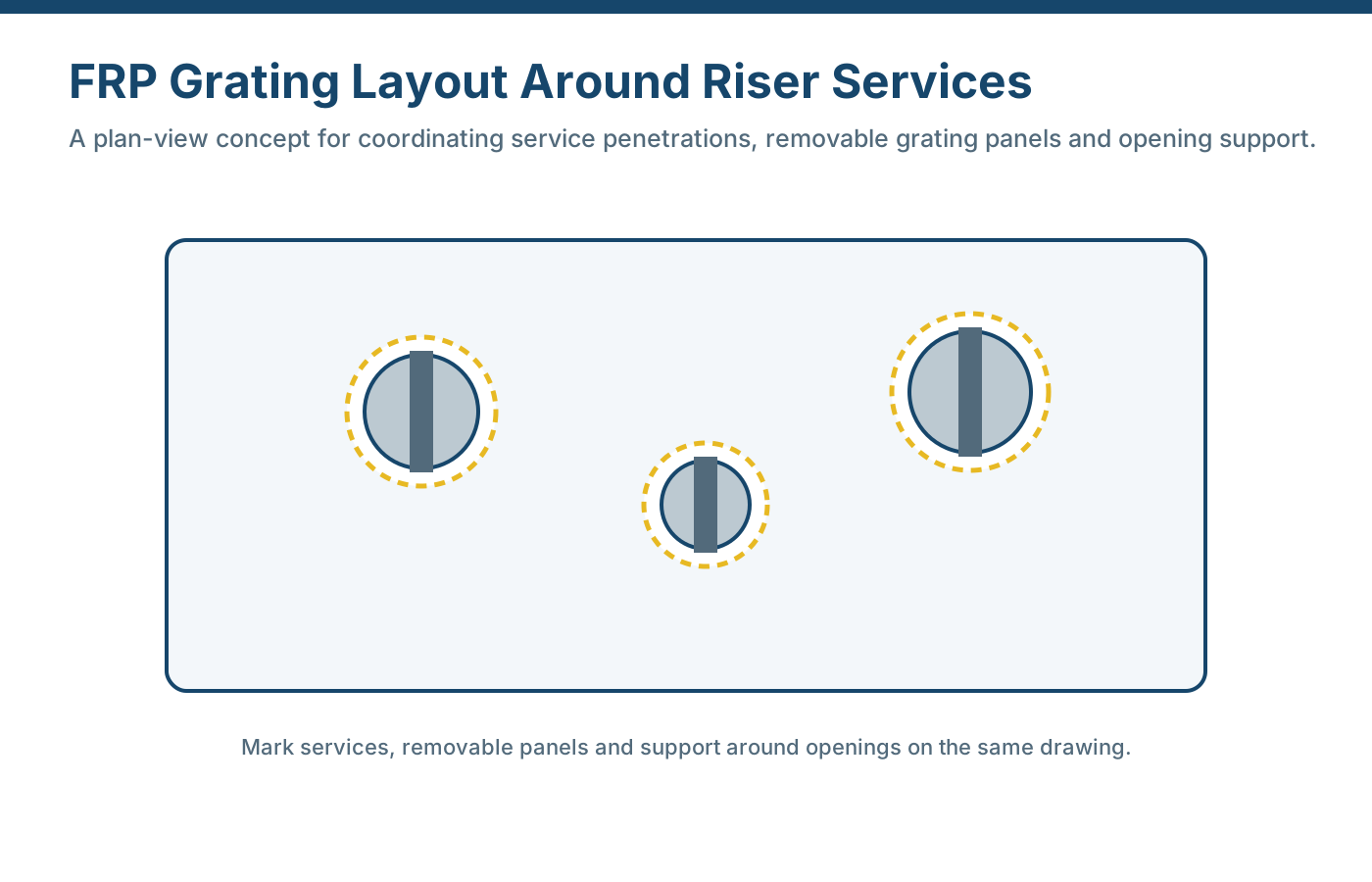
Riser shafts in buildings
Service shafts where pipes and cables pass through the grating and maintenance access has to be planned on the same drawing.

Pool and dock walkways
Barefoot, permanently wet walkways where chlorine or salt exposure, drainage and grip are decided together.

Offshore and marine platforms
Vinyl ester or phenolic directions, with corrosion, fire, smoke and structural integrity treated as separate requirements.
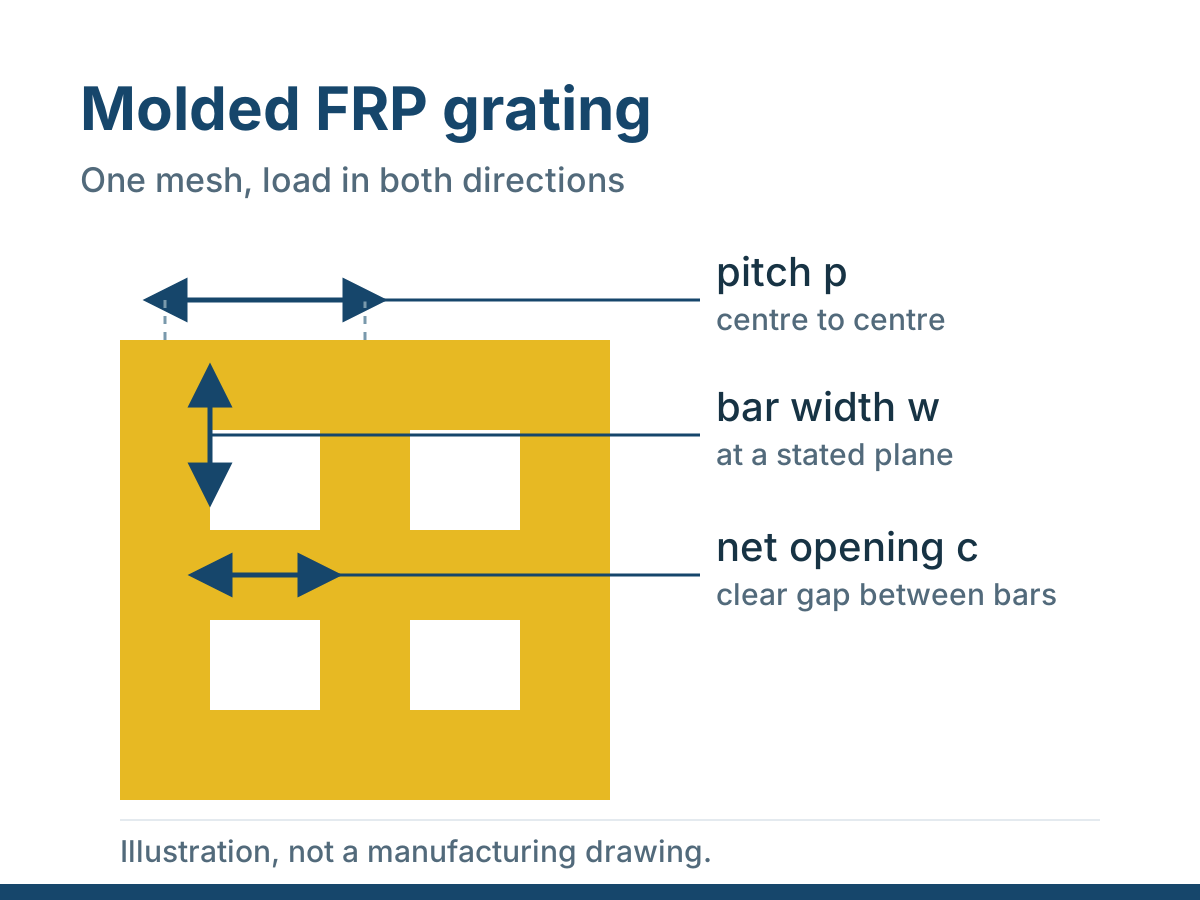
Grating types these applications use
Molded, pultruded and mini mesh grating, with clips and cut-to-size fabrication.
Conditions
How a FRP Grating Application Is Decided
The condition drives the selection; the industry name does not.
| Project condition | Where to start | What changes the answer |
|---|---|---|
| People walking on it | Molded grating, mesh and surface chosen for the walking condition | Whether vehicles, trolleys or equipment also cross it, and the deflection limit |
| Water and drainage | Open mesh, with the opening matched to what must pass through | Whether small items must be retained, and how the area is cleaned |
| Chemicals and wash-down | Resin direction chosen from the medium and temperature | Concentration, contact type and whether the exposure is spray or immersion |
| Sun and weathering | Stabilised resin and surface protection considered separately | Color expectations, cleaning and how long the appearance matters |
| Equipment and maintenance access | Panel sizes, fixings and, where needed, liftable sections | Single-piece weight, lifting route and how pieces are identified when refitted |
Project inputs
What to Describe for a FRP Grating Application Review
None of these has to be complete before you contact us.
- Where the panels go — Application, position in the plant or site, and what is below the grating.
- Who or what loads it — Pedestrians, trolleys, equipment or vehicles, with load type and value where known.
- How it is supported — Frame, rail or beam arrangement, clear span and which edges bear on the support.
- Environment and cleaning — Chemicals with concentration, temperature, salt, UV exposure and the cleaning method.
- Sizes and delivery — Panel or cut list, openings, fixings and the destination where the panels are installed.
Request a review
Send Your Application and Site Conditions
Describe the position and the loads; the configuration can follow.
- Molded and pultruded grating produced in house
- Full panels or factory cut-to-size pieces
- No fixed minimum order quantity
FRP Grating Application Questions
Which applications have you actually supplied?
Can you quote an application without a drawing?
Can one project use different configurations?
Do you design structures as well as supply grating?
Continue From Applications
Product types and configurations
The grating types these applications are built from.
Grating selection guide
Work from application and operating conditions to a candidate configuration.
Resin selection
Resin direction chosen from the medium, concentration and temperature.
Installation planning
Supports, fixings and openings checked before delivery.
Technical resources
The technical material behind each application page.
FRP grating product range for industrial applications
Compare the factory's molded and pultruded products before matching a panel to its application and supports.
Why These Pages Exist and Which Ones Do Not
An application page is useful when it carries something specific: a configuration the factory actually works with, a set of conditions that change the answer, and a delivery route. It is not useful when it is the same text with a different industry name. That is why this directory has five entries and not thirty — the pages below each hold a real starting point, and the rest are covered inside them rather than as separate thin pages.
Each application page follows the same structure: what we know from our own supply experience, what the customer has to confirm, how the panels are made and delivered, and what the factory will not claim. Where a project differs from the starting point — a vehicle crossing a walkway, a chemical we have not seen, an opening that cuts bearing bars — the page says so and moves the decision to a project review.
Reading an Application Page
Start from the conditions rather than the panel. If the area is walked on and the support is a frame, the application usually resolves into a molded grating question with a surface decision. If a single span carries the load in one direction, it becomes a pultruded question. If the requirement is about what falls through, it becomes a mesh or cover question.
The second reading is about what is missing. Every application page lists the values that still have to come from the site — support spacing, load, chemical exposure, cleaning method. Those are the values that decide whether a quotation is firm or provisional, and they are worth collecting before the panels are cut rather than after.
Content last checked: