Product
Double-Layer Mini Mesh Fiberglass Grating
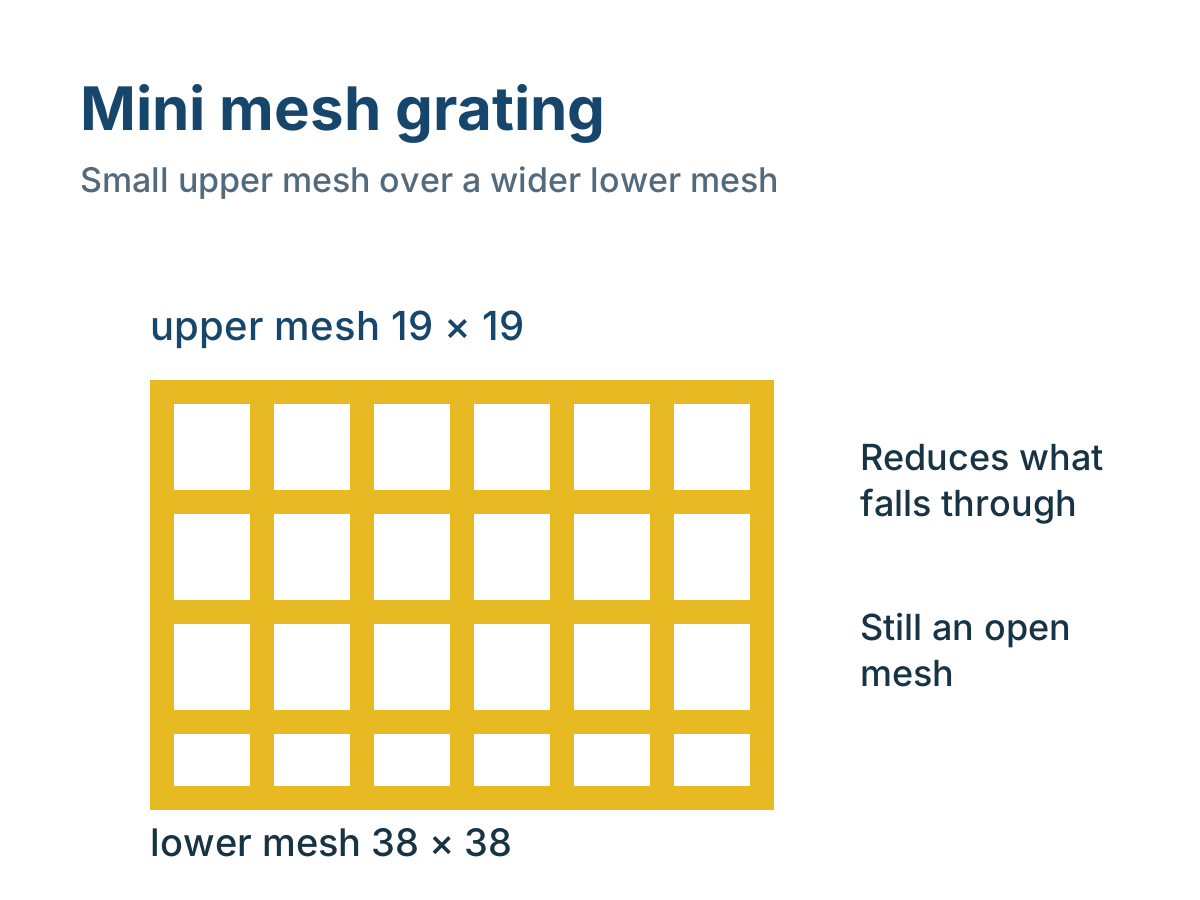
A small upper mesh over a wider lower mesh — most often 19 × 19 mm over 38 × 38 mm. It reduces what can fall through the walking surface while the panel stays an open mesh, not a solid cover.
Mesh terms
Mini Mesh Grating Terms and Measurements
Four definitions explain why a mesh name alone cannot answer a retention or drainage question.
- Nominal mesh size
- The size the product is described by — for example 19 × 19 mm. It is not automatically the net opening, which is the clear gap between two bar edges at the measuring plane.
- Net opening
- The clear distance between the edges of two adjacent bars. Whether an object passes through depends on this dimension, the object shape and its orientation, not on the nominal mesh name.
- Open area
- The proportion of the panel surface that is open. Drainage, airflow and cleaning all depend on it, together with how the area is maintained.
- Upper and lower mesh
- Two mesh layers with different spacings. The small upper layer reduces what falls through; the lower layer carries the structure and the wider opening.
Configuration table
Mini Mesh FRP Grating Sizes and Mass per Unit Area
Match the thickness and panel size first, then confirm both mesh layers for the order.
| Thickness | Upper mesh pitch | Panel sizes | Bar width | Mass per unit area |
|---|---|---|---|---|
| 14 mm | 20 × 20 mm | 1247 × 4007 mm | 7.0 mm | 9.5 kg/m² |
| 22 mm | 20 × 20 mm | 1007 × 4047 mm; 1247 × 4047 mm; 1527 × 4047 mm | 7.0 mm | 14.5 kg/m² |
| 25 mm | 19 × 19 mm | 1220 × 3660 mm | 6.5 mm | 15.5 kg/m² |
| 30 mm | 20 × 20 mm | 1007 × 4007 mm; 1247 × 4007 mm | 7.0 mm | 17.5 kg/m² |
| 30 mm small mesh | 11 × 11 mm | 1000 × 4000 mm | 8.0 mm | 21.5 kg/m² |
| 38 mm | 20 × 20 mm | 1007 × 4007 mm | 7.0 mm | 21.5 kg/m² |
| 38 mm | 19 × 19 mm | 1220 × 3660 mm | 6.5 mm | 22.5 kg/m² |
| 60 mm | 19 × 19 mm | 1220 × 3660 mm | 7.0 mm | 35.5 kg/m² |
Specification
Mini Mesh FRP Grating Specification Fields
The fields a mini mesh order is placed on.
Request a Project Quote| Specification | Value |
|---|---|
| Layers | Double layer, small upper mesh over wider lower mesh |
| Common combination | 19 × 19 mm upper, 38 × 38 mm lower Confirmed as the combination used most often; each order states both layers. |
| Upper mesh range | 11 × 11 to 20 × 20 mm |
| Thickness range | 14–60 mm |
| Mass per unit area | 9.5–35.5 kg/m² Higher than standard mesh at the same thickness because there is more material. |
| Panel sizes | 1000 × 4000 to 1527 × 4047 mm |
| Surface | Concave, grit and milled formats available The walking surface is selected separately from the mesh. |
| Fixings | M, L and C clips The jaw has to suit the small mesh, so the clip is checked against the actual bar width. |
Comparison
Mini Mesh Compared With Standard Mesh and Covered Grating
The three formats solve different problems; none of them is a general upgrade.
| Requirement | Standard mesh grating | Mini mesh grating | Covered or solid top |
|---|---|---|---|
| Drainage and airflow | Highest open area | Lower open area, still an open mesh | Drainage depends on the cover design |
| Small objects falling through | 38 mm or 40 mm openings | Small upper mesh reduces what passes | Nothing passes through the covered surface |
| Walking comfort | Open mesh, standard walking surface | Finer surface underfoot | Continuous surface, closes the panel |
| Mass per unit area | Lowest of the three | Higher than standard mesh at the same thickness | Highest once a cover layer is added |
| Load data | Per matching structure | Per matching structure | Per matching structure, including the cover |
Mesh options
Mini Mesh Grating Mesh Combinations
Three upper mesh sizes cover most inquiries we receive.
19 × 19 over 38 × 38 mm
The combination the factory uses most often. A practical starting point when the upper opening has to be smaller than a standard mesh.
11 × 11 mm upper mesh
The smallest upper mesh in the range, at 30 mm thickness. Heavier, and normally bought when the opening size is the deciding requirement.
20 × 20 mm upper mesh
Available from 14 mm to 38 mm thickness, including wide panel formats up to 1527 mm.
Selection path
How to Specify Mini Mesh FRP Grating
Work from what must not fall through, then confirm structure, surface and fixings.
The object, its size and its shape matter more than the mesh name — a 19 mm square opening passes different objects than a 19 mm round one.
Thickness and mass are matched to the support layout and to how the panel is fixed, not chosen from the upper mesh alone.
Concave, grit or milled top is selected against wet or oily conditions, cleaning method and what crosses the panel.
Clip jaws and heights are confirmed against the actual bar width of the mini mesh panel.
Request a quote
Send Your Mini Mesh Grating Requirement
State the upper mesh you are considering and what has to be retained.
- Molded and pultruded grating produced in house
- Full panels or factory cut-to-size pieces
- No fixed minimum order quantity
Mini Mesh Grating Questions
Is the nominal mesh size the net opening?
Does a smaller mesh mean higher load capacity?
Is mini mesh the same as Micro-Mesh?
Can mini mesh panels be cut to size?
Continue With Mini Mesh Grating
Product types and configurations
Compare molded, pultruded and mini mesh grating before choosing a type.
Grating selection guide
Work from the application and operating conditions to a candidate configuration.
Surfaces and treatments
Choose the walking surface and functional format separately from the mesh.
Clips and fixings
Clip families and how the jaw is matched to a small mesh panel.
Technical resources
Specification, load, material and installation material by task.
Covered fiberglass grating details
Base panel with a cover layer, and the point where a continuous surface changes drainage.
Fiberglass grating stair treads details
Load-bearing treads against tread covers, with nosing and side support confirmed from the stair drawing.
FRP grating types and configurations
Compare molded, pultruded and mini mesh grating before deciding which structure fits the support layout.
Pultruded FRP Grating
Pultruded FRP grating made from I and T bearing bars assembled with cross rods, for spans that run in one direction.
Why Mini Mesh Grating Exists
Standard grating openings are designed for drainage, access and load. They are also large enough for tools, bolts, packaging and personal items to fall through. Mini mesh grating keeps the open-mesh structure but adds a finer upper layer, so the surface that people and objects meet has a smaller opening while the lower layer keeps the panel’s spacing and structure.
That is a trade rather than an upgrade. A smaller upper mesh reduces open area, which affects drainage and airflow, adds mass per unit area at the same thickness, and makes cleaning partly different because debris is held closer to the surface. The decision usually comes down to one question: what has to stop at the surface, and does the area still drain and clean acceptably once the mesh is finer?
Matching the Mesh to the Object
A mesh dimension only answers a retention question when the object is considered too. A square opening of 19 mm passes a round object of up to 19 mm across and a flat object of up to roughly 27 mm if it turns diagonally. Orientation matters, so it is worth describing the object rather than the mesh: what it is, how big it is, and whether it is rigid, like a bolt, or flexible, like a cable tie.
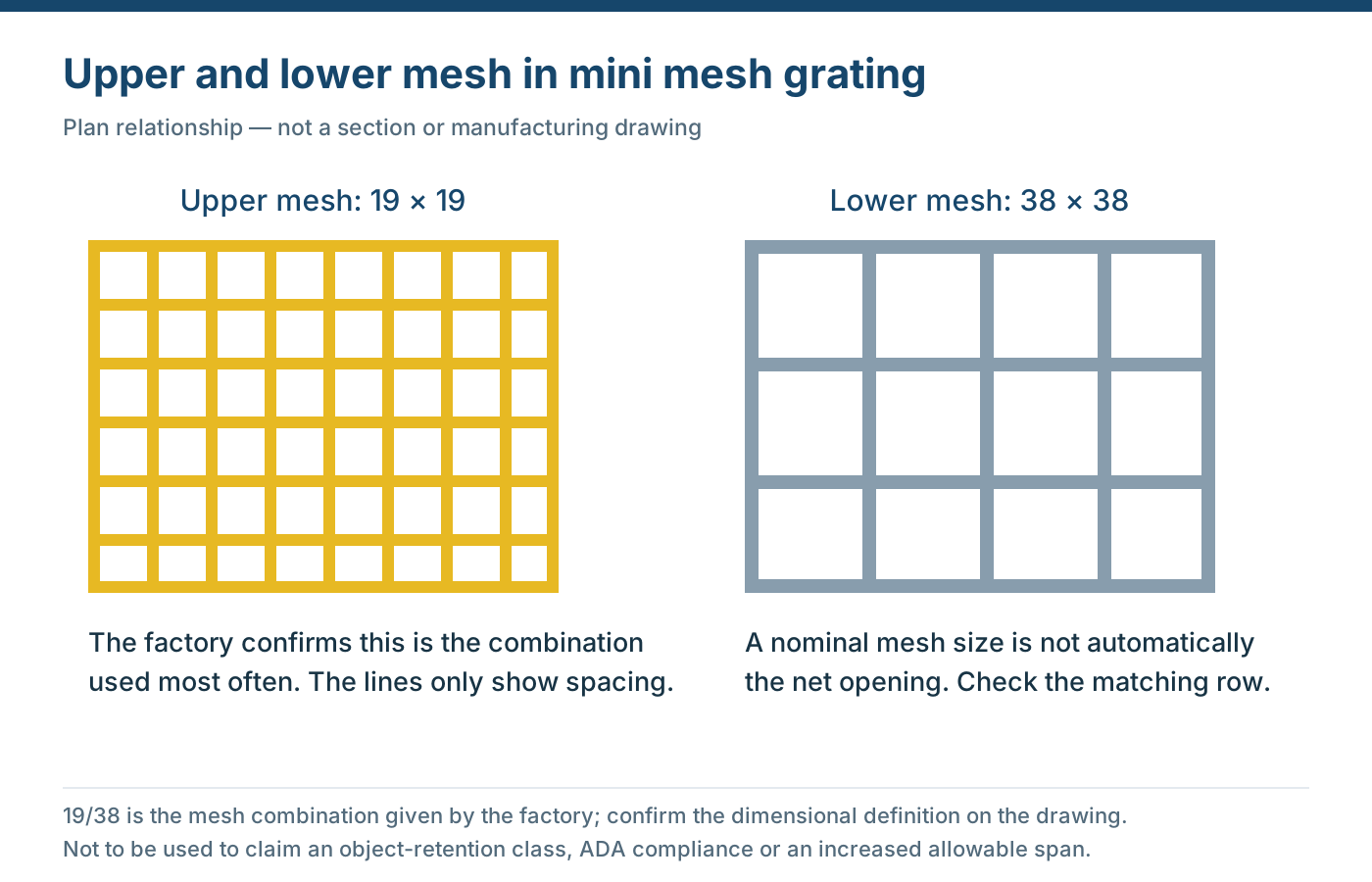
Where a project specifies a maximum opening, treat that as a dimension to verify on the drawing rather than as a product name. We confirm the upper and lower mesh for the order and state both on the quotation, because the same nominal description can cover different upper meshes across suppliers.
Structure, Surface and Fixings
Thickness and mass per unit area are decided by the support layout, exactly as they are for standard molded grating. The mini mesh table lists the adopted configuration rows, so the mass value belongs to the row it appears in — a 38 mm row at 22.5 kg/m² is not the mass of every 38 mm panel.
Surfaces matter more on mini mesh than on coarse mesh, because grit or a milled top changes how the finer surface behaves underfoot and how it cleans. Fixings deserve the same care: a clip jaw sized for a standard bar may not sit correctly on a small mesh panel, so the clip is checked against the actual bar width rather than the panel height alone.
Content last checked: