Specification
FRP Grating Weight and Panel Net Weight
Weight is used to estimate what the grating adds to its supports and what a piece weighs to lift. It comes from the matching structure row, and it never becomes a load rating.
Mass table
FRP Grating Weight by Structure Row
The mass figure belongs to the thickness, pitch and panel size printed with it.
| Thickness | Bar pitch (c/c) | Panel size example | Mass per unit area |
|---|---|---|---|
| 15 mm | 50 × 50 mm | 1220 × 3660 mm | 6.5 kg/m² |
| 25 mm | 38 × 38 mm | 1000 × 4000 mm | 12.5 kg/m² |
| 25 mm | 40 × 40 mm | 1007 × 4007 mm | 12.5 kg/m² |
| 25 mm mini mesh | 19 × 19 mm | 1220 × 3660 mm | 15.5 kg/m² |
| 30 mm | 38 × 38 mm | 1000 × 4000 mm | 16.5 kg/m² |
| 38 mm | 38 × 38 mm | 1220 × 3660 mm | 19.5 kg/m² |
| 38 mm mini mesh | 19 × 19 mm | 1220 × 3660 mm | 22.5 kg/m² |
| 50 mm | 50 × 50 mm | 1220 × 3660 mm | 21.5 kg/m² |
| 50 mm heavy duty | 25 × 50 mm | 1220 × 3660 mm | 45.0 kg/m² |
| 63 mm | 38 × 38 mm | 1530 × 4000 mm | 52.5 kg/m² |
Definitions
Four Weight Figures Used in FRP Grating Orders
Mass per unit area, panel net weight, gross package weight and self weight load.
- Mass per unit area
- Net product mass divided by the panel's projected area, in kg/m². It describes the configuration and is used to estimate the load the grating adds to its supports.
- Panel net weight
- The mass of one panel or cut piece at the ordered size, resin and surface, in kg per piece. Used for handling, lifting and packing decisions.
- Gross package weight
- The mass of the packed consignment including pallet, wrapping and accessories. It is what freight is calculated on, and it is not equivalent to the panel mass.
- Self weight load
- The panel mass expressed as a load on the structure, roughly kg/m² × 9.81 ÷ 1000 in kN/m². It is a permanent load, not an allowable load for the grating.
Conversions
FRP Grating Weight and Load Unit Conversions
Four conversions, and the difference between a mass and a pressure unit.
| Unit | Converts to | Where it is used |
|---|---|---|
| 1 kg/m² | About 0.2048 lb/ft² | Panel mass per unit area, and the basis for a panel weight estimate |
| 1 lb/ft² | 4.882428 kg/m² | Mass per unit area quoted in imperial catalogs |
| 1 lbf/ft² | 0.04788026 kPa | A pressure figure, used in load tables rather than for panel mass |
| 1 kPa | About 20.9 lbf/ft² | A load figure; 1 kPa equals 1 kN/m² |
Project inputs
What to Send With a FRP Grating Weight Question
Five items that turn an estimate into something usable.
- Structure row — Thickness and pitch or bar section, so the mass figure belongs to the right configuration.
- Panel or cut sizes — Each size with its quantity, so net weight can be estimated per piece.
- Resin and surface — Grit, inlaid grit or a covering layer all add mass compared with a bare concave panel.
- Handling limit — The maximum weight one person or a lifting point should take, which decides the piece sizes.
- Packing requirement — Pallet or crate arrangement and piece count per pack, so gross weight can be confirmed when it is recorded.
Boundaries
Three Boundaries on FRP Grating Weight
What the figures cannot be used for.
- Weight cannot be converted into capacity — A heavier panel is not stronger by definition. Mass increases with bar depth and density, but it also increases with a grit surface or a cover layer that adds no structural depth at all.
- Mass figures are per configuration, not universal — The figures here come from adopted structure rows. A different resin, a surface layer, a covering panel or a different bar pattern changes the mass, and the change is stated for the configuration being supplied.
- Gross weight is recorded, not assumed — Package weights depend on pallet construction, packing and piece count. They are confirmed per order when they are weighed, rather than published as a fixed figure.
Request a quote
Send Your Handling and Packing Limits
Handling limits often decide the piece sizes, so they are worth stating early.
- Molded and pultruded grating produced in house
- Full panels or factory cut-to-size pieces
- No fixed minimum order quantity
FRP Grating Weight Questions
How much does FRP grating weigh per square meter?
How do I estimate the weight of one panel?
Is the weight the same as the load the grating can carry?
What is the difference between kg/m² and psf in a catalog?
Continue With Weight
FRP grating sizes and mesh
Thickness, pitch, panel sizes and the mesh definitions behind the rows.
Load and span guidance
What load data covers, and the adopted data for two structures.
Product types and configurations
The structures the mass figures belong to.
Pultruded FRP grating
Bearing bar sections and how pultruded mass is stated.
Technical resources
The technical material behind this specification page.
FRP Grating Selection Guide
A decision path from application and operating conditions to a candidate FRP grating configuration, with the values that still have to be confirmed.
What Weight Is Used For
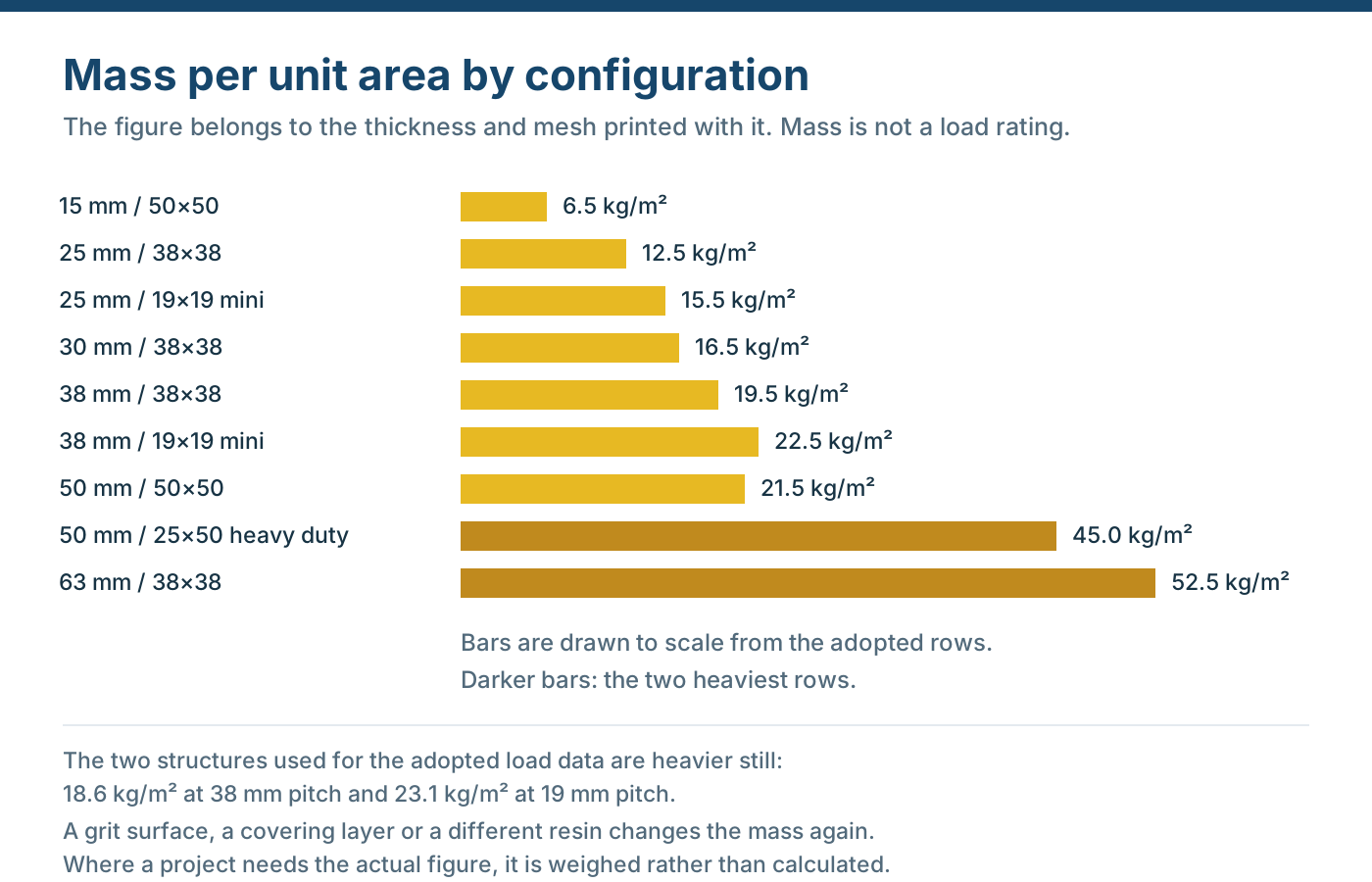
Mass per unit area does two useful jobs. It tells the structural engineer what the grating adds to the frame as a permanent load, and it lets a buyer estimate the weight of a panel or cut piece before handling and packing are planned. Both uses are about the panel as a load on something else.
The third use, judging quality or capacity by how heavy the panel feels, does not work. A heavier panel may carry the same load as a lighter one if the added mass comes from a surface layer, and two panels of the same mass can behave differently if the bar geometry differs. Mass describes a configuration, not a performance.
Estimating Panel and Piece Weight
The estimate is straightforward: mass per unit area multiplied by the panel area. A 1220 × 3660 mm panel is 4.4652 m², so at 12.5 kg/m² it weighs about 55.8 kg, and at 19.5 kg/m² about 87 kg. That is enough to plan a two-person lift or a small crane, and enough to decide whether a large cover panel should be supplied as two pieces instead.
Cut pieces behave the same way, summed over the pieces. Two cautions apply. First, a grit or covered surface adds mass without adding depth, so the figure for a surfaced panel is higher than the bare row. Second, the estimate is not a weighing record: where a project needs the actual net weight — for a lifting plan, for example — it is confirmed against the delivered pieces rather than calculated.
Gross Weight and Freight
Freight is calculated on gross weight: panels, pallets, wrapping and any accessories. Wooden pallets with iron supports are used on export orders, and the pallet itself is part of the consignment. Because packing arrangement and piece count vary with the order, the gross weight is recorded per consignment rather than published as a fixed number per square meter.
For planning purposes, the panel mass gives a lower bound on the consignment weight and the pallet adds the rest. A project that is tight on lifting capacity or container load should say so at inquiry stage, because both the piece sizes and the packing plan can be adjusted before production rather than after.
Content last checked: