Specification
FRP Grating Sizes, Thickness and Mesh Definitions
Panel sizes only mean something when they are bound to a thickness and a mesh. This page lists the molded rows we work from, explains why pitch and net opening are different fields, and converts the common imperial sizes.

Reference sample only; use the product drawing for actual pitch and net opening.
Panel table
Molded FRP Grating Sizes and Mesh Rows
Thickness, pitch, panel size and mass per unit area in one row — the row is the configuration.
| Thickness | Bar pitch (c/c) | Panel sizes | Mass per unit area |
|---|---|---|---|
| 13 mm | 38 × 38 mm | 1220 × 3660 mm | 8.0 kg/m² |
| 15 mm | 50 × 50 mm | 1220 × 3660 mm | 6.5 kg/m² |
| 25 mm | 38 × 38 mm | 1000 × 4000 mm; 1220 × 3660 mm | 12.5 kg/m² |
| 25 mm | 40 × 40 mm | 1007 × 4007 mm | 12.5 kg/m² |
| 30 mm | 38 × 38 mm | 1000 × 4000 mm; 1220 × 3660 mm | 16.5 kg/m² |
| 38 mm | 38 × 38 mm | 915 × 3050 mm; 1220 × 3660 mm; 1000 × 4000 mm | 19.5 kg/m² |
| 40 mm | 40 × 40 mm | 1007 × 4007 mm | 19.5 — unit to be confirmed |
| 50 mm | 50 × 50 mm | 1220 × 3660 mm; 1220 × 4000 mm | 21.5 kg/m² |
| 63 mm | 38 × 38 mm | 1530 × 4000 mm | 52.5 kg/m² |
Definitions
Sizes, Pitch, Net Opening and Nominal Dimensions
Four terms that cause most sizing mistakes.
- Pitch
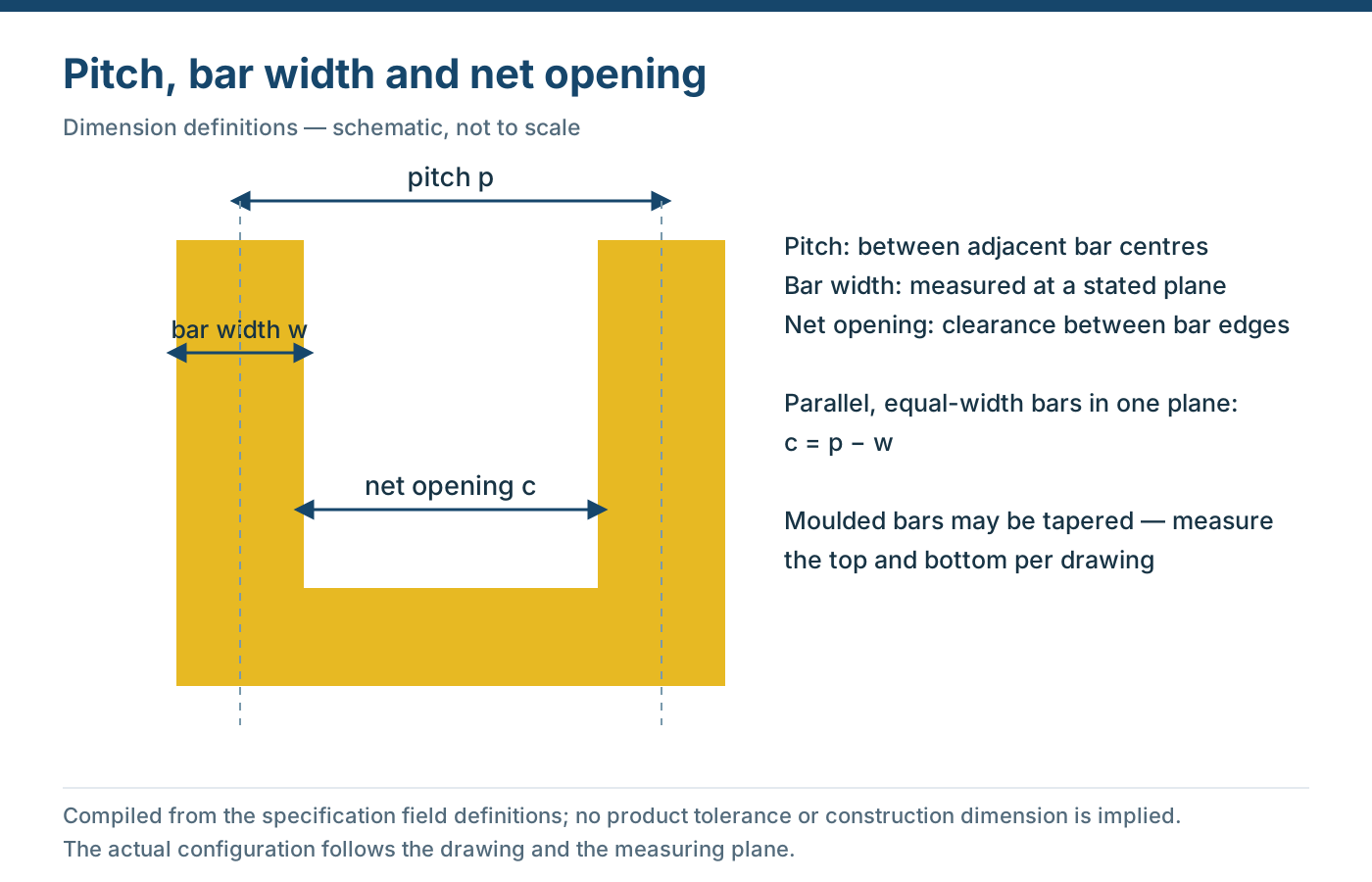
- The distance from the center of one bar to the center of the next. This is the figure used in most specification tables.
- Net opening
- The clear gap between the edges of two adjacent bars, measured at a stated plane. It is always smaller than the pitch.
- Open area
- The proportion of the panel surface that is open, calculated from the geometry. Useful for drainage and airflow discussions, not for deciding what falls through.
- Nominal size
- The size a product is called by, such as 4 × 8 ft. It is a description, not a manufactured dimension, and it is not a tolerance.
Conversions
Imperial to Metric FRP Grating Sizes
Exact conversions, with the point to watch in each row.
| Imperial size or unit | Exact metric conversion | What to watch |
|---|---|---|
| 4 × 8 ft panel | 1219.2 × 2438.4 mm, area 2.9729 m² | A 1220 × 2440 mm panel is close but not identical, so confirm which one the project requires |
| 4 × 12 ft panel | 1219.2 × 3657.6 mm | 1220 × 3660 mm is not exactly the same dimension |
| 1 inch | 25.4 mm | State whether the dimension is thickness, pitch or net opening |
| 1.5 inch | 38.1 mm | Often written as 38 mm in metric catalogs; the two are not identical |
| 2 inch | 50.8 mm | Commonly written as 50 mm |
| 1 ft² | 0.09290304 m² | Used when converting an area rate from square feet to square meters |
| 1 lb/ft² | 4.882428 kg/m² | A mass per unit area unit, not a load |
| 1 lbf/ft² | 0.04788026 kPa | A pressure unit; do not confuse it with the mass figure above |
Project inputs
What to State When Ordering FRP Grating Sizes
Six items, and the first two are the ones inquiries most often omit.
- Thickness and mesh — Both, stated together, because a panel size alone does not identify a product.
- Panel or cut sizes — Length × width and quantity, with the unit, and whether sizes are nominal or required dimensions.
- Mesh definition — Whether the figure you have is pitch, net opening or open area, and at which plane it is measured.
- Layer structure — For mini mesh, both the upper and lower mesh, since the two are different fields.
- Tolerances — Any dimensional tolerance the project requires, so it can be confirmed against the drawing.
- Edge and opening details — Trimmed edges, openings and their positions, which change the delivered piece even when the outline is the same.
Boundaries
Three Boundaries on FRP Grating Sizes
What a size does not tell you, and where tolerances come from.
- A panel size does not identify a product — 1220 × 3660 mm can be supplied in several thicknesses and meshes with different mass and different load behavior. Sizes are quoted together with the structure they belong to.
- Imperial conversions are not manufactured sizes — The conversion of 4 × 8 ft is 1219.2 × 2438.4 mm. Whether the project accepts a nominal 1220 × 2440 mm panel or requires the exact figure is a project decision, and it is confirmed before cutting.
- Tolerances come from the drawing — Nominal dimensions are not tolerances. Where the project sets a tolerance on length, width, thickness or opening size, it is stated on the inquiry so it can be confirmed against the order drawing.
Request a quote
Send Your Sizes, Units and Mesh
State the unit and whether the dimension is nominal or required.
- Molded and pultruded grating produced in house
- Full panels or factory cut-to-size pieces
- No fixed minimum order quantity
FRP Grating Size Questions
Is 1220 × 2440 mm the same as 4 × 8 ft?
What is the difference between mesh size and net opening?
Which thicknesses do you supply?
Can I order a panel size that is not in the table?
Continue With Sizes and Mesh
FRP grating weight
How mass per unit area is used to estimate panel weight.
Product types and configurations
Molded, pultruded and mini mesh grating with the fields each type needs.
Mini mesh grating
Small upper mesh over a wider lower mesh, with sizes and mass per unit area.
Load and span guidance
Why the mass figure is not a load rating.
Technical resources
The technical material behind this specification page.
FRP Grating Selection Guide
A decision path from application and operating conditions to a candidate FRP grating configuration, with the values that still have to be confirmed.
Why Sizes Are Quoted With the Structure
A grating inquiry that says “1220 × 3660, ten panels” identifies a panel outline and nothing else. The same outline can be a 25 mm panel at 12.5 kg/m², a 38 mm panel at 19.5 kg/m² or a mini mesh panel at 22.5 kg/m², and those three are different products with different support requirements and different behavior over a span. That is why every row in the table on this page states thickness, pitch, panel size and mass together.
The same discipline applies to cut-to-size work. A cut list full of sizes without thickness and mesh cannot be quoted properly, because the nesting and the pricing depend on which panel the pieces come from. Sending the configuration first and the sizes second is the fastest route to a usable quotation.
Pitch, Net Opening and Open Area
These three fields are used almost interchangeably in conversation and mean different things. Pitch is measured center to center and is what catalog tables usually list. Net opening is the clear gap between bar edges at a defined measuring plane, and it is what decides whether a particular object passes through. Open area is a proportion of the surface, used for drainage and airflow discussions.
For molded grating the bars may be tapered, so the net opening measured at the top face differs from the opening at the bottom. When a project specifies a maximum opening, it should also state the plane at which it is measured, otherwise the check is ambiguous from the start.
Nominal, Actual and Toleranced Dimensions
Most industry sizes are nominal: 4 × 8 ft, 1220 × 2440 mm, 38 mm mesh. Nominal sizes exist so that products can be discussed quickly, and they are not manufacturing promises. The actual delivered dimension sits inside a tolerance, and the tolerance is stated on the order drawing for the configuration being supplied.
That is why a project with a tight interface — a frame opening that the panel must drop into, or a walkway that has to meet an existing edge exactly — should send the required dimension and its tolerance rather than a nominal size. It costs one line on the inquiry and prevents the panel being cut to a dimension that fits the catalog but not the structure.
Content last checked: