Export
FRP Grating HS Code and Classification Information
We do not publish a single HS code for FRP grating, because a code belongs to specific goods and a specific transaction. What we do is provide the product facts, structure, use and shipment details that a classification decision needs.
Information
What Customs Classification Needs From a Grating Supplier
Five items we can supply, and the record that keeps them usable.
| Information needed | How we record it | Why it matters |
|---|---|---|
| Goods description | Molded panel, pultruded assembly, covered or solid-top item, or a system supplied with frames and accessories | Different structures and systems are different goods for classification purposes |
| Material and manufacturing | Resin and reinforcement used, and how the product is made — molded or pultruded | Material composition and process are part of how goods are described |
| Use and dimensions | Intended application, panel sizes, drawings or photographs, and whether it ships with supports or fixings | Use and the delivered configuration can affect the classification |
| Transaction and countries | Country of origin, exporting and importing country, the importer, and the port where known | Classification and duties are applied per importing jurisdiction |
| Confirmation record | The tariff version used, who confirmed the code, the date, and the product scope it covers | A code without a record of who confirmed it and for which goods cannot be reused safely |
Process
How FRP Grating Classification Information Is Prepared
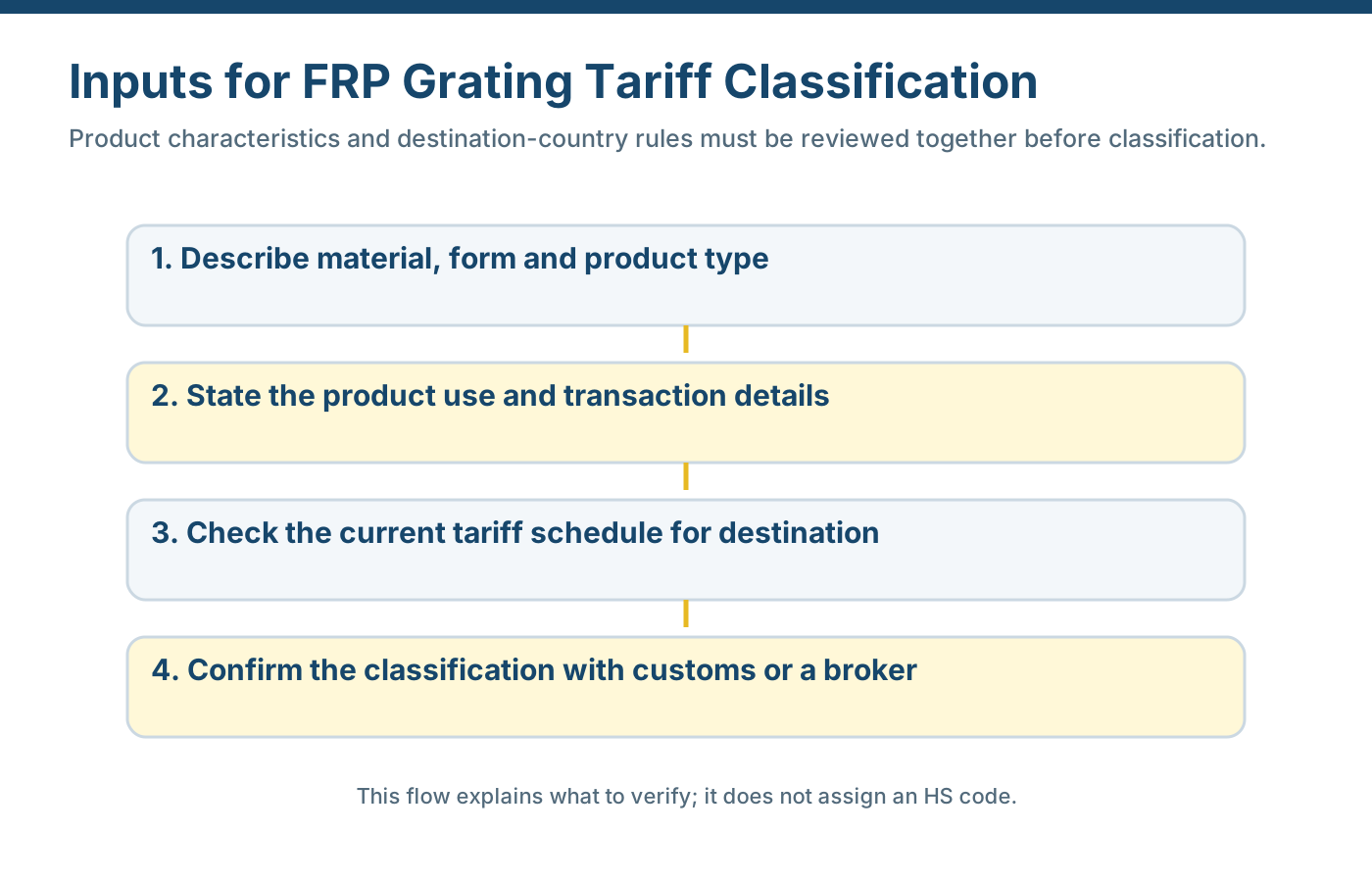
Five steps, ending with the party who is responsible for the code.
State what physically ships — panels, cut pieces, assemblies with accessories — rather than the general product family.
Material, manufacturing method, dimensions, drawings or photographs, and the intended use.
Origin, destination, importer and mode of shipment, so the classification is made for this movement rather than in the abstract.
The importer or their customs broker confirms the applicable code in the importing country, or a written ruling is requested where that route exists.
The confirmed code, its scope and the date stay with the order documents, so a later shipment can be compared rather than assumed identical.
Boundaries
Three Boundaries on HS Codes for FRP Grating
Written down because each one appears in real inquiries.
- A code found online is not a classification — Search results for FRP grating codes mix steel grating, glass fiber products and other composites. Those are different goods, and copying a number from a search result is how shipments end up misdeclared.
- The same product can be classified differently in different markets — Tariff schedules, national notes and duty rates differ between importing countries. A code confirmed for one destination is not evidence for another.
- We do not provide a ruling, and we say so — Classification responsibility sits with the importer or their broker, or with a customs authority ruling where the process exists. We supply accurate product information to support that work rather than a code of our own.
Project inputs
What to Send With a Classification Information Request
Six items, and the first one is the destination.
- Importing country — Where the goods are being imported, since the tariff schedule applied depends on it.
- Goods and configuration — Panels, cut pieces, covered items or an assembly, with the delivered structure described.
- Material and process — Resin and reinforcement type, and whether the product is molded or pultruded.
- Dimensions and use — Panel sizes, intended application, and drawings or photographs where they help.
- Supporting items — Whether frames, clips or accessories ship with the grating, and how they are packed.
- Confirmation route — Who will confirm the classification, and whether a written ruling is required before shipment.
Request information
Request the Product Information for Classification
Tell us the configuration and the importing country.
- Molded and pultruded grating produced in house
- Full panels or factory cut-to-size pieces
- No fixed minimum order quantity
FRP Grating Classification Questions
What is the HS code for FRP grating?
Can you give me a code if I only need it for a quote?
Is the code the same as steel grating?
Does your FOB quotation include import duties?
Continue With Export Documentation
Pricing and quote guide
Trade terms, payment and production arrangements.
Quality and documentation
What the factory issues with an order.
Product types and configurations
The configurations that a goods description has to reflect.
About Dengtai Industry
Factory facts, including where production is located.
Request a quote
Send a requirement with the destination and configuration.
Molded vs Pultruded FRP Grating
Molded and pultruded FRP grating compared by structure, load direction, spans, openings, resin and cost scope — without declaring one universally better.
FRP Grating vs Steel Grating
FRP and steel grating compared on the same duty — corrosion, spans, weight, static and fire requirements, fabrication and total cost.
Why We Do Not Publish a Code
Searching for an FRP grating HS code returns a mixture of results: codes for steel grating, codes for glass fiber products in other forms, and commentary that assumes the products are interchangeable. They are not. A molded composite panel, a pultruded bar assembly, a covered item and a walkway supplied with frames and clips are different goods, and the classification has to be made for the goods that actually ship, into the country that actually receives them.
Where a code is confirmed, it belongs to a scope of goods and a transaction. Reusing it later assumes nothing has changed — the construction, the accessories, the importing country or the tariff schedule. Those assumptions are exactly what a customs audit examines, so the record matters as much as the number.
What We Can Do Instead
We can describe the product accurately and consistently: structure, material, manufacturing method, dimensions, the intended application, and what is in the box. We can say whether the consignment is bare panels, cut pieces, an assembly with clips, or a system with frames. We can supply drawings and photographs where they help identify the goods.
That package is what an importer, a customs broker or a ruling request needs. Advisory routes for written rulings exist in some jurisdictions — the United States, for example, publishes guidance on classification requests through its customs authority — and where a project requires that route, the information we provide feeds the application. What we do not do is issue the code, because we are not the responsible party, and a supplier code presented as an official classification creates exactly the problem it appears to solve.
Documentation With the Shipment
Whatever is confirmed should travel with the order: the code, the description it applies to, the tariff version used, who confirmed it and when. On repeat orders that record allows a quick comparison rather than a fresh guess, and where something has changed — a different packing arrangement, an added accessory, a new destination — the change is visible and can be re-checked.
For the commercial side, the quotation sets out the trade term, which defines where our responsibility for the goods ends. Import duties, destination charges and clearance are handled by the importer under the applicable rules, and the quotation states the term rather than implying a delivered duty-paid price.
Content last checked: