Cross-product delivery release
FRP Grating Receiving Inspection: From Package ID to Release
Receiving inspection starts before the pieces leave the packaging. Preserve package identity and transport evidence, then trace each piece mark, drawing revision, physical item, fixing set and document to one accept, hold or report decision.
Prepared by
Dengtai Industry
Published
·
Reviewed

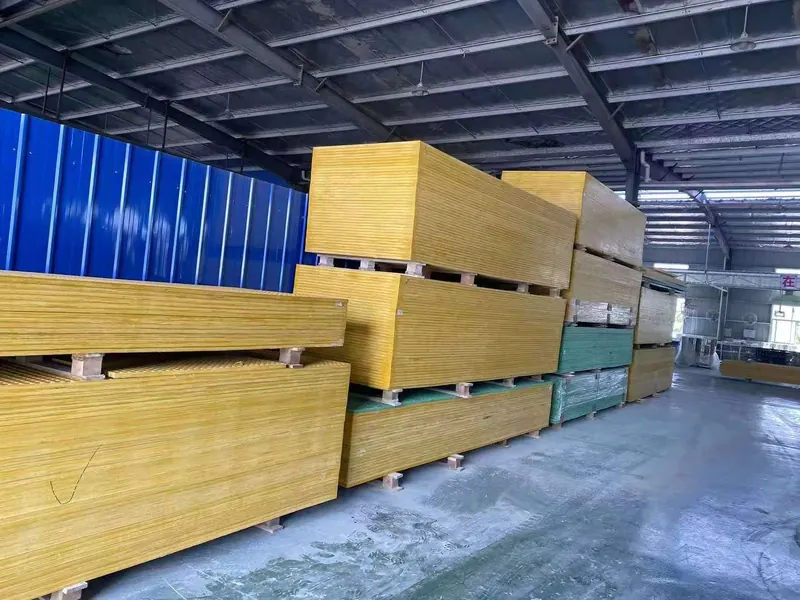
The receiving decision begins with the package and its marks, not with an individual panel after it has been moved. Photo: Dengtai Industry.
Receiving vocabulary
Ten Terms That Keep an FRP Grating Delivery Auditable
Package, piece, revision, observation, evidence and disposition each answer a different question.
- Receiving inspection
- The controlled checks made when a delivery arrives and before it is accepted into storage, construction or installation. It compares the delivered object and package with the order.
- Package ID
- The unique identifier on a pallet, bundle or crate. It connects the physical package to the packing list, piece schedule, shipment and any photographs or receiving record.
- Piece mark
- The identifier on or assigned to a physical grating piece. It should connect the piece to its approved drawing, installed location, quantity, fabrication details and packing entry.
- Drawing revision
- The controlled issue of the drawing against which a piece was reviewed and fabricated. A size can look correct while belonging to a superseded or different revision.
- Physical identity
- The demonstrated connection between the delivered item and the order through mark, configuration, dimensions, orientation and packing. A familiar appearance is not enough.
- Measured value
- The actual reading taken with a stated instrument and measuring plane. It is separate from the nominal product label and should be recorded with its location where the check requires it.
- Accessory set
- Clips, bolts, washers, anchors, edge trims or other separately supplied items grouped by type and quantity. The set may need to remain connected to the piece or installation area it serves.
- Evidence scope
- The product, batch, specimen, test condition and issuer that a document actually addresses. A missing or wider claim should not be inferred from the document title.
- Hold
- A controlled status for material whose identity, condition, quantity or evidence is unresolved. Held material is isolated and preserved while the issue is reviewed.
- Disposition
- The recorded outcome of the receiving check: accept, hold, reject or report under the agreed route. It identifies affected quantity and the next responsible action.
Receiving checks
What an FRP Grating Receiving Inspection Should Observe and Record
Every observation needs an identity, a comparison basis and a record that can support release.
| Receiving question | Observation to make | Record to keep |
|---|---|---|
| Did the expected package arrive? | Package label, piece of shipment, wrapping, straps, pallet and external marks | Package ID, photograph, carrier reference and visible condition |
| Is the package intact? | Crushing, punctures, shifted pieces, broken supports or loose straps | Location and extent, noted before unpacking changes the evidence |
| Can it be unloaded safely? | Package mass, lifting points, forklift or crane access, slings, spreaders and surface protection | The agreed lifting method and any stop condition |
| How will accepted material be stored? | Support, stack height, ground contact, ventilation, sunlight and separation from held material | Storage location and handling condition |
| Does the piece belong to the order? | PO, packing list, piece mark, drawing revision and installed location | The identifiers actually compared and any mismatch |
| Is the full product row present? | Construction, depth, mesh or bar row, resin basis, surface and colour reference | Confirmed fields or the exact field that cannot be verified |
| Is the quantity complete? | Packages, bundles, full panels, finished pieces and accessories | Expected and received quantities by package and item |
| Does the physical geometry agree? | Panel or finished dimensions, openings, orientation, edges and marks | Actual measurements and the agreed drawing basis |
| Is the condition acceptable? | Cracks, chips, voids, delamination, exposed fibre, contamination and surface damage | Location, observable extent and photograph |
| Are the documents complete? | Packing list, inspection record, conformity certificate, test report and traceability | Received, missing, illegible or scope mismatch |
Product families
How General FRP Grating Receiving Checks Connect to Product-Specific Checks
Use one traceability method, then apply the additional fields for the delivered family.
| Product family | Additional receiving checks | Specific guide |
|---|---|---|
| Molded grating | Panel size, depth, mesh pattern, surface, colour and cut-edge condition | Use the molded receiving checklist for the family-specific detail |
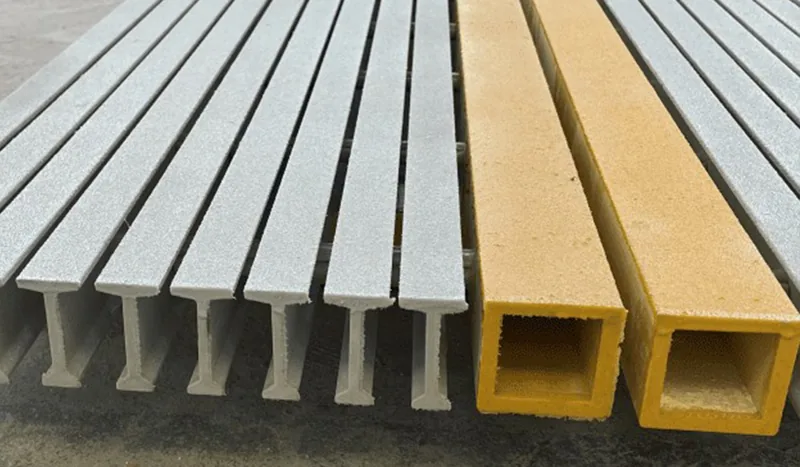
| Pultruded grating | Full I/T/WT row, bearing direction, cross rods, bar ends and bundle support | Use the pultruded receiving guide for profile and rod checks |
| Mini-mesh grating | Both mesh grids, total depth, net opening, surface and finished openings | Confirm both grids; one top measurement does not define the product |
| Covered grating | Base, cover or plate, interface, total height, joints, edges and fixing | Check the delivered item as a complete assembly, not a loose cover plate |
| Factory-cut pieces | Piece mark, drawing revision, datum, orientation, opening, edge treatment and count | Match the physical piece to the approved finished-piece schedule |
| Stair treads and covers | Tread or cover class, width, depth, nosing, support, fixing and piece identity | Do not use a platform-panel record as a stair-product receiving record |
| Clips and hardware | Type, material, bolt, washer, anchor, quantity and assigned locations | Keep accessory packages identified when several fixing types are present |
| Documents only | Document title, issuer, applicable item, batch or specimen, result and scope | Check that the document supports the actual delivery rather than the whole catalogue |
Traceability chain
The FRP Grating Package-to-Piece Receiving Record
Nine linked fields connect the delivery and its evidence to one controlled disposition.
| Traceability field | Compare against | Keep on the receiving record | Why it controls release |
|---|---|---|---|
| Package ID | Packing list and shipment package count | Package label and photograph | Connects the record to the physical delivery unit |
| Unloading method | Packing plan and agreed handling equipment | Lifting points, protection and responsible receiver | Prevents new damage while proving the delivered condition |
| Piece mark | PO, drawing, cut list, packing list and replacement history | Mark read from the item and its package | Prevents similar pieces from being mixed during storage or installation |
| Drawing revision | Released fabrication revision | Revision and approval status | Confirms that dimensions and openings follow the controlled design |
| Product configuration | Quotation and order row | Observed or measured configuration | Prevents a correct-looking piece of the wrong construction from being accepted |
| Quantity | Ordered quantity and packing schedule | Count by package, item and accessory | Makes shortage, excess and mixed packing visible |
| Condition | Agreed acceptance criteria and condition at dispatch | Observation, location and photograph | Separates manufacture, packing and transport concerns |
| Accessory match | Fixing schedule and item allocation | Type, material and count actually received | Prevents a complete grating delivery from stopping at installation |
| Document scope | Required document schedule and applicable order identity | Received status and scope match | Prevents a generic document from closing an order-specific question |
| Storage condition | Agreed support, environment and segregation rule | Location, support and status | Prevents accepted material from being damaged or mixed before installation |
| Decision owner | Project acceptance roles | Name or role, decision date and next action | Makes accept, hold or report an auditable action |
Planning gates
When an FRP Grating Delivery Is Ready for Controlled Receiving
These conditions should be agreed before packing and shipment, not improvised after arrival.
Specify this if…
- The supplier has agreed how packages, pieces and revisions will be identified.
- The packing list can be matched to the PO and finished-piece schedule.
- The receiving team knows which measurements and records are required.
- Accessories will carry a package or item identity.
- The document schedule states issuer and issue stage.
- An issue route exists for shortage, damage or scope mismatch.
Look elsewhere if…
- The delivery is accepted from the invoice alone.
- Pieces are unpacked and mixed into stock before labels and damage are recorded.
- The receiver measures only the outside of a package.
- “Certificate included” is accepted without checking document scope.
- Accessory allowances are counted after installation begins.
- A held piece is released because the installation schedule is urgent.
Receiving examples
How Missing Traceability Links Change the FRP Grating Release Decision
These examples show record logic, not acceptance tolerances or project approvals.
| Receiving example | What is known | Missing link | Required action |
|---|---|---|---|
| Bundle P-03 | Label shows PO and item group | No piece-level schedule is attached | Hold opening of the bundle until marks and quantities are reconciled |
| Piece M-12 | Mark matches packing list | Drawing revision has not been recorded | Compare the revision before dimensional acceptance |
| Cut opening F-06 | Shape visually matches the site location | The approved datum and orientation are absent | Measure against the controlled drawing rather than fitting the piece by eye |
| Clips A-02 | One separate carton is present | Count and type are not yet compared | Reconcile family, material and quantity with the fixing schedule |
| Report D-03 | A test report was supplied | Report specimen and stated scope are not identified in the receiving record | Mark evidence as pending scope review rather than “complete” |
| Damaged package P-07 | Crushed corner and loose strap are visible | Inner pieces have not been inspected | Photograph before unpacking, isolate affected pieces and use the agreed report route |
Start With the Delivery as It Arrived
Receiving inspection begins with the package, not with a panel lying alone on the floor. The outer package, straps, supports and labels carry evidence about how the consignment traveled and how it was identified. Once those items are removed or separated, it becomes harder to show whether a crack, chip or shifted piece existed before arrival.
The receiver should photograph the vehicle, package positions and labels if the process allows. At minimum, record the package ID and visible condition before opening. If damage is visible, preserve that state and follow the agreed carrier or project route.
This first step is not a check that the product is correct. It is evidence preservation. The product identity review follows.

Match the Package to the Order Before Unpacking
The packing list should identify the packages and the items they contain. A package label should allow the receiver to connect the physical unit to that list. If the consignment has several bundles, mixed products or separate accessory cartons, the receiver should establish the count before pieces spread through the site.
Use the PO, supplier order reference, package ID and packing-list revision as the initial identity set. If one of those references is missing, record the gap. A label with only a product name is weak because several items in the same shipment may share that name while carrying different sizes, marks or configurations.
The inspection should not assume that a package with the correct number of panels contains the correct panel configuration. Quantity and technical identity are separate checks.
Trace Each Piece Mark to a Controlled Drawing
A finished-piece mark should resolve to more than a drawing file name. The receiving record needs the item description, revision, dimensions, quantity and intended location or installation area. For shaped pieces, the same mark should make it possible to identify the top face, bearing direction or opening orientation.
If the piece mark is missing, illegible or not present on the packing list, place the affected item under a controlled hold before installation. Do not try to infer the drawing by fitting the piece into the first available opening.
The factory-cut versus site-cut guide explains why the source panel and the finished piece need distinct records. This page applies that principle at arrival: the physical piece must return to the correct item and revision.
Count the Units the Order Actually Uses
A delivery can contain full panels, finished pieces, bundles, accessory sets and documents. One number cannot represent all of them. Count each unit separately.
For a molded delivery, count the panels or pieces by item mark. For pultruded products, count the finished pieces and check that the bundle identity persists. For accessories, count the packaged set against the fixing schedule. If the packing list uses area, retain the area field but still count the delivered objects where piece identity matters.
The weight guide is a useful reminder that panel mass, piece weight and gross package weight are different quantities. Receiving should not reconstruct a piece count from the gross package weight.
Confirm the Full Product Row
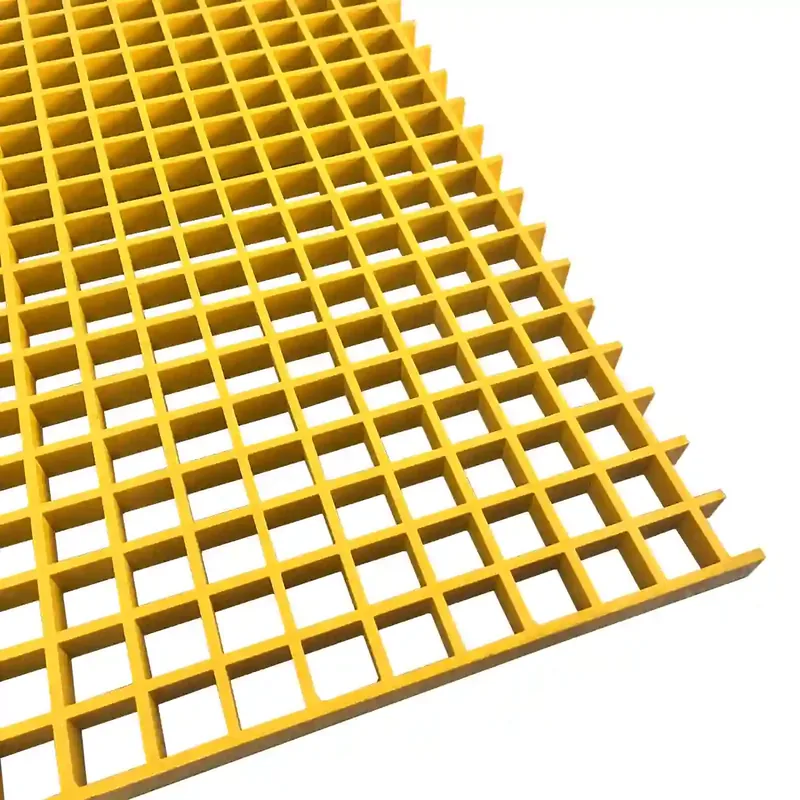
The receiver should compare the delivered construction with the order. Depth alone is insufficient for molded grating because mesh, panel size, resin basis, surface and color also belong to the row. For pultruded grating, the I, T or WT profile, pitch, bar direction and cross-rod arrangement belong to the product identity. A mini-mesh item needs both grids. A covered item needs the complete base-and-cover arrangement.
Some fields can be observed directly, while others may depend on the supplied datasheet, order drawing or batch record. The receiving record should therefore separate:
- fields observed on the physical item;
- fields measured with an instrument;
- fields checked against the order; and
- fields still supported only by documentation.
This distinction keeps a visual check from being written as a performance approval.
Use the Product-Specific Checks Where They Add Evidence
The cross-product method keeps identity and record control consistent. It does not replace the additional checks that a family needs.
Molded grating inspection should look at the full grid, surface, panel dimensions, cuts, edge sealing and piece marks. The molded receiving checklist sets out that family detail.
Pultruded grating inspection should look at the profile row, bearing bars, cross rods, long-piece support and cut ends. The pultruded receiving guide carries those checks.
Keep Accessories Connected to Their Items
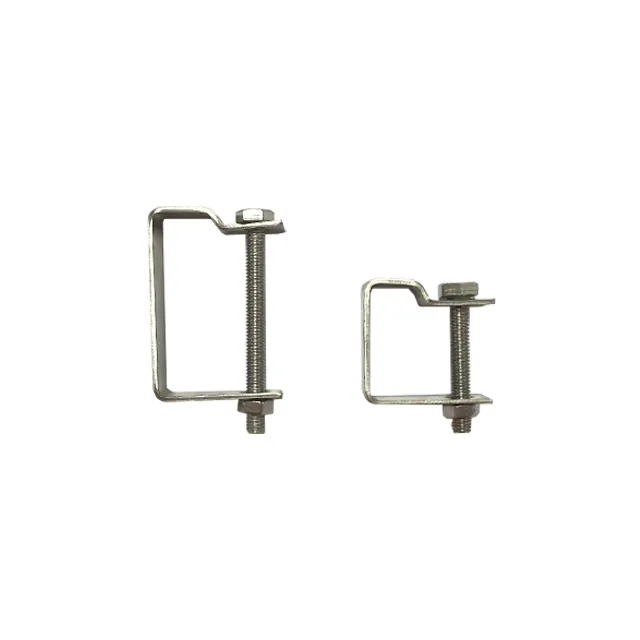
Accessories can be packaged separately for protection and handling. That makes them easy to miss at receiving. The record should state which clips, hardware or other accessories arrived, in what quantity and with which grating item or installation area they belong.
If one carton contains M clips and another contains L clips, the receiver must not combine them into an unnamed “fixing stock.” Keep package identity and material type visible.
Match Documents by the Question They Close
The delivery document set should be checked in two stages. First, confirm whether each required document arrived. Second, confirm whether it applies to the item, batch or specimen in the order.
A packing list closes the package and quantity question. A dimensional record closes a defined finished-piece check. A certificate of conformity states that named goods conform to an agreed requirement. A test report supplies evidence for the specimen and conditions it describes. None is interchangeable with another.
When the document is present but its product identity or scope is unclear, record it as “received, scope pending.” Do not mark the evidence complete simply because a PDF exists.
Make Accept, Hold and Report a Controlled Action
After the checks, each affected package or piece needs a disposition:
- accept it into controlled stock;
- hold the exact package or piece mark pending clarification;
- reject it under the agreed route;
- report a shortage or transport issue with the evidence required by the contract.
The record should include the affected quantity and the action owner. A package with eight accepted pieces and one held piece should not be released as a single accepted package.
Plan the Unload Before the Release Decision
Inspection and handling happen at the same time. The receiving plan should identify the package mass and dimensions, the available forklift or crane access, the planned lifting points and the protection needed for slings, forks or support contacts. Long pultruded assemblies and large panels can be damaged by uncontrolled dragging, dropping, single-point lifting or concentrated fork contact even when the package itself looks intact.
Use the handling method agreed for the actual package. If access, lifting equipment, package condition or visible stability does not match the plan, stop and review it rather than inventing a field method. The factory can state the package basis and protection; the receiver still has to provide safe site equipment and competent operation.

Keep the Carrier Record and Product Record Separate
The transport record answers where the consignment came from and what was handed over. The product record answers what should be inside it and whether the pieces meet the order. Both are needed.
Before the delivery is rearranged, compare the number of packages received with the transport or delivery record. Record visible packaging damage and any difference in package count on the document prescribed by the carrier and contract. When damage is concealed, preserve the packaging and affected item, photograph the condition and follow the joint-inspection or claim route agreed for the shipment.
Do not use a universal claim deadline or rejection rule from another supplier’s manual. Time limits, refusal rights and responsibility depend on the contract, carrier and destination. What should remain consistent is the evidence: reference number, package ID, piece mark, affected quantity, photographs, preserved packaging and requested action.
Store Accepted Grating as a Product
An “accepted” panel can still be ruined before installation. Store grating on a dry, level and suitably supported surface. Keep it off direct ground contact where the project requires, provide ventilation and prevent unprotected heavy material from being stacked on the grating.
Long pultruded pieces need support that avoids uncontrolled bending and overhang. Finished pieces should remain flat unless the packaging and product plan deliberately allow another orientation. Keep accessories and held pieces identified and separate from accepted installation stock.
The storage photograph above is a factory example, not a site storage instruction for every product. The actual support spacing, stack height and environmental protection belong to the product and project plan.
Release the Exact Record, Not the Whole Shipment by Default
Release the verified package or piece, not an arbitrary shipment total. If one character of the chain remains unresolved, hold only the affected item and preserve the link to its package and evidence. A precise open record is more useful than accepting the whole delivery or rejecting it without identifying what failed.
Receiving sequence
From Arrival Evidence to FRP Grating Disposition
Preserve, reconcile, inspect, verify evidence and record the exact decision.
Photograph the vehicle, packages, labels and visible damage before unloading separates the evidence.
Match PO, package ID, packing list, piece schedule and delivery quantity.
Trace piece marks, drawings and accessory packages before the material enters general storage.
Record dimensions, orientation, product fields, condition, edges and openings against the agreed basis.
Confirm that documents are present and that their order, batch or specimen scope is applicable.
Accept verified items, isolate holds and send a report that identifies exact quantity and identity.
Receiving boundaries
Four Boundaries That Protect an FRP Grating Receiving Decision
Identity, visual inspection, documents and holds must not be stretched beyond what they prove.
- Package evidence disappears when unpacking is uncontrolled — Once wrapping, straps and labels are removed, it becomes harder to show whether damage existed at arrival. Preserve package identity and condition before the pieces are mixed into storage.
- A piece mark is not useful without a source record — The mark must resolve to the PO, drawing revision, description, quantity and intended location. Otherwise it is only a label that happens to be attached to the product.
- Receiving inspection is not a new performance test — Visual and dimensional checks can verify delivered condition and identity. They do not establish structural capacity, fire classification, slip performance or chemical suitability unless the relevant test is included and applicable.
- Hold status has to stop material movement — Recording “pending” while allowing installation is not a controlled hold. The affected pieces and packages should remain isolated until the disposition is recorded.
Receiving checklist
What to Record During FRP Grating Receiving Inspection
Ten groups create a usable trail from package arrival to release or report.
- Delivery identity — Carrier, vehicle, package count, PO and receiving date.
- Package condition — Wrapping, support, straps, labels and visible transport damage.
- Piece identity — Mark, packing-list entry, drawing revision and intended location.
- Quantity — Packages, panels, finished pieces and accessories counted separately.
- Product configuration — Family, depth or profile, mesh or pitch, resin basis, surface and colour.
- Geometry — Dimensions, datum, openings, orientation and edge treatment.
- Condition — Cracks, chips, voids, delamination, contamination and surface damage.
- Accessories — Clip type, material, hardware and count by the item served.
- Documents — Packing list, inspection record, conformity document and report scope.
- Unloading plan — Package mass, access, lifting equipment, protection and the stop condition.
- Storage — Supported, flat, dry and ventilated location with held material kept separate.
- Carrier evidence — Transport reference, package count, visible damage and preserved claim evidence.
- Disposition — Accepted, held or reported quantity with owner and next action.
Receiving record
What the Final FRP Grating Receiving Record Should Contain
Keep actual observations, document status and disposition beside the item identity.
Request a Project Quote| Specification | Value |
|---|---|
| Package record | Package ID plus photograph Keep the label and condition visible before unpacking. |
| Piece record | Piece mark plus drawing revision Use the actual mark read from the delivered item. |
| Lifting record | Equipment and protection used Follow the package plan and stop when the delivered condition prevents safe or controlled unloading. |
| Quantity record | Separate units and counts Do not combine panels, pieces and accessory sets into one number. |
| Measurement record | Actual value, location and instrument A nominal label is not a measured result. |
| Observation record | Condition, location and extent State what can be seen rather than inventing an acceptance grade. |
| Evidence record | Received and applicable Mark missing and scope-unresolved documents explicitly. |
| Storage record | Location plus condition Keep accepted material supported, dry and separate from held items. |
| Disposition | Accept, hold, reject or report Identify affected quantity and responsible next step. |
| Closure | Replacement or release record Close only when the physical item and records agree. |
Our factory handoff
How Our Factory Connects Packing to FRP Grating Receiving
The same package, piece and document identity is planned at dispatch and checked at arrival.
Packing is part of product control
Our dispatch chain uses package IDs, piece marks, drawing revisions and accessory sets so the receiver can return the physical delivery to the same order record.
The handling plan travels with the package
The agreed lifting method, package mass, access, support and protection are fixed before shipment rather than improvised at the receiving door.
One issue keeps one identity
A shortage, transit mark or document query is recorded against the exact package and piece, preserving quantity, evidence and the responsible next action.
Release ends with protected storage
Accepted pieces remain supported, dry, identifiable and separate from held material. Release does not remove the need for controlled handling before installation.
Delivery planning
Agree the FRP Grating Receiving Record Before Shipment
Package marks, piece identity, document scope and issue route are easier to control before dispatch.
- Keep package and piece identity linked
- Separate condition, quantity and evidence
- Define the hold and report route
FRP Grating Receiving Inspection Questions
What should an FRP grating receiving inspection check first?
What should be checked before unloading FRP grating?
How should accepted FRP grating be stored?
How should transport damage be recorded?
How is this different from a molded or pultruded inspection guide?
Should I measure the package or the pieces?
What is a useful piece mark?
How should clips and hardware be received?
What if the certificate arrived but its scope is unclear?
What does hold mean at receiving?
Can a visual check replace a load or fire test?
What belongs in a shortage or damage report?
When can a held piece be released?
This content was prepared and reviewed by Dengtai Industry’s technical and production team using the project conditions, available product data and applicable documents. Limits that require design, testing or approval are identified in the content. Content last checked: