Quote comparison after offers arrive
How to Compare FRP Grating Quotations: Units, Fabrication and Delivery
Three quotations can show three different products, quantity units, fabrication scopes, fixing allowances and delivery terms. Rebuild each offer against one buyer item row first, then compare price only after the product and scope match.
Prepared by
Dengtai Industry
Published
·
Reviewed

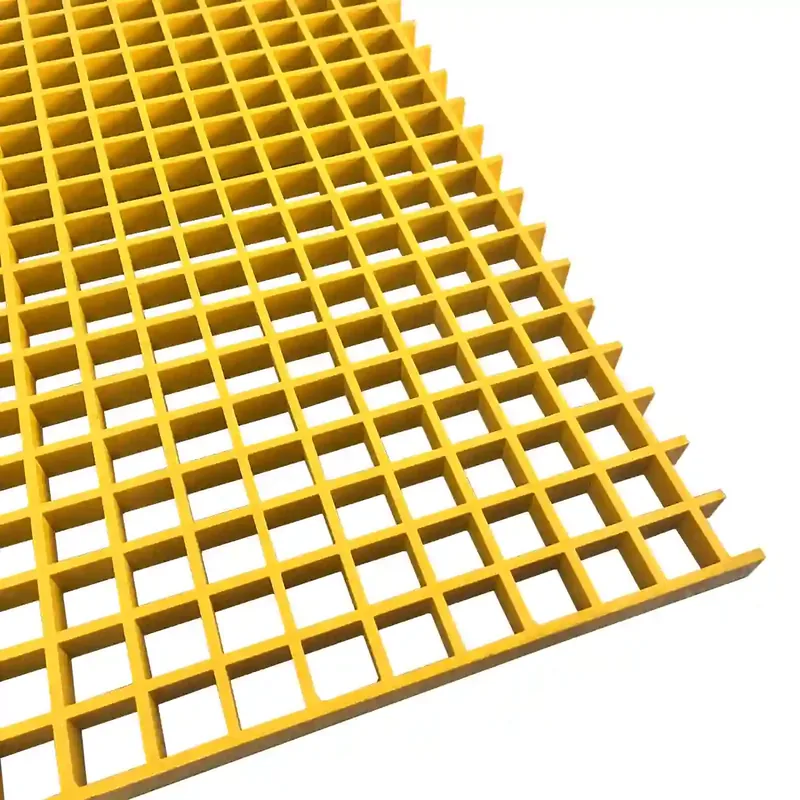
The delivered pieces are the result of product selection and fabrication scope. Both must be visible in a comparable quotation. Photo: Dengtai Industry.
Comparison vocabulary
Ten FRP Grating Quote Terms That Affect the Bottom Line
Product, quantity, fabrication, evidence and delivery are different decisions that must not collapse into one price.
- Quotation comparison
- The controlled review of two or more offers for the same requested supply. It compares product configuration, quantity, fabrication, accessories, evidence and commercial delivery before price.
- Normalization
- Rewriting each supplier offer on the buyer's item ID, unit and scope basis so the same object is being compared. It does not alter the supplier's original quotation.
- Product row
- The complete offered configuration, such as a molded depth and mesh, pultruded bar section and pitch, mini-mesh construction or covered assembly. One attribute does not define the row.
- Quantity basis
- The unit in which the product or service is priced, such as full panels, finished pieces, square metres, fixture sets, drawing reviews or packages. The basis must be stated with every number.
- Source panel
- The full product sheet or stock panel from which finished pieces are selected or cut. Its configuration, dimensions and quantity can differ from the delivered piece count and area.
- Finished piece
- A delivered item made to a defined size, orientation, opening, edge treatment and identity. A panel rate is not automatically a finished-piece price.
- Scope exclusion
- Work, material or responsibility not included in the supplier's price. A low total may simply contain more exclusions, so every exclusion must remain visible during comparison.
- Commercial basis
- Currency, validity, Incoterm, named place, packing, payment, lead time, taxes and other terms that affect what the buyer must pay or arrange. It is separate from the technical product row.
- Equivalent offer
- An alternative that has been reviewed against the required function, configuration, evidence and acceptance criteria and formally accepted. A similar size or lower price does not create equivalence by itself.
- Total cost of supply
- The comparable cost of obtaining the agreed product and services under the stated delivery terms. It is not an installed cost, structural approval or lifecycle-cost conclusion unless those scopes are added explicitly.
Hidden differences
Why FRP Grating Quotation Prices Can Look Similar but Buy Different Things
The same size, rate or inclusion phrase can conceal a different product or scope.
| Area that looks comparable | Hidden difference to check | How to normalize it |
|---|---|---|
| Same panel depth | Mesh, molded pattern, resin, surface, panel size or bar section can differ | Restore every configuration field from the approved item row |
| Same load statement | Support span, load type, deflection limit, bearing direction, table edition or safety factor can differ | Compare the complete load and support basis, not one highlighted value |
| Same square-metre rate | One offer may price source panels; another may price finished pieces | Add a full-panel or finished-piece quantity schedule and convert both to delivered area |
| Same finished size | Bar direction, top face, cutouts, edge treatment or tolerance can differ | Compare the approved drawing revision and fabrication fields |
| Clips included | Clip family, alloy, hardware, quantity, spare allowance or locations may differ | Convert the statement into a defined accessory set |
| Certificate included | Issuer, specimen, batch, standard, result or required stage may differ | List the exact document and scope instead of accepting a title |
| Packed for export | Package support, protection, marks, gross weight or wood requirement can differ | Compare the packing schedule and release record |
| Delivered price | Incoterm, named place, duties, unloading and validity may differ | Restate every offer on one trade term and destination |
Offer rows
What Each FRP Grating Quotation Line Should Make Comparable
Each product or service family has fields that disappear when a buyer compares only totals.
| Offer line | Required comparison fields | Common low-price trick |
|---|---|---|
| Molded panel | Depth, mesh, panel size, resin, surface, colour and source quantity | A lower-cost row uses a different mesh, resin or mold size |
| Pultruded panel | I, T or WT row, depth, pitch, bearing direction, width, bar length and cross rods | The offer names only depth or panel size |
| Mini-mesh panel | Upper and lower mesh, depth, resin, surface and panel dimensions | Only the smaller top opening is stated |
| Covered item | Base, cover or plate, interface, total height, edges, fixings and assembly work | A cover plate is compared with a complete base-and-cover product |
| Factory-cut piece | Source row, finished size, direction, openings, edge sealing, marking and drawing revision | A panel price is compared with finished pieces |
| Clip and hardware set | Type, material, bolt, washer, anchor, fixing locations and count | “Accessories allowance” hides an undefined supply |
| Documents and testing | Document name, issuer, applicable item, acceptance basis and stage | “Certificate available” replaces a defined deliverable |
| Packing and transport | Packing method, package ID, marks, gross weight, Incoterm and named place | EXW and delivered prices are placed side by side |
Normalization matrix
The Control Fields for Comparing FRP Grating Quotations
Use one row per buyer item and preserve supplier exclusions beside the normalized scope.
| Normalization field | Buyer-controlled value | Supplier must state | Why it belongs in the comparison |
|---|---|---|---|
| Item ID | One stable ID for each product or service | Their quotation line reference mapped back to the same ID | Prevents missing and duplicated rows from disappearing in the total |
| Product family | Molded, pultruded, mini mesh, covered, stair or accessory | The exact family and product row offered | Different families cannot be treated as interchangeable because the outline matches |
| Configuration | Depth or profile, mesh or pitch, resin, surface and colour basis | Every field offered or an explicit reference to the approved specification | The price must describe the same product before it is ranked |
| Load basis | Support arrangement, span, load type, deflection limit, direction and calculation reference | The load basis, support assumption, result and exclusions behind the offer | Two similar panels can be quoted on different structural assumptions |
| Quality evidence | Datasheet, batch record, inspection scope and applicable report or certificate | Which current evidence applies to the offered product and production batch | A complete-looking supplier website is not order-specific manufacturing evidence |
| Quantity | Panels, pieces, square metres, sets or locations with explicit units | Quantity and unit used to build the price | A rate cannot be compared if one offer counts panels and another counts pieces |
| Geometry | Approved drawing revision, datum, orientation, openings and edge treatment | Finished size and fabrication scope per item | Source material and completed fabrication carry different risk and work |
| Accessories | Type, material, hardware, location and expected quantity | What is supplied, packed and included in the price | A hidden allowance can make the initial total look lower |
| Documents | Output, issuer, applicable item, acceptance basis and stage | Included documents, exclusions and issue timing | A report or certificate is only useful when its scope matches the order |
| Packing | Protection, bundle or pallet method, marks and gross-weight record | Packing responsibility and any packing price | Freight and handling cannot be planned from a bare panel rate |
| Delivery | Incoterm, named place, currency, validity and payment basis | All commercial assumptions and exclusions | The buyer's cash exposure changes before any panel is installed |
| Change route | Who approves product, drawing, quantity and commercial changes | How a revision affects price and schedule | A corrected offer must not leave old rows active in production |
Readiness gates
When FRP Grating Offers Are Ready for a Price Decision
Every gate closes a difference that can change cost, risk or installed outcome.
Specify this if…
- Every supplier has quoted the same item IDs and product rows.
- Each line shows its quantity and unit.
- Finished-piece work and accessories are either defined or visibly excluded.
- Documents, issuer and issue stage are stated.
- Packing, trade term and named place are aligned.
- Any substitution is marked, reviewed and approved in writing.
Look elsewhere if…
- The total is the only comparable number.
- A panel rate is being compared with a cut-piece package.
- The resin, mesh, bar row or surface is assumed from a photograph.
- Clips or hardware are described only as “included.”
- A generic report is treated as evidence for every product.
- Freight is excluded from one offer and included in another without adjustment.
Example comparison
How Six FRP Grating Quote Lines Return to One Decision
These are comparison examples, not product prices or approved configurations.
| Example item | Supplier A offer | Supplier B offer | Normalized decision |
|---|---|---|---|
| M-01 molded panel | 25 mm at 38 × 38 mm, plain panel, isophthalic polyester | 30 mm at 38 × 38 mm, panel with grit | Different depth and surface; obtain the specified row before comparing price |
| F-02 finished piece | Priced as 5.2 m² of source panel | Priced as 12 finished pieces with openings and sealed edges | Add panel consumption, fabrication and drawing revision to one schedule |
| A-03 clipping set | 100 sets, type not identified | 120 M clips, stated material, bolts and washers | Request the fixing schedule and locations; quantity and type are not aligned |
| D-04 documents | Certificate of conformity included | Packing list plus dimensional record | Compare which evidence the acceptance requirement actually needs |
| P-05 packing | Export packed, gross weight to be confirmed | Packing plan with pieces per bundle and marks | Require named packing scope and release record before comparing freight |
| C-06 commercial basis | EXW factory, USD | FOB Shanghai, USD | Restate freight, export handling and named place on one Incoterm |
Compare the Product Before You Compare the Total
An FRP grating quotation comparison becomes unreliable when suppliers are allowed to price different objects under a familiar product name. One offer may contain a molded panel in the requested depth and mesh. Another may quote a similar depth with a different mesh, resin or surface. A third may quote a source panel while the buyer asked for finished pieces with shaped openings and sealed edges.
All three totals can be real quotations. They are not quotations for the same supply. The buyer’s review should therefore begin with the item identity and product row, not the currency at the bottom of the page.
The mixed-product RFQ guide explains how to create the project item master. This page starts after the offers arrive. Its purpose is to return each offer to that item master so the technical reviewer and the buyer can see what is equivalent, what is missing and what must be priced again.

Restore the Full Configuration
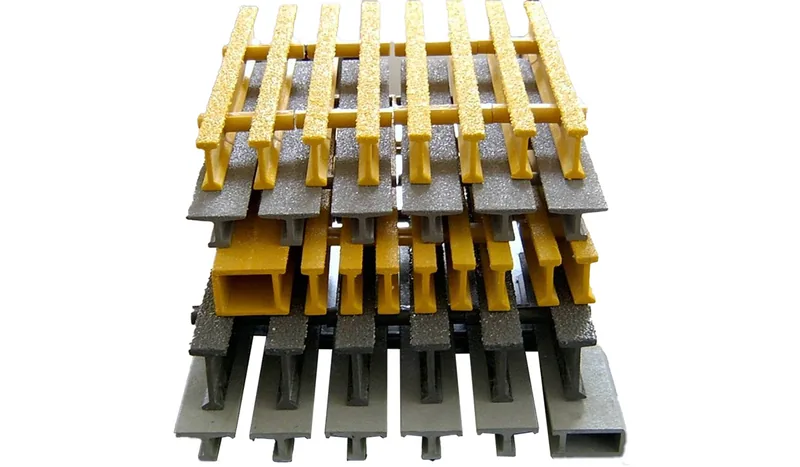
Molded grating requires more than a thickness. The panel row also depends on mesh or pattern, panel dimensions, resin basis, surface and colour. Pultruded grating requires the exact I, T or WT bearing-bar row, depth, pitch, bearing direction, width, bar length and cross-rod basis. Mini mesh needs both the upper and lower grid. Covered grating needs the base, cover or plate, interface and complete assembly scope.
If the buyer’s request contains only a nominal size, the supplier may legitimately choose a configuration to quote. The comparison cannot then assume that every supplier chose the same one. Record the configuration offered and compare it with the requested basis. If it is an alternative, keep it in its own row.
The fiberglass grating panel guide explains the field differences by product family. The sizes and weight guide is useful when dimensions and mesh names need to be separated before price comparison.
Compare the Technical Basis Behind the Price
Two quotations can show the same depth and the same headline load without using the same engineering basis. Before comparing those numbers, ask what support spacing, load type and deflection limit sit behind them. A uniform load, a concentrated load and a wheel load are different design questions. A panel spanning in one direction cannot be reviewed as though the same figures applied after it has been rotated.
Record the following beside any technical value offered:
- the current load table, datasheet or calculation reference;
- span and support arrangement;
- load type and units;
- deflection limit;
- bearing-bar direction where relevant;
- safety factor or design method, if stated; and
- exclusions such as frames, anchors, structural approval or installation.
A higher raw load number can therefore be less useful than a lower number obtained under the project’s actual span and deflection requirement. The load and span guide and pultruded span guide explain why the conditions belong with the result.
Check Manufacturing Evidence, Not Only the Finished Shape
Configuration controls what the supplier says it will make. Manufacturing evidence controls how the buyer can judge whether the offered supply is repeatable. Ask which current datasheet applies, which batch record can be supplied, what dimensional or appearance checks are performed, and whether a report or certificate covers the offered product.
This does not require inventing a universal quality threshold. The evidence should match the stated requirement. Resin grade, reinforcement, cure control and inspection scope can matter, but a photograph of a clean panel cannot prove them. A test report is similarly limited by its specimen and stated conditions.
The manufacturer checklist helps establish who controls production, fabrication and inspection. The quality and documentation guide explains the document scope. If the project requires a load calculation, current product datasheet or batch record, name it in the comparison rather than adding “quality assured” to a supplier score.
Separate the Quantity Unit From the Physical Object
Supplier offers may use square metres, square feet, panels, pieces, bundles, metres, sets or installation locations. These units answer different purchasing questions. Area can relate to material consumption. Piece count controls handling and hardware. Package count controls freight. A quotation should not mix them without a conversion schedule.
A simple example shows the problem. One supplier prices 5.2 square metres of source panel. Another prices 12 finished pieces made from that source. The second quote is not automatically more expensive because its number is larger. It may include cutting, openings, sealed edges, marking and packing. The first may require the buyer to arrange all of those later.
Keep the source-panel schedule and the finished-piece schedule separate, then show how one derives from the other. The factory-cut guide covers that relationship in detail.
Make Fabrication Visible
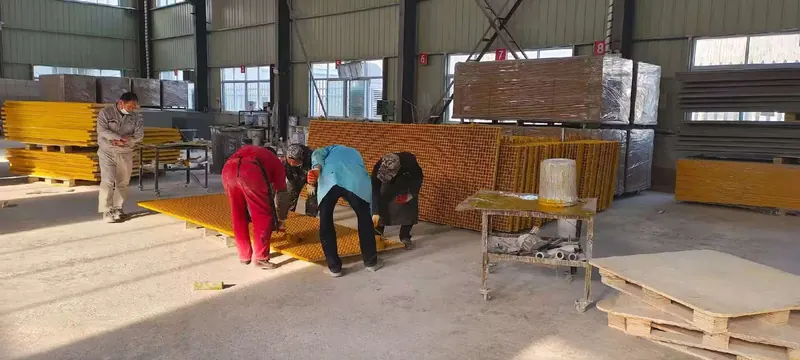
The following are separate fabrication questions:
- Is the product supplied as a full panel or a cut piece?
- Is the final outline dimension confirmed against an approved drawing?
- Does the piece have an opening, notch, curve or handed orientation?
- Which cut faces require sealing, and what is the inspection requirement?
- Is the top face or bearing-bar direction marked?
- Does the piece receive a unique mark that follows it into the packing list?
- Is the edge and opening condition checked before packing?
An offer that says “cut to size” does not answer these questions. A quotation line could contain cutting but exclude edge sealing, or include the outer cut but leave field openings to site work.
Turn “Accessories Included” Into a Defined Set
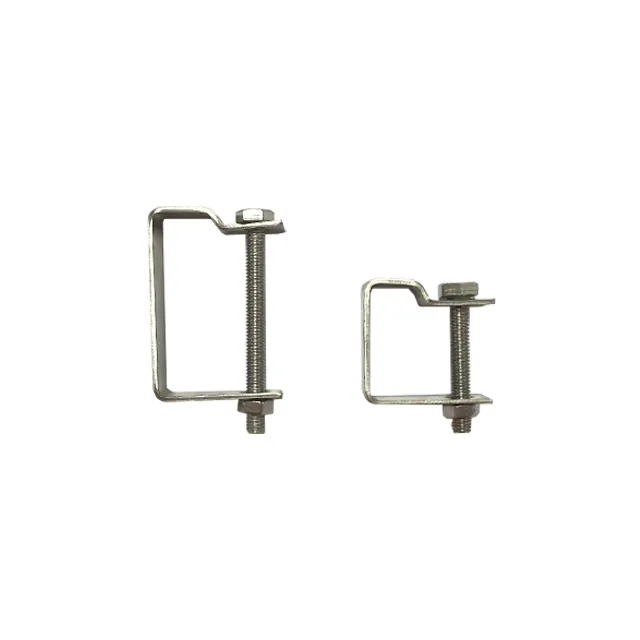
Clips are easy to hide inside a quotation comparison. A supplier may include M clips, another may include L clips, a third may supply clips without bolts and washers. The quantities may be based on panel corners, support crossings, perimeter positions or a rough allowance.
Create an accessory line with:
- clip family and drawing;
- material;
- bolt, washer or anchor supplied;
- the panel and support interface;
- fixing-location count;
- spare quantity, if agreed; and
- packing relationship to the panel or installation area.
If the fixings are not yet designed, state that as an open technical item. A cash allowance can reserve budget, but it does not prove a complete fixing supply. The clip guide explains the product fields.
Normalize Documents by Scope
“Certificate included” is not a document specification. The comparison should identify exactly what will arrive, who issues it, which item or batch it applies to and when it is required. A certificate of conformity, dimensional record, factory inspection record and test report answer different questions.
If the buyer needs a test report, compare its specimen, method, support or exposure condition, result and stated scope with the item under review. A historical sample report can be useful evidence, but it should not be treated as an automatic certificate for every supplied configuration.
The quality and documentation guide and test report applicability guide provide the review method. Each document stays tied to the quotation item, not to the supplier’s general website.
Compare Packing Before Freight
Packing affects both protection and freight. Ask what supports the pieces, how edges and surfaces are protected, how many pieces go into each package, where the package marks appear and how gross weight is recorded. Long pultruded pieces may need a different support and handling arrangement from molded panels. Mixed accessories may need their own package identity.
A supplier can appear to have a lower delivered price simply because it excludes packing upgrading or assumes a collection point the buyer cannot use. The pultruded packing guide shows how finished-piece identity, direction and bundle support belong to the packing record.

Rebuild the Commercial Terms
After product and services are aligned, establish a common commercial basis:
- quotation currency and validity;
- Incoterm and named place;
- export packing and inland transport;
- main freight, insurance and clearance;
- import taxes, duties and unloading;
- payment milestones;
- production lead time and delivery-date basis;
- inspection or witnessing;
- document release; and
- warranty and claim route.
An EXW offer can be useful and legitimate. It is not comparable with a delivered price until the buyer adds the omitted transport and handling. The FRP grating cost guide provides a wider budget framework, while the molded price page shows the limits of a published plain-panel reference.
Comparison sequence
From Supplier Quotations to One Auditable FRP Grating Decision
Normalize identity, technical scope, commercial scope, then record the selected offer.
Use the approved item master, product rows, quantities and drawing revisions as the only buyer baseline.
Map each offer to an item ID and mark missing, duplicate or unassigned lines.
Compare full configuration, geometry, fabrication, accessories and evidence.
Add a comparable allowance for exclusions or request a revised offer on the same basis.
Normalize packing, Incoterm, named place, validity and payment before ranking totals.
State the selected offer, accepted assumptions, approved substitutions and open actions.
Comparison boundaries
Four Rules That Stop an FRP Grating Quote Comparison From Misleading the Buyer
A normalized price still needs technical and commercial review.
- Price is a result, not a scope — A quoted number only ranks after the supplier identifies what product, quantity, fabrication, evidence, packing and delivery it includes. Removing that context makes the offer impossible to audit.
- One conversion is not one approved quantity — A metric conversion can help compare an imperial request, but it does not decide whether the factory supplies the exact converted size, a nominal panel or a cut finished piece.
- A lower offer can require more buyer work — One supplier may exclude cutting, sealed edges, piece marks, hardware, inspection or export packing. The buyer's internal labour and risk belong in the same evaluation.
- Alternatives belong in their own row — A proposed resin, construction or accessory substitution should keep its own identity. It cannot silently replace the requested item and then be compared as though the rows were equivalent.
Buyer checklist
What to Keep in an FRP Grating Quotation Comparison
Ten records make the selected offer traceable to the questions and assumptions behind it.
- Quotation identity — Supplier, quotation number, date, validity, currency and named contact.
- Item mapping — Every offer line mapped to the buyer item ID, including missing and extra rows.
- Product configuration — Full row for each molded, pultruded, mini-mesh, covered or stair item.
- Load and support basis — Span, load type, deflection limit, direction, calculation reference and exclusions.
- Quantity basis — Explicit unit, calculation basis and delivered quantity.
- Fabrication — Source panel, finished sizes, openings, edge treatment, marking and revisions.
- Accessories — Type, material, hardware, fixing locations, quantities and spares.
- Documents — Exact document, issuer, item scope, acceptance basis and required stage.
- Manufacturing evidence — Current datasheet, batch record, inspection fields and applicable production controls.
- Packing — Protection, package identity, pieces per pack, gross-weight record and marks.
- Commercial terms — Incoterm, named place, freight, payment, lead time and exclusions.
- Decision record — Approved assumptions, substitutions, owner and required follow-up.
Decision record
What the Final FRP Grating Comparison Should State
The record should show the normalized basis and every unresolved difference.
Request a Project Quote| Specification | Value |
|---|---|
| Unit display | Keep the original and converted units State which value controls the order and drawing. |
| Panel and piece | Separate lines Do not compare a source-panel rate with a fabricated finished piece without the same scope. |
| Area and count | Both shown where both matter Area may price material; count controls handling, hardware and packing. |
| Structural basis | Same span, load, direction and deflection A load number cannot be transferred between different support or calculation conditions. |
| Quality evidence | Current and product-specific Name the datasheet, batch record or inspection output and what it can establish. |
| Accessories | Defined set plus location count Include type, material and hardware rather than a cash allowance. |
| Documents | Named evidence and stage A generic certificate statement is not a document schedule. |
| Delivery | Incoterm plus named place Name who arranges packing, main carriage and unloading. |
| Substitution | Separate rev-controlled row Keep the original request visible beside the alternative. |
| Decision status | Aligned, clarification, hold or selected Every open assumption needs an owner and response. |
Our factory review
What Our Factory Adds to an FRP Grating Quote Comparison
The method keeps the buyer's item identity while making technical, quality and commercial differences visible.
The buyer's item row stays the reference
Our review maps each offer back to the buyer's item ID, product family, quantity unit, approved drawing revision and required service rather than rebuilding the comparison around a supplier catalogue.
Exclusions stay beside the price
A plain panel price does not become a fabricated or delivered price. Cutting, edge treatment, clips, documents, packing and freight are included only where the offer states them.
Alternatives remain visible
A different resin, construction, accessory or document scope is kept as an alternative with its own technical and commercial effect. It is not silently substituted into the requested row.
Technical evidence remains item-specific
A load table, report or certificate is reviewed against the same product, support condition and order scope. General company assurance does not close a project-specific technical question.
Quotation review
Send Your FRP Grating Offers on One Item Basis
Include the item master and supplier originals so the review can preserve every exclusion.
- Keep supplier originals intact
- Map each line to the buyer item
- Identify missing scope and substitutions
FRP Grating Quotation Comparison Questions
How do I compare FRP grating quotations fairly?
Why can two FRP grating prices per square metre be different?
How should load capacity be compared between quotations?
What manufacturing evidence should accompany a quote?
Should I compare a panel price with a cut-to-size quote?
How should clips and hardware be compared?
What documents should appear in the comparison?
How do I compare EXW, FOB and delivered prices?
What if one supplier proposes a technical alternative?
Does this process confirm that a quotation is technically compliant?
What output should a normalized comparison contain?
What is the most common quotation comparison mistake?
This content was prepared and reviewed by Dengtai Industry’s technical and production team using the project conditions, available product data and applicable documents. Limits that require design, testing or approval are identified in the content. Content last checked: