FRP grating procurement
FRP Grating RFQ Template: Drawings and Acceptance Data
Send one project package that names the exact product row, quantities, finished pieces, support and load, required evidence, commercial terms, delivery and every value that still needs an owner.
Prepared by
Dengtai Industry
Published
·
Reviewed

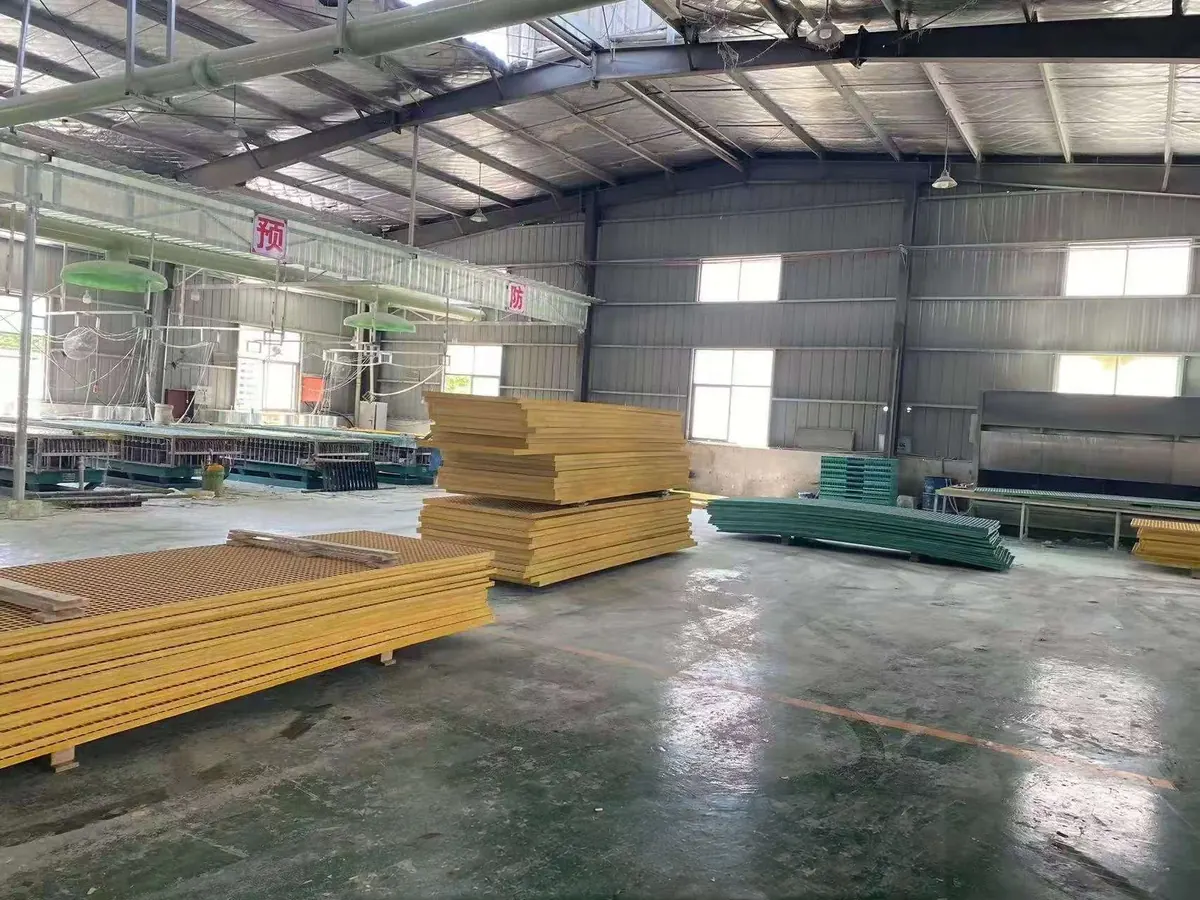
The more clearly the RFQ describes the actual product and finished pieces, the less the quotation relies on assumptions. Photo: Dengtai Industry.
A good FRP grating RFQ prevents the supplier from pricing an invented product. It states the project, exact technical rows, quantities, finished pieces, support and load basis, required evidence, commercial scope and every value that is still unknown. The quotation then has a stable basis to answer.
The downloadable CSV on this page is a request template prepared and reviewed by Dengtai Industry’s estimating, technical and production team. It is not a quotation, order or engineering approval.
Download the FRP grating RFQ CSV
The file uses a repeatable field list so a buyer can send the same project structure to several suppliers. Delete no unknown field; assign an owner and due date instead.

Start With One Controlled RFQ Record
Give the request a number and revision before writing product rows. Record:
- project or site;
- application and normal users;
- buyer and technical contact;
- required quotation date;
- required delivery date;
- destination;
- quote stage: budget, tender, purchase review or production release;
- attachments and drawing revision.
The RFQ number should appear on every schedule and attachment. If a later drawing changes, issue a numbered revision rather than replacing one file silently.
Give every item a stable ID
Use IDs such as FG-01, FG-02A or CLIP-01. An item can be:
- one panel row;
- one finished-piece row;
- one accessory set;
- one fabrication service;
- one document or sample requirement.
Keep the item ID the same in the RFQ, quotation, drawing, inspection and packing list. The mixed RFQ guide covers the larger multi-product schedule when the package includes different families.
Describe the Exact Product Row
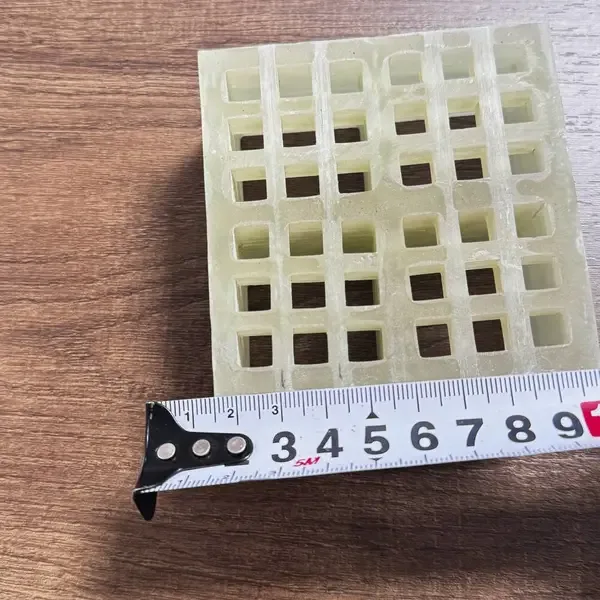
“FRP grating” is a family. A quotation needs the exact field set:
| Family | Required configuration fields |
|---|---|
| Molded | Depth, pitch in both directions, panel size, resin, surface and color |
| Pultruded | I/T/WT series, bar height, top width, pitch, bearing direction, panel format and resin |
| Mini mesh | Upper and lower mesh, both pitches, depth, panel size, resin and surface |
| Covered | Base panel, cover construction, connection, total thickness, mass and drainage |
Use the fiberglass grating panel guide and size definitions when the source only gives a product name or nominal panel size.
Separate source panels from finished pieces
The buyer may request:
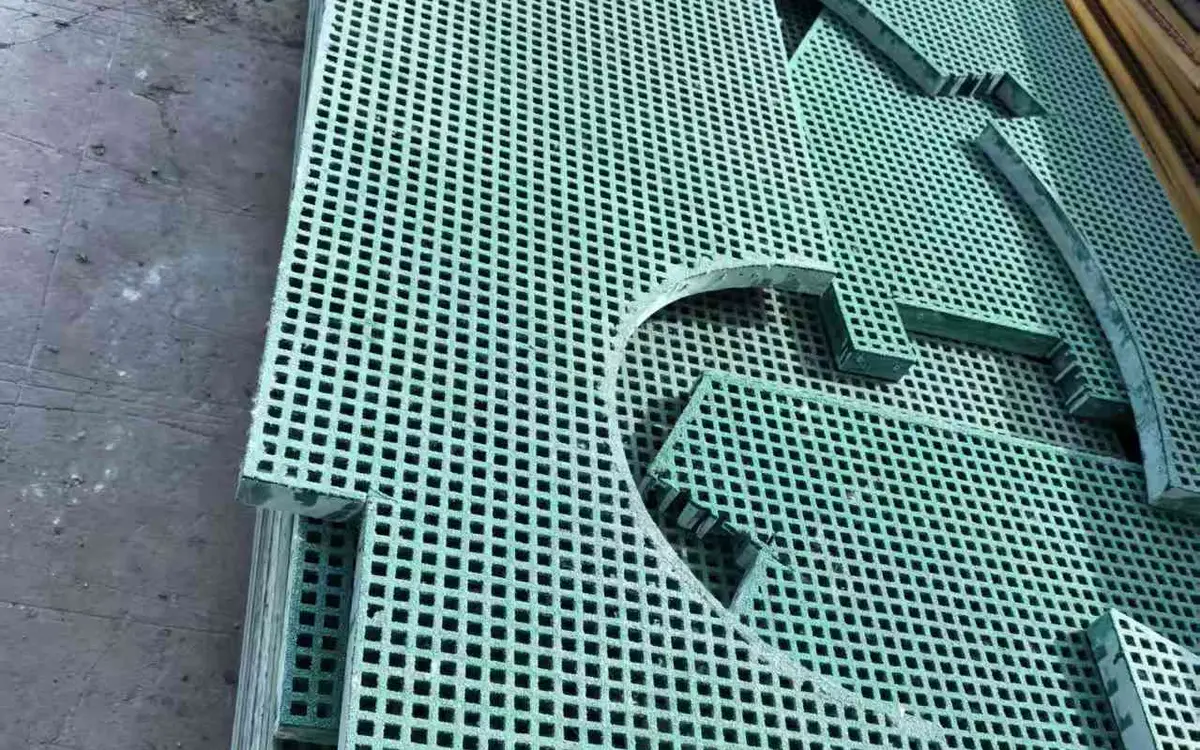
- full source panels;
- factory-cut finished pieces;
- full panels plus spare pieces;
- source panels cut over several stages;
- panels plus separately supplied clips and edge treatment.
Give the quantity unit for each. “20 pieces” can mean 20 panels, 20 cut pieces or 20 packets. The cut-list and yield guide links panel consumption to finished-piece identity.
State Why the Quantity Is Needed, Not Only How Many
Quantity affects:
- source-panel nesting and offcut;
- packing and lifting;
- spare allowance;
- document preparation;
- sample and inspection quantity;
- delivery economics.
State whether the quantity is final, budgetary, minimum, maximum or a requested package. If a tender allows an option quantity, separate the base requirement from the option.
Accessories and services
Name:
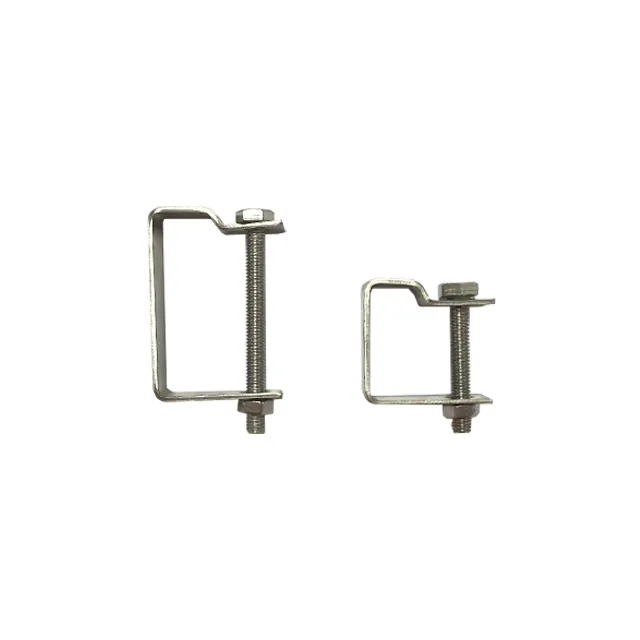
- clip type, material, fastener, washer and quantity;
- edge sealing faces and method;
- cutting, drilling and openings;
- piece marking or labels;
- sample type and quantity;
- inspection or test scope;
- packing method;
- engineering or document service.
The clip range page explains why M, L and C clips do different jobs. The RFQ should state the hardware scope rather than “clips included.”
Provide Support, Load and Exposure in the Correct Units
Support and load are often the missing middle between a product list and a usable quotation.
Record:
- support drawing and bearing faces;
- clear span in each direction;
- load type and value;
- point or wheel contact area;
- deflection limit and source;
- chemical medium and concentration;
- normal, peak and cleaning temperature;
- UV, fire or anti-static requirement;
- fixing and removable access condition.
Do not give only the equipment mass. A 500 kg machine can be supported differently depending on whether the load reaches two feet, four feet or the surrounding floor. The load and span guide shows the fields behind an engineering review.
Keep the exposure schedule with the product
If the resin is unknown, state the actual medium, concentration, temperature and splash/immersion condition. The resin selection guide explains why “chemical resistant FRP” is not a complete grade.
Name the Documents and Their Stage
A request for “all certificates” produces different responses. Use lines such as:
| Requirement | Exact request | Stage |
|---|---|---|
| Product data | Current row, dimensions, mass and surface | With quotation |
| Order drawing | Piece ID, size, direction and openings | Before production |
| Inspection | Dimensions, appearance, marks and accessories | Before packing |
| Conformity | Batch or order and agreed requirement | Before shipment |
| Test report | Specimen, method, result and scope | With quotation or agreed lead time |
| Structural evidence | Load table or calculation with support condition | Before approval |
The specification and evidence template is the next document-control layer when the buyer needs a form that can be completed and attached to the RFQ.
Make the Commercial and Delivery Basis Comparable
Add:
- currency;
- Incoterm and named place;
- quote validity;
- payment terms;
- lead-time start point;
- packing scope and package limit;
- freight inclusion or exclusion;
- sample charge and freight;
- inspection or third-party test responsibility;
- document language and revision.
The quotation comparison guide uses the same principle: compare offers against one item row before comparing total price. Packing and destination are also connected to the export unit and packing guide.
Keep a Visible Unknown-Item Register
Do not hide unresolved values in the email body. Add a row:
- unknown field;
- current source or evidence;
- owner;
- due date;
- whether it blocks technical review, quotation comparison or production release.
For example, a missing clear span may allow a budget range but not a firm structural selection. A missing drawing may allow a full-panel quote but not a cut-piece quote. A missing destination may allow an EXW price but not a delivered comparison.
The project can send partial information. The mistake is pretending the missing field has been answered.
Copyable Minimum RFQ Text
RFQ no. / revision:
Project / site:
Application and area below:
Buyer and technical contact:
Required quote date / delivery date:
Destination / Incoterm:
Item:
Product family:
Exact current row:
Resin / surface / colour:
Bearing or grid direction:
Full panels or finished pieces:
Finished sizes / quantities:
Openings / edge treatment / fixing:
Support / clear span / load / deflection:
Required sample / drawing / inspection / report:
Open items and responsible owner:
The CSV adds separate fields and an example structure for teams that need to send a schedule rather than an email.
Our Factory View: What Makes an RFQ Efficient to Answer
Our estimating and production review starts with the project, the exact row and the quantity basis. We then check the drawing, direction, support, exposure, fabrication and evidence. A clean RFQ lets us quote the product that can be manufactured and leave the project-owned unknowns clearly outside the offer.
We would rather receive a marked-up incomplete drawing than an invented complete one. It shows where a supplier can help and where the project must remain responsible. That produces a more useful quotation and a lower risk of changing the order after production starts.
Get a Quote
Get a FRP Grating RFQ Template: Drawings and Acceptance Data Quote
- Attach the drawing and item schedule
- Mark unknown values with an owner
- State the evidence and Incoterm required
Example
A Filled RFQ Row Still Shows What Is Open
The example is useful because the unresolved engineering and commercial inputs stay visible.
| RFQ item | Illustrative entry | Status |
|---|---|---|
| Project | Industrial access platform, illustrative example | Replace with actual site |
| Product direction | Molded FRP grating, current 38 mm / 38 x 38 mm row to confirm | Technical review required |
| Quantity | 12 finished pieces, factory-cut to drawing | Drawing required |
| Direction | Grid direction and top face to be marked per piece | Buyer to approve |
| Support and load | Support and clear spans shown; load and deflection by project designer | Open item |
| Evidence | Dimensional inspection record; test report scope to be named | Evidence discussion |
| Delivery | FOB Shanghai, packing and delivery date to confirm | Commercial input |
Quote readiness
Budget, Comparable, Engineering and Production Stages
Do not call an offer firm when the quantity or technical basis is still unknown.
| Quote stage | What can be quoted | What cannot yet be treated as firm | Best next action |
|---|---|---|---|
| Budget indication | A product family, approximate sizes and indicative quantity | Exact row, load evidence, fabrication and delivery | Mark assumptions and do not treat the number as a purchase approval |
| Comparable price | Exact product row, piece schedule, quantity, resin, surface and commercial scope | Any missing inputs remain visible on each quote line | Issue the same RFQ revision to every supplier |
| Engineering review | Support, load, deflection, exposure, fixing and project evidence | Structural approval not owned by the supplier | Resolve project design inputs before release |
| Production release | Approved row, current drawing, piece IDs, acceptance and packing | Unresolved changes, substitutions or document scope | Freeze one revision and matching quotation |
RFQ fields
The Data Groups a Quotable FRP Grating RFQ Needs
Each group controls a different part of the product, price or acceptance decision.
| RFQ group | Required content | Why it matters |
|---|---|---|
| Project header | RFQ number, site, application, buyer contact, required date and destination | Connects technical and commercial replies to one request |
| Product family | Molded, pultruded, mini mesh, covered or mixed | Stops one generic family from being substituted |
| Exact row | Depth or bar profile, mesh or pitch, resin, surface, color and direction | Identifies a manufacturable configuration |
| Quantity format | Source panels or finished pieces, size and count | Prevents area, panel and piece quantities from being mixed |
| Support | Supported edges, bearing faces and clear span | A plate area without support is not enough to price a usable deck |
| Load | Uniform, point, line, wheel or sustained load and contact area | The same value without a load type is ambiguous |
| Deflection | Limit and source | Strength and serviceability are separate checks |
| Exposure | Chemical, concentration, temperature, UV, fire and cleaning | Resin selection cannot be based on a broad environment label |
| Fabrication | Cuts, holes, openings, edge sealing, tolerances and marks | Changes the finished item and production scope |
| Accessories | Clip type, material, fastener, washer and quantity | “Fixing included” is not comparable |
| Documents | Datasheet, drawing, inspection, conformity, report or calculation with stage | The supplier can price only the requested evidence |
| Commercial terms | Currency, Incoterm, named place, validity, payment and lead-time basis | Totals require the same commercial assumptions |
Build the package
From an RFQ Number to Comparable Quotations
A controlled sequence prevents technical and commercial scope from drifting apart.
Use the same identifier on the schedule, drawings, attachments, quotation and later change record.
Record site, application, traffic, access, environment and required date.
Give each family and item a stable ID and the complete technical configuration.
Separate full panels, finished pieces and accessories with their own units and IDs.
Show support, clear span, load, deflection and any required evidence.
State evidence, inspection stage, packing, Incoterm, place, currency and validity.
Give every missing value an owner, due date and effect on the offer.
Reject old drawings and unmarked substitutions; normalize every quotation against the same schedule.
- Project header — RFQ number, site, application, buyer, contact, required date and destination.
- Technical item rows — Stable item IDs and the exact molded, pultruded, mini-mesh or covered configuration.
- Quantity units — Full panels, finished pieces, accessories and services with separate units.
- Drawing and cut list — Current revision, finished dimensions, direction, openings, edges and tolerances.
- Project design basis — Supports, spans, load, deflection, exposure and any fixing or access condition.
- Document scope — Required data sheet, reports, calculations, inspection, conformity and packing list.
- Commercial terms — Currency, Incoterm, named place, validity, payment, packing and freight.
- Unknown register — Missing value, responsible owner, due date and effect on engineering or price.
- Approval status — Budget, tender, order review or production release, with the current revision.
FRP Grating RFQ Template Questions
What should an FRP grating RFQ include?
Can a supplier quote from a photo?
What is the difference between a panel quantity and a piece quantity?
Is a budget quote the same as a firm quotation?
What documents should I request?
Why should every unknown have an owner?
Should I ask multiple suppliers for the same document package?
Does the RFQ template replace the formal quotation?
Can I send partial information?
How do drawings and spreadsheets stay aligned?
Scope
Keep the RFQ a Request, Not an Approval
The template helps the buyer organize inputs; it does not decide the design.
- RFQ boundary — This template organizes buyer inputs. It is not a supplier quotation, engineering approval or purchase order.
- Exact row requirement — Keep the product row and unit separate from the price. A supplier can quote a valid number against the wrong row if the technical schedule is unclear.
- Industry ordering reference — McNICHOLS separates construction, resin, density, surface, span, direction, form, quantity, fabrication and accessories in its fiberglass grating ordering method. Review the McNICHOLS ordering fields
- Fabrication reference — Grating Pacific connects stock-panel layout, support and manufacturing tolerances with the fabricated order. Review Grating Pacific fabrication guidance
This content was prepared and reviewed by Dengtai Industry’s technical and production team using the project conditions, available product data and applicable documents. Limits that require design, testing or approval are identified in the content. Content last checked: