Export unit and quantity control
FRP Grating Export Units and Packing: mm, Inches, Pieces and Weight
A converted dimension is not automatically the manufactured size, and a panel count is not the finished-piece count. Use one approved table to carry units and quantities from RFQ and drawing through production, packing and transport.
Prepared by
Dengtai Industry
Published
·
Reviewed

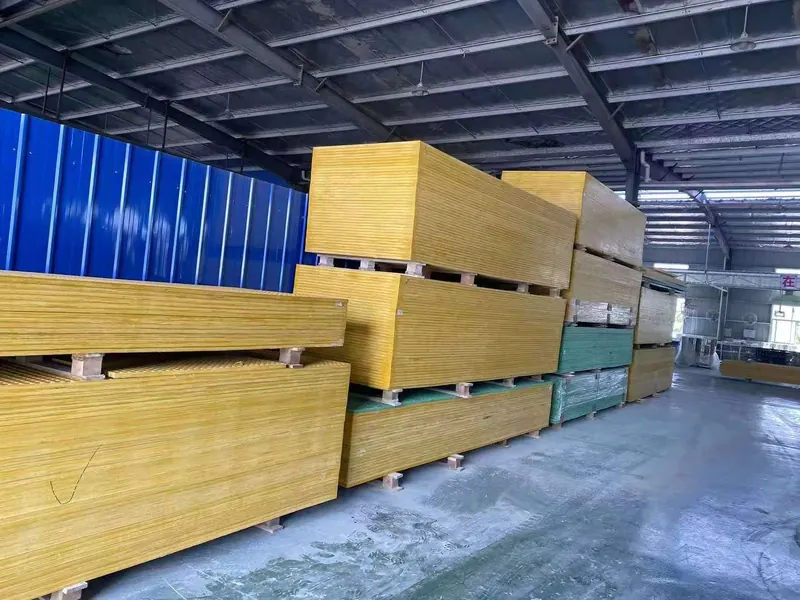
The export document should use the package count and gross weights produced by the actual order, not an assumed panel conversion. Photo: Dengtai Industry.
Export vocabulary
Ten FRP Grating Export Unit Terms That Need Separate Fields
Original units, conversions, actual drawings, panel counts, piece counts and package weights answer different questions.
- Original unit
- The unit in which the buyer, drawing or package value was first stated, such as millimetres, inches, millimetres per panel or feet. It remains visible after conversion.
- Converted value
- A calculated expression of the original value in another unit. Conversion is a checking aid and does not by itself change the approved size, quantity or manufacturing instruction.
- Nominal dimension
- A product name or approximate ordering size. A nominal 4 × 8 ft panel and a manufactured 1220 × 2440 mm panel are close but not exact conversions.
- Actual dimension
- The dimension approved on the controlled drawing or measured on the delivered item. It needs a stated datum, measuring plane and, where relevant, tolerance.
- Pitch
- The center-to-center distance between repeating bars or grid elements. It is not the same as the clear opening between their edges.
- Net opening
- The clear gap measured between appropriate edges at a stated plane. Objects, wheels and debris interact with the net opening rather than the pitch alone.
- Panel quantity
- The number of source or full panels ordered or consumed. It can differ from the number of finished pieces delivered after cutting.
- Finished-piece quantity
- The number of individually identified delivered pieces after cutting, opening and fabrication. Piece count and finished area can both matter for different controls.
- Net weight
- The weight of the grating product itself, excluding pallet, crate, bearers, wrapping and other packing. It should be tied to the actual configuration and quantity.
- Gross package weight
- The weight of the complete package, including product, support structure, wrapping, straps and packed accessories. It is the basis for lifting and freight planning.
Conversion traps
Where FRP Grating Unit Conversions Become Packing Mistakes
These are the places where a valid arithmetic conversion can still create an invalid order record.
| Unit pair or quantity | Common error | Control action |
|---|---|---|
| Millimetres and inches | A rounded inch value silently becomes the manufactured dimension | Keep the original and converted value, then name the drawing-controlled value |
| Feet and metres | 4 × 8 ft is treated as exactly 1220 × 2440 mm | State nominal or exact; exact 4 × 8 ft converts to 1219.2 × 2438.4 mm |
| Pitch and net opening | Center-to-center pitch is used as the clear gap | Label each field and measure the relevant plane |
| Panel and piece | A price or package count moves from panels to finished pieces without a schedule | Keep source-panel and delivered-piece schedules linked by item ID |
| Square metres and square feet | The converted area is used to reconstruct the package count | Keep area for the material or price basis and pieces for handling and packing |
| Kilograms and pounds | A net-weight conversion is used as the freight value | Record net and gross weight separately for every package |
| Piece and package | One pallet is assumed to contain one item or one size | Give every package a package ID and list its piece marks and quantity |
| Gross weight and volume | Weight alone is treated as a complete transport plan | Record package dimensions, gross weight, CBM, stack limit, count and handling notes |
| Piece and package footprint | A package is planned without its length, width, height or stackability | Calculate CBM from the actual packed outline and keep the package ID |
Product families
Which FRP Grating Product Fields Must Carry Their Units Into Export Packing
A configured product row becomes a finished-piece schedule and then a package plan.
| Product family | Units that must remain explicit | Export-specific risk |
|---|---|---|
| Molded grating | Panel length, width, depth, pitch, net opening and mass per area | A nominal imperial panel size is converted and then cut as though exact |
| Pultruded grating | Bearing-bar depth, top width, pitch, bar length, panel width and direction | The outside rectangle is packed without identifying bar direction or long-piece support |
| Mini-mesh grating | Upper and lower pitch, both openings, total depth and panel dimensions | One top-grid value is allowed to represent the complete product |
| Covered grating | Base dimensions, cover thickness, total height, joint and fixing positions | The base panel unit is packed as if it were the complete assembly |
| Factory-cut pieces | Finished size, quantity, area, drawing revision, orientation and piece mark | Source-panel area and finished-piece count are mixed in the packing list |
| Stair products | Width, tread depth, nosing, support position, fixing and piece count | A platform-panel weight or dimension is used as the stair-product record |
| Accessories | Clip type, material, hardware, count and assigned fixing locations | A loose carton is counted as a set without identifying its contents |
| Packages | Package ID, L × W × H, CBM, piece marks, stack limit, net weight and gross weight | Gross weight is estimated from panel rate after accessories, support and protective packing are omitted |
Control table
The FRP Grating Export Unit and Quantity Control Table
Ten fields follow the originating request through drawings, pieces, packages and transport.
| Control-table field | Value to record | Stage where it is approved | Downstream records that use it |
|---|---|---|---|
| Item ID | Stable buyer or project identifier | RFQ and item master | Quotation, drawing, inspection, packing list and shipment |
| Original value | Number and unit exactly as received or specified | RFQ or source drawing | Technical review and clarification |
| Converted value | Calculation, rounding rule and second unit | Technical review | Drawing comparison and document consistency |
| Approved value | Actual controlled dimension and tolerance basis | Approved drawing or specification | Production, inspection and receiving |
| Product quantity | Source panels or bar lengths, with unit | Production plan | Material schedule and cutting plan |
| Finished quantity | Finished-piece count and finished area | Approved piece schedule | Inspection, packing and receiving |
| Package quantity | Pieces by mark in each package | Packing plan and release | Label, packing list and loading |
| Package dimensions | Measured packed L × W × H and calculated CBM | Packing release | Freight enquiry, loading plan and transport documents |
| Protective system | Edge, corner, surface, strap, separator and wood-packaging scope | Packing specification | Protection, package mass and destination compliance check |
| Loading plan | Footprint, stackability, lifting access, distribution and sequence | Dispatch review | Container or vehicle check and loading photographs |
| Net weight | Product weight by confirmed configuration and quantity | Reviewed weight record | Handling and gross-weight planning |
| Gross weight | Complete packed package weight | Weighed package or verified packing record | Lifting, freight and transport documents |
| Document handoff | Packing list, invoice description, Bill of Lading and applicable quality records | Commercial and document review | Customs, delivery and receiving |
| Unit owner | Person or role confirming the controlling unit and rounding | Technical and commercial approval | Revision control and dispute review |
Release gates
When an FRP Grating Export Schedule Is Ready for Packing
The order needs explicit units, a controlled drawing and a traceable package basis.
Specify this if…
- The RFQ states original units and whether dimensions are nominal or exact.
- The drawing gives the actual fabricated dimensions and datum.
- Source-panel and finished-piece quantities are separate.
- Package IDs and piece marks can be connected to the packing list.
- Net and gross weights are distinguished in the transport plan.
- The packed L × W × H, CBM, stack limit and lifting access are recorded.
- Protective packing and destination wood-packaging requirements are reviewed.
- Any conversion or rounding rule is approved and visible.
Look elsewhere if…
- An online converter is the only basis for the manufactured dimensions.
- An imperial size is written without stating nominal or exact.
- A square-metre figure is used to infer the exact package count.
- Gross weight is estimated without packing and accessories.
- Package volume is omitted even though freight is volume-sensitive.
- Edge, strap and surface protection are left to an undefined “export packing” allowance.
- Several piece marks are hidden under one package description.
- The packing list and drawing use different unit conventions without a mapping.
Worked example
How One FRP Grating Unit Chain Moves From RFQ to Shipment
The numbers below illustrate record logic; they are not a standard panel size or project quantity.
| Stage | Example value | Quantity basis | Control question |
|---|---|---|---|
| RFQ | 4 × 8 ft, nominal | Panels requested | Does the project need nominal metric panels or exact imperial dimensions? |
| Technical conversion | 1219.2 × 2438.4 mm exact | Calculated dimension | Is rounding allowed, and what value is now approved? |
| Drawing | 1220 × 2440 mm example | Finished panel or source panel | Which item and drawing revision controls this value? |
| Production | 2 source panels | Source-panel count | How many finished pieces will the cutting plan produce? |
| Finished schedule | 9 pieces, 4.63 m² example | Piece count plus finished area | Are both values linked to the same piece marks? |
| Packing plan | 2 packages, 9 pieces | Package IDs and piece marks | Which pieces and accessories are in each package? |
| Weight record | Net weight and gross package weight | Configuration and complete package | Which value is used for lifting and freight? |
| Shipment | 2 packages, stated gross weight | Shipped package count | Do packing list, label and transport record agree? |
A Correct Conversion Can Still Produce the Wrong Order
Unit conversion is arithmetic. Order control is a separate decision. A buyer can correctly convert 4 × 8 ft to 1219.2 × 2438.4 mm and still create a mismatch if the factory has been asked for a nominal 1220 × 2440 mm panel. Both statements can be near each other and still represent different approved manufacturing dimensions.
The same issue appears with area, pitch, panel count and weight. A square-metre figure can be correct while the finished-piece count differs after cutting. A kilogram value can be correct while the package’s gross weight is larger because the pallet and wrapping are excluded. An export unit table therefore needs to record more than a converted number.
The table should show the original value, its unit, the converted value, the rounding rule, the controlling approved value and every downstream document that uses it.

Capture the Request Before Converting It
The first record is the buyer’s original statement. It should include the number, unit, quantity basis and whether the size is nominal or exact.
Examples include:
- a 4 × 8 ft nominal panel request;
- an exact imperial finished-piece dimension;
- a width stated in millimetres and a bar length stated in inches;
- a total area stated in square feet with a separate piece count;
- a package ceiling stated in kilograms; or
- a maximum piece handling weight stated in pounds.
Converting the value immediately and deleting the original loses the intent. The review may need to know whether the buyer asked for the nearest product format or an exact fabricated size.
Name the Controlling Value
After the RFQ is clarified, the approved drawing or specification should identify the actual value that controls production. If a metric conversion is rounded, the drawing should say so. If the customer requires an exact imperial dimension, the drawing should show that figure and the permitted tolerance basis.
Do not allow several documents to carry different “actual” values without a mapping. The quotation, product schedule, drawing, inspection record and packing list should agree on the controlling item and unit.
Keep Pitch and Net Opening in Different Columns
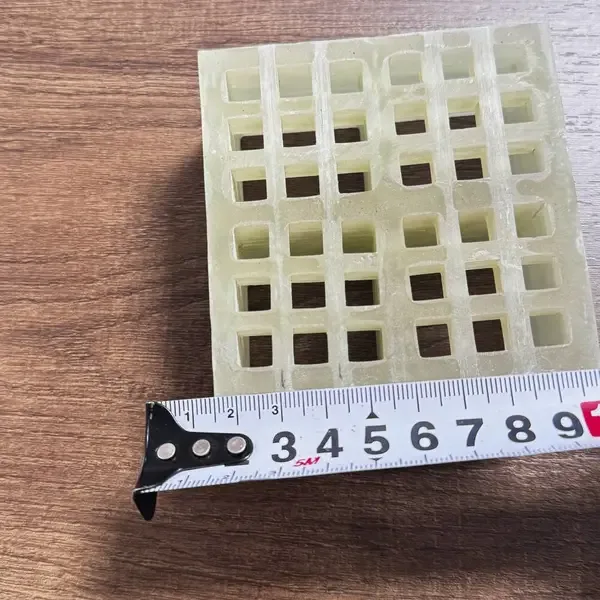
Pitch is measured center to center. Net opening is the clear gap between edges. They can be expressed in the same unit and still describe different fields. A buyer who converts pitch and then calls it clear opening can approve the wrong opening.
Molded, mini-mesh, covered and pultruded products also measure different elements. Mini mesh may require both an upper and lower grid. Pultruded products may require bearing-bar pitch and cross-rod spacing. Covered products may require overall height and joint dimensions.
The FRP grating sizes guide explains the definitions. The export rule is simpler: every number must carry both the correct unit and the correct field name.
Separate the Source Panel from Finished Pieces
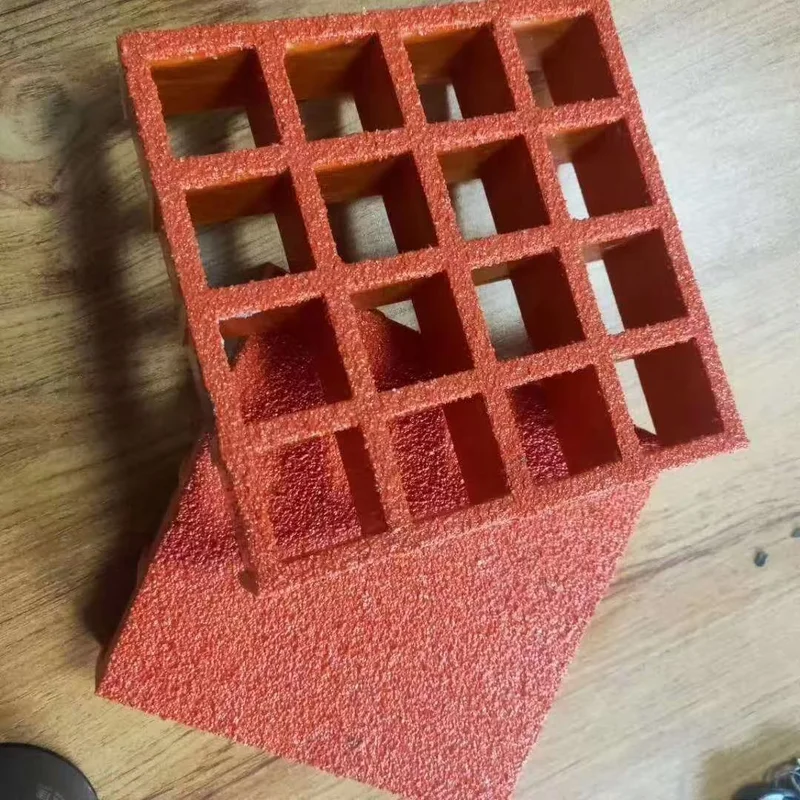
The production plan uses source panels or pultruded bar lengths. The approved finished-piece schedule describes the delivered objects. Cutting and fabrication create a bridge between them.
One source panel may yield several finished pieces. The buyer may therefore receive more pieces than the source-panel quantity. Conversely, the finished area may be less than the source-panel area because of offcuts and unusable shapes.
Keep both records. The production plan needs source quantity. The cutting and inspection plan needs piece identity. Packing needs the finished-piece count and package grouping. Receiving needs piece marks and revision identity.
The factory-cut guide explains why the two levels of identity must remain connected. This export page adds the unit and quantity consequences for packing.
Preserve Direction on Long and Directional Products
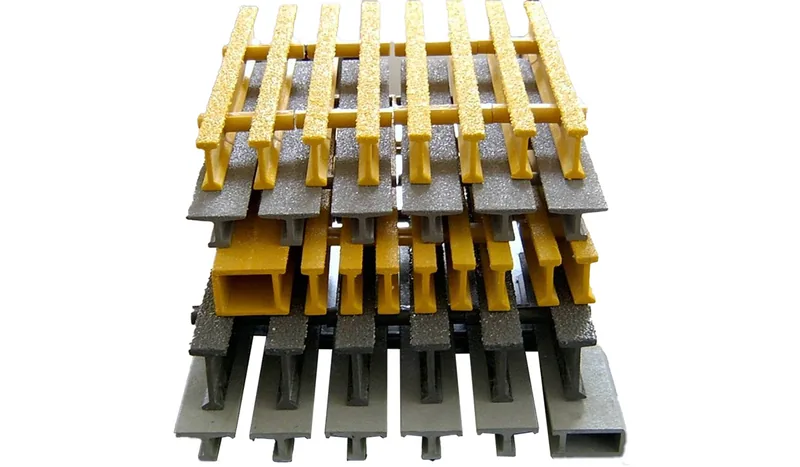
For pultruded grating, a dimension can describe the panel outline without identifying the load-bearing direction. The bearing-bar length, panel width, bar profile and pitch belong to the product row. Packing should preserve the direction and keep the piece marks readable.
Long bars and assembled panels may need support along the bundle. The pultruded packing guide covers direction, support and edge protection. The unit table should identify which length and width values refer to the bar direction, the panel outline or the package.
Build Package Quantity From the Packing Plan
The packing list should identify each package and list the pieces by mark inside it. If two package IDs contain the same product family but different finished sizes, the list should show that distinction. Accessory packages also need an identity.
The number of pieces per package may be constrained by length, width, mass, support, handling, surface protection or installation sequence. It should not be inferred from total area alone.
Package count × pieces per package is useful only when the packages are actually uniform and the list says so. Mixed export deliveries often are not.
Add Package Volume to the Freight Quantity
Gross weight does not describe how much freight space the order occupies. FRP grating can be large and comparatively light, so the packed package footprint, height and stackability can control the transport plan even when the weight is below the vehicle or container limit.
For each package, record the packed length, width and height in one stated unit. Calculate cubic metres from the actual packed outline, then keep the formula with the package ID. Record whether the package may be stacked, where lifting equipment can access it, and which side or face must remain upward. Do not use the nominal panel area as the package volume.

Write the Protective Packing Plan
“Export packing” is too broad to quote or inspect. Define the protection intended for the actual product:
- edge and corner protection;
- separators between finished faces;
- stretch wrap or other surface protection;
- strapping and protection under the strap;
- pallet, bearers, crate or other support;
- handling and orientation marks; and
- any destination-specific treatment or marking requirement for wood packaging.
The requirement is project and destination specific. Do not assume that a generic wooden pallet is accepted everywhere, and do not claim a treatment or mark unless it is part of the confirmed packing scope. The record should identify who supplies, treats, marks and inspects the export package.
Wood packaging rules and container capacity should be checked for the destination and actual route. This page does not publish a universal container quantity or wood-treatment claim because piece format, package design and cargo limits vary.
Record Net Weight and Gross Weight as Different Values
Net weight describes the product. Gross package weight includes the product and its complete packing system. Pallets, wooden supports, wrapping, straps, labels and packed accessories can make the gross weight larger.
For freight and lifting, use the actual package gross weight when it has been recorded. If the value is a pre-packing estimate, label it as an estimate and state its basis.
Reconcile the Documents Without Recalculating Every One
At the end of the chain, compare the documents rather than treating each as an independent conversion exercise:
- the item ID and product description;
- the original and approved drawing dimensions;
- the source and finished quantities;
- the finished-piece schedule;
- the package IDs and packing list;
- the net and gross weight record;
- the package dimensions and total CBM;
- the transport package count; and
- the packing list, commercial invoice, Bill of Lading and applicable inspection or conformity documents.
All records should point to the same controlled item and quantity basis. If one document uses a different revision, unit convention, package count or gross weight, stop and resolve it before shipment.
Unit-control sequence
From Original RFQ Units to Reconciled FRP Grating Export Records
Preserve, convert, approve, separate quantities, pack, weigh and reconcile.
Record the value, unit, quantity basis and whether the dimension is nominal or exact.
Show the converted value and rounding, then approve the controlling actual dimension on the drawing.
Link the source-panel or bar schedule to the finished-piece marks, counts and area.
Assign pieces and accessories to package IDs with packed dimensions, CBM, marks, stack limits and handling notes.
Distinguish product weight from the complete packed package used for freight and lifting.
Confirm edge, corner, strap and surface protection, wood-packaging requirements, load distribution and release photographs.
Compare drawing, inspection, packing list, package labels, commercial invoice, transport document and applicable quality records.
Export boundaries
Four Rules That Stop FRP Grating Unit Conversion From Changing the Order
Arithmetic can be correct while the controlled product, quantity or weight basis remains wrong.
- Conversion does not approve a manufactured size — A calculator can show that one unit equals another. It cannot decide whether the project accepts a nominal panel, an exact converted size, a tolerance, a cut piece or a particular measuring plane.
- Area and count answer different questions — Area can support material order or price calculation. Piece count supports identity, hardware, inspection and packing. One should not be invented from the other after cutting creates multiple finished pieces.
- Net weight is not freight weight — The product weight excludes pallet, supports, wrapping, straps, labels and separately packed accessories. Freight and lifting planning use the complete package value.
- A package label is not a substitute for a packing list — The label identifies the package. The list should connect that package to item IDs, piece marks, quantities, weights and documents so the receiver can reconstruct the delivery.
- Gross weight is not a complete loading plan — Freight space also depends on packed length, width, height, footprint, stackability and cargo distribution. CBM must be calculated from the actual package outline and kept with the package ID.
Export checklist
What to Record in an FRP Grating Export Unit and Packing Schedule
Ten groups connect the buyer's request to the package and shipment.
- Original asked size — Value, unit, nominal or exact, and quantity basis.
- Conversion record — Formula, rounded result, approved controlling unit and reviewer.
- Product configuration — Family, depth or profile, pitch or mesh, resin basis and surface.
- Drawing basis — Actual dimension, datum, tolerance, revision and orientation.
- Source quantity — Full panels, bar lengths or material units consumed.
- Finished quantity — Piece marks, piece count and finished area.
- Package schedule — Package ID, pieces by mark, accessories, L × W × H, CBM and handling notes.
- Weight record — Product net weight and complete package gross weight.
- Protective packing — Edges, corners, surface separators, wrapping, straps, pallet or crate and applicable wood requirements.
- Loading plan — Stack limit, upright or flat orientation, lifting access, load distribution, sequence and release photographs.
- Transport basis — Incoterm, named place, package count and loading constraints.
- Document reconciliation — Drawing, packing list, labels, invoice, Bill of Lading and applicable quality records agree on item and units.
Conversion record
FRP Grating Unit Conversions and the Basis to Keep Beside Them
Use conversions for checking, while the approved drawing and package record remain controlling.
Request a Project Quote| Specification | Value |
|---|---|
| Length conversion | 1 in = 25.4 mm Do not round the converted result into an approved dimension without review. |
| Foot conversion | 1 ft = 304.8 mm An exact 4 × 8 ft panel is 1219.2 × 2438.4 mm. |
| Area conversion | 1 m² = 10.7639 ft² State whether area is source panel, finished pieces or priced quantity. |
| Mass conversion | 1 kg = 2.20462 lb Name the item and whether the value is net or gross. |
| Mass per area | 1 kg/m² = 0.204816 lb/ft² Tie the figure to the exact product row and surface. |
| Nominal vs actual | Both visible The drawing or approved specification should name the controlling actual value. |
| Panel vs piece | Separate quantities Connect them through the cutting or production schedule. |
| Net vs gross | Separate package values Record the complete package basis used for freight. |
| Package volume | L × W × H → CBM Use the packed outline and keep the calculation with the package ID. |
| Protection and loading | Written packing and load plan Name protection, wood-packaging review, stack limit, lifting access and release evidence. |
Our factory handoff
How Our Factory Connects FRP Grating Units to the Loaded Package
The approved item, finished pieces, package and export records stay on one quantity basis.
The drawing and unit table stay connected
Our review begins with the buyer's original unit and approved drawing. The source panel, finished pieces and package remain separate quantities that point back to the same item identity.
Packing is planned before freight
The package outline, gross weight, protection and lifting access are defined before the shipment is priced or loaded. A panel weight does not substitute for a complete package record.
Directions remain visible
Pultruded bearing direction, finished-piece orientation and piece marks pass through packing so the shipment can be unloaded and received in the intended order.
One set of quantities reaches the documents
Packing list, invoice, Bill of Lading and applicable quality records are reconciled against the same item basis before dispatch. A unit change is not left for a later department to discover.
Export quote
Send the Original Units, Quantities and Packing Requirements
State whether the size is nominal or exact and which values should control the approved drawing.
- Keep the original request
- Approve the actual drawing
- Close at package weight and count
FRP Grating Export Unit and Packing Questions
Is a 4 × 8 ft FRP grating panel exactly 1220 × 2440 mm?
How do I convert FRP grating size units safely?
What is the difference between pitch and clear opening?
Why are panel and finished-piece quantities different?
Should an export quotation use square metres or square feet?
Why is panel weight not the same as package weight?
When should gross package weight be confirmed?
How is CBM calculated for an FRP grating export package?
What should “export packing” include?
Which documents should use the same package basis?
How should mixed pieces be listed on a packing list?
Are exact conversion formulas enough for export documents?
What is the most common FRP grating export unit error?
This content was prepared and reviewed by Dengtai Industry’s technical and production team using the project conditions, available product data and applicable documents. Limits that require design, testing or approval are identified in the content. Content last checked: