FRP grating sea freight review
Stacking FRP Grating for Sea Freight: Load and Protection Checks
Stackability belongs to the packed transport unit. Confirm what carries the vertical load, which surfaces touch, how edges and straps are protected, how moisture and vessel movement are addressed, and how the package will be lifted and identified. A grating panel load table is not a sea-freight stack limit.
Prepared by
Dengtai Industry
Published
·
Reviewed

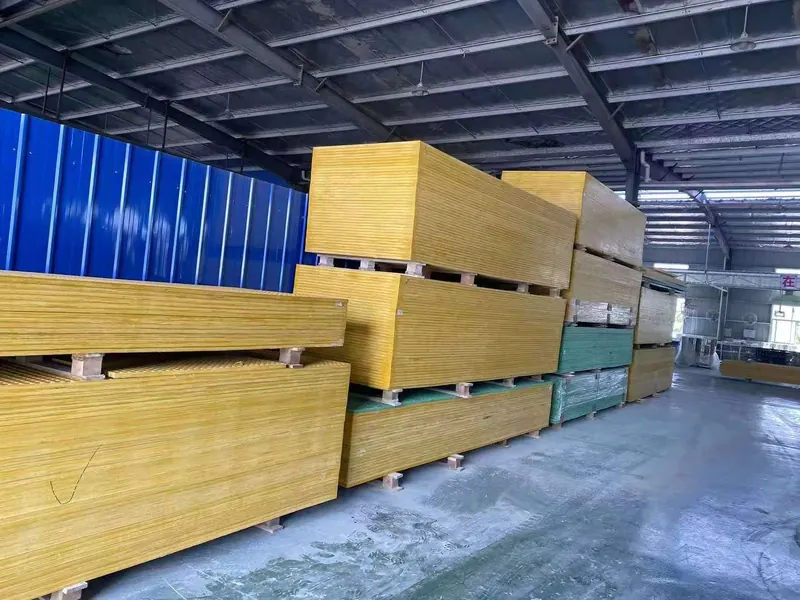
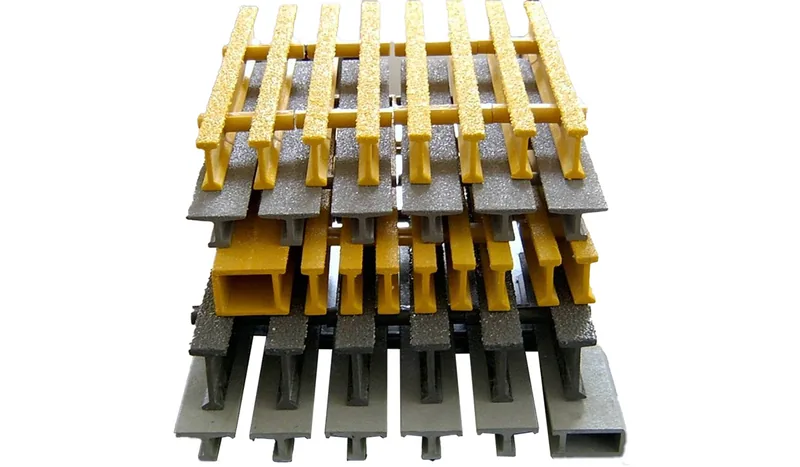
Prepare the package as the object that will be lifted, stacked and restrained. Photo: Dengtai Industry.
The Short Answer: Approve the Packaged Unit
The first useful question is not “how high can FRP grating be stacked?” It is “what is the complete packed unit, and what supports it?”
That unit includes the grating pieces, base or pallet, separators, edge protection, straps, wrapping and packed accessories. Its actual dimensions and gross mass can differ from the nominal panel size and sum of panel weights. It is this package that a forklift, crane, container or receiving team must handle.
Sea freight adds conditions that are not represented by an installed grating load table: package-on-package compression, concentrated contact at edges, strap pressure, lifting points, condensation, salt-laden air, vessel motion, variable storage and the need to keep piece identity readable.
The safe conclusion is therefore conditional. A package can be planned for a stated stack position only when its load path, protection, mass, dimensions, lifting access, restraint and route have been reviewed together. This page explains that review. It does not publish a universal stack height or lifting capacity.

A Panel Load Table Describes an Installed Panel
FRP grating load data normally depends on a controlled support arrangement, a defined clear span and a stated load condition. It may also distinguish molded, pultruded, square mesh, rectangular mesh and different depths. The FRP grating load and span guide explains the installed-panel assumptions behind that data.
In a freight package, the load case changes:
- the upper package may rest on selected separators;
- the lower package may be supported only at bearers;
- several pieces may create different high points;
- straps can compress an edge;
- a crate can transfer load around the outside;
- lifting equipment applies a different temporary path; and
- the package may be stowed at an angle or exposed to motion and vibration.
That does not mean the panel’s engineering data is irrelevant. It means the data is an input to the packing review, not the packing approval itself. The packing and export-unit guide shows how finished pieces and package quantities are kept separate.
Our factory quotation therefore separates “panel product and installed design duty” from “packed transport unit.” If the buyer supplies only a panel name and mass, we can identify the missing packing information but cannot pretend the stack is approved.
Find the Supported Vertical Load Path
Start with a side view and a plan view of the package. Mark every physical contact:
- between the bottom piece and its base;
- between adjacent pieces and separators;
- between the top of one package and the bottom of the next;
- at straps, crate faces or blocking; and
- at lifting equipment.
The vertical load path should run through identified support or protected contact zones. The word “separator” alone is not enough. A loose or isolated separator can create a point load instead of distributing the upper package.
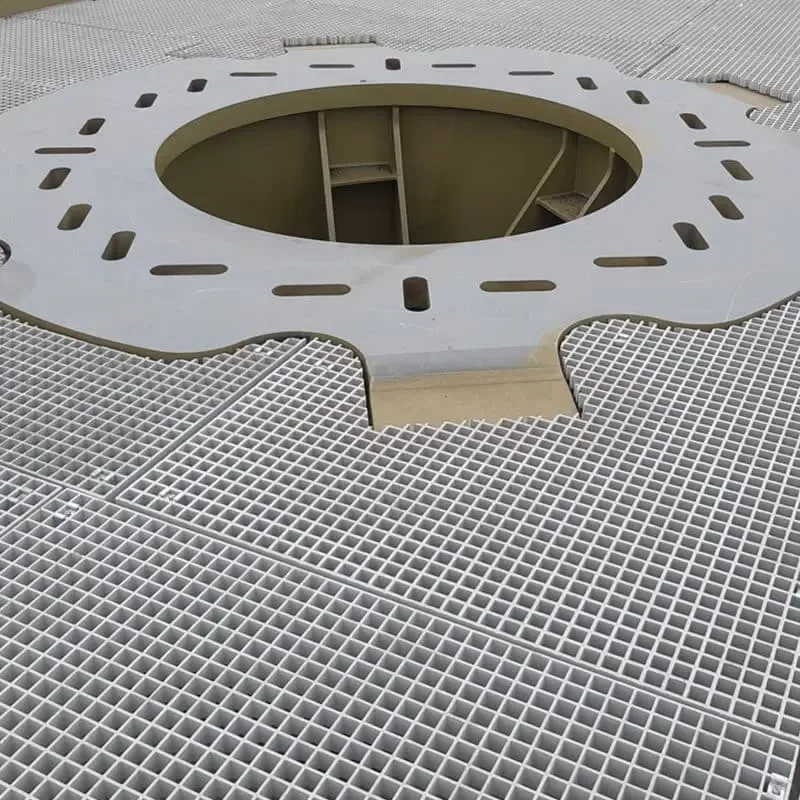
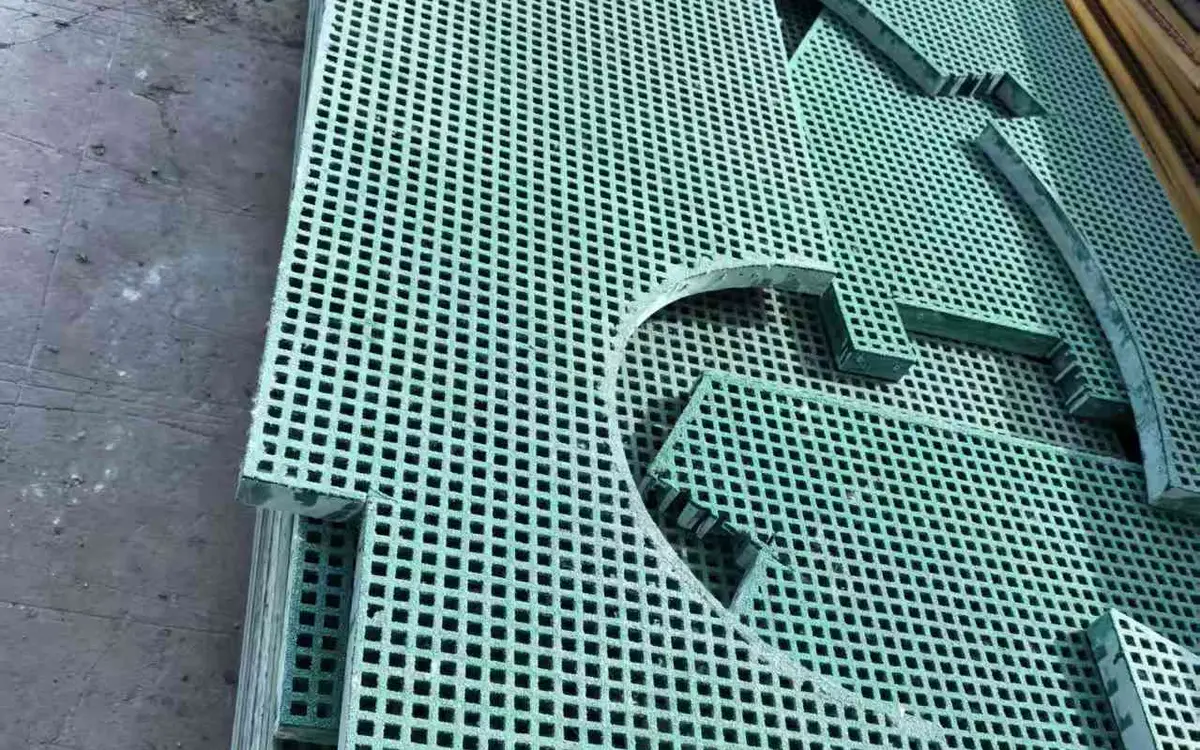
For finished pieces with cutouts, a nominal outer rectangle no longer describes the contact area. A bearer may meet a panel at a location affected by a cutout, a cut bar or a different edge condition. That position belongs on the packing drawing.
Derive a project-specific layer count
The packing plan can produce a number without inventing a universal rule. Use the complete package height, route envelope, gross mass and verified contact allowance:
- Height limit: divide the clear stack height at the tightest point by the actual package height. Use cumulative heights when packages are not equal.
- Contact limit: divide the verified allowable package-on-package contact load by the gross mass of one package. This is valid only when the load path and contact arrangement match the evidence.
- Handling limit: reduce the result where stability, lifting access, restraint or unloading makes a taller stack impractical.
- Carrier limit: use the stowage or transport requirement that applies to the actual route.
The released layer limit is the lowest accepted result, not the number that happens to fit visually. If the contact capacity is not verified, that input remains open and the factory must not infer it from the grating load table. For mixed package heights, use a cumulative table rather than a simple division.
Check the lower unit first
The bottom package is the least visible and often carries the largest accumulation of mass. It needs a base that keeps the stack stable, a defined contact with the floor or transport surface and edge protection around restraint.
Do not inspect only the visually accessible top package. A neat top layer does not prove the base is flat, continuous or free of debris.
Protect the Contact, Not Only the Outside
Packaging imagery often shows wrapping, straps and timber. The engineering question is what those features do at each interface.
An unprotected strap can press into a panel edge. A timber member can create a hard high point under a mesh. Wrapping can conceal a damaged edge. A protective material that moves out of position before tightening may leave no useful protection at the actual contact.
The packing record should therefore identify:
- the contact location;
- the material placed there;
- how it is held in position;
- whether the strap or frame can still move it;
- who inspects it before closure; and
- how the protected condition will remain visible during receiving.
The DM Composites packaging reference shows pallet-supported bundles, edge framing, wrapping, strapping and forklift handling from below. We use it as a reminder of the physical interfaces that need control, not as evidence that every FRP grating product can use the same package.
The CBSI installation guidance also warns that wire rope can cinch, bind and damage panels and that lifts should protect the grating. The same handling principle applies before installation.
Treat Straps as a Force Path
A tight strap is not automatically a better strap. Its function may be to keep separators together, hold wrapping, brace a bundle or restrain movement. Those tasks need different details.
Check whether the strap:
- compresses only protected material;
- remains clear of sharp timber or metal edges;
- can loosen or migrate during handling;
- deforms the panel or base;
- blocks a label or lifting point; and
- remains accessible for receiving inspection.
Do not use “tighten until it looks secure” as a universal factory instruction. The acceptable condition comes from the package design and the product’s sensitivity to compression.
Plan the Lifting Method Before Wrapping
Forklift access and sling access are part of the package geometry.
For a forklift, the planned entry must remain clear after wrapping, straps and edge protection. The forks should contact the intended base or lift points, not the underside of an unsupported panel. The load centre, gross mass and route to the container or truck still require handling review.
For a sling, protect the panel and package from the sling or spreader contact. A wire rope or unprotected edge can damage the product even when the lift itself is stable.
The factory can assign a package ID and prepare the intended lifting presentation. It should not infer a lifting capacity from the panel’s installed load rating or from a photograph. If the lifting arrangement, attachment or route changes, the packing plan should be reviewed again.
Confirm LCL, Full-Container and Destination Handling
The same origin package can meet different handling chains after it leaves the factory.
A full-container shipment may avoid consolidation, but the package still needs a load plan, restraint and accessible unloading at destination. LCL can introduce additional transfer and restowing points, mixed freight around the package and a greater chance that labels or protective material are disturbed.
For either mode, confirm:
- whether the package remains intact from origin to destination;
- who can inspect it at a consolidation or transfer point;
- whether the package must stand and be identified independently;
- which forklift, crane, sling or liftgate equipment will unload it;
- whether ground conditions and access allow that equipment to work; and
- how the receiving team will identify the package before opening it.
A package that is safe at the factory but cannot be lifted or identified at destination is not a complete delivery plan. The FRP grating weight guide helps separate panel mass from the gross package mass used in those checks, while the receiving inspection guide continues the identity and damage-evidence chain after arrival.
Separate Water Protection From Ventilation
Sea freight combines moisture, changing temperature, salt exposure and long storage intervals. A cover can protect panels from direct water and dirt, but the whole package still needs a defined moisture route.
Ask:
- Is water able to enter at the top, base or strap penetrations?
- Can water or condensation collect against the panels?
- Is the base dry and clean before closure?
- Is ventilation required or should the package be sealed?
- Does the wrapping trap moisture introduced before packing?
- How should the package be stored before loading and after unloading?
- When should it be opened and inspected at destination?
A material description is not enough. Keep the actual wrapping, sealing and ventilation method in the packing plan so receiving teams can preserve the condition and report a problem correctly.
Do Not Stack Mixed Pieces Without a Contact Map
Finished cut pieces, pultruded panels and accessory boxes can create an uneven package. A simple height check does not show which pieces carry the upper load.
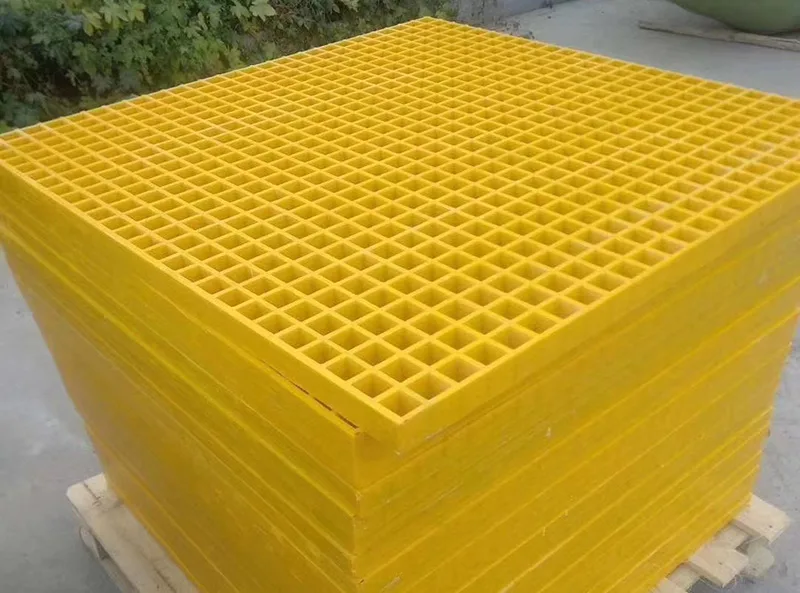
Molded grating has an integral grid. Pultruded grating has directional bearing bars and cross rods. Cutout pieces may have changed bar patterns or edge conditions. Even when their outer panels look similar, the points available for package support can differ.
Mixed packing should have one of two clear approaches:
- group pieces by a compatible package and contact condition; or
- design a controlled mixed package with a contact map and separate accessory identity.
If a small finished piece is placed in a void beside a larger panel, it should not become an unplanned high point. If an accessory box sits on a cutout area, that contact must be visible on the packing plan.
Keep Identity Visible Through the Package
A packed unit should answer four questions without opening every layer:
- Which order and shipment does it belong to?
- Which package is it?
- Which finished pieces are inside?
- What handling or inspection condition applies?
Use a package ID that matches the packing list and shipping documents. Keep piece marks attached to the pieces and show how the package corresponds to the approved drawing revision. If accessories are included, give them a separate identity instead of hiding them in a generic “panel kit.”
Longtime’s panel layout and cutout guide makes a useful peer point: unique piece references and orientation marks should continue into packing and installation. Our factory application is stricter at the transport boundary: the package itself becomes an additional identity level above the piece.
Define Who Owns Stowage and Lashing
There are several different controls:
- product and finished-piece conformity;
- package construction and closure;
- forklift or crane handling at origin;
- container or vehicle stowage;
- tie-down or lashing design;
- ocean carrier acceptance;
- destination lifting and storage; and
- final receiving acceptance.
One company does not necessarily own all of them.
Our default factory scope covers the supplied product, agreed fabrication and agreed package presentation. Unless a separate written scope says otherwise, we do not treat a panel quotation as structural approval of a lifting frame, container lashing arrangement or vessel stowage plan.
That boundary protects the buyer. It turns an undocumented assumption into a named open item that can be closed by the correct party.
Inspect the Stack Before It Leaves
A stack release should record:
- package ID and contents;
- actual dimensions and gross mass;
- bottom, middle or top position;
- support and separator contact;
- edge and face protection;
- strap or restraint condition;
- lifting access;
- wrapping and moisture route;
- label readability; and
- any open item.
Photograph both the complete package and the critical hidden interfaces. A photograph of the wrapped exterior alone cannot prove that the lower edge was protected or that the separators remained in position.
When a package changes after release, treat it as a revision. A replacement strap, added accessory, changed stack position or opened wrap can alter the earlier record. Do not silently issue the package under the old condition.
Our Factory View
We can review the offered product, finished-piece schedule, packing presentation, package IDs, piece marks and agreed loading access. We can coordinate a package-specific record and identify missing information before closure.
We do not convert a nominal panel size into a universal stack height. We do not infer the weight of a crate that has not been defined. We do not assign a lifting capacity from a panel load table. And we do not accept responsibility for a carrier stowage or lashing calculation unless that work is explicitly included in a written scope.
The practical standard is simple: the transport plan, the physical package and the release record must describe the same object.
Freight vocabulary
Ten Terms That Define a Stackable FRP Grating Package
Package identity, load path, mass, contact protection and handling access must be controlled together.
- Packed unit
- The physical bundle, pallet, crate or other package that the carrier will lift, stow and restrain. It includes panels, separators, edge protection, wrapping, straps, base members, accessories and package marks.
- Stack position
- The top, middle, bottom or single-high position assigned to one packed unit. The position determines what rests above and below it and belongs to the load plan.
- Vertical load path
- The route through which stacked mass passes from an upper unit into supports below. Unsupported grating spans, isolated high points and loose separators can interrupt it.
- Gross mass
- The mass of the complete packed unit, not only the grating pieces. It includes the base, crate, wrapping, separators, straps and packed accessories where applicable.
- Footprint
- The actual base area and support contact pattern of the package. A nominal panel size is not enough when bearers, crates or overhangs change the transport object.
- Edge protection
- A material or detail placed between a strap, frame, adjacent package or handling equipment and the grating edge to reduce point pressure and abrasion.
- Restraint
- The arrangement intended to limit package movement. It may include straps, bands, blocking, dunnage or carrier lashing, with separate responsibilities.
- Lifting access
- The clear path and approved equipment interface needed to lift the packed unit. It is not inferred from an image of the panel or a nominal weight.
- Moisture route
- The plan for water, condensation and ventilation at wrapping, pallet, storage and transport interfaces. A closed wrap is not automatically a dry package.
- Stacking record
- The package ID, gross mass, dimensions, stack position, load path, protection, lifting method, marks, photographs and acceptance/release evidence.
Stacking questions
Which Evidence Answers an FRP Grating Freight Stack Question?
Replace visual assumptions with the actual package, support and route records.
| Question | Useful evidence | Not enough on its own |
|---|---|---|
| Can this unit support another unit? | Contact map, base and separator detail, package mass and approved transport stack plan | A panel load table |
| Can the bundle be stacked three high? | Route, carrier limit, package dimensions, support positions and acceptance | The fact that three similar bundles fit vertically |
| Are the panels protected? | Edge, face and strap-contact detail plus clean handling records | Wrapping over an already point-loaded edge |
| Is the package stable? | Base footprint, separators, restraint, blocking and lifting sequence | Tight straps without checking deformation |
| Will wrapping keep it dry? | Moisture-control and ventilation plan from pack closure to unpacking | “Waterproof” written without a working method |
| Can a forklift move it? | Gross mass, load centre, clear fork access and marked lifting points | A photograph that shows only one side |
Product and packing
How Product Form Changes the FRP Grating Packing Risk
Full panels, directional bars, finished cutouts and accessory packs place different demands on the unit.
| Product form | Packing question | Common wrong assumption |
|---|---|---|
| Molded square or rectangular panels | Supported base, separator contact and whether the strong bar direction must remain marked | The integral grid can accept any stack contact |
| Pultruded panels | Bearing-bar direction, bundle support, separator contact and lift path | A full rectangular outline proves the bundle orientation is safe |
| Finished pieces with cutouts | Available contact zones, changed edge geometry and piece ID | The original panel size still describes the packed piece |
| Small or mixed pieces | Controlled grouping, voids, accessory packs and independent marks | Small pieces can fill gaps without becoming high points |
| Covered grating | Base panel, cover surface, interface and upper-contact protection | Protecting the visible cover protects the whole assembly |
| Accessory set | Separate packing, quantity and relationship to its panels | Clips and hardware can move freely inside a “panel kit” |
Package register
Sea-Freight Stacking and Protection Confirmation Table
These fields turn the packed pieces and route into a supported, protected and traceable stack plan.
| Packing record | Required value | Why it matters |
|---|---|---|
| Package ID | Unique package or unit reference | Connects drawings, pieces, marks, photographs and the packing list |
| Contents | Piece IDs and quantities in the unit | Prevents one stable-looking package from concealing missing or mixed pieces |
| Dimensions | Actual length, width and height including base and overhang | Establishes the transport footprint and stack volume |
| Gross mass | Complete packed-unit mass | Supports lifting and freight planning; panel net weight is incomplete |
| Stack assignment | Bottom, middle, top or single-high position | Defines what is above and what touches the package |
| Layer basis | Route height, package height, contact allowance, stability and carrier limit | Converts the stack plan into a project-specific number rather than a generic layer rule |
| Vertical contact | Bearers, separators, contact patches and supported positions | Shows where stack load can travel |
| Edge and face protection | Details at every strap, frame, lower contact and upper contact | Reduces point pressure and abrasion |
| Moisture control | Wrapping, cover, ventilation and condensation allowance | Connects the package to the sea route and storage condition |
| Lifting | Fork or sling access, protected contact and planned lift point | Keeps handling equipment from deciding the panel condition on site |
| Marks and release | Package label, handling marks, photographs and accepted condition | Preserves identity and evidence after the package is closed |
Release gates
When an FRP Grating Freight Stack Is Ready to Close
Confirm the load path, protection, lifting, moisture and responsibility before the package is sealed.
Specify this if…
- The actual packed-unit mass and dimensions are known.
- The base and upper contact positions are shown.
- The route stack envelope and verified package-contact allowance are stated.
- Each panel or finished piece keeps its package and piece ID.
- Edge, face and strap protection are assigned to the actual contact points.
- Moisture and vessel-motion expectations are discussed with the transport planner.
- Fork or sling access is visible after protection and wrapping.
- The stacking decision includes the carrier or stowage plan.
Look elsewhere if…
- The stack height is copied from another shipment.
- A panel load table is used as proof of package stackability.
- Panels bear directly on unsupported mesh or isolated high points.
- Straps are tightened without edge and face protection.
- The bottom package cannot be inspected after closure.
- Wrapping is assumed to eliminate condensation.
- No one owns carrier stowage, lashing or receiving inspection.
Packing sequence
From Finished Pieces to a Released Sea-Freight Unit
Define, measure, map, protect, lift and identify the package in one sequence.
Identify pieces, base, separators, accessories, package ID and closure method.
Measure the complete package, including bearers and any overhang.
Use gross mass for lifting, stacking and freight checks.
Take the lowest of route height, package-contact allowance, stable handling and carrier limits.
Check origin loading, LCL or full-container processing, destination unloading and available equipment.
Show whether upper packages bear on supported positions or isolated points.
Resolve strap, edge, face and package-to-package interfaces before tightening.
Keep access clear and protect the points touched by forks or slings.
Coordinate wrapping, ventilation, restraint and responsibility with transport.
Keep package marks, packing list, photographs and open items visible.
RFQ checklist
What to Send for an FRP Grating Stacking Review
Fourteen records make the freight-stacking request usable for packing and production.
- Packing plan — Package IDs, piece quantities, stack positions and closure sequence.
- Product schedule — Product family, depth, actual panel or finished-piece dimensions and marks.
- Package dimensions — Actual L × W × H including base, edge protection and any overhang.
- Route stack envelope — Available height at storage, loading, transport and unloading positions.
- Transport mode — Full container or LCL, including consolidation, transfer and restowing exposure.
- Contact allowance — Verified package-on-package support limit from the responsible transport or structural review.
- Gross mass — Complete package mass, not only sum of panel net weight.
- Support and separators — Base bearers, spacing, contact patches and material.
- Edge and face protection — Material and location at strap, frame and panel-to-panel contacts.
- Restraint — Straps, bands, blocking or tie-downs and protected tightening points.
- Lifting — Origin and destination fork, sling or liftgate access, protected contact and handling instruction.
- Moisture — Wrap, cover, ventilation, clean dry interfaces and unpacking sequence.
- Identity — Package label, piece mark, handling symbol and relationship to the packing list.
- Release — Photographs, inspected condition, open points and responsible approver.
Packing schedule
What the FRP Grating Stacking Detail Should State
The approved record defines a package-specific transport condition, not a generic layer count.
Request a Project Quote| Specification | Value |
|---|---|
| Stacking basis | Complete packed unit Panel construction, base, separators and accessory pack all affect the review. |
| Stack height | Lowest verified project limit Compare route height, package height, support allowance, stability and carrier limit. |
| Contact | Supported positions with protection Avoid isolated point loading through mesh or a cut edge. |
| Gross mass | Actual packed mass Use for freight, lifting and receiving records. |
| Lifting | Approved access and protected interface Do not infer capacity from the panel image. |
| Moisture | Documented wrap and ventilation route Discuss condensation and storage with the responsible transport parties. |
| Marks | Package ID plus piece IDs Marks must remain readable after wrapping and restraint. |
| Release | Recorded package condition Keep photographs and open items with the package identity. |
Packing review
Send the Piece and Package Plan
Include the planned stack, lifting access, moisture route and final stowage responsibility.
- Show the complete packed unit
- Identify what supports the stack
- State who owns final stowage and lashing
FRP Grating Sea-Freight Stacking Questions
How many FRP grating packages can be stacked for sea freight?
Can a grating load table confirm the stacking capacity?
Does LCL sea freight need a different packing plan from a full container?
What is wrong with stacking panels directly on one another?
Why is gross mass different from panel weight?
Does wrapping protect FRP grating from sea air and condensation?
Where should edge protection be used?
Can the factory decide the container lashing plan?
What should remain visible after the package is closed?
When should the stack be inspected?
What should I send for a packing quotation?
Final release rule
Release the Package Only When the Whole Chain Agrees
The final control combines project-specific limits with the packaging and transport evidence below.
- Final release rule — Release only when the packed unit, supported load path, gross mass, protection, handling chain, lifting access and package identity describe the same shipment.
- Use project values — The layer limit is the lowest accepted result from route height, contact allowance, stable handling and carrier requirements. Do not transfer a number from another package.
- Keep the transport boundary visible — The factory can prepare the offered product and agreed package. Carrier stowage, lashing calculations and vessel acceptance remain with the responsible transport parties.
- Packaging and handling reference — DM Composites shows pallet support, edge framing, wrapping, strapping and forklift handling. Open the DM Composites packaging reference
- Handling and bearing-interface caution — CBSI illustrates protected lifting and the separation between bearing support and attachment. Open the CBSI installation guidelines
- Installed-panel engineering limit — Fibergrate engineering guidance applies to defined product, support and fixing conditions. Open the Fibergrate engineering guide
This content was prepared and reviewed by Dengtai Industry’s technical and production team using the project conditions, available product data and applicable documents. Limits that require design, testing or approval are identified in the content. Content last checked: