Pultruded grating packing guide
Packing Pultruded Grating: Bar Direction, Supports and Labels
Pack the finished pieces so the pultruded bars, grit surface, cut edges, piece marks and accessories arrive in a condition that can be identified, lifted and installed without site sorting.
Prepared by
Dengtai Industry
Published
·
Reviewed

A representative export-loading scene. Pultruded package support and labels come from the actual order. Photo: Dengtai Industry.
Packing vocabulary
The Package Is a Finished-Piece Control, Not Only Packaging Material
Identity, orientation, support and gross weight all travel with the product.
- Finished-piece schedule
- The list of each pultruded piece by mark, width, bearing-bar length, quantity, cutouts, edge treatment, finish and installed location. Packing is planned from this list.
- Bundle
- A controlled group of pieces secured as one handling unit. It should have a defined support arrangement, protection method, gross weight and identification.
- Support point
- A bearer or pallet member that carries a bundle without allowing uncontrolled bending or concentrated loads. Spacing and position depend on the pieces and the agreed packing detail.
- Bearing-bar direction
- The run direction of the continuous pultruded bars. Packing should preserve orientation and prevent a bundle from being interpreted from a different face or end.
- Edge protection
- Corner, end or strap protection that prevents impact, abrasion and strap crush during handling and transport.
- Package mark
- The unique identifier on a bundle, pallet or crate that connects the physical package to the packing list, piece schedule and shipping documents.
- Gross package weight
- Piece mass plus pallet, crate, bearers, wrapping, straps, labels and packed accessories. It is the relevant value for lifting and freight planning.
- Mixed consignment
- A shipment containing more than one piece type or accessory, such as panels, cut treads, clips, hardware, edge protection or separately packed items.
Packing decisions
What Changes the Bundle and Protection Plan
The product row and finished-piece schedule determine how the package must be handled.
Swipe horizontally to view all columns.
| Packing input | What it changes | What the order should record |
|---|---|---|
| Piece configuration | Stack footprint, support spacing and protection. | Profile, depth, pitch, finished outline and piece count. |
| Long direction | How pieces should be aligned, lifted and supported. | Bearing-bar direction and bundle orientation. |
| Surface | Abrasion protection and separator needs. | Grit, colour and any functional coating. |
| Cut and sealed ends | Edge or corner protection during handling. | Faces sealed, cured condition and protection requirement. |
| Accessories | Whether clips and hardware travel with the pieces. | Clip type, quantity, material and package reference. |
| Route | Package type, lifting equipment and import requirements. | Destination, transport mode, maximum unit weight and document scope. |
| Container or vehicle load | Stowage pattern, dunnage, load distribution and restrictions on stacking. | Transport mode, package sequence, lifting access and any destination unloading constraint. |
Packing review
When a Pultruded Shipment Needs a Written Packing Plan
Long pieces, similar marks, accessory sets and heavy handling units deserve explicit controls.
Specify this if…
- The order contains long pultruded pieces or a mix of different finished sizes.
- Several piece marks look similar and must not be mixed during installation.
- Grit, colour, sealed ends or functional surfaces require protection.
- Clips or hardware must arrive with specific panels or removable pieces.
- The project has a maximum lift, unloading equipment or destination packaging requirement.
Look elsewhere if…
- The buyer expects a generic pallet count to identify every piece.
- The pack is being planned from total square metres rather than the finished-piece schedule.
- Bare straps are being used directly over finished edges without protection.
- Lifting equipment and access have not been checked against the gross package weight.
- The destination requires a specific wood-treatment or document standard that has not been confirmed.
Package record
Eight Fields for a Pultruded Grating Pack
Connect piece identity, support, protection, weight and shipment evidence.
Swipe horizontally to view all columns.
| Packing field | What to record | Why it matters |
|---|---|---|
| Piece identity | Mark, revision, quantity and installed location. | The correct piece must remain identifiable after packing. |
| Bundle grouping | Which marks share a support and handling unit. | Mixed sizes can create poor support or sorting errors. |
| Direction | Bearing-bar run, top face and nosing side where applicable. | Unloading and installation should preserve orientation. |
| Support | Pallet, bearers, iron supports and spacing. | Long pieces must not bridge uncontrolled gaps. |
| Protection | EPE foam, stretch film, corner and end protection. | Abrasion, strap crush and edge chipping occur before installation. |
| Accessories | Clip or hardware package identity and matched panel pieces. | A missing or mismatched fixing set can stop installation. |
| Weight and lifting | Piece count, net weight, gross weight and lifting points. | Transport and unloading equipment follow the package, not panel rate. |
| Release | Package photo, packing list, labels and required documents. | One record connects the stock, shipment and installation schedule. |
Pultruded grating packing starts with the finished pieces, not with the blanket-wrapped outline of a generic panel. The bundle has to preserve the bearing-bar direction, protect the actual surface and cut ends, keep each piece mark identifiable and give the receiver a safe gross weight.
Fiberglass grating is relatively light for its volume, but that does not make long pultruded pieces immune to bending, edge damage or a bundle twisting during unloading.

Measure the Finished Pieces, Not the Source Area
Our pultruded grating is made to the required panel width and bearing-bar length. A shipment may therefore contain several outlines cut from different nominal panel runs.
Prepare a packing line for each unique item:
- piece mark and drawing revision;
- finished width and bearing-bar length;
- quantity;
- I, T or WT profile and pitch;
- top face and bar direction;
- cutouts and interrupted bars;
- sealed or protected edge faces;
- surface and colour;
- matched clips or hardware.
Two pieces with the same area can need different handling because one is longer, has a nosing, contains an opening or carries a fragile sealed edge. Do not let the total square metres become the only packing description.
The weight guide helps separate panel mass, individual piece handling weight and gross package weight.
Keep Long Bearing Bars Aligned and Supported
A bundle should be planned as a handling unit. Bearers or pallet members need to support the pieces without long unsupported spans, single-point loading or unstable overhang.
The packing review should show:
- the long direction of the bundle;
- planned bearer positions;
- maximum unsupported distance for the actual pieces;
- whether more than one size may share the bundle;
- lifting points and the equipment expected at each end of the route;
- restraints that stop the bundle sliding or spreading;
- separation between finished faces.
Do not assume that one central support is enough because the material is light. A long thin assembly may bend or twist under its own handling loads, and an unsupported end can catch during loading.
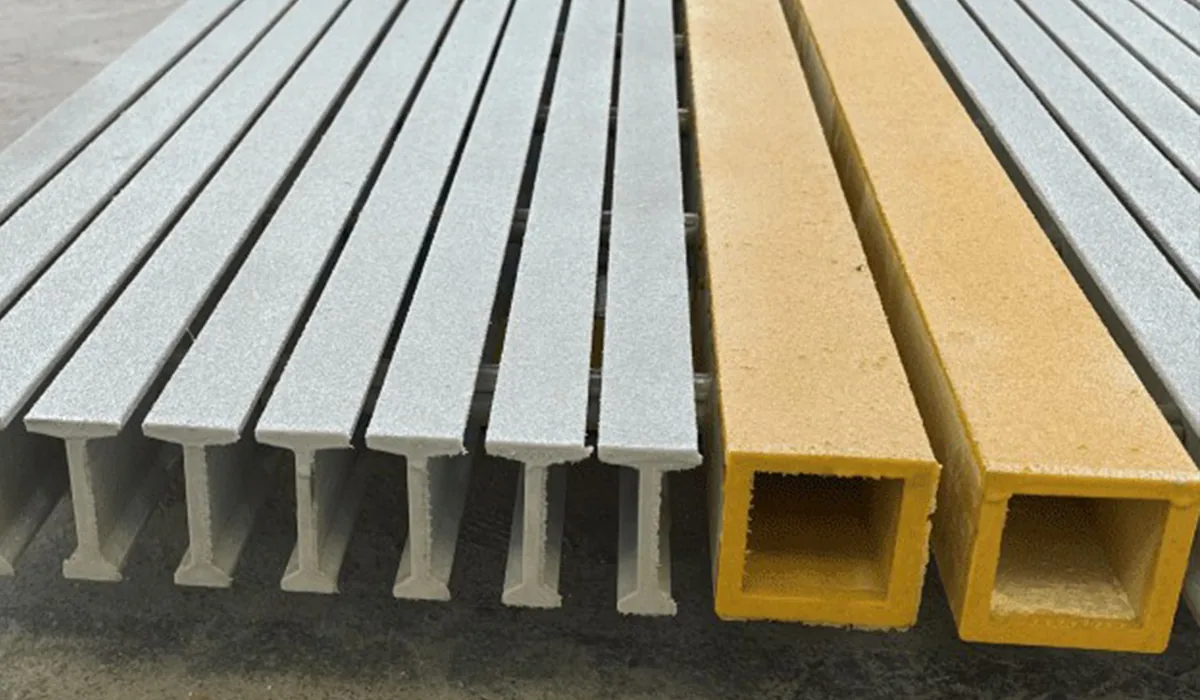
Separate Compression From Impact Protection
Wrapping alone does not prevent strap crush. EPE foam and stretch film protect surfaces and keep out dirt, but the straps and pallet need their own load path.
Typical points to resolve are:
- corner or longitudinal edge protectors under straps;
- foam or separators where finished pieces touch;
- protection for grit, painted or functional surfaces;
- end protection for cut and sealed faces;
- restraint that keeps the bundle tight without crushing the bar section;
- weather cover or additional wrapping where the route requires it.
Our usual export packing uses EPE foam and stretch film, normally with wooden pallets and iron supports. That is the starting arrangement, not a claim that every bundle has identical support spacing or protection.
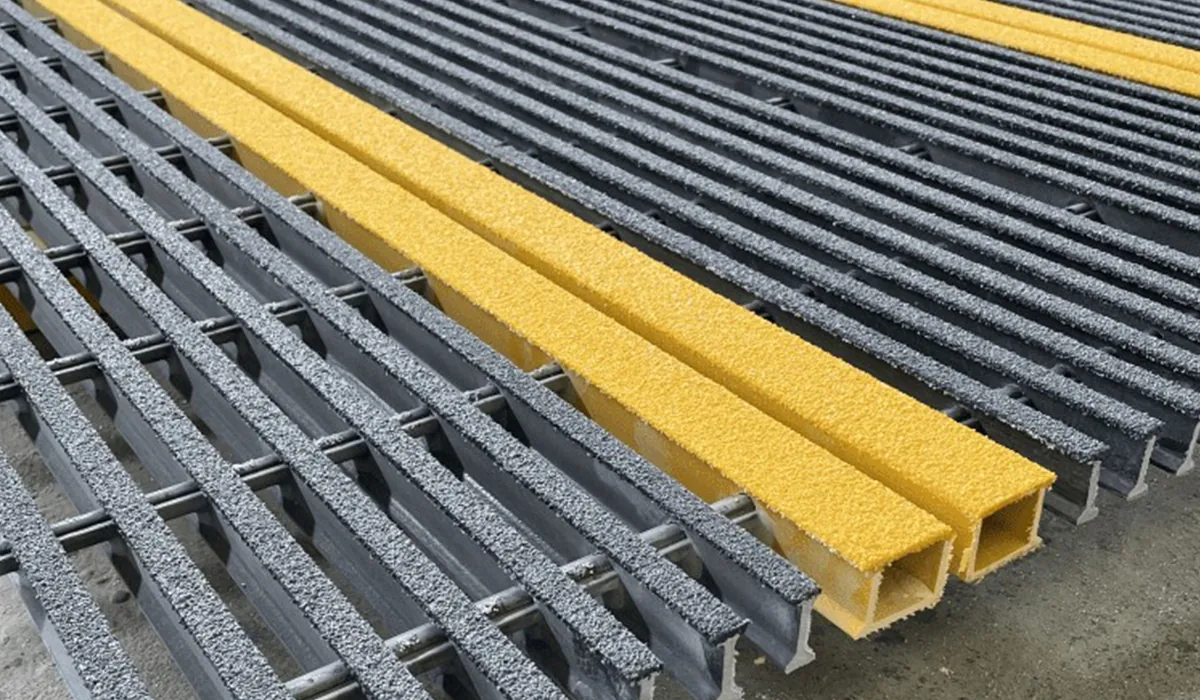
Keep the Bearing-Bar Direction Visible
Direction can be lost in three places: the fabrication bench, the bundle and the site lay-down area.
Use the drawing and package together:
- place the direction arrow or mark where it can survive wrapping and transport;
- keep marks on the same face or end assumed by the installation drawing;
- avoid turning one bundle upside down merely to make the stack level;
- group left and right or top and bottom pieces under different marks;
- include a small orientation sketch on the packing list;
- keep removable pieces with the same location mark used during trial fit.
The bearing-direction guide explains the drawing and piece-level basis. Packing is the point where that information either survives or disappears.
Keep Package Marks, Piece Marks and Accessories Connected
Every bundle needs a package mark that appears on the packing list. If several similar pieces are inside, their individual marks still need to remain visible or be listed by bundle in a clear sequence.
For mixed consignments, record:
- panels or finished pieces in each bundle;
- separately packed small pieces;
- clip type and material;
- hardware packs and quantity;
- lifting devices or edge trims;
- any sample or spare;
- documents that belong to the order rather than the package.
Clips are matched to the panel order. They should not arrive as an unlabeled loose bag when several panel heights or fixing families are present. Use the clip guide to keep clip-family, height and hardware scope consistent.
Plan Gross Weight and the Lift Before Loading
The panel mass is not the shipping weight. Add pallets, iron supports, separators, wrapping, straps, labels and separately packed accessories.
Plan against:
- maximum gross weight per bundle;
- forklift or crane capacity;
- lifting points and sling access;
- container or vehicle floor loading;
- unloading space at destination;
- whether the receiving team can break the bundle safely.
A bundle that is economical in transport but cannot be lifted or unpacked at site is not a good package.

Confirm Export Wood and Destination Rules
Wooden pallets or crates may bring destination-specific treatment, marking or documentary requirements. The order should identify these requirements early enough to become part of the packing plan.
Stretch film and foam do not replace the structural support, and a wooden pallet does not automatically prove that its timber meets every destination rule. Where heat treatment, an ISPM-15 mark or another certificate is required, state it in the inquiry and verify the agreed evidence before dispatch.
The destination and route can also change corrosion protection for clips and hardware, package dimensions and whether the product should be wrapped for rain, dust or salt exposure.
Load the Bundle Through the Whole Route
The pallet is only the first handling unit. The same bundle must suit the truck, container, lifting equipment and unloading area at destination.
Prepare a simple loading record:
- container or vehicle type and usable internal dimensions;
- package sequence and total gross weight;
- longitudinal position and lateral distribution of the bundles;
- bearers, dunnage and spacers between packages;
- restraint against forward, backward and sideways movement;
- top-load limit and the location of any protected surface;
- lifting access and the order in which bundles will be unloaded;
- visibility of package marks before and after loading.
Do not allow a bundle to sit on a high point, bridge over dunnage or transfer its weight through an unsupported piece. A container that is volumetrically full can still be unsafe if the load is concentrated or restrained only by fiction.
Our usual quotation basis is FOB, with the named port and included export scope confirmed in the offer. Freight, destination handling and any import restriction remain separate unless the quotation says otherwise. Use the quote-comparison guide when Incoterms and packing scope must be compared in one place.
Preserve Damage Evidence Before It Is Lost
Packing protection is only useful if an exception can be investigated. When a package arrives damaged, do not immediately unwrap and mix the pieces into site stock.
Record:
- the vehicle or container and the package position;
- package mark, piece marks and visible wrapping or strap failure;
- the affected piece, count and extent of damage;
- whether the bundle shifted, overhung or carried an unexpected top load;
- photographs before and after a controlled unpack;
- the retained packaging, labels and any broken restraint;
- the agreed hold location and who has been notified.
A scratch under intact wrapping is not described in the same way as a cracked bearing bar or a bent bundle. Keep visible transit damage separate from a manufacturing observation and from a document mismatch. The receiving guide provides the continuation after arrival.
Release the Pack Only When Product and Records Agree
A useful dispatch check covers:
- piece count against the packing list;
- package marks and visible piece marks;
- profile, direction and top face;
- cut-edge protection and surface protection;
- clip or hardware grouping;
- gross weight and bundle dimensions;
- labels, loading photos and required documents;
- any hold or unresolved substitution.
Packing photographs help show the condition and arrangement. They do not replace the packing list, actual gross weight or a project-specific inspection record unless those items are separately agreed.
The Pultruded Packing Rule
Build the bundle from the finished-piece schedule. Keep bearing bars aligned and supported. Protect edges and the actual surface. Preserve direction, piece identity and matched accessories. Record gross weight and confirm the destination rules. A package is ready only when the physical bundle and its records describe the same order.
Packing sequence
From Finished Pieces to a Released Bundle
Resolve orientation and support before wrapping and loading.
Confirm each piece mark, size, quantity, direction, cut edge and surface.
Separate incompatible sizes and define each bundle's support and lift arrangement.
Align the pultruded pieces so the package cannot be mistaken for a different orientation.
Add the agreed foam, wrapping, separators and strap protection before closing the pack.
Tie package marks, piece marks and matched clips or hardware to the correct bundle.
Confirm dimensions, mass, labels, packing photos and documents before loading.
Release boundary
What Must Be True Before the Package Leaves the Works
The physical bundle and its records must describe the same pieces.

One finished-piece identity
Each package entry connects to a piece mark and revision.
One protected orientation
The bearing-bar direction, top face and nosing side remain identifiable.
One supported bundle
Long pieces are carried at planned points without uncontrolled overhang or bridging.
One accessory set
Clips and hardware are packed with the matching product or a clear package reference.
One lifting figure
The planning record states piece count, net weight and gross package weight.
One release package
Labels, packing list, photographs and agreed documents describe the same bundle.
Factory packing basis
What Our Current Export Packing Can Include
Standard protection is confirmed together with piece size, route and documents.
Pack the actual pieces
Pultruded grating is made to the required width and bearing-bar length. Packing therefore starts from the finished-piece schedule rather than an assumed stock panel count.
Keep standard protection visible
Our usual export packing uses EPE foam and stretch film, normally with wooden pallets and iron supports. The exact arrangement is confirmed against piece size, surface and shipment.
State the destination requirement
Where the destination requires particular wood treatment, marking, lifting points or packing photographs, include it in the inquiry. The quotation states the agreed packing and document scope.
We can provide packing photographs and a packing list within the agreed order scope. Gross package weight, bundle identification and lifting conditions remain part of the shipment review, not an unexplained by-product of the panel price.
RFQ checklist
What to Send With a Pultruded Packing Requirement
Give the piece list, limitations and destination before the first bundle is planned.
- Finished-piece schedule — Piece marks, widths, bearing-bar lengths, quantities, cutouts and installed locations.
- Product row — I, T or WT profile, depth, pitch, resin, colour and surface.
- Direction and protected face — Bearing-bar direction, top face, nosing side and any surface that must remain exposed.
- Packing unit preference — Pallet, crate, bundle limits, maximum gross weight and required lifting access.
- Protection requirement — Edge protection, separators, wrapping, weather cover and strap protection.
- Accessories — Clips, hardware and other parts that must ship with a specific package or piece.
- Destination and route — Port or place, transport mode, import packaging rules and receiving equipment.
- Loading and stowage — Container or vehicle type, package sequence, weight distribution, dunnage and top-load restrictions.
- Document scope — Packing list, photographs, labels, weights and any certificate or inspection record.
Request a review
Send Your Pultruded Piece and Packing Schedule
Upload the piece list and identify lifting, protection and document requirements.
- Packing tied to piece marks, not aggregate area
- Long pieces and protected faces identified
- Gross weight and accessory package kept visible
Pultruded Grating Packing and Shipping Questions
How should pultruded grating be packed for export?
Does bearing-bar direction matter during packing?
Can long pultruded pieces overhang a pallet?
How should grit or other walking surfaces be protected?
How are clips and small parts packed?
Should the packing list use square metres or piece marks?
What is gross package weight?
Does every wooden export package need ISPM-15 treatment?
How should pultruded bundles be loaded into a container?
What evidence should be kept if a pultruded grating delivery is damaged?
Can you provide packing photographs?
What should be checked before a pultruded package is loaded?
This content was prepared and reviewed by Dengtai Industry’s technical and production team using the project conditions, available product data and applicable documents. Limits that require design, testing or approval are identified in the content. Content last checked: