Pultruded grating quotation guide
Comparing Pultruded Grating Quotes Beyond Nominal Depth
Two panels can share “38 mm” yet use different I, T or WT geometry, pitch, resin, finished pieces, fixings and delivery terms. Normalize the complete quotation before comparing its total.
Prepared by
Dengtai Industry
Published
·
Reviewed

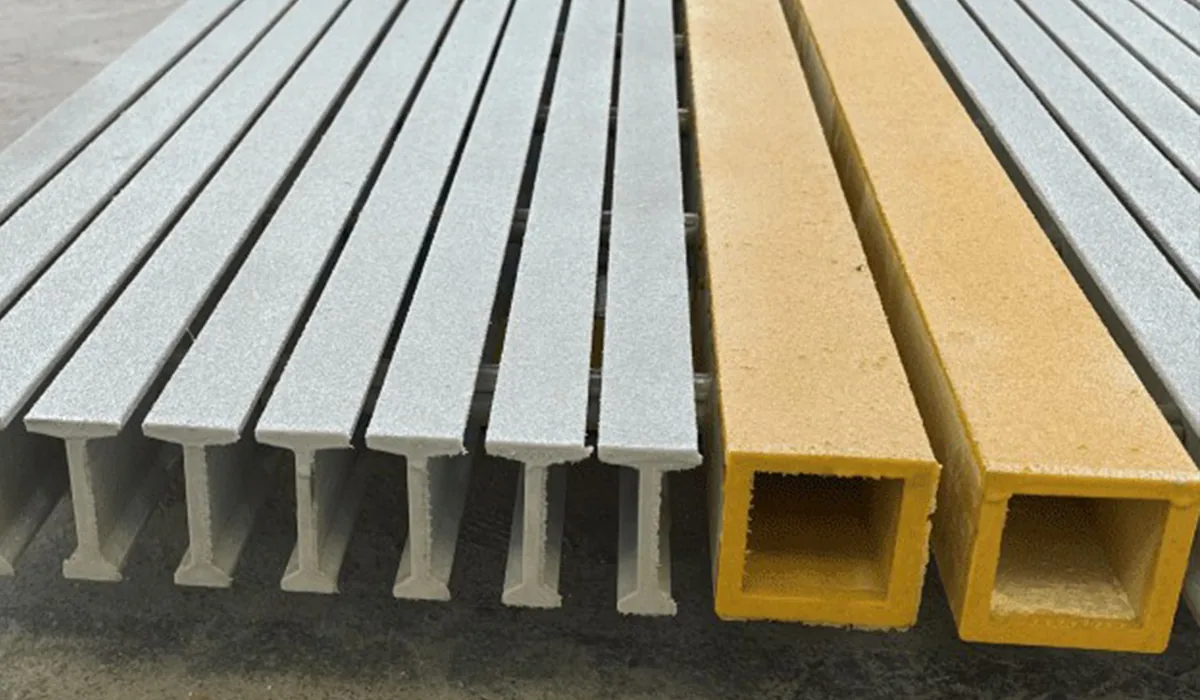
The complete profile and assembly belong to the quotation. Photo: Dengtai Industry.
Quotation vocabulary
Depth, Configuration, Fabrication and Delivery Scope
Each field can change the amount and what the buyer still has to provide.
- Nominal depth
- The panel depth or bearing-bar height commonly used to describe a product. It does not identify the full I, T or WT section, pitch, top width, resin, surface or finished-piece scope.
- Panel configuration
- The exact bearing-bar profile, depth, pitch, assembly, resin, surface, color, width and bearing-bar length proposed for the order.
- Fabrication scope
- The work required to turn the panel into finished pieces: cutting, shaped openings, edge treatment, piece marking, inspection and packing.
- Commercial scope
- Quantity, currency, validity, payment, packing, trade term, named port or delivery point, taxes and other explicitly included or excluded items.
- Like-for-like quote
- A comparison in which both offers provide the same performance requirement, product configuration, finished pieces, accessories, packaging, delivery stage and evidence scope.
- Quote risk
- An unstated item that can move to another party or appear later as an extra. Missing cut-edge treatment, fasteners, pallets or evidence can make a lower panel rate misleading.
Quote normalization
What Pultruded Grating Offers Must Match
A product name and a number are not enough to create a comparable offer.
Swipe horizontally to view all columns.
| Quote field | What must be normalized | Why a depth-only comparison fails |
|---|---|---|
| Bearing-bar row | Exact I, T or WT profile, depth, top width and pitch. | Equal nominal depth can still produce different mass, geometry and load evidence. |
| Finished geometry | Width, bearing-bar length, openings, piece count and direction. | The source panel outline and the delivered piece schedule can differ. |
| Resin and surface | Offered resin family and grade or formulation, color and walking finish. | “FRP” or “vinyl ester” alone does not identify the same material scope. |
| Fabrication | Cutting, openings, edge treatment, inspection and piece marking. | One quote may price panel supply while the other prices installation-ready pieces. |
| Fixings | Clip family, panel-height fit, material, hardware, quantity and positions. | A clip is an accessory that restrains the panel; it is not support capacity. |
| Packing and freight | Packing method, net and gross scope, Incoterm, named location and validity. | EXW panel supply and FOB shipment are not equivalent delivered costs. |
| Production and delivery | Required-on-site date, drawing release, deposit, production period and shipping scope. | A lower panel rate can still miss the project programme or exclude time after dispatch. |
| Warranty and after-sales | Warranty period, exclusions, claims route, replacement scope and responsible party. | A service-life example or generic durability claim is not a substitute for the order terms. |
| Evidence | Drawing, inspection, product data or project-specific documents included. | A generic catalog page cannot fill an unstated acceptance requirement. |
Scope map
Eight Layers of a Pultruded Grating Quotation
Ask for each layer by name so an exclusion cannot hide inside the headline rate.
Swipe horizontally to view all columns.
| Scope layer | Fields to compare | Common missing item |
|---|---|---|
| Panel | I/T/WT profile, depth, pitch, width, bearing-bar length and quantity | Bearing direction or custom panel split |
| Material | Resin family, grade or formulation, color and surface | Exact offered grade or surface standard |
| Fabrication | Outline cuts, openings, interrupted bars, edge sealing and piece marks | Cut-edge treatment or support change after an opening |
| Fixings | M/L/C type, panel height, jaw fit, material, hardware and count | Bolt length, washer or fastener material |
| Packing | Piece count, edge protection, pallet, bundle and package marks | Gross weight or stack limit |
| Delivery | Incoterm, named port or place, freight, insurance and unloading boundary | Destination cost treated as if it were included in FOB |
| Evidence | Drawing revision, inspection scope, product data and required reports | Which document is included and what configuration it covers |
| Commercial terms | Currency, validity, payment, taxes and exclusions | Assumptions that expire before the order |
A pultruded grating quotation should be compared by complete configuration and delivered scope, not by nominal depth or a single area rate. Two offers described as “38 mm pultruded grating” can still differ in profile, pitch, resin, finished pieces, clips and freight.
Normalize the technical row and the commercial scope before deciding which total is lower.

Start With the Exact Profile Row
Our current schedule contains I, T and WT families. Equal nominal depth does not mean equal geometry or mass:
- I38-40 is listed at 23.0 kg/m²;
- I38-60 is listed at 18.5 kg/m²;
- T38-33 is listed at 15.5 kg/m².
The top width, pitch, open area and section differ. A quotation that states only “38 mm” cannot show which row is being supplied.
Ask each supplier to identify:
- I, T or WT profile;
- depth and actual section drawing;
- top width and pitch;
- cross-rod spacing or assembly basis;
- resin, surface and color;
- bearing direction.
The pultruded product page lists the current series dimensions. The section guide explains why section modulus or profile letter alone is not a complete comparison.
Price the Finished Pieces, Not Only the Source Panel
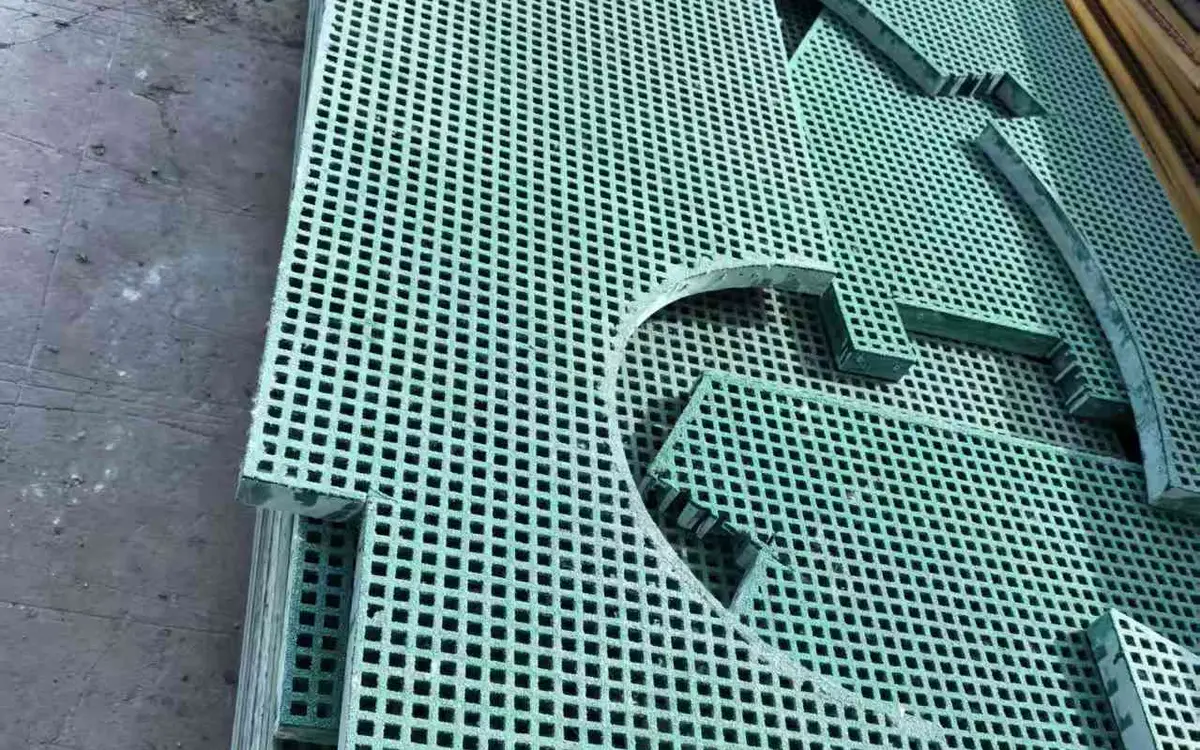
Our pultruded panels are made to order. The important quantity may therefore be a schedule of different finished pieces rather than one nominal panel size.
Give each line:
- piece mark;
- width and bearing-bar length;
- quantity;
- top face and bearing direction;
- opening and edge details;
- required treatment and marking.
Two offers can use the same source panel and still leave different amounts of cutting, sealing or site work. Factory cutting is normally quoted from the actual finished area with size and material loss considered. A shaped opening can require extra handling even when its removed area is small.
The pultruded weight guide helps separate panel, finished-piece and package weight. Weight supports handling and freight planning; it does not establish structural capacity.
Use the pultruded packing guide when the quote must also define bundle support, edge protection, piece marks and gross package weight.
Compare Resin and Surface as Offered Products
“Polyester,” “vinyl ester,” “phenolic” and “epoxy” are material directions. The quotation should also identify the grade or formulation description, surface and color.
A change can affect:
- chemical and temperature suitability;
- fire, smoke or electrical evidence;
- surface and edge-treatment compatibility;
- price and availability;
- required documents.
Use the resin-name resolution section to keep the family, grade, structure and finished-product evidence together.
Put Fabrication in the Correct Column
A plain-panel quote may exclude:
- outline cutting;
- curves, notches and pipe openings;
- trimming interrupted bearing bars;
- cut-edge sealing;
- piece identification;
- first-piece inspection;
- additional packing.
The cut-end inspection guide explains how those tasks change the finished pultruded piece. A low panel rate is not equivalent to an installation-ready piece price.
If one offer says “cut to size included” and another says “panel only,” the totals are not yet comparable. Ask which finished dimensions, openings, edge faces and markings are included.
Keep Fixings and Supports Separate
Clips can be listed as a separate quotation line while still forming part of the panel order. They do not become structural supports and do not automatically increase the allowable span.
Compare:
- M, L or C family or the supplier-specific geometry;
- fit to the ordered panel height;
- bearing-bar width and jaw clearance;
- galvanized or stainless material;
- bolt, nut and washer scope;
- quantity and locations;
- removal and reinstatement requirements.
The pultruded clip guide explains why a clip positioned at midspan or clamped only to a cross rod does not recreate the support line assumed by the panel. If the two offers price different clip, hardware or packing scopes, use the grating clip price and quantity comparison to normalise them before comparing totals.
Normalize Commercial and Delivery Terms
Check that the offers use:
- the same currency;
- the same quote validity;
- the same Incoterm;
- the same named port or delivery place;
- the same tax and clearance basis;
- the same packing scope;
- the same payment terms.
We commonly quote FOB, with the named port and included costs agreed for the order. An FOB offer is not a delivered-to-site price unless the written quotation says so.

Add the Costs That Stay Outside the Panel Rate
The lowest panel price is not automatically the lowest project cost. A buyer should compare the work and risk that remain after delivery, not only the material and freight lines:
| Ownership-cost field | What to add to the comparison |
|---|---|
| Installation | Dry fitting, lifting, site cutting, dust control, edge treatment, drilling, clips, hardware and installation access |
| Support preparation | Work needed to provide level bearing faces, correct openings and a sound connection to the structure |
| Operation | Cleaning method and frequency, routine inspection and access for maintenance |
| Replacement | Spare pieces, piece identification, minimum order implications, downtime and the cost of returning a panel |
| Schedule | Drawing approval, deposit timing, production days, shipment, receiving and installation windows |
These items do not need to be converted into one number with invented percentages. Put the same project quantities and working assumptions beside each offer. A supplier that includes factory fabrication may look more expensive at panel rate while removing site labour; an offer that leaves more work on site may cost more once access, tools, sealing and downtime are counted.
For our custom pultruded orders, the quotation follows the finished-piece schedule rather than a stock sheet. That makes early drawing release and fabrication review part of cost control: fewer unplanned site changes, clearer piece identification and better matched fixings can reduce avoidable handling and rework.
Compare Production and After-Sales on the Same Basis
Schedule and assurance belong beside price. Two suppliers can quote similar panels while one assumes a later drawing release, a different deposit date or a longer fabrication period.
Use the same fields:
- required-on-site date and who can release the drawing;
- deposit trigger and payment milestones;
- production period from the agreed start point;
- inspection, packing and document release that must happen before dispatch;
- shipping, arrival and site receiving assumptions;
- warranty period, exclusions, claims route and replacement scope.
Our usual payment is 50% in advance with the balance before shipment. For a normal custom pultruded order, production is typically 15–30 calendar days after receipt of the deposit; shipping and arrival time are additional. These are planning terms, not a promise that every project has the same schedule. The issued quotation governs the actual order.
Do not use an experience example as a warranty period. If a long service life is relevant, ask what resin, exposure and maintenance conditions it describes and keep that evidence separate from the contractual warranty and exclusions in the order documents.
Example: Correct the Scope Before Ranking Price
Suppose Offer A names T38-33, twelve finished pieces, sealed edges and M clips, while Offer B names I38-60, ten pieces, no edge treatment and L clips.
The totals cannot be compared as written:
- the profile, pitch and mass differ;
- the finished-piece count differs;
- edge treatment is included in one scope only;
- the fixing type and quantity are not equivalent;
- packing and evidence may also differ.
Return to the approved project schedule. Ask both suppliers to quote the same product row, the same piece marks and the same included work. Only then does a total-price difference describe commercial value.

Red Flags in a Pultruded Quote
- A unit rate without profile, pitch or resin.
- One “standard” panel size when the project is custom.
- Cut-to-size wording without the cut list or edge scope.
- “Clips included” without type, height, material or quantity.
- A total without currency, validity or Incoterm.
- A test report whose product row is not identified.
- A cheaper alternative that changes the structural or exposure requirement without approval.
- A price that assumes site cutting but does not add the buyer’s labor, tools, sealing or disposal.
The Quote-Comparison Rule
Freeze the product row and finished-piece schedule first. Then normalize fabrication, fixings, packing, delivery and evidence. Compare totals only after every offer describes the same work.
The lowest usable quote is the one that satisfies the same project requirement without hiding scope in an assumption.
Factory quote basis
Why Pultruded Grating Is Quoted From the Layout
The product is made to order, so the finished pieces and delivery scope belong to the price.
Quote the finished layout
Our pultruded grating is made to the required width and bearing-bar length rather than supplied from one fixed panel format. The quotation therefore follows the profile, piece schedule, fabrication, fixings and packing scope.
Cutting is not a universal surcharge
Factory cutting is normally priced from the actual finished area with size and loss considered. Openings, curves, edge treatment and piece marking can add scope. There is no single percentage that applies to every cut list.
Keep trade terms explicit
We commonly quote FOB, with the named port and included costs confirmed for the order. Confirm currency, validity, export packing, package marks, freight scope and any required documents in the written offer.
Show schedule and after-sales boundaries
Our usual custom production period is 15–30 calendar days after receipt of the deposit, with shipping and arrival time planned separately. The issued quotation governs the actual schedule, payment terms, warranty period and exclusions; a service-life example is not a warranty statement.
We do not publish a universal pultruded price per square metre. Send the drawing and finished-piece schedule so the offered I/T/WT row, resin, surface, fabrication, accessories, packing and delivery can be identified.
RFQ checklist
What to Send for a Quote Comparison
Send the same inputs to each supplier and state which requirements cannot be changed.
- Support and piece drawing — Support faces, clear span, bearing direction, piece outlines, openings and joints.
- Product row — I, T or WT profile, depth, pitch, resin, surface, color and panel dimensions.
- Finished quantity — One quantity per unique piece mark, not one total that hides different sizes.
- Fabrication requirement — Cutting, shaped openings, cut-edge treatment, marking, inspection and packing.
- Fixing requirement — Clip type or performance need, support section, access, material and expected removal.
- Delivery requirement — Destination, Incoterm, named port or place, packing requirements and unloading limit.
- Evidence requirement — Project documents, product data, calculations, reports or inspection records.
- Commercial baseline — Currency, payment, validity, taxes and any item that must remain optional.
- Production and after-sales terms — Required-on-site date, drawing release, deposit, production period, shipping, warranty and exclusions.
Comparison sequence
From Project Requirement to a Like-for-Like Quote
Normalize the technical, fabrication, delivery and evidence fields before comparing totals.
Record the support, span, load, exposure and required evidence before asking for prices.
List every width, bearing-bar length, opening, edge requirement and quantity.
Name profile, depth, pitch, resin, surface and color for every offered alternative.
Identify clips, hardware, cutting, sealing, marking, inspection and packing.
Put both offers on the same currency, validity, Incoterm, named place and tax basis.
Compare installation, inspection, cleaning, replacement, production period and after-sales responsibility.
Do not rank totals until every exclusion has either been priced or accepted by the buyer.
Comparison boundary
What Makes Two Pultruded Quotes Comparable
Each offer must describe the same product and the same work left for the buyer.

One product identity
The quotation names the complete I, T or WT row, resin, surface and finished-piece scope.
One piece schedule
Quantities, dimensions, openings and piece marks are comparable across offers.
One fabrication boundary
Cutting and edge treatment are included, excluded or priced as visible line items.
One fixing scope
Clip type, height fit, material, hardware and count are not buried in a generic accessories allowance.
One delivery basis
Both offers state the same Incoterm, named place, packing and validity.
One evidence boundary
The documents required for acceptance are identified and attached to the offered configuration.
Request a review
Send Your Pultruded Grating Scope
Attach the drawing, piece list and existing offers so the exclusions can be compared explicitly.
- Same full product row and piece schedule
- Fabrication, fixings and packing shown separately
- Delivery and evidence scope kept visible
Pultruded Grating Quotation Questions
Why can I not compare pultruded grating by 38 mm depth alone?
What is usually missing from a cheap pultruded grating quote?
Should I compare an EXW price with an FOB price?
How should I compare two resin options in a quote?
Are clips included in the panel price?
Does a lower price per square meter always reduce project cost?
Can custom panel widths reduce the price?
What does a properly formatted pultruded quote include?
Can I compare my project with a retail panel listing?
Should a pultruded grating comparison include lifecycle cost?
How should production time and warranty be compared?
Can you quote before every technical detail is known?
This content was prepared and reviewed by Dengtai Industry’s technical and production team using the project conditions, available product data and applicable documents. Limits that require design, testing or approval are identified in the content. Content last checked: