Mini-mesh quotation guide
Comparing Mini-Mesh Grating Quotes by Finished Duty
Two offers can both say “mini mesh,” yet use different upper and lower grids, depth, resin, finished pieces, edge treatment, clips, packing and delivery. Build one comparable scope before deciding which total is lower.
Prepared by
Dengtai Industry
Published
·
Reviewed

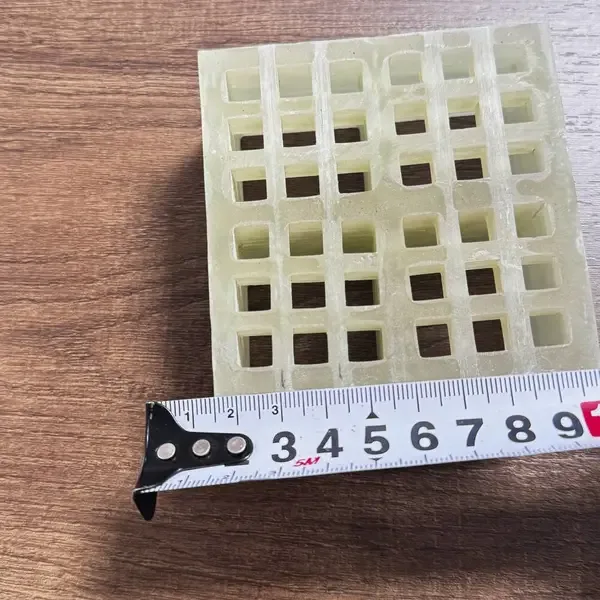
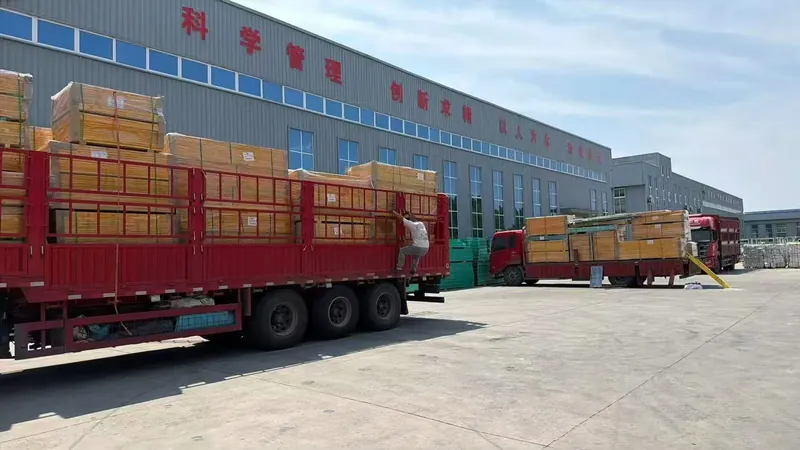
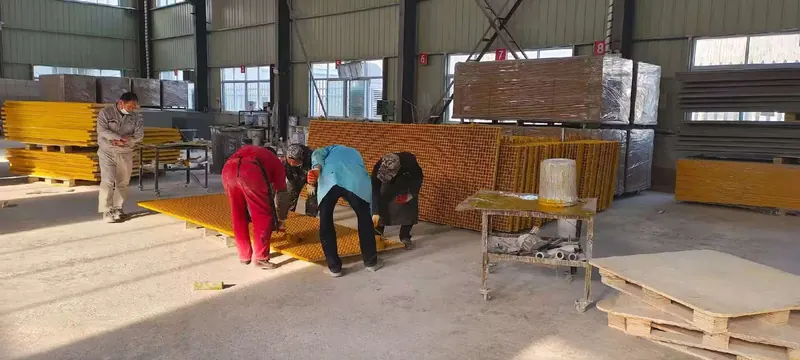
The upper grid, lower grid, depth, resin and finished details must all belong to the quoted item. Photo: Dengtai Industry.
Quotation vocabulary
Define the Duty Before Comparing the Total
A mini-mesh price belongs to a product row, a finished-piece schedule and a delivery stage.
- Finished duty
- The complete installed task represented by the quotation: measured opening, panel depth and support, exposed environment, walking surface, finished pieces, fixings, delivery and required evidence.
- Product row
- The exact offered mini-mesh construction, including upper and lower pitch where known, bar geometry, depth, resin, surface and color.
- Finished-piece schedule
- Every delivered piece identified by mark, size, quantity, orientation, openings, edge treatment and required marking.
- Fabrication scope
- Cutting, openings, cut-edge treatment, trial fitting where required, inspection and piece identity.
- Commercial scope
- Currency, validity, payment, packing, Incoterm, named place, taxes and every item included or excluded.
- Evidence scope
- The drawings, product data, inspection records or reports the offer includes, with the configuration and batch or sample to which each document applies.
- Like-for-like quote
- Two offers that solve the same measured project duty with equivalent product, finished work, accessories, delivery and acceptance evidence.
Scope map
Eight Layers in a Mini-Mesh Grating Quotation
Use the layers to expose work that one offer may have moved to the buyer.
Swipe horizontally to view all columns.
| Scope layer | Fields to freeze | Frequent hidden difference |
|---|---|---|
| Performance task | Object or heel to retain, drainage duty, wheel or foot traffic, load and support. | Both suppliers quote a general walkway even though one project needs a tighter opening. |
| Panel row | Upper/lower pitch, clear opening, bar geometry, depth, width, length and direction. | Same product name with a different row geometry or panel size. |
| Material | Resin family and offered grade, color, surface and applicable data. | Different resin grade or finish buried behind a generic “FRP grating” label. |
| Fabrication | Cut schedule, openings, interrupted bars, edge treatment, inspection and marks. | Panel-only quote compared with installation-ready fabricated pieces. |
| Fixings | Clip type, fit, material, hardware, count and positions. | Fasteners excluded, guessed or assumed compatible. |
| Packing and freight | Protection, pallet or bundle, marks, gross weight, term and destination. | The nominated port, loading limit and packing responsibility differ. |
| Documents | Drawing, inspection record, material data or report and its applicable scope. | Generic catalog paper treated as project-specific evidence. |
| Commercial terms | Currency, validity, payment, taxes, warranty and exclusions. | A time-limited offer compared with a materially different commercial basis. |
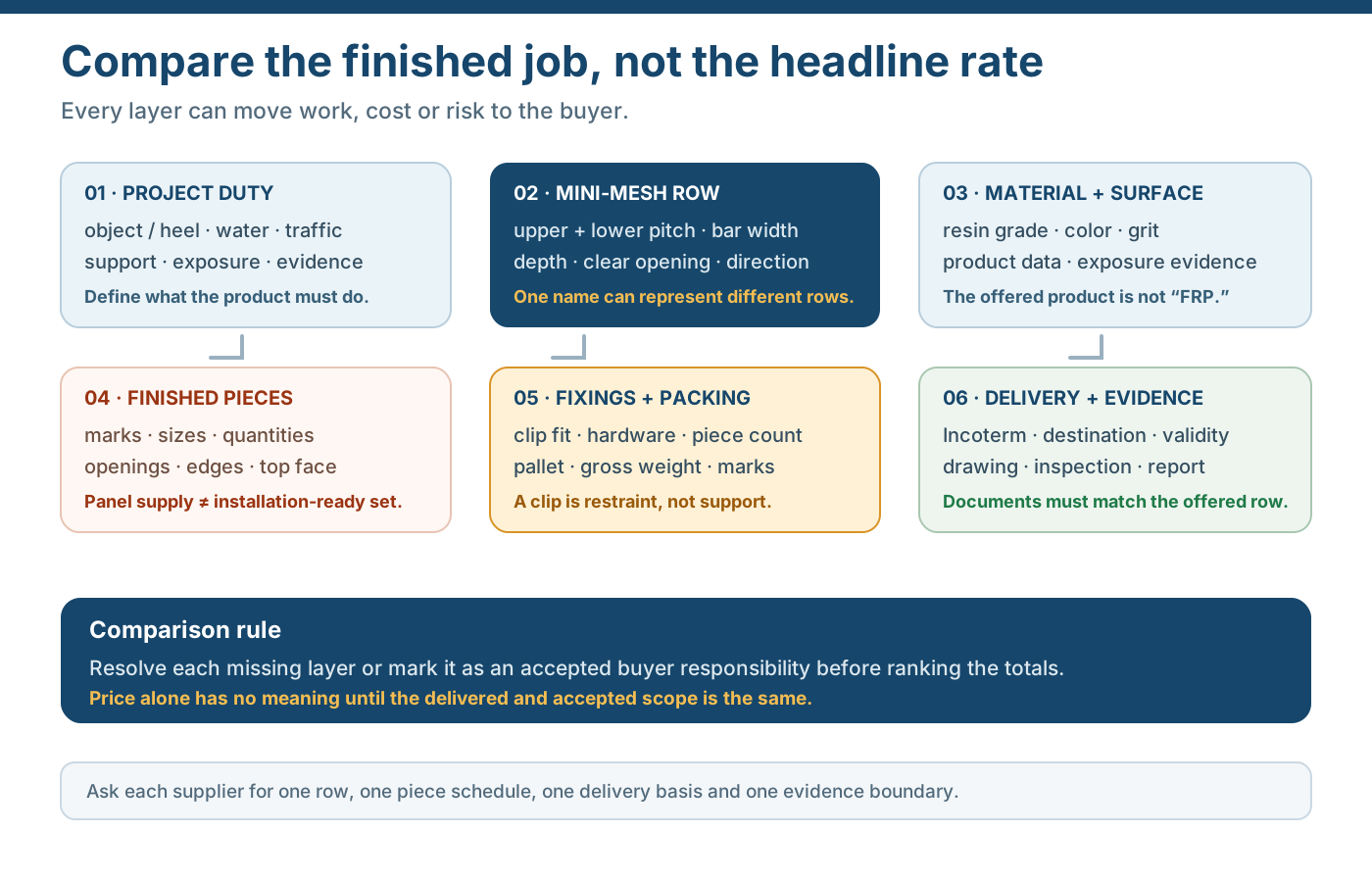
A mini-mesh grating quote is comparable only when both offers describe the same finished duty. The panel must use an identified upper grid, lower grid, depth, bar geometry, resin and surface. The offer must then say whether it supplies plain panels or finished pieces, which cut edges and openings are included, and what clips, packing, delivery and evidence remain.
A lower number can be genuinely efficient. It can also be a different product, a panel-only scope or a quotation with less work included. The buyer needs to see which one before the price has meaning.
Start With the Mini-Mesh Row
“Mini mesh” is not a complete specification. Our own range distinguishes different upper and lower mesh combinations. The upper finish may be tighter than the lower load-bearing grid, so a nominal adjective does not identify the actual opening.
Ask each supplier to state:
- upper mesh pitch and bar width where known;
- lower mesh pitch and bar geometry;
- panel depth;
- measured clear opening and its measuring plane;
- panel width, length and bearing direction;
- resin family and offered grade or formulation;
- walking surface and color.
The same number may also mean different things. A 19 mm pitch is not a 19 mm clear opening, because the bar consumes part of the centre-to-centre distance. The upper mesh also sits over a wider lower structure, so a simple upper-grid percentage is not the whole installed flow path.
Use the mini-mesh product page for the available row families and the thickness guide when the panel depth is being compared. Neither one removes the need for the quotation to name a complete configuration.
Convert the Project Into Finished Pieces
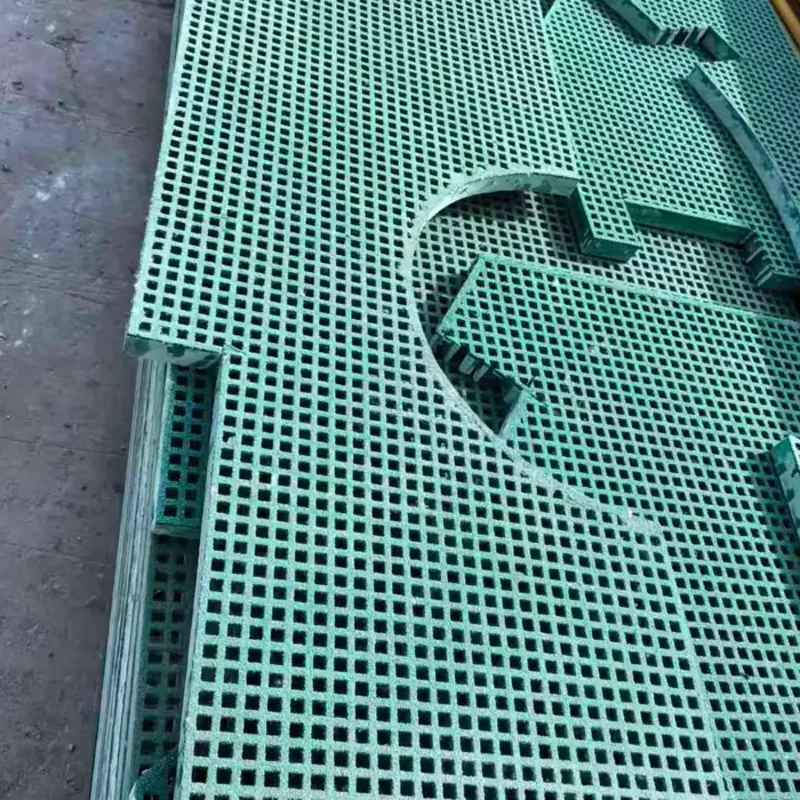
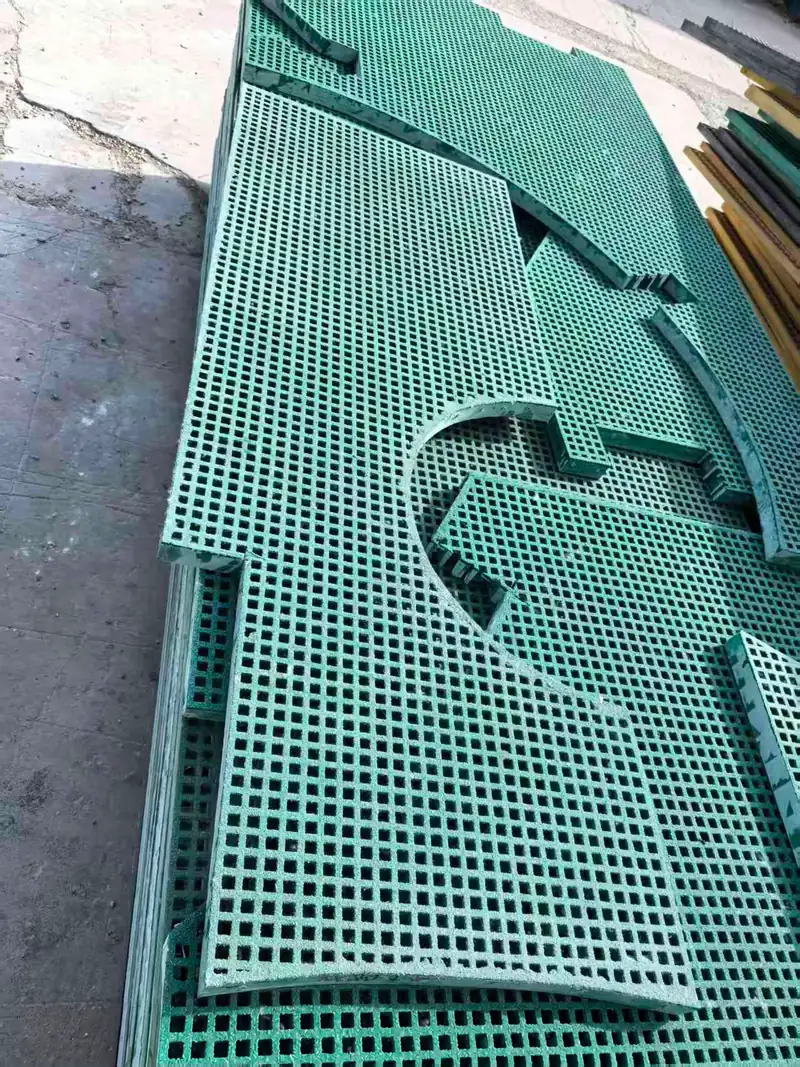
Many buyers do not actually purchase a rectangular source panel. They purchase a set of walkway pieces, cover sections, stair panels or replacement pieces. The commercial quantity should follow the finished schedule.
Give every piece:
- a piece mark;
- finished width and length;
- quantity;
- top-face and mesh orientation;
- outline cuts and shaped openings;
- edge treatment and piece-mark requirements;
- support or fixing locations that affect fabrication.
Two quotations may start from the same large panel and still deliver different work. One may supply only the source sheet. The other may nest the pieces, cut openings, treat edges, inspect the first piece, mark and pack the set.
The full-panel versus cut-piece cost guide explains the source-area and cutting-loss logic. For a mini-mesh order, the fabricated piece is the item that must fit the walkway, not the nominal panel from which it came.
Normalize the Material and Surface
The resin and surface are not accessories to the price. They change the offered product and the evidence needed. A general-purpose polyester installation, a vinyl-ester process area and a phenolic fire application should not be compared as if only the mesh geometry mattered.
Use one line for:
- resin family;
- grade or formulation description;
- color;
- grit, concave or other top surface;
- relevant product data or report;
- assumptions about chemical, temperature and fire exposure.
When a quotation says only “corrosion resistant,” ask which resin direction and grade the supplier is offering and what exposure it is intended to meet. Use the resin selection guide and surface guide to turn the commercial labels into comparison fields.
Compare Fabrication Line by Line
A “cut to size” allowance is not a specification. Ask for:
- outline cutting;
- curved or notched openings;
- the support consequence of any interrupted bars;
- cut-edge sealing or other treatment;
- first-piece check;
- piece marking;
- final inspection;
- packing of the finished pieces.
A shaped opening may remove only a small area yet require much more work than a straight trim. A large quantity of small pieces may use less source-panel area but more cutting, handling, marking and packaging. No universal percentage can represent those differences.
Use the cut-to-size price guide when one supplier quotes a panel and another quotes fabricated pieces. Use the mini-mesh cutting guide when the cut edge or piece identity needs a production boundary.
Put Clips, Supports and Fixings in Their Own Column
Clips may appear in the same purchase order as the grating while still needing a separate line. Compare:
- M, L, C or supplier-specific geometry;
- fit to the ordered panel height;
- actual bar and jaw contact;
- galvanized or stainless material;
- bolt, nut and washer scope;
- number and positions;
- whether the panel is intended to be removable.
A clip restrains a panel. It does not turn a midspan point into a new support line and does not prove the panel’s load capacity. Read the mini-mesh clip guide before treating “clips included” as a complete fixing scope.
Normalize Packing and Delivery
A panel price at the factory gate is not the same as a delivered installation kit. Put the following on one basis:
- protection for cut corners and sealed edges;
- bundle or pallet construction;
- piece count, marks and package list;
- gross weight and stack limit;
- Incoterm and named port or place;
- freight, insurance, unloading and duties;
- quote currency, tax basis and validity.
Our general cost guide includes project-level cost layers. This page applies them to the mini-mesh comparison: if one offer excludes packing or delivery work, the buyer still has to price that work somewhere.
Make a Quote Comparison Table
Use one row for each decision. A practical comparison can look like this:
| Decision | Supplier A | Supplier B | Resolution |
|---|---|---|---|
| Upper and lower mesh | State both pitches, bar geometry and measured opening | State the same fields | Select the row that meets the duty |
| Panel depth and support | State depth and support assumption | State depth and support assumption | Confirm same structural requirement |
| Resin, surface and color | State family, grade, finish and color | State family, grade, finish and color | Align or price the changed duty |
| Finished pieces | Give piece marks, sizes, quantities and openings | Use the same schedule | Re-quote the missing pieces |
| Fabrication | List cutting, sealing, marking and inspection | List the same scope | Price every gap |
| Clips and hardware | List type, fit, material and quantity | List type, fit, material and quantity | Add exclusions before ranking |
| Packing and freight | State method, term, place and validity | State method, term, place and validity | Compare at one delivery stage |
| Documents | Identify the required document and applicable item | Identify the same document and item | Do not accept generic substitution |
| Price and schedule | Show total and production assumptions | Show total and production assumptions | Award only a resolved comparison |
The table does not require the two offers to become identical in every engineering choice. It makes every difference explicit and gives it a commercial consequence.
Worked Example: Normalize Two Offers Before Comparing Them
Imagine two suppliers quote the same ten walkway pieces. Supplier A offers plain panels with separate clips, cuts and edge treatment, on an EXW basis. Supplier B offers the cut set with clips and export packing, on an FOB basis. The second headline price can appear higher even when the buyer will pay more to complete the first offer.
Normalize them in this order:
| Comparison step | What to normalize and resolve |
|---|---|
| Product row | Confirm both grids, depth, resin and surface for both offers. Do not compare different duties. |
| Finished pieces | Price the same ten piece marks, sizes, openings and quantities. |
| Fabrication | Add or verify cutting, edge treatment, piece marks and inspection. |
| Fixings | Match clip type, fit, material, hardware and quantity before ranking totals. |
| Delivery | Convert EXW and FOB offers to the same named place and included services. |
| Evidence | Price or resolve the required drawing, inspection and product records. |
Only after these rows are resolved should the buyer compare the totals. This example does not invent a factory rate; it shows how to reveal scope differences that a simple price per square metre cannot show.
Read Market Prices Without Turning Them Into Our Quote
Public search results mix marketplace prices, stock listings and editorial claims. One result may show a small quantity with a marketplace markup; another may quote source material; another may bundle a different surface or quantity. None of those numbers automatically identifies a Dengtai row or your finished-piece price.
The useful information from a public listing is the question it raises: which mesh, depth, resin, quality, cutting scope and delivery stage produced that amount? Ask the same question of every offer. The molded pricing page keeps our published reference basis separate from other suppliers’ claims.
Compare Production and Assurance
Two totals are not final until the project programme and acceptance evidence are comparable:
- who releases the drawing and when;
- deposit trigger;
- production period;
- first-piece or final inspection;
- packing and document release;
- shipping and receiving assumptions;
- written warranty and exclusions.
Our usual custom production period is 15–30 calendar days after deposit, with shipping additional. The issued quotation governs the exact order because the drawing, quantity and finishing scope can change the schedule.
An external service-life example is not a warranty. If durability is part of the buying decision, ask for the product, exposure, maintenance basis and evidence behind the statement, then compare the written warranty separately.
Add the Ownership Costs Outside the Panel Price
Use the same project assumptions for both offers:
| Ownership-cost field | What to add to each comparison |
|---|---|
| Installation | Lifting, fitting, site cutting, drilling, clips and access |
| Support preparation | Bearing faces, frame adjustments and connection work |
| Cleaning | Method, frequency, labour, water or agent and access |
| Spare and replacement | Spare pieces, identification, minimum order and handling |
| Downtime | Shutdown, removal, replacement and reinstatement |
| Schedule | Drawing release, production, shipping and site window |
Do not convert these items into a made-up single percentage. Record the same work quantity beside each offer. An installation-ready quotation may look higher than a panel-only quotation while reducing total project work.
How We Build a Mini-Mesh Quotation
Our factory review starts with the completed duty, not a generic area rate:
- Identify what must be retained, drained or supported.
- Select the mini-mesh row and support requirement.
- Confirm resin, surface, color and exposure.
- Nest the finished pieces and review openings.
- Define edge treatment, marking and inspection.
- Match clips, hardware and packing.
- State delivery and document scope.
- Issue the quotation against one drawing revision.
That sequence gives the buyer a traceable answer when a price changes. It also makes it harder for an important engineering or finishing scope to disappear between the product page and the purchase order.

What to Send With a Mini-Mesh RFQ
Send what is fixed and mark what is still unknown:
- application, measured opening requirement and anything that must not pass through;
- drainage, debris, cleaning and traffic conditions;
- support sketch, clear span and bearing direction;
- proposed depth or the structural requirement;
- exposure, resin and surface needs;
- piece schedule with openings and edge treatment;
- clip and removal requirements;
- destination, trade term and required-on-site date;
- drawings, reports and acceptance evidence.
The quality and documentation guide helps separate the drawing, inspection record and test report. The sample comparison guide shows how a physical reference can be tied back to the quotation without being presented as a certificate.
If existing quotations are available, send them too. They can be normalized against the same schedule and the unresolved items can be priced before a supplier is selected.
Quote the finished duty
Mini-mesh grating is selected as a complete row and then cut or finished for the project. We do not use one isolated mini-mesh area rate to represent every upper mesh, depth, resin, surface and piece schedule.
Separate panel supply from fabrication
Outline cuts, shaped openings, edge treatment, inspection and piece marks can be included or listed separately. The quotation should make that boundary visible instead of hiding it in a percentage.
Keep clips and packing visible
Clips, hardware, export packing and loading are separate scope items unless the written offer says otherwise. Their price and responsibility belong in the comparison.
State the commercial baseline
Currency, validity, payment, Incoterm, named location, production period and required documents complete the quotation. A panel number cannot do that job alone.
We do not turn public marketplace prices into a Dengtai quotation. Send the intended duty, measured opening, support, exposure, destination and finished-piece schedule so the offered row and exclusions can be identified.
Request a review
Send the Mini-Mesh Row and Cut List
Include existing offers so their assumptions and exclusions can be compared explicitly.
- Same measured opening and product row
- Fabrication and fixings shown separately
- Delivery and acceptance evidence kept visible
Mini-Mesh Grating Price Questions
Why can I not compare mini-mesh grating by price per square metre alone?
Is every product called mini mesh the same?
What usually explains a much lower mini-mesh quote?
Should I compare a marketplace listing with a factory quotation?
Does a tighter mesh automatically cost more?
How do I compare different resin options?
Are clips included in a panel price?
How should cut-to-size work be compared?
Does a longer service-life claim make an offer cheaper?
What is the best first document for a mini-mesh quotation?
This content was prepared and reviewed by Dengtai Industry’s technical and production team using the project conditions, available product data and applicable documents. Limits that require design, testing or approval are identified in the content. Content last checked: