Mini-mesh drainage and cleaning
Mini-Mesh Grating Drainage and Cleaning Inputs
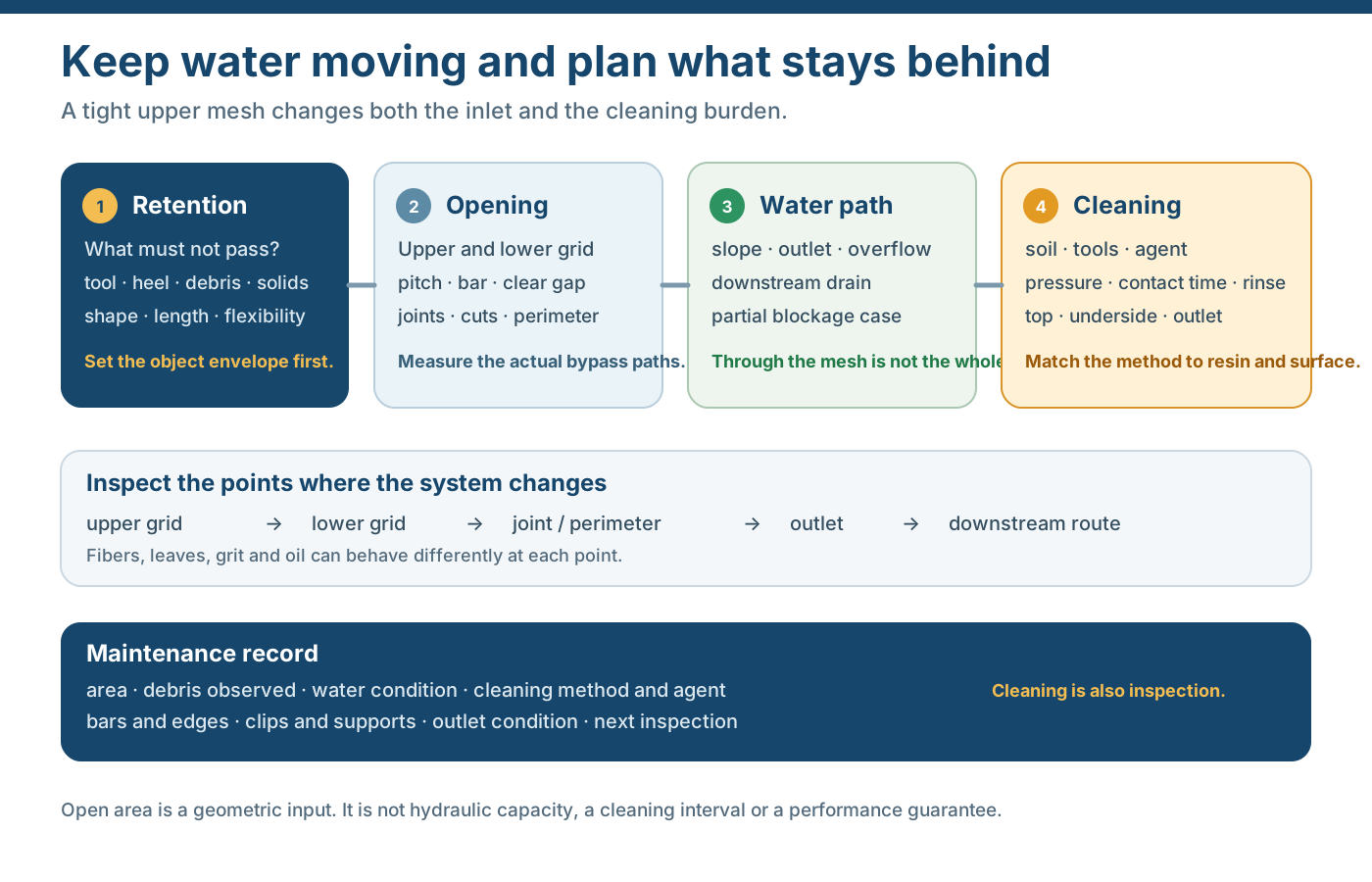
Mini mesh keeps water and air able to pass, but a finer upper grid can trap debris and reduce free flow. Plan the actual opening, joints, drainage outlet, contamination, cleaning method and access as one system.
Prepared by
Dengtai Industry
Published
·
Reviewed

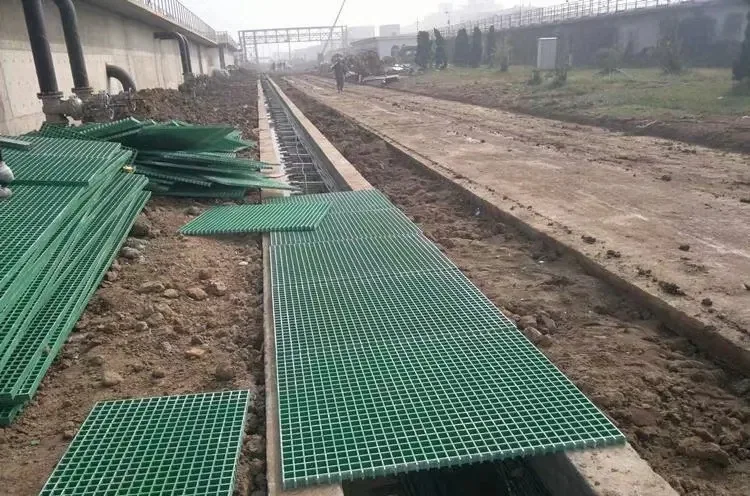
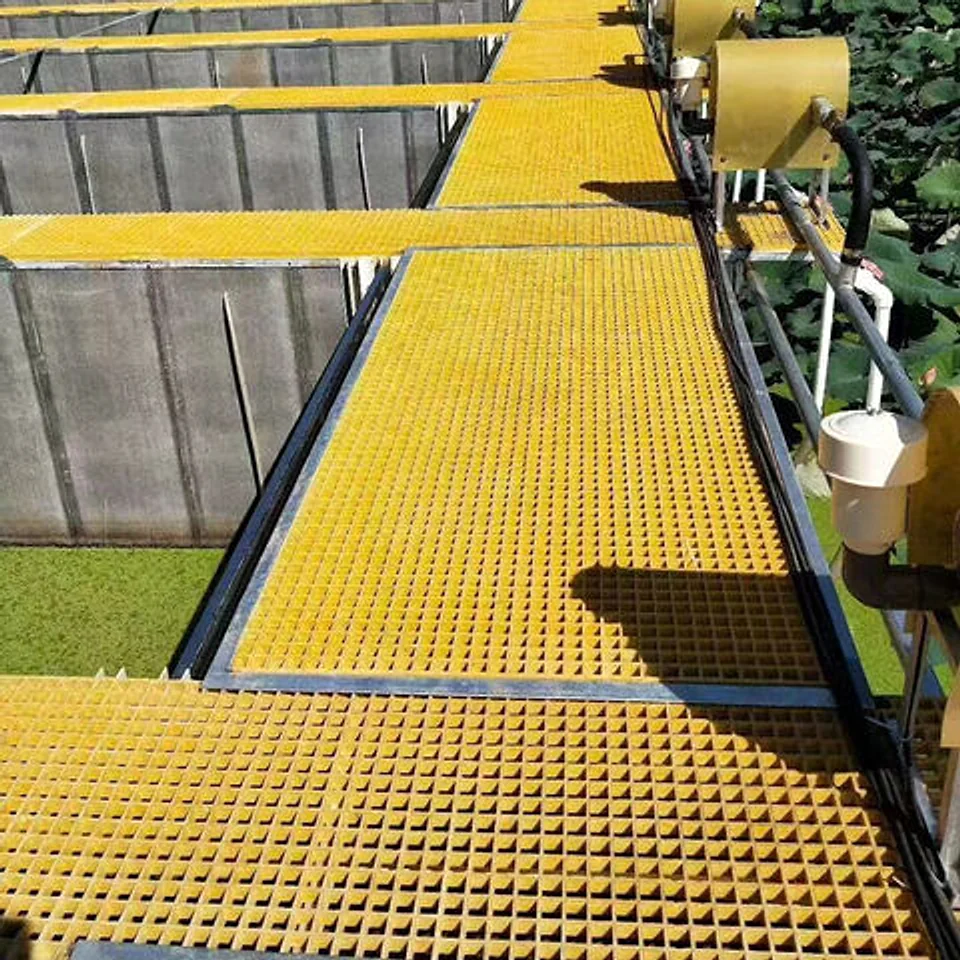
The surface remains open, but the upper and lower grids, debris and outlet determine how it performs in service. Photo: Dengtai Industry.
Flow vocabulary
Opening, Drainage and Cleaning Are Different Measurements
A tight mesh changes both what passes and what becomes trapped.
- Actual open area
- The unobstructed share of the installed walking surface. It differs from nominal pitch because bars, taper, the lower mesh, joints, cuts and debris reduce the open path.
- Hydraulic duty
- The water flow and accumulation the installed drainage opening must handle, including slope, head, inlet conditions, outlets and the consequences of blockage.
- Through-surface path
- The route by which water passes directly through the upper and lower grid.
- Bypass path
- The route around the mesh at panel joints, perimeter gaps, openings or an incomplete frame. A small mesh does not close these paths.
- Contamination
- The material that must be removed: dust, leaves, fibers, grit, oil, grease, scale, biological growth or process chemicals.
- Clean-in-place
- A method that cleans the fixed panel without removing it. The method must reach the upper grid, joints, underside, supports and drainage outlet without harming the resin or surface.
- Cleaning record
- The date, area, observed contamination, method and agent, findings, completed actions and next review.
Inputs
Nine Inputs for a Mini-Mesh Drainage Review
Each input changes the product shortlist or the cleaning plan.
Swipe horizontally to view all columns.
| Input | Why it matters | Record to provide |
|---|---|---|
| Object or debris | Determines the opening target and expected blockage mechanism. | Shape, length, flexibility, quantity and whether it is wet or fibrous. |
| Water source | Rain, washdown, process spill and immersion create different duties. | Expected flow, duration, slope, head and extreme event. |
| Opening and joints | Defines the direct and bypass paths. | Measured gap, joint detail, perimeter and cut-outs. |
| Contamination | Determines cleaning method and agent. | Material, concentration, temperature and contact time. |
| Cleaning method | Tools, pressure, nozzle, chemicals and frequency can damage or wear the product. | Method, equipment, agent, dilution, contact time and rinse. |
| Access | Upper-grid debris may require underside or drain access. | Removable pieces, lifting method, fixings and safe access. |
| Surface | Grit, concave or other finishes differ in cleanability and wear. | Product row, surface condition and acceptable cleaning. |
| Resin | Cleaning agents and contaminants must suit the offered resin. | Resin grade, exposure assumption and chemical evidence. |
| Inspection | Cleaning can reveal wear, cracks, loose clips or blocked outlets. | Inspect upper and lower bars, edges, supports and fixings. |
Mini-mesh grating supports drainage because it remains an open grid, but it is not a hydraulic rating, a filter specification or a maintenance-free floor. The tighter upper mesh reduces the direct opening. Leaves, fibers, grit and product residue can bridge that opening, collect on the lower layer or reach the outlet. At the same time, water can bypass the mesh through joints, perimeter gaps and cut-outs.
Plan the whole path: what must be retained, what must pass, where the water goes, what will collect, how it will be cleaned and how the worker can reach the surface and outlet.
Start With the Opening Geometry
There are three common ways to describe a grating “size”:
- Nominal pitch: centre-to-centre distance between adjacent bars.
- Clear opening: the unobstructed gap at a stated measuring plane.
- Open area: the share of a reference surface that is not occupied by material.
They are not interchangeable. A 19 mm pitch with a 4 mm bar has a smaller clear gap than 19 mm. Bar taper can also make the top and bottom opening different. A mini-mesh panel adds a relatively wide lower grid, so the upper layer is not the complete through-thickness path.
For a simplified square upper pattern, the geometric open fraction can be estimated as:
open fraction ≈ ((pitch − bar width)² / pitch²)
The result describes that one layer, at that one plane. It does not include the lower mesh, joints, perimeter gaps, taper or retained debris. It is not a flow coefficient and should not be used as proof that a drainage opening can handle a design storm or washdown rate.
Separate the Two Layers
The upper layer starts the screening process. The lower layer may be wider, but it can still catch long objects, fibers or material that enters and then turns or bridges.
Check:
- upper pitch and bar width;
- lower pitch and bar geometry;
- intersection and underside geometry;
- depth between the layers;
- which layer is exposed to the contaminant;
- whether the underside can be seen or cleaned.
This is particularly important where the buyer wants to retain small parts or heels while allowing leaves, water and air to pass. A product can be tight enough at the top and still collect fibrous debris below it.
Design the Complete Drainage Path
Opening area is only the inlet. A practical drainage review continues through:
- the upper mesh;
- the lower mesh;
- panel joints and perimeter gaps;
- the supporting frame and openings;
- the slope and low point;
- the drain or outlet;
- the downstream route;
- the planned response when the inlet or outlet blocks.
Two installed systems with the same grating can behave differently because one has a clear outlet and good fall while the other has a narrow drain, flat tray or hidden perimeter lip. A large open area at the walking surface cannot make up for a downstream blockage.
Classify the Debris Before Choosing the Mesh
“Dirty water” is not a useful design description. Record what actually reaches the grating:
- leaves, twigs and packaging fragments;
- fibrous material that can bridge the upper grid;
- sand, grit, scale or metal particles;
- food or process solids;
- oil, grease or waxy deposits;
- chemical precipitates or biological growth;
- mixtures that become sticky or compacted.
Fine mesh can retain a small object while making the cleaning problem worse. A wide mesh can pass debris but allow the same object through. The right question is not only “What opening is smaller?” but “What will arrive, where will it stop and how will it be removed?”
Choose a Cleaning Method for the Soil
Cleaning should move from the least aggressive effective method toward stronger intervention.
Loose dust and debris
Begin with dry removal using suitable brushes, vacuums or site-approved tools. Remove the easy material before washing it into the lower grid or drain. Avoid metal scrapers that can damage a grit surface.
Ordinary dirt
Water, a soft or medium brush and a mild detergent may be appropriate. Rinse the residue and check where the wash water goes. Cleaning the top while pushing soil into the drain can turn a surface problem into an outlet blockage.
Oil, grease and sticky residue
Identify the material before selecting a solvent or detergent. Compatibility depends on the resin and surface, as well as the concentration, temperature and contact time. Cleaning can also create a slippery surface during the work; the site’s safe cleaning procedure applies.
Chemical or unknown deposits
Do not choose a generic aggressive cleaner from appearance alone. State the chemical, concentration, temperature and expected contact. Confirm the resin and surface compatibility, then define rinse, containment and disposal.
Pressure washing
Pressure, nozzle type, distance and angle can change whether the surface is cleaned or damaged. Grit, functional coatings and sealed edges may need a different method from an ordinary molded top. The acceptable method is configuration- and condition-specific, so there is no useful universal pressure setting.
The gritted surface acceptance guide explains how grit coverage, adhesion and test evidence change wear and cleaning. The resin-selection guide helps connect the chemical to the material direction.
Select Cleaning by Accumulation Trigger, Not a Universal Calendar
The site should set the review interval from its own debris, weather, process and inspection findings. Use these triggers to make the decision repeatable:
| Debris condition | What usually triggers action | Check before returning to service |
|---|---|---|
| Light dry dust | Visible deposits, dull grit or routine housekeeping | Rinse path clear; no damage under the dust |
| Leaves, fibers or packaging debris | Matting starts, rain is forecast or the outlet begins to narrow | Upper/lower grid, joints, outlet and downstream route |
| Fine sediment or biological growth | Ponding, odour, visible film or reduced flow | Underside build-up, drain access, surface and fixing condition |
| Oil, grease or sticky residue | Visible film or a changed walking surface | Approved agent, residue removal, rinse and safe footing |
| Chemical deposit or unknown stain | Unexpected colour, corrosion, film or process spill | Compatibility, containment, rinse and project notification |
Do not wait for a complete blockage when the inlet already shows recurrent accumulation. At the same time, avoid a fixed weekly or monthly interval that ignores the actual debris and weather. The maintenance record should show why the next check was scheduled.
Return-to-Service Check After Cleaning
Before the area is returned to normal use, confirm:
- water can pass and leave without unexpected ponding;
- the upper and lower grids are free of blocking material;
- joints, perimeter gaps and the outlet are clear;
- grit, bars and cut edges have not been damaged by the cleaning method;
- removable panels are back in the marked position and clips are engaged;
- cleaning residue has been rinsed or removed;
- the walking surface is safe under the site’s wet or dry access procedure.
The last check matters because “clean” does not automatically mean “ready for traffic.” A wet, slippery surface, a displaced panel or a looseness found during cleaning must be resolved before release.
Check the Joints, Edges and Outlet
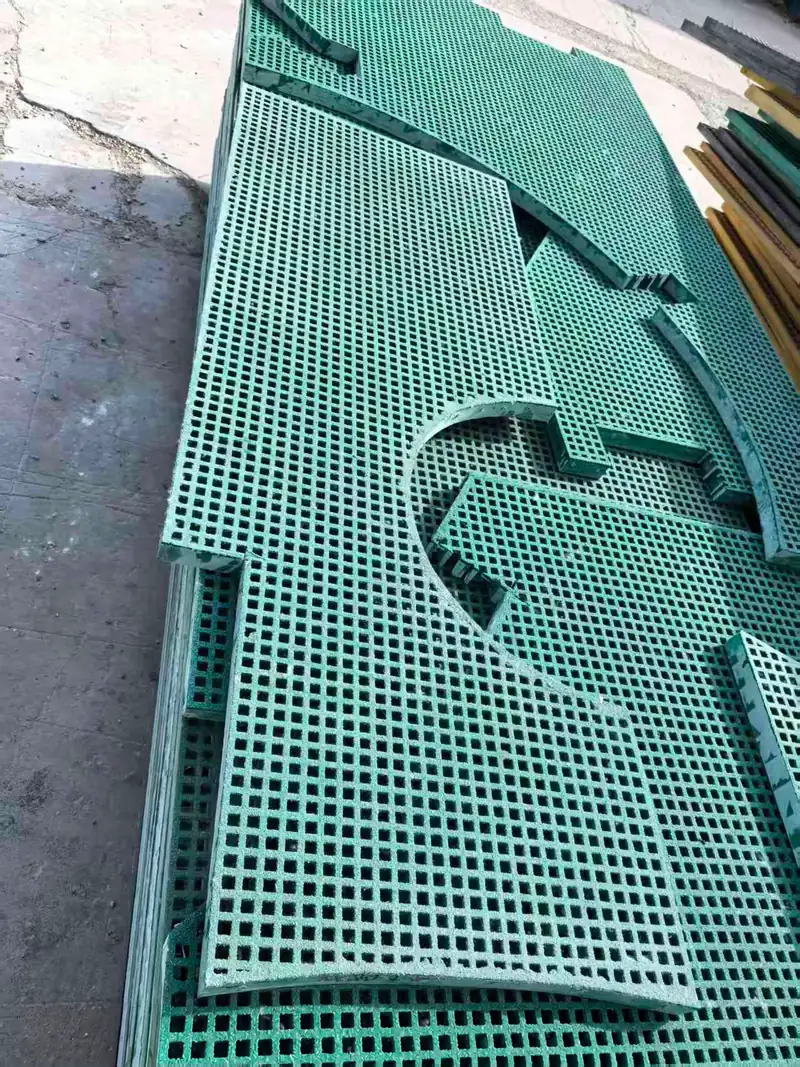
A clean top can hide the real problem. Inspect:
- panel-joint gaps and overlap;
- perimeter gaps;
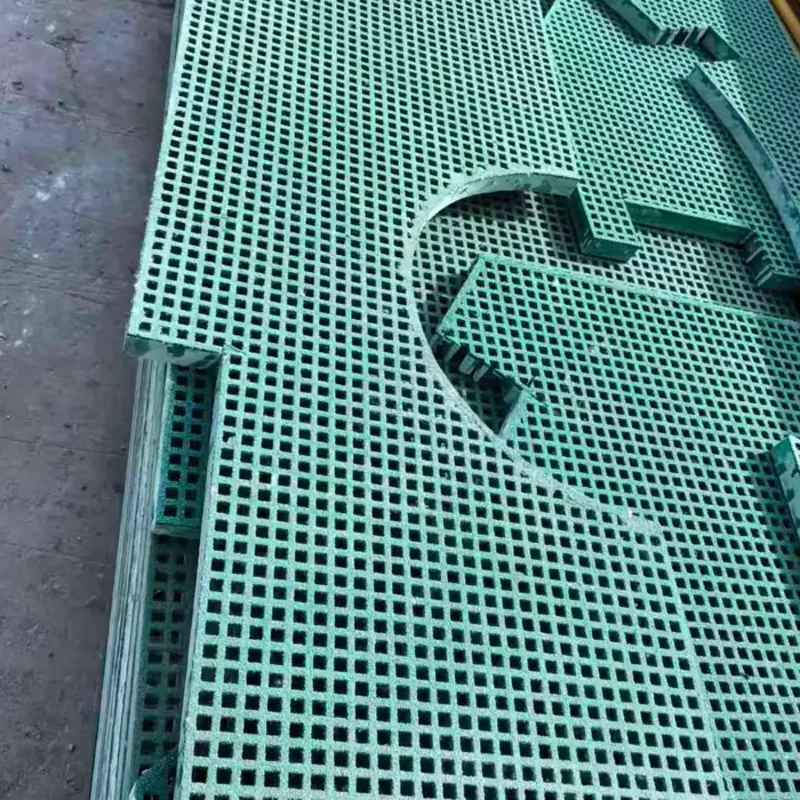
- cut-outs and interrupted bars;
- edge treatment;
- supporting members;
- clip positions and looseness;
- drain covers, grates and downstream channels.
The tighter the mesh, the more likely it is that debris accumulates at the boundary rather than passing through. If a panel is removable, the correct replacement position and clip engagement must be obvious.
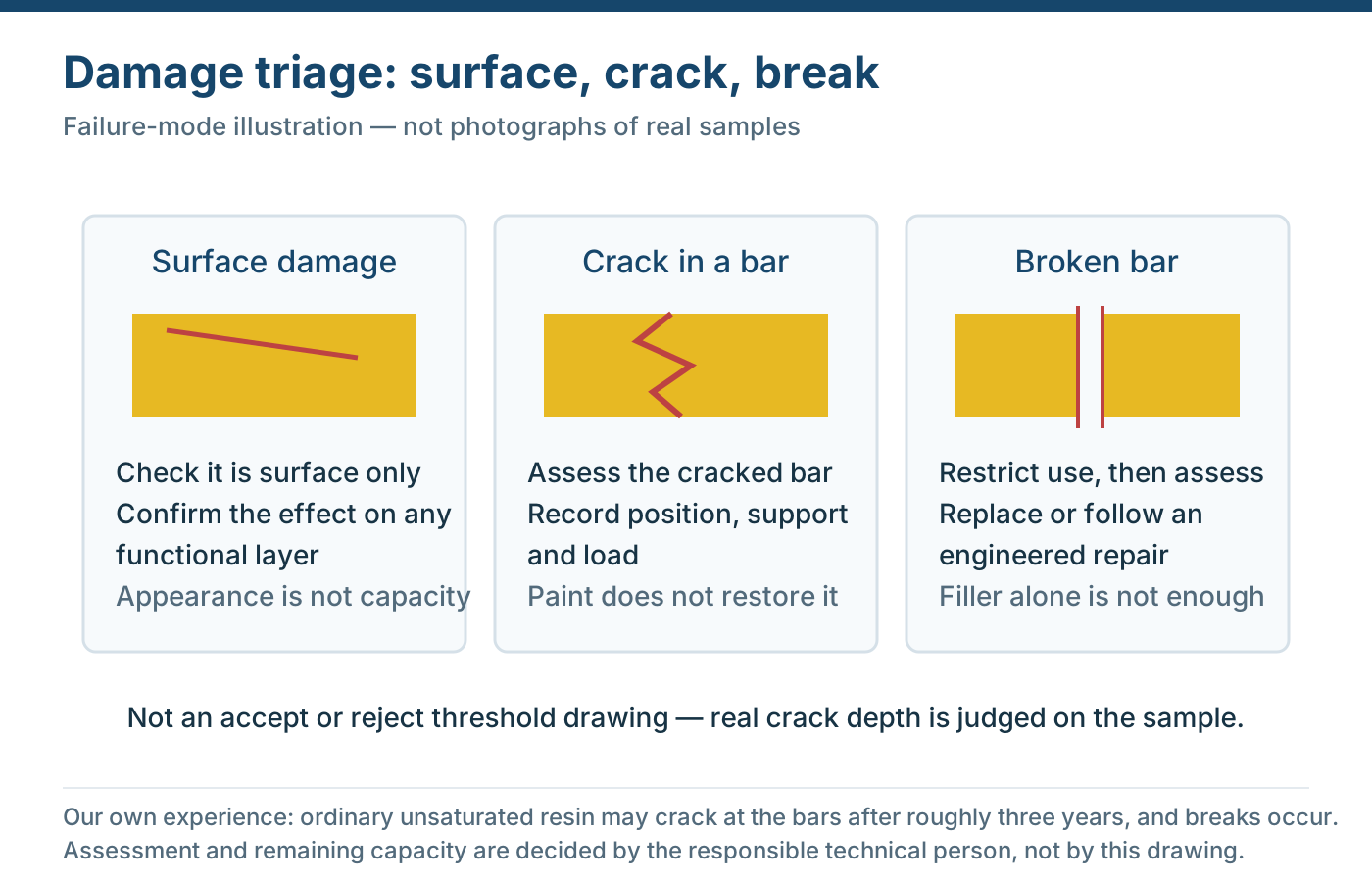
Use Cleaning as an Inspection Round
The person cleaning the surface is often the first to notice:
- grit worn locally or polished smooth;
- resin chalking or exposed fiber;
- a crack or broken bar;
- edge damage;
- loose clips or movement;
- blocked drains;
- ponding or unexpected runoff.
Record the observation with the panel area and photograph where useful. Surface contamination can be cleaned; a bar crack, broken bar or loose support is a different condition and should not be hidden under new resin or paint. Use the maintenance guide to triage surface wear, bar damage and fixing issues.
Plan Access Before the Installation
A maintenance method is only real if someone can reach the work:
- Is the upper grid accessible from above?
- Can the lower grid and supports be inspected from below?
- Can the panel be lifted without damaging clips or edges?
- Is each piece marked so it can return to the correct position?
- Can the outlet be cleared without removing unrelated equipment?
- Is lifting and working at height within the site plan?
A fixed panel may be appropriate when the inlet is easy to clean and debris is controlled. A removable or hinged arrangement may be preferable near fibrous debris, frequent washdown or a drain that requires inspection. Removal does not replace the need for correct restraint when reinstated.
A Practical Cleaning Record
Use one record per area or group of identical panels:
| Record field | Example entry |
|---|---|
| Area and panel ID | Drainage bay D-03, removable panel D3-A |
| Product reference | Mini mesh, quoted row and surface confirmed elsewhere |
| Contamination observed | Wet leaves and fine grit on upper grid; silt below |
| Water condition | Rainwater plus occasional washdown; outlet visually clear |
| Cleaning method | Dry remove, brush, mild detergent, rinse; pressure confirmed on sample |
| Cleaning agent | Named product, dilution, temperature and contact time |
| Findings | One loose clip; no visible bar crack; shallow ponding at outlet |
| Actions | Clear outlet, reengage clip, review slope and reinspection interval |
| Next inspection | Set by the maintenance plan and next heavy-debris season |
The entries are illustrative. The point is to make cleaning repeatable and keep it connected to inspection, not to create a universal schedule.
Our Factory Inputs
For a project review, we need the actual opening requirement and the water/debris condition. We can match those against the available mini-mesh rows and surface options. We can identify the resin direction that needs chemical verification and the fabrication details that change the flow path.
We cannot approve hydraulic capacity from an opening drawing alone. If the project requires a flow rate, ponding limit, structural load or chemical acceptance, the relevant calculation, test condition and responsible specification still have to be supplied.
Handover Checklist
- measured upper and lower mesh geometry;
- clear opening and measuring plane;
- joints, perimeter gaps and cut-outs;
- water source, destination, slope and outlet;
- debris type and expected cleaning frequency;
- resin, surface and compatible cleaning method;
- fixed or removable panels and lifting points;
- bar, edge, support and clip inspection route;
- cleaning record and responsible owner.
What to Send With a Drainage Question
Send:
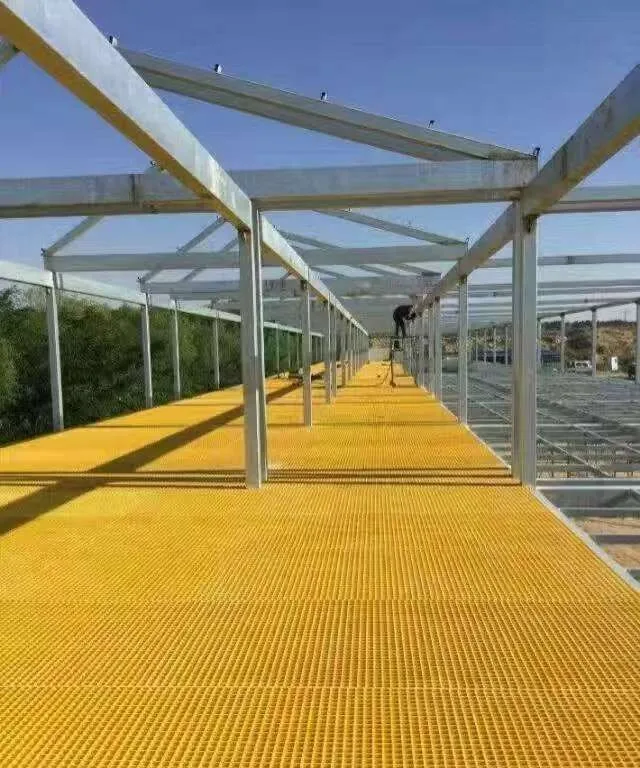
- a plan and photographs of the opening;
- the object or debris that must not pass;
- expected water source and flow, or the project document that defines it;
- slope, outlet, downstream drain and overflow arrangement;
- chemicals, oil, wash agents and temperature;
- required cleaning method and access;
- panel support, fixing, removal and lifting;
- the required load, chemical, hydraulic or inspection evidence.
If the water duty is unknown, mark it as unknown. A quote based on that uncertainty should keep the assumption visible rather than presenting a generic mesh as a calculated drainage solution.
Drainage is a project input
Mini-mesh geometry can be shortlisted from the retained object, debris and water condition, but hydraulic performance still depends on slope, outlet, joints and blockage.
Cleaning must match the product
The resin, surface, grit, edge treatment and fixing material determine which tools and agents are suitable. There is no universal pressure or chemical recommendation for every installation.
Access affects the design
Fine debris can collect on the upper grid or underneath it. A removable panel, drain access or inspection opening may be more useful than a product with no maintenance plan.
Keep wash water in the project scope
Water used to clean an industrial area can carry oil, solids or chemicals. The site must define its containment, treatment and discharge route.
Send the object to retain, debris, expected flow, outlet, cleaning method and exposure. We will identify the mini-mesh rows that can be reviewed and the inputs still missing before a project-specific offer.
Request a review
Send the Drainage, Debris and Cleaning Conditions
Photographs, flow conditions and known agents will identify the next missing input.
- Actual opening and bypass paths reviewed
- Cleaning method matched to resin and surface
- Access and inspection included in the scope
Mini-Mesh Grating Drainage and Cleaning Questions
Does mini-mesh grating drain water?
Does a smaller opening mean easier or harder cleaning?
Can I calculate open area from the mesh pitch?
Can I pressure-wash FRP grating?
Which detergent should be used?
Does good drainage mean the grating is maintenance-free?
What should be checked after cleaning?
Can I use the same cleaning method for oil and process chemicals?
How do joints affect drainage?
When should a mini-mesh panel be removable?
This content was prepared and reviewed by Dengtai Industry’s technical and production team using the project conditions, available product data and applicable documents. Limits that require design, testing or approval are identified in the content. Content last checked: