Sample and order evidence guide
What a Molded FRP Grating Sample Can and Cannot Prove
A sample can help compare visible construction, mesh, surface, color and approximate dimensions. It cannot by itself prove that a different panel will carry a project load, pass a chemical test or meet fire, slip or installed-system requirements.
Prepared by
Dengtai Industry
Published
·
Reviewed

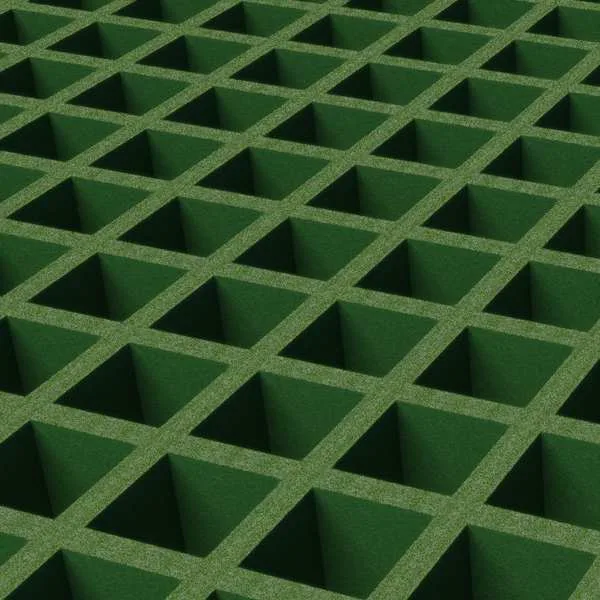
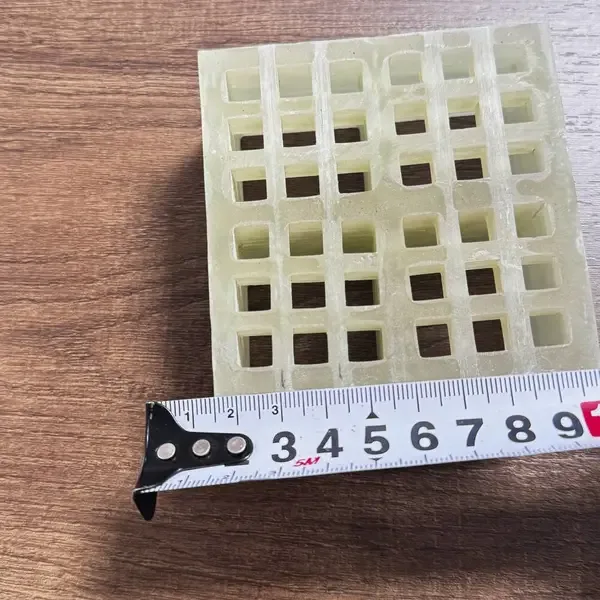
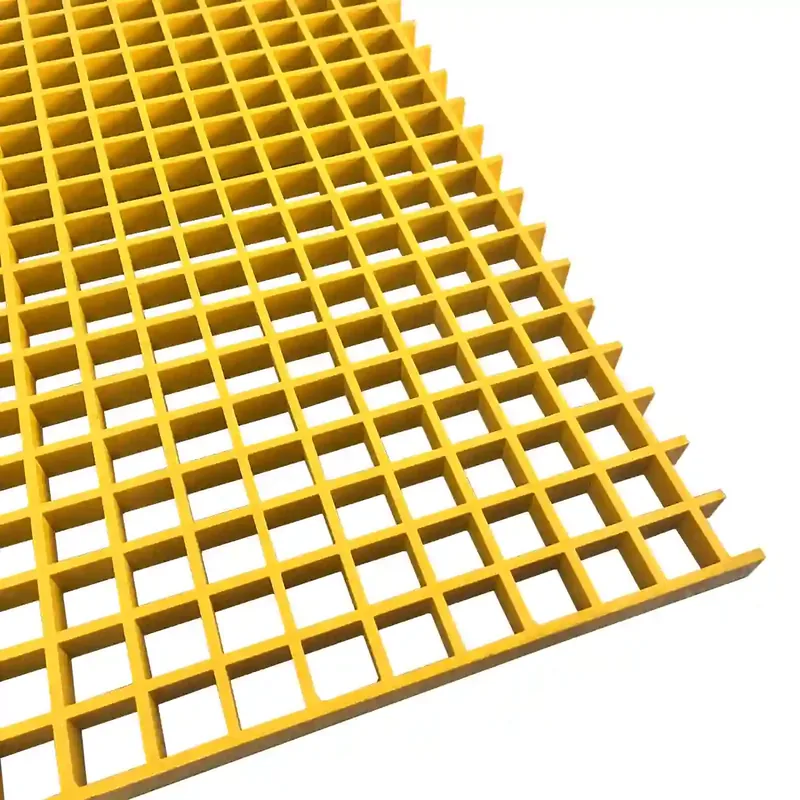
A molded grating sample with visible mesh and grit texture. Compare it with the sample record and quoted configuration. Photo: Dengtai Industry.
Sample types
Generic, Project-Specific and Tested Samples
These are different evidence types even when they look identical.
- Generic sample
- A reference piece from the available product range. It can show typical color, surface and mesh appearance, but it may not have been produced for the buyer’s order.
- Project-specific sample
- A sample made or selected to match a defined depth, pitch, resin, surface and color for a project. Its approval record should identify those fields and the drawing revision.
- Test sample
- A specimen associated with a defined test method, condition and report. It may be part of an order or an independent sample; it should not be confused with a visual sample.
- Reference retained sample
- A signed or photographed sample kept by both parties as the visual reference for color and surface. It still does not prove load or chemical performance.
- Sample record
- The traceable description of a sample: ID, request, configuration, date, purpose, measurements, photographs and approval criterion.
- Equivalence
- A documented comparison showing that the proposed order configuration matches the sample or tested item in every relevant field. A similar appearance is not equivalence.
Evidence scope
What a Molded Grating Sample Can and Cannot Establish
Separate visual or dimensional checks from load, chemical, fire and compliance claims.
Swipe horizontally to view all columns.
| Sample question | What the sample can support | What must come from another record |
|---|---|---|
| Visible mesh and surface | Compare opening pattern, grit, concavity and color under agreed lighting. | The ordered depth, pitch, resin, surface and color still need to be in the specification. |
| Approximate depth | Measure the specimen and compare it with the drawing. | Tolerances, full-panel thickness and the exact production row remain order controls. |
| Clear opening | Measure the sample at a stated plane. | The result applies to the sample unless the order drawing confirms the same bar width and taper. |
| Load capacity | A sample can identify the structure that was tested. | A load table, calculation or report for the same construction and support condition is still required. |
| Chemical resistance | The sample can show color and surface, not the resin grade hidden in the material. | Exposure schedule, formulation, concentration, temperature and test or service evidence are required. |
| Fire and smoke | A sample can show the physical construction. | The project needs a classification or report tied to the actual product and test method. |
| Slip resistance | A sample lets the buyer feel and inspect the texture. | Any numerical result needs the specified test method, condition and tested sample. |
| Installed compliance | The sample can represent one component. | Supports, fixings, guardrails, joints and site conditions may all be part of the installed requirement. |
Sample decision
When a Molded FRP Grating Sample Is Useful
Use a sample where direct comparison adds information, and pair it with the right order or test record.
Specify this if…
- You need to compare visible mesh, color, grit or other surface before ordering.
- You need a measurable reference for depth, pitch or opening that will be tied to the order description.
- A project-specific sample can be identified by resin, surface, color and production reference.
- The sample approval has a named purpose, such as visual appearance or dimensional verification.
- Required performance claims have a separate test or document plan.
Look elsewhere if…
- The sample is expected to certify every panel, every span or every support condition.
- The approval is based only on a photograph and the sample is not identified.
- The sample uses different depth, pitch, resin, surface or color from the proposed order.
- A load, fire, chemical, anti-static or slip result is being inferred without a defined test and report.
- The installed system requires structural or compliance approval but no project drawings or calculations are available.
Sample record
Fields That Connect the Sample to the Order
The sample record makes the physical piece reviewable later.
Swipe horizontally to view all columns.
| Sample record field | Why it matters | Example entry |
|---|---|---|
| Sample ID | Connects the physical item to the inquiry and approval. | DT-MG-S-1029-01 |
| Request or project | Prevents a sample being reused for an unrelated specification. | Plant walkway / P07 review |
| Construction | Defines molded vs pultruded and the visible mesh or bar structure. | Molded, 38 mm, 38 × 38 mm pitch |
| Resin | Separates visual approval from chemical duty. | Isophthalic polyester, grade to be confirmed |
| Surface and color | Records the finish and appearance being approved. | Yellow, grit; color reference attached |
| Measured values | Records what was measured and at which plane. | Depth 38 mm; pitch 38 mm; clear opening measured at top face |
| Purpose | Prevents the sample from being presented as broader evidence. | Visual and dimensional comparison only |
| Order link | Shows whether the item represents a quotation or production batch. | Quotation Q-2026-1029, revision A |
| Approval | Records who accepted the sample and against what criterion. | Buyer name/date; visual and dimensional checklist |
A molded FRP grating sample can prove what can be seen and measured on that sample. It can show the construction, mesh pattern, surface, color and approximate profile. It cannot, by itself, prove the load capacity of a different full panel, confirm chemical suitability, establish a fire or slip classification or approve the installed platform.
That distinction is important because a sample often travels through a different commercial process from the production order. It may be a standard representative piece, a project-specific sample or a tested specimen. Each supports a different decision.

Start by Identifying the Sample
A useful sample review starts with its identity. “A piece of FRP grating” is not enough.
Record:
- sample ID;
- requester and project;
- molded or pultruded construction;
- depth and pitch;
- bar width or measured opening;
- resin grade where known;
- color reference;
- surface format;
- production date or quotation reference;
- the purpose of the sample.
If these fields are missing, the sample may still help a conversation, but it is weak approval evidence.
What a Sample Can Show
Mesh Geometry and Visible Construction
The sample lets a buyer see whether the grid is square, rectangular, mini mesh or another construction. A ruler can compare pitch, bar width and approximate clear opening.
The observation should state the measuring plane and the actual measured value. A nominal product label is not enough.
Surface and Color
The sample can show grit size, surface roughness, concave profile or cover appearance under the agreed lighting. It can help approve a color reference.
Color is not a performance grade. Two samples with the same color may use different resin or fire systems.
The sample is also a point-in-time appearance reference, not a forecast of the installed surface after years of exposure. Sunlight, cleaning, chemical contact and abrasion can change appearance. When color retention is important, ask which evidence applies to the actual resin, pigment and surface system rather than assuming that a new sample represents long-term appearance.
Workmanship at the Sample Scale
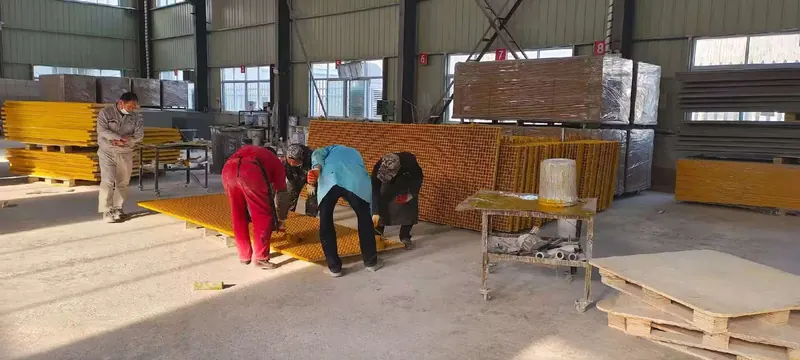
The buyer can inspect surface defects, visible cut edges and overall workmanship on the sample. That is useful for appearance alignment, but the sample does not necessarily show:
- the full-panel flatness;
- the tolerance of every production piece;
- how the factory will pack the order;
- how a different batch will look over time.
What a Sample Cannot Prove Alone
Load Capacity
A load table or calculation requires the complete structural configuration, support arrangement, span, load and deflection limit. A hand sample is not a full-panel load test.
If a report exists, compare its specimen and test condition with the proposed order. The molded grating load-table guide shows how to review the row.
Chemical Resistance
The visible sample may not reveal the resin grade. Chemical suitability depends on the resin and formulation as well as the exposure concentration, temperature and duration.
Use the chemical resistance guide when the sample is being used to discuss a process environment.
Fire, Smoke and Anti-Static Performance
These are functional properties. They need a stated test method and report. A colored sample, a dark surface or a marketing phrase does not establish them.
Slip Resistance
A sample lets a person feel the texture, but a numerical slip result belongs to the test method, condition and tested surface. The surface selection guide explains the difference.
Installed-System Compliance
Even if the sample is a perfect copy of the panel, supports, fastenings, openings and installation may not meet the project requirement. The product sample is one component of the installed system.
Generic, Project-Specific and Tested Samples
| Sample type | Useful for | Evidence limit |
|---|---|---|
| Generic range sample | Visual comparison of typical color, mesh and surface | It may not represent the exact resin, size or production run |
| Project-specific sample | Confirming a defined depth, pitch, surface and color against a quotation | Still does not prove load, fire or chemical performance unless tied to test data |
| Tested specimen | Supplying material or product evidence under a stated test | Only the tested configuration and conditions are covered |
The buyer should state which question the sample is expected to support. The supplier should state what the sample actually represents.
Our Standard 3 × 3 Cell Sample
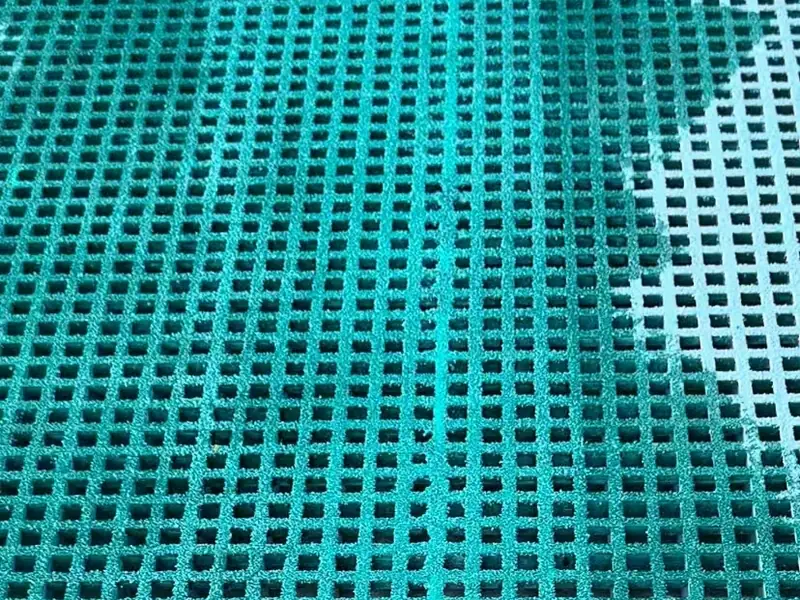
Our standard sample contains a 3 × 3 cell section. It is free of charge, with the customer paying freight. A custom sample in a non-standard color, resin or surface is charged, and the fee and timing are confirmed first.
This sample is useful for:
- seeing a typical molded structure;
- comparing mesh and surface appearance;
- checking approximate color;
- measuring a visible opening where the sample is identified.
It is not a certificate for the full production panel. The molded grating product page lists the ordered configuration separately.
When a Sample Should Be Tested
A test may be appropriate when the project:
- states a load and deflection test requirement;
- evaluates a chemical or fire service;
- requires a measured slip result;
- has a witness or third-party inspection requirement;
- needs a specific conformity criterion.
Define before sampling:
- test method and laboratory;
- number and size of specimens;
- production or batch identity;
- conditioning and test conditions;
- acceptance value;
- report format and ownership;
- retention period for test specimens.
A test on an unidentified piece is much less useful than a test traceable to the proposed product.
What a Sample Does Not Replace
It does not replace:
- the approved product drawing;
- the complete mesh and resin specification;
- the support and load review;
- the fire, slip or chemical test required by the project;
- the inspection of the delivered order;
- packing or piece-mark requirements.
The sample sits within an evidence chain. It is not the whole chain.
A Sample Approval Record
Record the sample fields in one compact table:
| Field | Example |
|---|---|
| Sample ID | DT-MG-S-1029-01 |
| Product | Molded FRP grating |
| Depth and pitch | 38 mm, 38 × 38 mm |
| Resin | Isophthalic polyester, grade reference |
| Surface / color | Yellow grit, reference attached |
| Measured values | Depth, pitch, bar width, opening and plane |
| Purpose | Visual and dimensional review only |
| Order link | Quotation or drawing revision |
| Approval | Buyer, date and checklist result |
| Next evidence | Matched load table or required test |
The exact values in the example are illustrative. The actual sample record uses the request and the product quoted.
Photographs and the Retained Reference Sample
A physical sample becomes more useful when the photographs show how it was identified and measured. We recommend recording:
- the complete sample with its label and a scale;
- a top view under neutral light;
- a side view showing the depth and bar profile;
- the underside, especially for mini mesh or a double-layer construction;
- the measuring plane with the ruler or gauge visible;
- the agreed color reference and surface finish;
- the sample ID and approval date in the final approval note.
Where appearance is a contractual requirement, both parties should retain an identified reference sample or a sealed photo set. Store it away from direct sunlight and contamination, and record who holds it. A retained sample makes later comparison easier, but it still does not replace production inspection or performance evidence. Use the quality and documentation guide to define the separate order records.
Before a Sample Is Shipped
Sample logistics should be settled with the same precision as the sample itself:
- destination address, contact and import or courier requirements;
- required-on-site date and the decision deadline behind it;
- freight payer and any duties or taxes;
- number and size of pieces;
- product configuration and quotation reference;
- label, packing and identification requirements;
- whether one piece must remain sealed or be retained by each party;
- the named person who will review and approve the sample.
If the sample is for testing, do not put it in the same scope as a visual reference without identifying the specimens. The factory and sample process should connect the physical item, its request and the order reference without implying that a generic sample represents every production batch.
How We Review a Sample Request
Our review asks:
- What do you need to approve?
- Which depth, pitch, resin, surface and color are being considered?
- Is the purpose visual, dimensional, testing or all three?
- Does the sample need to match a drawing revision?
- What will be measured?
- What evidence is still needed beyond the sample?
The answer determines whether a standard sample, a custom sample or a tested specimen is appropriate.
Sample Approval Without Overclaiming
A short approval note can say:
Sample DT-MG-S-1029-01 was reviewed for visible mesh, yellow grit appearance and measured 38 mm depth. Approval is limited to the fields listed; order load, chemical, fire and slip evidence remain separate.
This is more useful than “sample approved” with no scope because the next person can see what was accepted.
When the Sample Differs From the Order
Treat a difference as a new approval issue. It may involve:
- depth;
- pitch or clear opening;
- resin grade;
- surface or color;
- panel format;
- cut edge;
- production batch.
Do not assume that a similar-looking sample covers the revised product. Ask whether the difference is accepted or whether a new sample is required.
How to Reduce Sample and Order Errors
Use the same identifiers in:
- the sample request;
- sample label;
- quotation;
- approved drawing;
- production traveler or inspection record;
- packing list.
That simple discipline turns a sample from a loose object on a desk into a checkable part of the order evidence.
The Manufacturer Rule for Samples
A sample is strongest when its purpose is narrow and its identity is complete. Use it to compare what can be seen and measured, then state separately which structural, chemical, fire, slip or compliance evidence the project needs.
Approval path
How We Use a Sample in an Order Review
The process separates the physical reference, the product specification and the test requirement.
Visual approval, dimension verification and performance testing require different sample records.
Depth, pitch, mesh, resin, surface and color are compared with the quotation and drawing.
A ruler and written method record depth, pitch, bar width and clear opening at a stated plane.
The label, photographs and approval record connect the sample to the request and revision.
Load, chemical, fire, slip or compliance questions move to a matched table, calculation or test.
The quotation and inspection record repeat the same sample reference and configuration.
Factory evidence
What the Factory Can Record From a Sample
A sample is useful when its source, measurement and scope are recorded.

Sample record
Every useful sample is identified by request, configuration, date and purpose instead of relying on appearance alone.
Measured geometry
Depth, pitch and opening are recorded with the measuring plane and the instrument used.
Separate test evidence
Load, chemical, fire, slip or conductivity claims need the test method, specimen and result.
Limited approval
The approval note states exactly which visible or dimensional fields were accepted.
Production reference
The approved sample can be linked to the quotation and order drawing without becoming a universal certificate.
Material limitations
A sample does not reveal every formulation, batch tolerance or full-panel condition.
Sample request
What to Include When Requesting a Molded Grating Sample
Tell us what you need to decide so the sample and record are fit for that purpose.
- Configuration requested — Depth, pitch, mesh type, resin, surface and color.
- Purpose — Visual, dimensional, sample approval, testing or another defined decision.
- Order or drawing reference — Quotation, revision and project reference when the sample must match them.
- Measurements required — Which dimensions and measuring plane need to be recorded.
- Test requirement — Method, laboratory, acceptance value and report if the sample is for testing.
- Sample destination — Delivery address, recipient and any import or courier constraints.
- Approval field — The exact appearance or dimensional fields the buyer will approve.
- Retention or witness requirement — Whether samples must be sealed, photographed, stored or witnessed.
Request a sample
Request or Review a Molded FRP Grating Sample
State the configuration and the decision the sample must support.
- Sample identity and purpose recorded
- Performance evidence kept separate
- Standard and custom sample scope explained
Molded FRP Grating Sample Questions
What can I check with a molded FRP grating sample?
Does a grating sample prove load capacity?
Is the standard sample free?
Is a project-specific sample automatically tested?
Can a sample prove chemical resistance, fire rating or anti-static performance?
How do I approve a sample?
What if the production order differs from the sample?
Can photographs replace a physical sample?
Does the sample predict how the installed panel will look after weathering?
This content was prepared and reviewed by Dengtai Industry’s technical and production team using the project conditions, available product data and applicable documents. Limits that require design, testing or approval are identified in the content. Content last checked: