Procurement quantity structure
Grating BOQ Example: Panels, Finished Pieces and Accessories
Organize the measured request by deliverable: source panels, finished pieces, accessories, fabrication services, evidence, packing and delivery. Keep one item ID from the BOQ to drawing, quotation and receiving record.
Prepared by
Dengtai Industry
Published
·
Reviewed

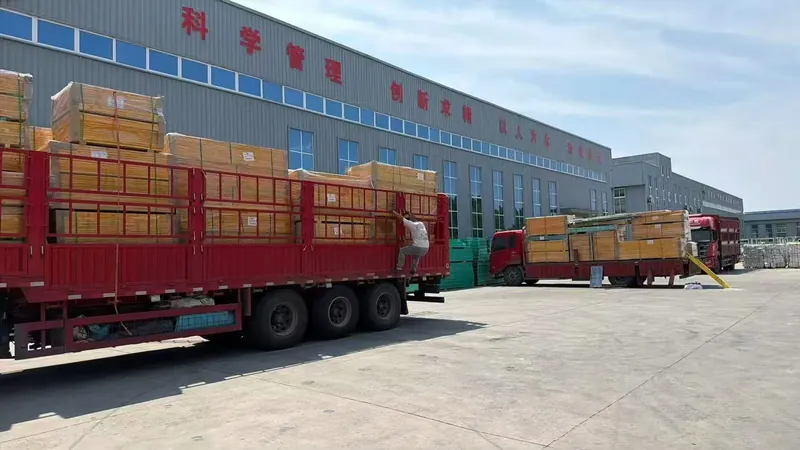
A BOQ is useful when each deliverable can be identified, measured, quoted and checked after delivery. Photo: Dengtai Industry.
- Bill of quantities
- A measured list of work or supply items in which each line has a description, unit, quantity and basis for pricing. It supports comparable tenders and later quantity control.
- Item ID
- A stable identifier for one deliverable or service. The same ID should be used in the drawing, quotation, inspection record and packing list.
- Source panel
- The full product sheet or stock panel from which finished pieces are supplied or made. Its row and dimensions belong to the BOQ even when the buyer ultimately receives only cut pieces.
- Finished piece
- A delivered part with a defined ID, size, direction, openings, edge scope and quantity. The piece is not interchangeable with an equal rectangular area of source panel.
- Unit rate
- The commercial price applied to one stated unit, such as a panel, piece, set or service. The unit of the rate must match the unit of the quantity.
- Measurement basis
- The drawing, specification, datum and assumptions used to derive a quantity. It records what has been measured and what still requires project confirmation.
- Provisional quantity
- A quantity used for tender, budget or planning before the final drawing and re-measurement are available. It must not be presented as a produced or shipped quantity.
| BOQ line | What it describes | Evidence or check |
|---|---|---|
| Source panel | Complete product row and actual panel dimensions | Current data sheet and factory source-panel reference |
| Finished piece | Piece ID, size, direction, openings and edge scope | Approved drawing revision and piece schedule |
| Accessory | Clip family, material, fastener, washer and count | Hardware schedule and package identity |
| Fabrication service | Cutting, drilling, sealing, marking and inspection work | Defined operation and acceptance record |
| Evidence | Datasheet, drawing, inspection, report or calculation | Named issuer, specimen, scope and stage |
| Packing | Package type, marks, protection and gross-mass limit | Packing plan and package list |
| Delivery | Incoterm, named place, freight and handling responsibility | Commercial quotation and handover record |
| BOQ field | What to enter | Why the field matters |
|---|---|---|
| Item ID | Stable line identifier such as BQ-01 or FG-02 | Keeps revisions, pricing and delivery traceable |
| Description | Product or service stated as a measurable deliverable | Prevents a generic family name from pricing different work |
| Reference | Current drawing, data sheet or schedule | Connects the quantity to a controlled source |
| Size / geometry | Dimensions, direction, openings and tolerances | Captures work that area alone cannot describe |
| Quantity and unit | Number and unit in the same basis as the rate | Prevents panel, piece and square-metre totals from being mixed |
| Quantity status | Firm, provisional, indicative or measured | Stops a tender allowance from looking like a final takeoff |
| Fabrication | Cut, seal, drill, mark, inspect or pack operations | Makes services visible instead of hidden in a product rate |
| Evidence | Named document and release stage | Allows document scope to be compared and checked |
| Rate and amount | Blank commercial cells for the supplier or estimator | Keeps buyer quantities separate from supplier pricing |
| Exclusions | Work or responsibility not included | Stops a lower total from hiding omitted scope |
| Spare or remnant | Spare panel, approved remnant or no allowance | Gives retained material an owner and future identity |
| BOQ item | Illustrative description | Unit | Quantity | Evidence |
|---|---|---|---|---|
| BQ-01 | Molded FRP source panel, exact row to confirm | panel | 4 | Current data sheet |
| BQ-02 | Finished piece FG-01, 1200 x 600 mm, direction marked | piece | 6 | Drawing Rev A |
| BQ-03 | Finished piece FG-02 with 300 x 300 mm opening | piece | 2 | Opening detail and inspection record |
| BQ-04 | M-clip fixing set, material and fastener grade to confirm | set | 96 | Hardware schedule |
| BQ-05 | L-clip edge fixing set | set | 24 | Hardware schedule |
| BQ-06 | Factory cutting, edge sealing and piece marking | lot | 1 | First-piece and final inspection |
| BQ-07 | Dimensional inspection and conformity scope | document | 1 lot | Agreed evidence schedule |
| BQ-08 | Export package FG-P1 with marks and lift points | package | 1 | Packing list and photographs |
| BQ-09 | Freight to the named destination | shipment | 1 | Incoterm and handover record |
| BQ-12 | Optional spare-panel allowance, identity and storage owner | panel | 1 | Provisional allowance note |
Record the project, BOQ revision, drawing revision, measurement datum and commercial basis.
Name the complete molded, pultruded, mini-mesh or covered configuration.
Give the source-panel count and actual dimensions before cutting assumptions.
Give each unique piece an ID, size, quantity, direction, openings and edge scope.
Give fixings, cutting, sealing, marking, inspection and engineering work their own measurable lines.
State what document or record proves the line and how the item will be identified when packed.
Populate rates only after the quantity unit and scope are fixed, and keep exclusions beside the amount.
- Header complete — Project, revision, measurement basis and delivery place are stated.
- Product row complete — Construction, geometry, resin, surface and colour are defined.
- Source panels separated — Full panels have their own quantity and dimensions.
- Finished pieces separated — Every unique piece has an ID, quantity and drawing basis.
- Accessories separated — Fixing sets include type, material, hardware and count.
- Services separated — Cutting, sealing, marking and inspection can be priced and checked.
- Evidence named — Documents and release stages are not hidden in a generic note.
- Commercial cells controlled — Rate unit matches the quantity unit and exclusions remain visible.
A useful grating BOQ is more than an area multiplied by a price. It separates what is bought into measurable deliverables: source panels, finished pieces, accessories, fabrication services, evidence, packing and delivery. Each row needs a description, unit, quantity and controlled reference. Pricing is entered only after that structure is clear.
The pages that come before and after this one solve different tasks. The FRP grating RFQ template collects the buyer’s request. The cut-list guide checks source-panel nesting and direction. This page organizes the measured lines that a supplier can price and a receiving team can compare with the delivery.

A BOQ and a Quotation Are Not the Same Document
A BOQ defines the measured items and quantities the project needs. A quotation supplies prices and commercial conditions for those items, or states an alternative. If the BOQ is incomplete, the supplier must either guess or write an exclusion. Both outcomes make the offers harder to compare.
The BOQ should therefore avoid a single line such as “FRP grating, supply and install, one lot.” That line can hide the product row, panel count, cut pieces, fixings, drawings, inspection, packing and delivery. A one-lot line may be useful for a preliminary budget, but it is not a production-ready material schedule.
The structure is also not the final engineering calculation. A measured area does not prove support spacing, bar direction, load capacity or deflection. The BOQ should point to the design and drawing basis rather than imply that measurement approves it.
Arkan’s BOQ explanation describes the standard commercial structure as a priced list in which every work item carries a description, unit, quantity and rate. We use that structure but add FRP-specific product, drawing, fabrication, accessory and receiving references. Strongwell’s grating worksheet adds a useful warning: wheel loads need wheel diameter and width, not only a total load. McNICHOLS’ ordering method similarly separates geometry, surface, form, fabrication and accessories.
Use Separate Lines for Separate Deliverables
Source-panel line
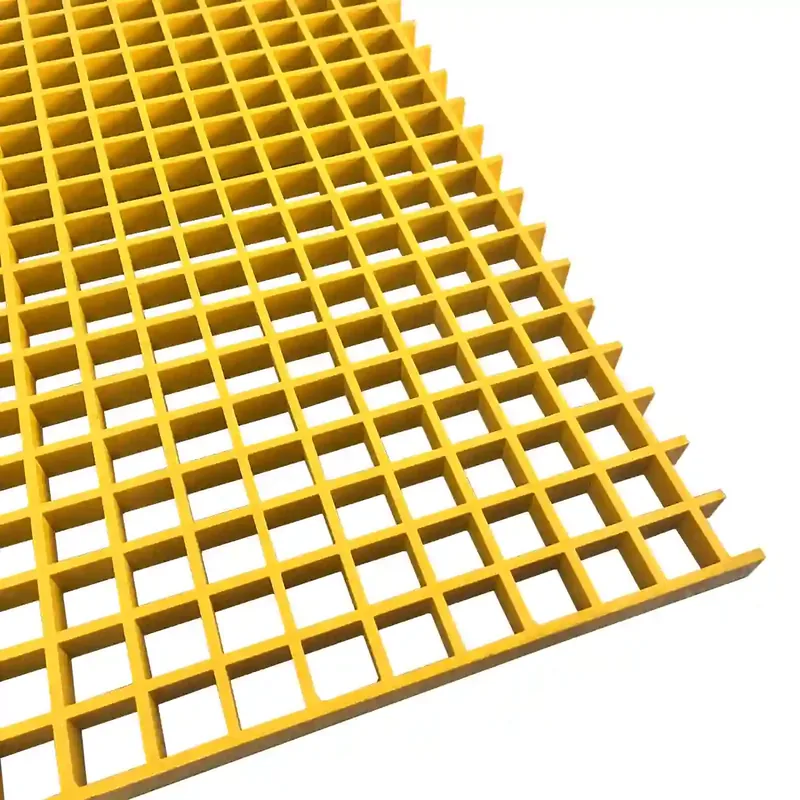
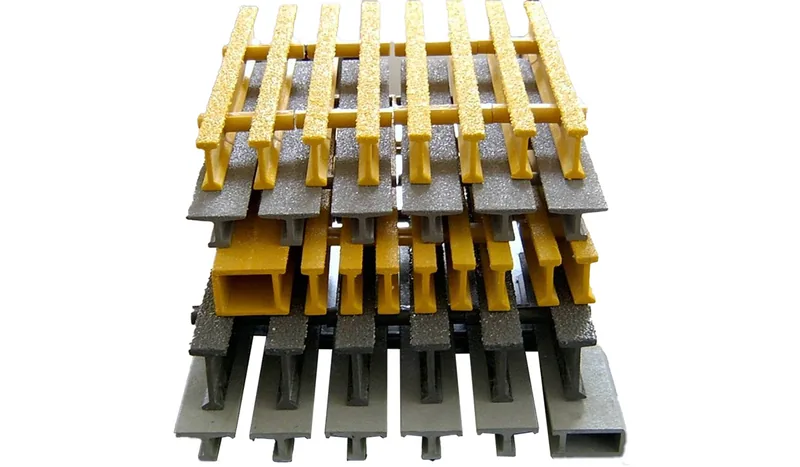
The source-panel line should state the complete product row and the actual panel dimensions. For molded grating, that includes depth, mesh, resin, surface, colour and top face. For pultruded grating, it includes the profile, height, top width, bar pitch, cross-rod arrangement and panel format.
The quantity is normally a panel count. If the supplier prices a square-metre area derived from the panel, the area conversion must still point to the actual source sheet. A nominal 4 x 8 ft label does not automatically prove the exact millimetre dimensions.
Finished-piece line
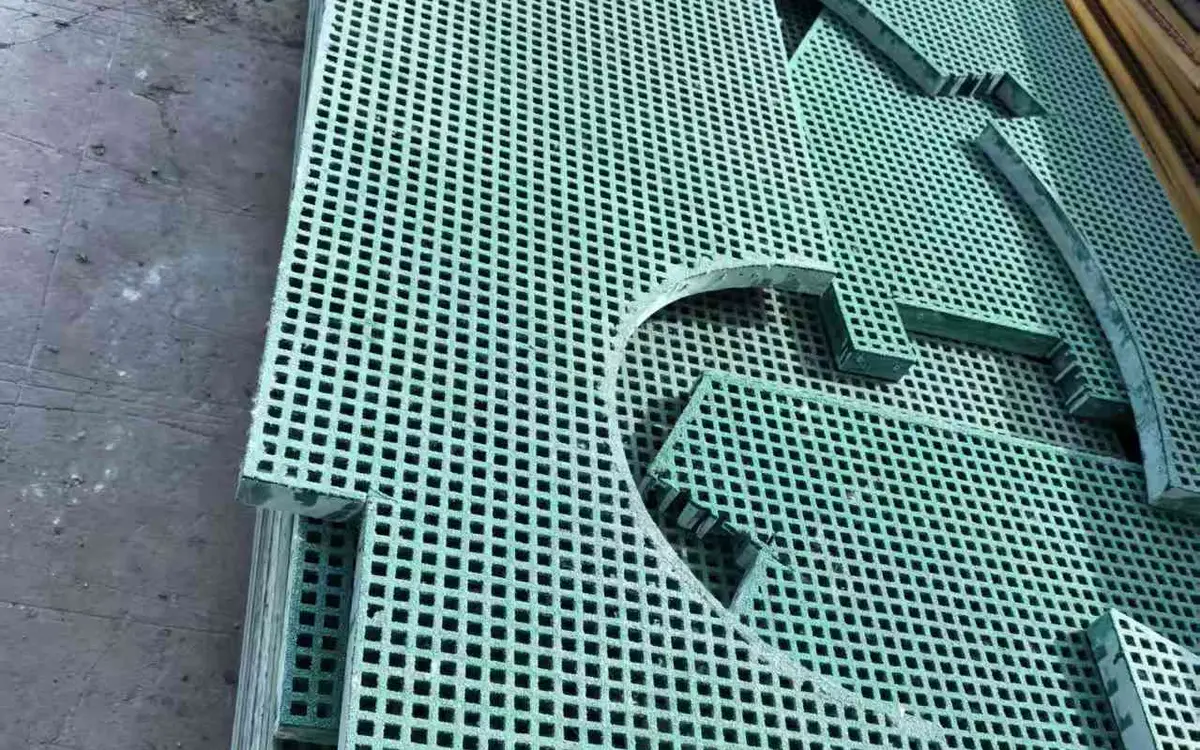
Finished pieces are not interchangeable with the source panels from which they came. Each unique piece needs an ID, finished length and width, quantity, bearing or grid direction, top face, opening geometry, edge treatment and drawing revision.
Two pieces can share a rectangle and still differ because one has an opening, a sealed edge, a different face or a more difficult lift. The BOQ should allow these differences to appear in the description or drawing reference rather than forcing them into a note outside the measured item.
Accessory line
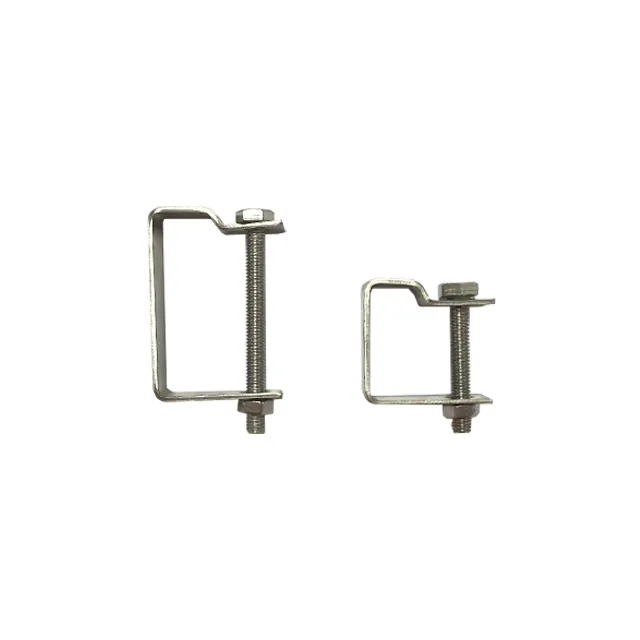
State the clip type, material, fastener, washer and quantity. The quantity may be derived from the support and panel-joint layout. Record the derivation or attach the fixing plan so the buyer and supplier are pricing the same count.
If the supplier offers “clips included,” replace that phrase with the actual set. A package of 25 clips is not a complete fixing set until the project confirms the required number and hardware.
Fabrication-service line
Cutting, drilling, edge sealing, piece marking and inspection can be described as one fabrication lot only when the operations are defined. A cutting operation for a rectangular piece is different from shaping an opening, sealing multiple cut faces and applying durable piece marks.
Separate service lines make it possible to compare whether the supplier is fabricating at the factory, supplying loose material or arranging work elsewhere.
Evidence line
Name the document or record and its stage. Typical lines include:
- current product data sheet with the quotation;
- approved order drawing before production;
- dimensional and appearance inspection before packing;
- conformity document tied to the agreed batch or order;
- test report with a known specimen and method;
- structural table or calculation with the support condition.
“All certificates” is not a measurable BOQ item because the supplier cannot know which document, issuer, specimen or stage the buyer requires.
Packing and delivery line
Packing is a deliverable when it protects the product and carries the identity needed for receiving. It should state package type, supports, protection, marks, piece list and gross-mass limit. Delivery then states the Incoterm, named place and who arranges freight, insurance and unloading.
Why the Example Uses Both Panels and Pieces
The worked example contains four source panels and eight finished pieces. Those numbers are illustrative, not a claim that one line simply produces the other. A project can genuinely require both full background panels and a separate batch of finished access pieces.
Keeping the lines separate exposes the right questions:
- Are the full panels and the pieces taken from the same product row?
- Does the piece schedule consume one or more source panels?
- Are spare panels or approved remnants included?
- Does factory cutting apply only to the piece line?
- Are the clips counted for both full panels and finished pieces?
The CSV separates quantity_status from spare_or_remnant_scope. Use “firm” only when the current drawing and takeoff support the quantity. Use “provisional” or “indicative” when the number is still a tender allowance. Spare panels and remnants should remain separate from required installed pieces so they are not accidentally priced or delivered as mandatory quantity.
If the buyer wants the supplier to optimize one source layout across all pieces, the BOQ should link to the current cut list and yield schedule and use its controlled piece IDs. If the project already includes full panels in another section, those panels should remain in that section rather than being silently consumed by the piece calculation.
Keep Pricing Cells Controlled
The downloadable example leaves rate, currency and amount cells available but blank. That is deliberate. A BOQ template should not ship with invented prices or imply that the buyer’s quantities equal a supplier’s current rate.
When rates are added, the unit of the rate must match the unit of the quantity. A rate per panel cannot be multiplied by a piece count without an explicit conversion. A rate per square metre must state whether it refers to source-panel area, delivered-piece area or billed area.
Keep exclusions beside the amount. If cutting, edge treatment, fixings, inspection or packing are excluded, the workbook should show the omission before anyone totals the column. A complete commercial comparison can then continue in the quote comparison worksheet.
The BOQ Revision Must Match the Drawing
Every BOQ revision should reference the drawing revision it measures. If the drawing changes from A to B, any changed piece ID or quantity should create a new BOQ revision. Replacing the file without a revision makes a supplier’s returned rate impossible to trace.
Use a short revision log:
| Revision | Drawing | Change | Quantity effect | Issued to |
|---|---|---|---|---|
| A | DRW-01 Rev A | Tender issue | Illustrative | Project team |
| B | DRW-01 Rev B | Added opening FG-02 | Add one piece and inspection line | Bidders |
This is not administrative clutter. A piece ID can remain the same while its opening or edge changes. The revision record is what tells the supplier and receiving team which physical object the price and delivery record belong to.
Our Factory View: Make Each Line Buildable
Our estimating and production review begins with the product row, drawing and quantity unit. For a finished-piece line, we also need direction, support information, openings, edge scope and piece marking. For a panel line, we need actual source dimensions and the required packing method.
The best BOQ is not necessarily the longest one. It is the one where each line has enough information to be produced and checked without inventing a missing value. We would rather add a clearly marked missing line than blend an unresolved requirement into the panel price.
That approach also improves the receiving decision. The same IDs can be checked against the BOQ, drawing, inspection record, packing list and incoming inspection spreadsheet. When the physical item, quantity and evidence agree, the delivery can move to the next stage without losing its original scope.
Get a Quote
Get a Grating BOQ Example: Panels, Finished Pieces and Accessories Quote
- Attach the current drawing
- Mark provisional quantities
- Name the required documents
What is a grating bill of quantities?
Should panels pieces and accessories be one BOQ line?
Can a grating BOQ use square metres?
Does a BOQ approve the structural design?
What should I do when a dimension is not final?
- Quantity boundary — A BOQ quantity is only as reliable as its drawing, datum and stated assumptions. Provisional quantities remain provisional until measured.
- Design boundary — The BOQ describes supply and measurable work. It does not approve support, load, deflection, fire, chemical or installation design.
- Commercial boundary — The buyer or estimator owns rate entry, currency and commercial evaluation. A blank rate is not evidence of a zero price.
This content was prepared and reviewed by Dengtai Industry’s technical and production team using the project conditions, available product data and applicable documents. Limits that require design, testing or approval are identified in the content. Content last checked: