Delivery release record
FRP Grating Incoming Inspection: Photos, Count and Release
Record the package before it is opened, verify each controlled identity and quantity, inspect the delivered condition and documents, then assign an accept, hold or report decision with an owner and due date.
Prepared by
Dengtai Industry
Published
·
Reviewed

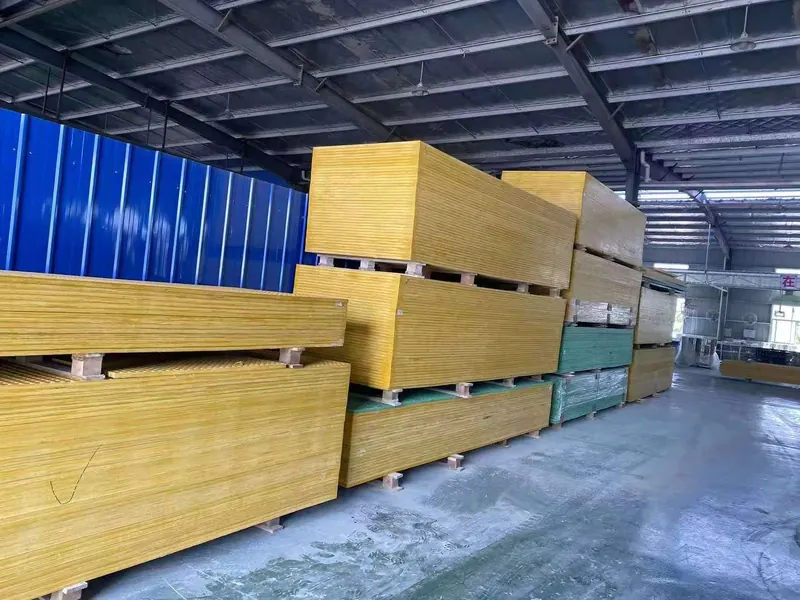
An arrival inspection starts with the package and its marks, before accepted material is mixed with other stock. Photo: Dengtai Industry.
- Incoming inspection
- The buyer-side checks made when a delivery arrives and before it is released into storage, construction or installation.
- Package ID
- The unique mark on a pallet, bundle or crate that connects the physical package to the packing list, shipment and receiving record.
- Piece mark
- The identifier assigned to a finished grating piece. It links the physical item to its drawing, installed location, quantity and packing entry.
- Sample plan
- The agreed rule for which packages or piece IDs are inspected. The checklist records the plan used; it does not invent an acceptance standard when the project has not specified one.
- Nonconformity
- A recorded mismatch between the delivery and the approved order, drawing, quantity or document scope. The affected quantity and location must be identified.
- Hold
- A controlled status that keeps unresolved material separated while an owner investigates the missing evidence, damage or identity mismatch.
- Disposition
- The recorded decision for the affected goods, such as accept, accept with note, hold, reject or report through the agreed route.
| Inspection stage | Evidence to preserve | Release question |
|---|---|---|
| Before unloading | Vehicle, package, label, seal, straps, supports and visible transport damage | Is the expected package identifiable and safe to handle? |
| Before unpacking | Package count, marks, wrapping and photographs | Has the original transport condition been recorded? |
| Identity | PO, packing list, package ID, item ID, piece mark and drawing revision | Can every inspected item be traced to the order? |
| Product | Construction, depth or profile, mesh, resin basis, surface and colour | Does the delivered row match the approved row? |
| Quantity | Packages, panels, finished pieces, accessories and spares | Is the number complete in the required unit? |
| Geometry | Outline dimensions, direction, openings, edges and measured values | Does the physical item match the current drawing? |
| Condition | Chips, cracks, exposed fibre, delamination, contamination and surface damage | Is the visible condition acceptable or does it require a hold? |
| Documents | Drawing, inspection record, conformity, test or packing record | Is the required evidence present and within the agreed scope? |
| Record field | What to enter | Why it matters |
|---|---|---|
| Record ID | Unique receiving-record reference and date | Connects photographs, notes and decisions |
| Package ID | Mark printed on the package or packing list | Keeps the physical and documentary package linked |
| PO and item ID | Buyer order reference and BOQ/RFQ item ID | Separates product lines and commercial scope |
| Piece mark | Unique delivered-piece identifier | Connects the item to its drawing and installed location |
| Drawing revision | Controlled reference used for fabrication | Prevents a correct-looking old piece from being released |
| Expected and received | Count by package, panel, piece and accessory set | Makes shortages and duplicates visible |
| Measurement | Actual value, location and measuring instrument | Allows the reading to be repeated and reviewed |
| Condition | Type, location, extent and photo reference | Preserves a visible defect before handling changes it |
| Disposition | Accept, accept with note, hold or report | Assigns the next action instead of ending at observation |
| Owner and due date | Responsible person and deadline | Prevents an unresolved item from disappearing into storage |
| Example record field | Illustrative entry | Release effect |
|---|---|---|
| Package | PKG-001, one bundle, label photographed before opening | Package evidence preserved |
| Item | BQ-02 / FG-01 / Drawing DRW-01 Rev A | Identity traceable to order and drawing |
| Quantity | Expected 6 pieces, received 6 pieces | Quantity complete for this ID |
| Product row | Molded row and surface to confirm against data sheet | Row review remains an open action |
| Measurement | Required value or tolerance, actual value and unit | Keep the measurement location and instrument on the same row |
| Condition | Surface and cut-edge check; photographs linked | Visible condition recorded |
| Accessories | Clip package counted separately | Hardware cannot be assumed from panel delivery |
| Documents | Drawing and inspection record checked for scope | Missing document becomes an owner/task |
| Disposition | Release only the conforming quantity | Unresolved goods remain held |
| Closure | Hold or report linked to a nonconformity record | Closure requires result, owner and reinspection reference |
Capture vehicle, label, supports, wrapping, straps and visible damage before unpacking.
Check package IDs and counts against the packing list before separating the pieces.
Match item ID, piece mark and drawing revision for each selected item.
Compare construction, geometry, resin basis, surface and colour with the approved record.
Record actual values at defined locations and describe visible condition without guessing causes.
Count the fixing set and compare the requested records with what was supplied.
Accept the conforming quantity, isolate a hold or report the issue through the agreed route.
- Package photographed — Label, transport condition and supports are preserved before unpacking.
- Package and item counts agree — Expected and received are recorded in the correct unit.
- Piece IDs match — Item ID, piece mark and drawing revision connect to the order.
- Product row matches — Construction, geometry, surface and colour are consistent with the record.
- Dimensions recorded — Actual values and measurement locations are written down.
- Condition described — Visible defects have a location, extent and photograph.
- Accessories checked — Type, material, fastener and count are confirmed.
- Documents scoped — Required records are present and checked against their stated scope.
- Disposition assigned — Accept, hold or report has an owner and next action.
An FRP grating incoming inspection is an evidence record, not a quick visual glance. It starts with the package before unloading or unpacking, follows each item ID and piece mark to the current drawing, and records what was actually measured or observed. The result is a named disposition for the affected goods, not a general statement that the delivery “looks okay.”
The downloadable CSV is designed for the arrival desk. Each row keeps the receiving record, package, order item, piece mark, drawing revision, expected and received quantity, actual measurements, condition, accessories, documents, photographs and disposition together.

Why the Inspection Must Start Before Unpacking
The outer package is evidence. Its label connects it to the packing list. Its wrapping, straps, supports and visible crushing or puncture marks show the condition before handling changes the scene. A photograph taken after the pieces are spread across the floor cannot prove what was present when the vehicle arrived.
Record the package identity and transport condition first. Then compare the number of packages with the delivery record. If a package is missing, wet, crushed, shifted or carrying a different label, preserve that observation before opening anything.
This is also a safety control. A package that has shifted on its pallet, lost a support or broken a strap may not be safe to lift by the planned method. Stop and use the site’s handling procedure rather than treating inspection as a reason to bypass lifting controls.
Match Identity and Quantity Before Storage
The receiving record should compare:
- purchase order or internal order;
- package ID and packing-list entry;
- BOQ or RFQ item ID;
- piece mark;
- drawing revision;
- panel or finished-piece size;
- received quantity in the required unit.
The inspection does not need to invent a new ID. It should use the IDs already approved through the BOQ example and the factory drawing. If the label is missing, the material should stay separated while the supplier or project record is checked. Writing a convenient new mark can break the connection to the delivered package.
A quantity can be complete at package level but incomplete at piece or accessory level. Ten packages may contain the expected pallets but omit two fixing boxes. The record therefore needs package count, panel or piece count and accessory count as separate observations.
Verify the Product Row You Actually Ordered
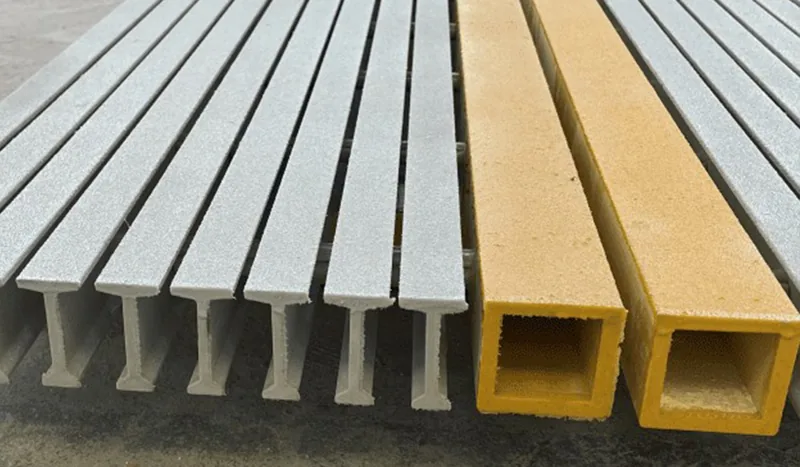
“FRP grating” is not enough. For molded grating, compare construction, depth, mesh, resin basis, surface, colour and top face. For pultruded grating, compare the I, T or WT profile, bar height, top width, pitch, cross-rod arrangement, bearing direction and finished form. For mini mesh, compare both upper and lower mesh. For a covered assembly, compare base construction, cover, connection and total thickness.
Some attributes can be verified visually from the delivered item and the approved sample. Others depend on the product data sheet, inspection record or controlled source. Record whether each attribute is visually consistent, documented or still open. Do not use a familiar appearance to prove colour, resin grade or fire performance.
Keep Measurements Repeatable
An entry such as “dimensions okay” is not a receiving record. Use values and measurement locations that another reviewer can repeat. Where the project defines tolerances, compare the measured value with the required tolerance and the approved drawing. Where no tolerance or reference is defined, record the actual value and identify the missing acceptance basis.
At minimum, the inspection plan should state:
- what is measured;
- which drawing datum or edge is used;
- the instrument and unit;
- the sample or coverage rule;
- the approved value or tolerance;
- who decides when a value falls outside the basis.
The exact sampling plan belongs to the buyer or project quality procedure. This checklist records the selected pieces and the result; it does not invent a universal AQL or a performance acceptance rule.
The downloadable record uses one row for each check rather than three unexplained readings across one row. A piece can therefore have separate rows for length, width, opening position, edge condition, accessory count and document scope. Each row keeps the expected value, measured result, unit, instrument, measurement location, tolerance, photo reference and release status together.

Record Condition Without Guessing Its Cause
Describe the observation, not an unverified explanation. “A 25 mm chip is visible at the upper cut edge of FG-03” is stronger than “supplier damage.” Record the piece ID, region, approximate size, photograph reference and whether the condition affects only appearance or a functional or dimensional requirement.
Common observations include:
- chips, cracks or exposed reinforcement;
- delamination or soft/hollow regions;
- excess resin, contamination or uncured areas;
- grit loss, surface irregularity or colour mismatch;
- damaged or unsealed cut edges;
- distorted openings or damaged bar ends;
- broken straps, shifted support blocks or crushed packages.
The inspection can identify a visible condition and hold the item. It cannot determine the root cause or the remaining structural capacity without the agreed evaluation method.
Check Accessories and Documents as Separate Deliverables
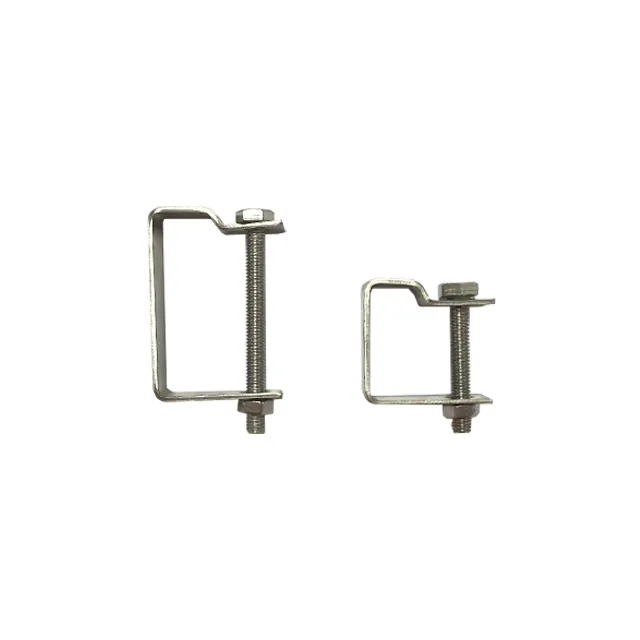
Open the fixing package on its own line. Confirm clip type, material, fastener, washer, quantity and package label. A panel delivery cannot be accepted as complete merely because the panels are correct when the fixing schedule is short.
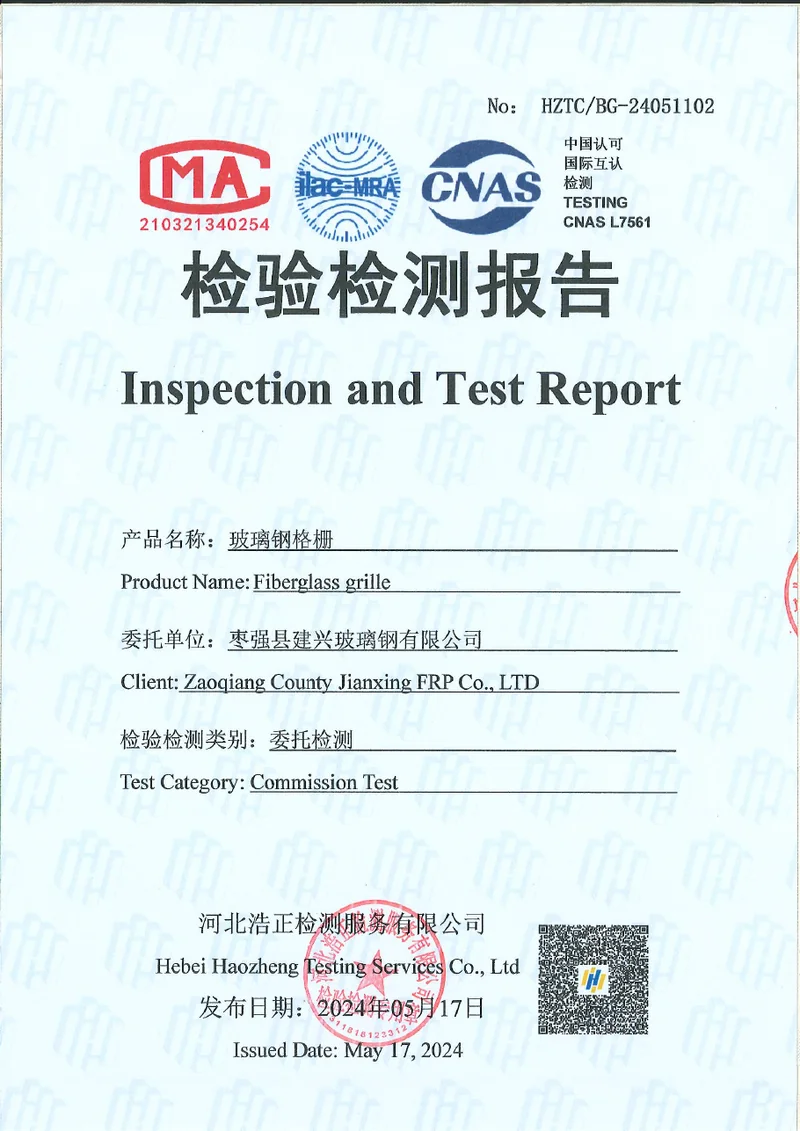
For documents, compare what was required with what was supplied. Name the issuer, specimen, batch, method, scope and stage. A report title does not prove that the report covers the delivered product. Use the quality and documentation guide when the scope is complex.
Assign a Disposition and Protect the Next Step
Use these outcomes consistently:
- Accept: identity, quantity and the agreed inspection checks conform.
- Accept with note: the release is allowed, but a non-blocking observation or document action remains.
- Hold: the item is isolated while identity, dimensions, condition or documents are reviewed.
- Report: the agreed carrier, supplier or project nonconformity route is opened.
Every hold or report needs an owner, due date, affected quantity and storage location. Accepted and held pieces should not be mixed. If the receiving team has no quarantine area, that should be resolved before delivery rather than at the tailgate.
Do not close a hold by changing the disposition alone. Add the nonconformity or report reference, the corrective result, the responsible owner and the date of any reinspection. This keeps the original finding and its resolution attached to the same receiving record.
What Peer Inspection Material Adds
Preet’s shipment inspection outline separates document review, visual appearance, dimensions, resin distribution, surface finish, load evidence, edges, colour, packaging and final approval. Mach FRP’s importer checklist highlights dimensional tolerance, surface-grit coverage, colour consistency, production records and a signed reference sample.
Those are useful factory questions, but they do not remove the need for a buyer-side arrival record. A supplier’s pre-shipment check describes what it observed before loading. Our incoming record identifies the package and delivered pieces after that handover. The two records should agree without either pretending to be the other.
Our Factory View: Make Arrival Checks Possible
Our production and packing records are designed to let the buyer repeat an identity check: the order drawing, piece ID, package list and agreed evidence should describe the same deliverable. We do not treat a supplier pre-shipment inspection as a substitute for the buyer’s arrival decision.
Before shipment, name the item IDs, package marks, documents and contact for receiving. That preparation is part of the order, not a final email after the container has left. The RFQ template and export packing guide help put these requirements into the commercial record.
A Good Arrival Record Answers Five Questions
- Which package and items arrived?
- Do their IDs and quantities match the order?
- Does the delivered product match the approved row and drawing?
- Which visible conditions and missing documents were found?
- What is the disposition, and who owns the next action?
When those answers are written down, the delivery can move into storage or installation with a traceable starting condition. When they are not, a later crack, shortage or document dispute has no controlled baseline.
Get a Quote
Get a FRP Grating Incoming Inspection: Photos, Count and Release Quote
- Keep item IDs visible
- Name documents and packing marks
- Define the receiving owner
What should be checked first when FRP grating arrives?
Is a supplier pre-shipment inspection enough?
Must every grating piece be measured?
Does incoming inspection certify structural performance?
What does an incoming inspection disposition mean?
- Inspection boundary — Incoming inspection verifies identity, quantity, visible condition, selected dimensions and documents against the order. It does not create a new structural or performance certification.
- Sample boundary — A sample plan should be agreed for the project. This record does not invent an AQL, acceptance tolerance or destructive testing method.
- Evidence boundary — Factory pre-shipment records and buyer arrival records are separate evidence. Neither removes an unresolved item or substitutes for project design approval.
This content was prepared and reviewed by Dengtai Industry’s technical and production team using the project conditions, available product data and applicable documents. Limits that require design, testing or approval are identified in the content. Content last checked: