Steel stair retrofit inspection
FRP Covers for Steel Stairs: Inspect Before Retrofitting
Establish whether the steel tread and its supports remain serviceable before adding a non-load-bearing cover. Record section, corrosion, connections, preparation, fixing, drainage and the finished stair separately.
Prepared by
Dengtai Industry
Published
·
Reviewed

A retrofit cover is considered only after the remaining steel has been accepted. Source image from our product library.
FRP stair tread covers can renew the walking surface of a steel stair only after the steel has been inspected. In this retrofit, the cover is non-load-bearing: the existing tread, stringers and connections carry the stair duty. Surface corrosion may be manageable; a loose tread, reduced section, cracked weld or failed connection is a structural problem. Covering it with a new anti-slip profile can hide the condition that should stop the stair from use.
This page is the pre-retrofit survey for covers over solid steel and steel-grating treads. The general tread-cover guide explains the cover product. If the old steel cannot remain, the cover-versus-load-bearing-tread guide and replacement-tread guide cover the different structural and support inputs.

Start With a Stop-or-Proceed Inspection
Look for movement, cracks, bent plate, loose grating, damaged welds, missing bolts, pitting and water traps. Check the underside where accessible. A tread that appears solid from above may be connected by a corroded bearing or supported by a deteriorated stringer.
USA Anti-Slip’s corrosion-retrofit example correctly starts with a qualified structural check before treating the stair as a candidate for a surface upgrade. It also connects preparation, corrosion protection, traction and drainage. We use the same order: the cover is evaluated only after the existing structure is accepted.
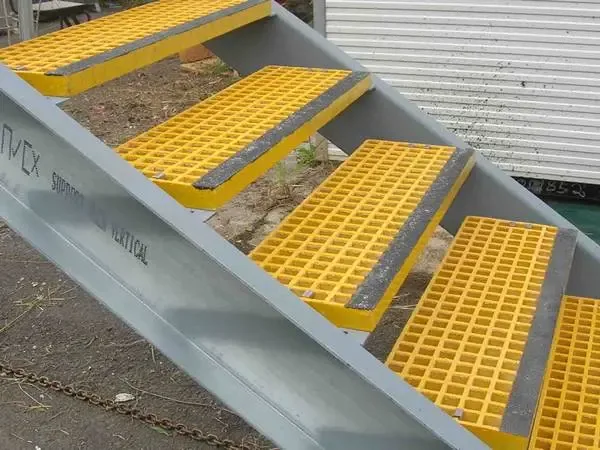
Surface Corrosion Is Different From Section Loss
Loose rust and failed coating can often be prepared as part of the retrofit. Pitting, thinning, perforation, cracked steel or movement can reduce the remaining structural capacity. Surface preparation should not be used as cosmetic evidence that the section is adequate.
Record the location and extent of corrosion. Check around fixed debris, cover plates, tread ends, fasteners and places where water stands. A cover designed without a drainage or inspection path can create another moisture trap at the steel surface.
Identify Solid Plate, Pan or Open Grating
A solid steel plate provides a different contact surface from an open grating tread. With solid plate, the cover needs a stable bearing contact and fixing layout. With grating, the cover fixing has to align with the supporting bars and frame, and an accessible underside may be necessary.
Unicomposite’s stair-cover guide makes this substrate distinction clear and treats covers for solid metal, metal grating and timber as different fixing conditions. We keep the tread type, bar direction, support and cover attachment on one drawing.
Inspect Welds, Bolts and the Load Path
The tread is only one element. Its connection to stringers or supports must remain sound. Record cracked or missing welds, loose or corroded bolts, deformed holes, movement under load and the condition of the supporting member.
A cover fixed securely to a loose tread can still move with the tread. Fasteners used for the cover do not repair the original connection. If the steel structure cannot be safely inspected or accepted, stop the cover quotation and route the issue to structural repair.
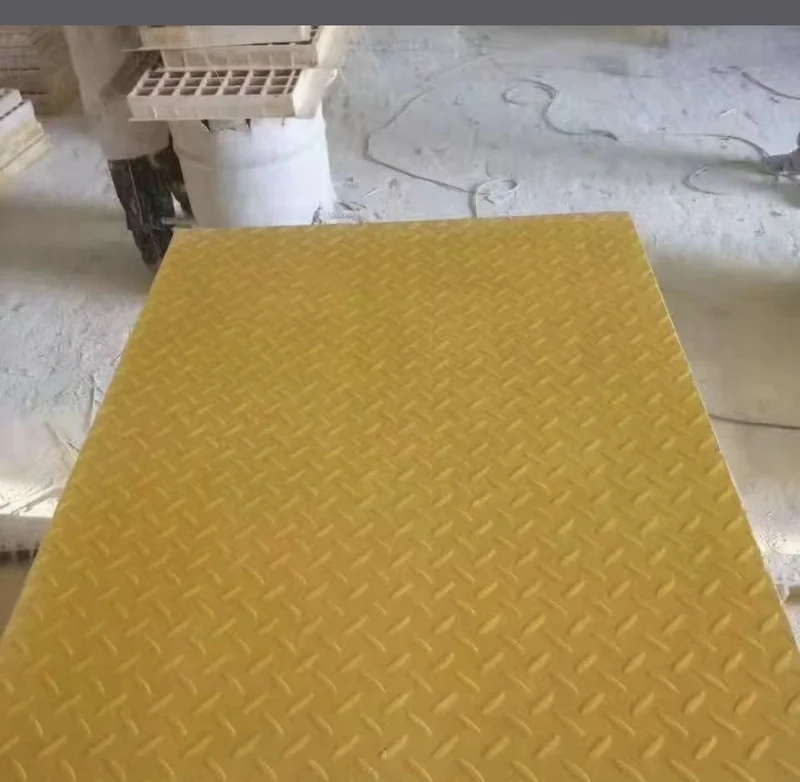
Define Compatible Preparation, Fasteners and Drainage
Prepare the steel according to the approved system: remove loose corrosion, failed coating, dirt and salts, then protect the prepared surface as specified. Select fasteners and isolation details for the steel and environment. Dissimilar-metal contact, damaged coatings and unsealed holes can start new corrosion.
The cover and fixing detail should allow water to leave and permit inspection. Do not hide fasteners where they cannot be checked. For a bonded or combined system, follow the product-specific surface preparation, temperature, cure and inspection requirements.
Dry-fit the covers before final fixing where the stair and access allow. Check bearing contact, hole alignment, edge distance, clearances and drainage at every tread. After installation, inspect the fastener condition, sealed or protected holes and the water path, and keep future underside or edge access in the maintenance plan.

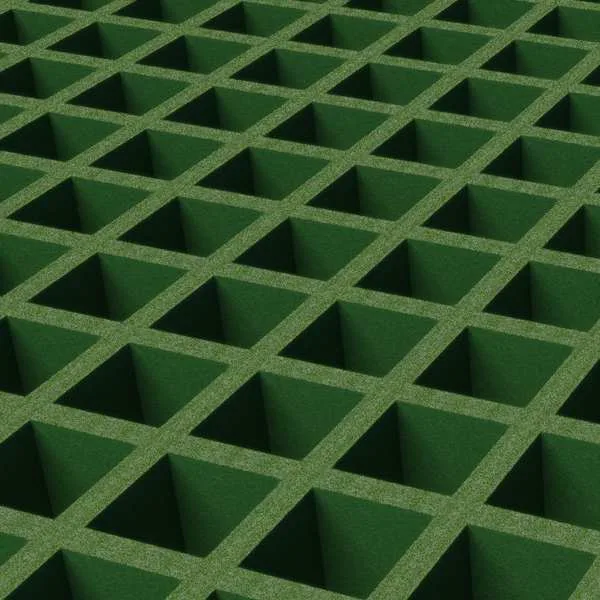
Approve the walking surface and nosing as a physical sample. Slip evidence must correspond to the expected oil, water, chemical, cleaning and wear condition; grit appearance does not establish it. A contrasting or luminous nosing improves edge visibility but does not prove slip, fire or egress performance. Use the surface guide and nosing-detail guide to keep texture, visibility, fixing and documentation separate.
Confirm Fire, Chemistry and Movement Duty
A steel stair may be an escape route or sit in a corrosive process area. Record the required fire and smoke basis, chemical and salt exposure, washdown method, UV condition and expected thermal movement between steel and cover. In static-sensitive areas, state whether anti-static or conductive performance is required. These inputs can change the resin, surface, isolation, fastener and test documents.
Use the fire-rating guide, resin-selection guide, thermal-movement guide and anti-static guide where applicable. A resin or coating name does not by itself prove the performance of the finished stair assembly.
Check the Cover Thickness and Finished Stair
The existing stair is being altered, not merely painted. Recheck the finished rise at every tread, the nosing projection, the top and bottom landings, door or rail clearance, and headroom. A cover that fits an individual tread can make the transition into a landing unsafe.
Use the finished-height method and the stair landing guide rather than inventing a generic cover thickness. The exact approved cover and installation system determine the finished build-up.
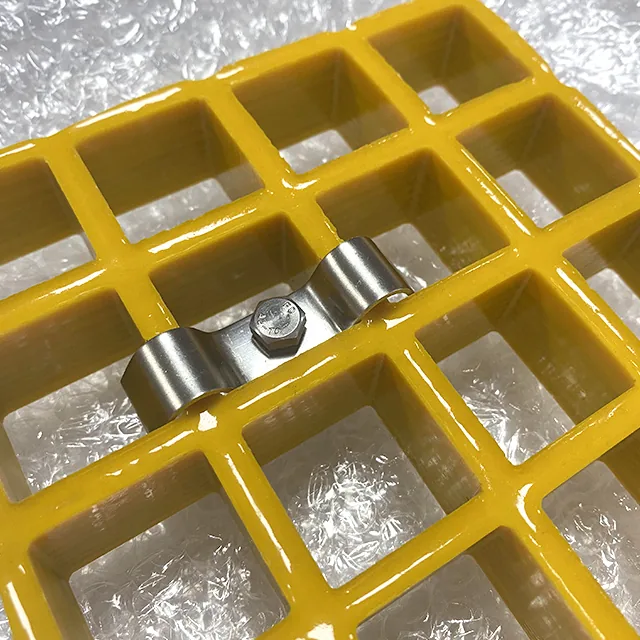
Our Factory View: The Cover Is the Last Step
Our quotation review asks first what remains of the steel and how a cover would be fixed. We can make the FRP tread cover to the approved drawing and prepare agreed holes, edge treatment and piece IDs. We cannot issue a structural restoration approval because an attractive cover was added.
The cleanest project package separates five items: steel inspection and repair, surface preparation and protection, cover fabrication, fixing hardware, and final installation inspection. That separation makes the handover stronger than a single line called “anti-slip cover”.
Inspection vocabulary
Steel Stair Tread Cover Terms
- Surface corrosion
- Deterioration at the steel surface that may be prepared and protected when the remaining section and connections are still adequate.
- Section loss
- A reduction in load-carrying steel thickness or geometry. A cover does not restore this loss and requires structural assessment.
- Solid tread or grating
- A solid steel plate or open steel grating tread. The cover support and fixing detail must follow the actual geometry.
- Discontinuity
- A crack, deformed area, loose connection or other separation in the steel that requires repair before a cover is considered.
- Dissimilar contact
- An interface between steel and a different metal or coating that may need isolation to limit local corrosion.
- Stop-use trigger
- A condition such as a loose tread, visible movement, heavily reduced section or failed connection that requires prompt structural review.
Before the overlay
When a Steel Stair Is Ready for a Cover Review
Specify this if…
- The steel tread and stringers remain structurally serviceable.
- Surface corrosion is loose or superficial and can be prepared as specified.
- Welds, bolts and supports can be inspected.
- The cover can be fixed without relying on unsound metal.
- Water can drain and the cover does not create a corrosion pocket.
- Finished rise, nosing and landings can be checked.
Look elsewhere if…
- The tread moves, visibly deflects or is disconnected.
- A connection, stringer or tread has significant section loss.
- Corrosion is being painted over without structural review.
- There is no underside access for the required fixing inspection.
- The cover detail cannot isolate or protect dissimilar materials.
- The stair needs replacement rather than surface renewal.
Decision boundary
Surface-Level Retrofit or Structural Repair
| Condition | Possible action | What must be proved |
|---|---|---|
| Surface corrosion, sound section | Prepare and protect the steel, then review a cover | Remaining section, connection condition and drainage |
| Worn or slippery steel top | Apply an FRP anti-slip cover or replacement tread | Existing tread support, fixing and cover compatibility |
| Deformed or loose tread | Repair or replace before any cover | Cause, connection and load path |
| Corroded nosing or edge | Structural repair, replacement or a different scope | Remaining steel and ability to support the required edge |
| Failed stringer or support | Structural repair or stair replacement | Engineering design and complete access safety |
Field record
Fields for a Steel Stair Cover Survey
| Survey field | What to record | Why it matters |
|---|---|---|
| Stair and step ID | Flight, step, location, drawing and current condition | Keeps each finding and cover piece traceable |
| Steel construction | Solid plate, grating, pan or other tread type and support arrangement | Determines preparation, contact and fixing |
| Remaining section | Measured or assessed material thickness and local loss | Establishes whether a cover is even permissible |
| Corrosion | Location, pitting, coating loss, debris and moisture traps | Defines preparation beyond cosmetic cleaning |
| Connections | Welds, bolts, rivets, anchors and supports | A sound tread is not useful with a failed connection |
| Movement or deformation | Loose tread, spring, crack, bent edge or changed geometry | A stop-use or repair trigger |
| Coating and fixing | Preparation, primer or coating, fastener, insulation and edge distance | Controls corrosion resistance and attachment |
| Drainage and cleaning | Water, salt, debris and access to clean the cover/steel interface | Prevents trapped moisture and hidden corrosion |
| Finished geometry | Cover thickness, nose, rise, landings and clearances | A cover must fit the complete flight |
Seven-step check
How to Inspect Before Adding a Steel Stair Cover
Do not cover a visibly loose, cracked, deformed or heavily corroded tread.
Record solid plate or grating, support points, connections and underside access.
Distinguish surface preparation from any condition needing structural repair.
Inspect welds, bolts, anchors, stringers and tread seating.
State how loose corrosion, old coating, salts and debris will be removed.
Select compatible hardware, isolation, sealing, drainage and nose geometry.
Check rise, landing, clearances, fixing and post-installation inspection access.
Before release
Steel Stair Tread Cover Checklist
- Structural condition accepted — The tread, stringers and connections remain serviceable.
- Steel type identified — Solid plate or grating and its support arrangement are shown.
- Corrosion map complete — Surface corrosion and possible section loss are distinguished.
- Movement triggers checked — Loose tread, flex, cracks and connection defects are recorded.
- Preparation defined — Old coating, rust, salt and debris removal are specified.
- Fixing compatible — Fastener, insulation, edge distance and sealing fit the steel.
- Drainage considered — Water and debris cannot be trapped against the steel.
- Project service duty defined — Egress, fire, chemical, movement and static requirements are recorded.
- Finished rise checked — Cover thickness and nose fit the complete stair.
- Landings included — Top and bottom transitions and clearances are reviewed.
- Repair and cover scope separated — Steel repair, coating and cover fabrication do not blur together.
Structural boundary
What the Cover Cannot Restore

The cover is not structural steel
It can renew the walking surface when the tread remains sound; it does not restore lost section.
The coating is not the inspection
A painted surface can conceal pits and section loss. The steel condition has to be assessed first.
A fastener is not the connection
The tread, weld, bolt or support must carry the design load independently of the cover.
A standard cover does not fit every stair
Steel plate and grating, nose details, levels and access require measured finished pieces.
Show what remains structural
Send the Steel Stair Condition and Cover Scope
- Molded and pultruded grating produced in house
- Full panels or factory cut-to-size pieces
- No fixed minimum order quantity
Steel Stair Tread Cover Questions
Is an FRP stair cover a load-bearing replacement for steel?
Can I put fiberglass covers over rusted steel stairs?
Does a tread cover repair a weak steel stair?
How should corrosion be prepared?
Can the cover trap water against steel?
What is the difference between steel plate and steel grating?
Should I use an FRP cover or replace the tread?
This content was prepared and reviewed by Dengtai Industry’s technical and production team using the project conditions, available product data and applicable documents. Limits that require design, testing or approval are identified in the content. Content last checked: