Outdoor grating restraint
Outdoor Grating Fixings: Uplift, Wind and Removable Access
Restrain outdoor panels against the actions the project identifies, while preserving a safe route for inspection and maintenance. Define the uplift input, support, fixing assembly and reinstatement record separately so one requirement does not hide another.
Prepared by
Dengtai Industry
Published
·
Reviewed

Exposed maintenance routes combine access, wind and reinstatement decisions. Photo: Dengtai Industry.
Uplift terms
Uplift, Restraint and Removable Access Defined
Separate the action, the fixing assembly and the maintenance procedure.
- Uplift
- An action tending to raise or displace the panel away from its support. It can come from wind pressure, negative pressure, vibration, impact, a jet, equipment movement or an accidental lift.
- Wind uplift
- A project-specific aerodynamic effect on the complete installation. It is not a property that can be inferred from the word “outdoor” or from a clip photograph.
- Anti-lift fixing
- A fixing arrangement intended to restrain a panel against a defined movement. The clip, fastener, support, panel edge and installation method form one assembly.
- Removable panel
- A panel intended to be released and reinstated for access, inspection, cleaning or equipment maintenance. Its fixing must be both effective when fitted and controllable when removed.
- Restraint path
- The route by which an action passes from the panel through the clip and fastener into the support and the support’s structural connection.
- Reinstatement record
- The marked sequence, component list and post-refit check that returns a removable panel to the approved arrangement.
When to review
When Outdoor Grating Needs a Specific Restraint Review
Exposure and repeated maintenance both change what a simple panel count leaves unresolved.
Specify this if…
- The panel is exposed to wind, negative pressure, vibration, wash jets, moving equipment or another action that may lift or shift it.
- The platform includes removable covers, inspection pieces or maintenance panels that must be released and refitted.
- The installed edge, joint or support condition differs from an ordinary interior floor.
- The project requires a top-side or blind-side fixing route.
- A fixing failure, missing clip or loose panel has already been observed.
Look elsewhere if…
- The design requires a quantified uplift resistance and no complete tested or engineered assembly has been defined.
- The support cannot accept the fixing or its structural attachment is unknown.
- The buyer expects a generic clip to make every panel “wind rated” without a project assessment.
- The panel is expected to be lifted by the fixing or used as an anchorage point.
Fixed or removable
Outdoor Grating Fixings for Fixed and Liftable Panels
The same location can combine permanent and maintenance pieces with different requirements.
Swipe horizontally to view all columns.
| Requirement | Fixed outdoor panel | Removable access panel |
|---|---|---|
| Main objective | Keep the panel seated at the approved supports and edges | Keep the panel seated when fitted and allow a controlled release when access is needed |
| Fixing route | Permanent or serviceable hold-downs selected for the support and access | Releasable fixing positions with an identifiable component set |
| Drawing control | Panel and fixing IDs remain part of the installed arrangement | Panel receives an R-mark, reinstatement order and post-refit check |
| Main risk | Loose or missing restraint, poor support contact or incompatible components | Panel returned with missing, substituted or incorrectly placed fixings |
Selection path
Plan Outdoor Grating Restraint in Five Steps
Define the action and support path before selecting the clip and access method.
Record wind, pressure, vibration, jet, traffic or handling inputs from the project. Do not derive them from a catalogue clip name.
Confirm where the panel can be restrained and how that load reaches the supporting structure.
Keep a fixed panel separate from a maintenance piece and give every removable piece its own release and refit route.
Check panel bars, clip jaw, fastener, support section, access and material compatibility together.
Confirm bearing, seating, hardware, panel movement and restoration of removable pieces before handover or reopening the route.
What “Anti-Lift” Means for an FRP Grating Panel
An outdoor panel can move for reasons other than a person stepping on it. Wind can create pressure differences across a platform. A roof or canopy can see negative pressure. A wash jet can lift a light cover. Machinery can cause vibration or snag an edge. A person can accidentally raise a removable piece. A panel can also shift during maintenance, transport or handling.
The phrase grating anti-lift clips describes one part of the restraint solution, not a guaranteed product class. There is no responsible way to declare a clip “wind rated” without describing the panel, support, fastener, bracket, edge condition, installation and load direction. The project responsible for the exposed structure must define the action that must be resisted.
This does not make clip selection complicated for its own sake. It separates three questions that often get mixed together:
- What action can displace the panel? Wind, negative pressure, vibration, traffic, equipment, wash-down or manual handling.
- Where can restraint safely pass into structure? The approved support, clip, fastener and support connection.
- Can the panel still be installed and maintained? Access direction, fixed or removable status, lifting route and reinstatement control.
The grating fixing interface guide sets out the responsibility layers. This page applies them to outdoor exposure and removable access.
On a solar-array maintenance route, the panel restraint is only one layer of the panel, rail and roof fixing interface. Roof anchors, waterproofing and rail movement remain separate project interfaces.
For a narrower maintenance catwalk, use the catwalk panel-layout review to connect fixed and removable pieces to effective width, lifting direction and reinstatement marks.

Uplift is not the same as slip or anti-slip
A textured walking surface addresses foot slip. A fixing restrains the whole panel. These are separate functions. A grit surface does not secure a panel against wind, and a hold-down clip does not create a slip rating. Likewise, a panel with good drainage can still be loose at its edge, and a panel with enough clamps can still have a poor anti-slip surface.
For a complete installation review, begin with the walking surface, panel load and support layout, then add restraint for the location and access. That avoids selecting a surface treatment as if it were a panel hold-down.
Where Outdoor Uplift Criteria Come From
The magnitude and distribution of wind action are project inputs. A roof edge, building corner, open canopy, offshore deck and sheltered ground-level walkway can experience different local pressures. Obstructions, parapets, equipment and array geometry can also change the flow around the installation. A simple statement such as “coastal site” or “windy location” does not define a number.
The responsible structural or façade engineer should provide the design action or the applicable project requirement. That input can then be compared with the proposed panel restraint, support spacing and fixing arrangement. Where a test or engineering assessment is required, its report should identify the complete specimen, support boundary, load direction and acceptance criterion. A photograph of a clip and a torque value is not enough.
This distinction also protects the buyer. If a supplier promises one clip as suitable for all outdoor wind conditions, the buyer still needs to know whether the support, fastener and edge detail are part of that promise. Our position is to state what we supply and what the project must confirm.
Our published factory report is material and sample evidence, not a clip-level uplift, pull-out or vibration approval. We do not present it as proof that a particular fixing pattern is “wind rated”. If the project needs quantified uplift or vibration evidence, the tested panel, clip, hardware, support boundary, direction and acceptance criterion must be specified and the test agreed separately.
Choosing a Restraint Path Through the Support
A hold-down is useful only where there is a suitable support to fasten into. On an exposed platform, the support may be a steel angle, a channel, a pultruded beam, a concrete kerb or a proprietary rail. Each creates a different interface.
Check the following together:
- the panel bar geometry and height at the fixing position;
- the clip jaw and intended contact;
- bolt or screw length, diameter, grade and locking detail;
- the support section, thickness, coating and access from above or below;
- the support’s connection to the primary structure;
- the edge, corner and joint details that need restraint;
- the material compatibility of clip, fastener, washer and support.
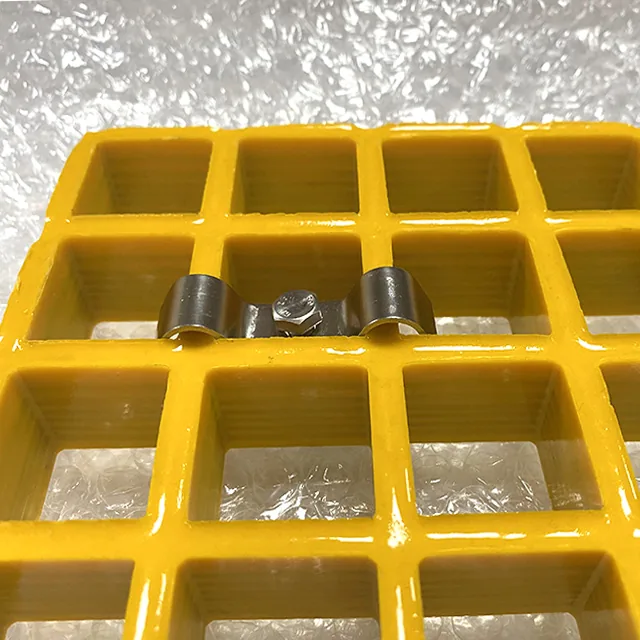
For a pultruded panel, the bearing-bar direction determines where the panel can be supported and how the clip can contact it. The pultruded grating clip guide should be used before carrying a molded-panel fixing pattern across. For conventional molded panels, the clip layout and spacing guide shows how to number support crossings separately from joints and edges.
A fixing in mid-span is not an anti-lift solution
If a clip position is shifted away from a support to suit a convenient mesh opening, the fixing has nothing structural to pull against. The clip may tighten onto the panel and appear secure, but the restraint path stops before it reaches the structure. That is why the fixing point must be tied to the support line, not a repeated grid invented from panel dimensions.
Fixed Panels and Removable Access Need Different Controls
A fixed panel and a removable panel can share the same clip family. Their control requirements are different.
A fixed outdoor panel should remain in the approved position. Its record identifies the panel mark, support, fixing IDs, components and material. If a panel must move relative to the structure because of temperature or another project requirement, that movement detail should be designed rather than created by leaving hardware loose.
A removable panel is a controlled maintenance item. It should carry an R-mark or another unique piece identifier. Its fixing packet should be linked to the panel, not treated as a random bag of clips. The reinstatement sequence should say which edge is placed first, which fixing IDs are refitted and what check follows. If the panel is heavy or awkward, the lifting and handling method should also be planned without using the fixing as a lifting point.
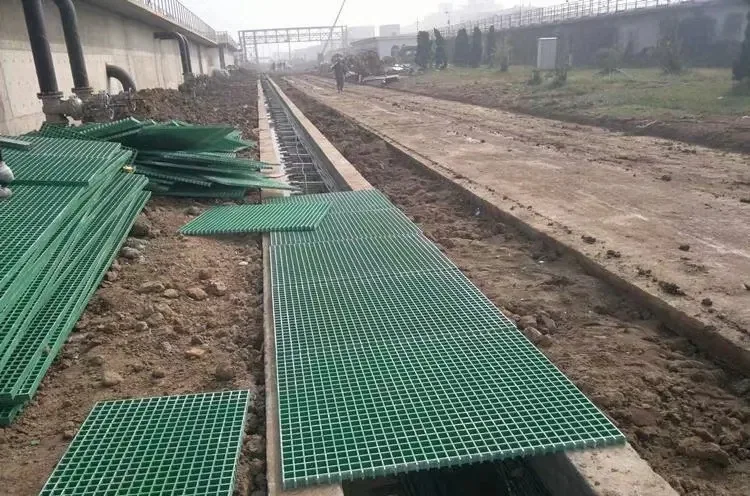
This matters on solar walkways, roof access, trenches, culverts, risers and equipment inspection openings. In each case, the panel can appear correctly fitted after maintenance even when one clip is missing or the wrong fastener has been substituted. A marked set makes that omission easier to find.
A removable piece is still restrained
The need to lift a cover does not mean it can be left unsecured when closed. “Removable” describes the intended access operation; it does not describe a lower performance requirement. The fixing should be releasable in the approved way and provide the required restraint once restored.
The solar walkway guide and trench cover guide illustrate how access and protection interact in different applications. For a riser, the GRP riser grating page covers the need to coordinate service openings and resulting edge support.
Check the complete exposed metal assembly
Consider a galvanized channel support with a stainless clip and fastener. That may be a practical route for a wet or coastal location, but the project still has to check the support coating or grade, the fastener grade, trapped water, crevices, cleaning chemicals and contact between different metals. A stainless clip does not make a galvanized support stainless, and choosing 316 for every exposure does not remove the need to name the medium and temperature.
The maintenance record should therefore describe the material at every contact: panel, clip, fastener, washer and support. The clip material selection guide explains how to keep those components in one corrosion review.
Installation, Maintenance and the Return Path
Outdoor exposure often includes maintenance staff, tools and temporary access. The fixing procedure should therefore be repeatable.
Before fitting, confirm that the support line is in the expected place and that the panel is not resting on a high point that will make it rock. Seat the panel, trial the clip jaw and confirm the specified hardware. Tighten only to the approved method. Over-tightening can deform the panel around a bar or damage the coating; it does not compensate for a wrong support or a missed fixing. If the project does not supply a tightening criterion, do not invent one from an unrelated clip system.
When a removable panel is taken out, keep the components with the R-mark and maintain the marked order. Reinstall the panel in the same orientation, refit every required fixing and check that no clip, washer or loose part remains on the walking surface or in the opening. Look for rocking, gaps, seal or edge displacement, and confirm that the panel has not become a trip hazard or left an unprotected opening.
A Practical Inspection Schedule for Outdoor Fixings
The inspection interval is project-specific. It should reflect exposure, traffic, maintenance frequency and consequences of movement. A generic service-life claim does not replace the owner’s inspection plan.
At each inspection, record:
- whether every panel is bearing evenly and remains in its approved position;
- whether any panel is missing a hold-down, edge restraint or connector;
- whether the fastener is engaged and the specified washer or locking component is present;
- visible deformation, cracking, coating damage or corrosion at the clip, fastener or support contact;
- whether a panel joint has opened or created a step;
- whether a removable panel has been reinstated with its marked fixing set;
- whether loose parts, tools or debris have been left in the opening or on the access route.
The maintenance and service-life guide covers inspection and repair decisions in more detail. If a fixing is loose because the support has shifted, adding a larger clip may not address the cause.
What the Factory Can Confirm and What It Cannot
We can confirm the geometry of the panel being supplied and whether a proposed clip is a plausible fit for its height and bars. We can supply M, L, C and agreed hardware items, state their material route, and pack removable sets according to the approved list. We can show whether the fixings are included in the quotation.
We cannot certify the wind resistance of an entire platform from a clip drawing, or approve a support we have not seen. We can help the buyer prepare the inputs and identify what needs project approval. That boundary is useful: the supplier controls the product interface, and the responsible engineer controls the exposed structure and its acceptance.
For the commercial side, the clip price and quantity guide shows how to compare a loose clip, complete assembly and marked removable set. For the base clip families, return to the M, L and C grating clip page. A good outdoor offer keeps the support, fixing, material and reinstatement logic visible from the first drawing to the final inspection.
Layout
What Changes Outdoor Grating Fixing Positions
Uplift, geometry and maintenance access can change the arrangement beyond an interior floor layout.
Swipe horizontally to view all columns.
| Design condition | What changes the fixing count or position | Evidence to record |
|---|---|---|
| Exposed perimeter | Wind or handling action at edges can require restraint beyond interior support crossings | Project pressure or restraint note, edge detail and numbered fixing positions |
| Open corners and changes in geometry | Local pressure and turbulent flow can concentrate at corners, obstructions and transitions | Project calculation or detail showing the approved restraint arrangement |
| Equipment and walkway movement | Vibration, wheel traffic, snagging and regular contact may change the service requirement | Equipment route, movement description and fixing pattern |
| Removable pieces | Each liftable piece needs a complete release and refit set | R-mark, fixing IDs, packet list and reinstatement sequence |
| Long panel runs | Fixed and movement-accommodating points may need separate treatment | Approved joint detail, temperature range and fixed/sliding identifiers |
Material review
Check the Whole Outdoor Grating Fixing Assembly
The panel, clip, hardware, support and edges all see the exposure.
Swipe horizontally to view all columns.
| Component | Outdoor question | Evidence to keep |
|---|---|---|
| Grating panel | Resin system, surface, cut edges and panel geometry match the exposure and project | Supplied product configuration and drawing revision |
| Clip and fastener | Coating or stainless grade suits the complete exposed metal assembly | Material statement for clip, bolt, nut and washer |
| Steel support | Support coating or grade, drainage and contact with the clip are compatible | Support specification and treatment at the fixing point |
| Joints and edges | Joint movement, edge restraint and cut-edge protection have an owner | Approved detail and post-installation inspection record |
Applications
Outdoor Grating Uplift and Access Situations
Different exposures create different restraint and reinstatement questions.
Solar-array maintenance walkway
Open exposure, removable access and repeated maintenance routes make the panel restraint and reinstatement procedure part of the walkway design.
Dock or poolside walkway
Wind, wash and coastal exposure may combine. The panel, complete fixing material and support contact need one exposure review.
Trench or culvert cover
A removable cover needs controlled lifting, marked refitting and restraint appropriate to the location; the fixing is not a lifting eye.
Riser or service-shaft panel
Repeated opening for service access makes the packet, reinstatement order and edge support as important as the clip itself.
Industrial platform edge
Start with the complete platform’s supports, edge restraint and supply boundary before deciding which fixing closes the detail.
Wet-process walkway
Stainless or coated components are selected as a complete exposed assembly rather than by the clip body alone.
RFQ checklist
What to Send for an Outdoor Grating Fixing Review
State the exposure and access requirement before asking for a clip.
- Outdoor location — Roof, solar array, offshore deck, dock, exposed platform, machine opening, trench or other location, including nearby obstructions.
- Action on the panel — Wind, negative pressure, vibration, equipment, jet, traffic, handling or accidental lift, with direction and project criteria.
- Support and edge detail — Support section and spacing, panel edges, corners, openings and the support’s attachment to the primary structure.
- Access requirement — Fixed panel or removable piece, lifting route, expected frequency, tools available and who controls reinstatement.
- Fixing and material — Clip type, fastener, washer, locking method, coating or stainless grade and adjacent support material.
- Handover evidence — Installed fixing schedule, removable-set record, inspection result and deviation approval.
Factory position
Make Restraint Visible without Overstating It
A clear responsibility boundary is part of a safe fixing offer.

The action belongs to the project
The responsible engineer defines wind, pressure, vibration or movement inputs and the acceptance criterion.
The assembly must be compatible
A clip restrains the panel only when the panel contact, fastener, support and tightening method work together.
Removal is a controlled procedure
A liftable panel needs its own mark, component packet, reinstatement sequence and post-refit check.
Review route
From Exposure to Marked Outdoor Fixing Set
Product fit, structural inputs and removable-panel control are reviewed together.
Provide the application, exposure, support and access requirement with any project uplift criterion.
We compare the proposed clip and hardware with the supplied panel and identify missing support or structural inputs.
The panel schedule is split into permanent and liftable marks. If the project uses panel-marked fixing packets, that packing method is confirmed and quoted before production.
Panel marks, clip IDs, hardware, materials and exclusions are checked before production. Any confirmed packet labels are checked as part of that agreed packing scope.
The project confirms bearing, seating, complete hardware and correct restoration of every removable panel.
Request a review
Send the Outdoor Panel and Access Detail
Include the application, support, exposure and question of whether each piece is fixed or removable.
- Molded and pultruded grating produced in house
- Full panels or factory cut-to-size pieces
- No fixed minimum order quantity
Outdoor Grating Uplift and Clip Questions
Are all outdoor grating clips “anti-lift” rated?
Can you calculate wind uplift from the platform location?
Do you provide a clip-level uplift or vibration test report?
How do I make a panel both fixed and removable?
Can the grating or clip be used as a lifting point?
What should be checked after a removable panel is reinstated?
This content was prepared and reviewed by Dengtai Industry’s technical and production team using the project conditions, available product data and applicable documents. Limits that require design, testing or approval are identified in the content. Content last checked: