Riser maintenance access
Removable Riser Panels: Access Sequence and Reinstatement
Design a removable riser panel from the maintenance action outward: who enters, what they reach, how the piece and tools move, how the open void is controlled, and how the same panel is identified and restrained again.
Prepared by
Dengtai Industry
Published
·
Reviewed

An access route must remain workable when a panel is released. This is an application reference. Photo: Dengtai Industry.
A removable riser flooring panel is a designed maintenance procedure, not a grating piece with its fasteners omitted. The design starts with the task: who needs to enter the shaft, which valve or instrument they must reach, what tools they carry and whether equipment has to pass through the floor. Only then can the panel size, hinge or lift-out choice, mass and support arrangement be judged.
This page is for building service risers and plant shafts where maintenance access is part of the normal operation. The GRP riser grating overview explains the complete shaft layout, while the service opening control guide defines the openings. This page concentrates on how a removable piece changes from the closed working floor to an open maintenance condition and back to service.

Start With What the Person Must Do
Write the maintenance action in plain words. A person may need to look down without entering, reach a valve at arm’s length, carry a meter, lift a pump, remove a flange or pass a tool box through the floor. These actions need different clear openings, hand positions and temporary storage.
Record the expected frequency and duration as well as the physical task. A panel opened once during commissioning is not the same operational feature as one opened weekly. Frequent access makes speed, repeatability, marking and fastener control more important. A one-off lift may justify a different temporary method, provided the project approves it.
Choose the Access Type From the Route, Not the Drawing Symbol
A lift-out panel is practical only if the finished piece can be released, lifted and moved clear. A hinged panel can keep the piece connected, but its swing may collide with pipes, rails or headroom. A small lift-out infill may suit a localized valve without disturbing the main floor, provided it has its own bearing and restraint. A separate temporary cover may be better where the floor must close between maintenance visits.
The hinged and lift-out comparison applies to the broader riser system. Our review adds the operational questions the factory needs: panel ID, maximum mass, handle position, lift direction, route, stored location, release hardware and the refit order.
If a hinged detail is proposed, the hinge needs its own support and anchorage, stops, open angle and clear footprint. A normal panel clip is not automatically a hinge. The open panel must not become a temporary barrier unless that role has been designed, and it must not swing into a service route or block a maintenance escape path.
The construction method also changes the maintenance strategy. A panel intended to lift should not rely on a method that permanently traps or casts the grating into the surrounding slab. Dura Composites’ riser manual notes that direct casting into concrete makes later adaptation and removal difficult. Confirm a post-fix or removable support route where repeated access is part of the design.

Treat the Open State as a Separate Condition
The floor’s closed state may work perfectly and still leave the shaft unsafe when the panel is open. The project needs a defined open-state control: a fixed or temporary barrier, a cover, warning and access control, lighting, tool control and a place for the removed piece. These measures belong to the project’s operating and safety procedure.
Open grating does not become a fall-protection system because it has small mesh or a gritted surface. A panel does not become a barrier when it is leaning against a wall. The responsible party must define how the void is protected before the panel is released and who removes that protection only after reinstatement is complete.
The panel mesh or surface still has a separate dropped-object and drainage role. Mini-mesh may reduce the size of objects that can pass, and a solid-top surface may be appropriate where containment or cleaning requires it, but neither replaces the temporary barrier around an open access void. Compare those choices in the mini-mesh versus solid-top guide.

Check Mass, Headroom and the Actual Lift Route
The finished panel’s mass should be established from the selected construction and final size. Then compare it with the available handling method. Is one person expected to lift the complete piece, or will two people or a lifting aid be used? Can they stand safely? Can the panel rise vertically? Is there a clear route past pipes, walls and temporary scaffolding? Where is it stored while the shaft is open?
These questions can make a nominally removable piece impractical even though it fits the opening. Use the FRP grating weight guide to estimate mass, then verify the final piece. Do not publish a universal maximum panel mass without the project’s lifting method and site-specific risk assessment.
Panel mass is not the same as panel load capacity. When the piece is closed, the person, tools and temporary maintenance equipment still need a designed load path through the panel and its supports. State the access and temporary load with the load and span inputs, not only the lift weight.
Give the Piece an Identity and a Way Back
Label the location and physical panel separately. The location ID belongs to the bay or opening. The physical item ID belongs to the actual grating piece. If the panel is replaced, the location stays the same while the new item and predecessor are recorded. This avoids assuming that a panel with the original location label is still the original part.
Mark the top face, bar direction and front edge where those details affect installation. Record the release hardware quantity and whether fasteners are captive. A simple parts bag is useful only when the procedure states where it is stored and how the correct number is restored.
Keep a stable location ID separate from the physical-item ID. When an access panel is replaced or modified, the location can remain the same while the new item, predecessor, drawing revision and final disposition remain traceable. High-Mat’s panel-identification guide shows why an unchanged outer size can conceal a changed opening.
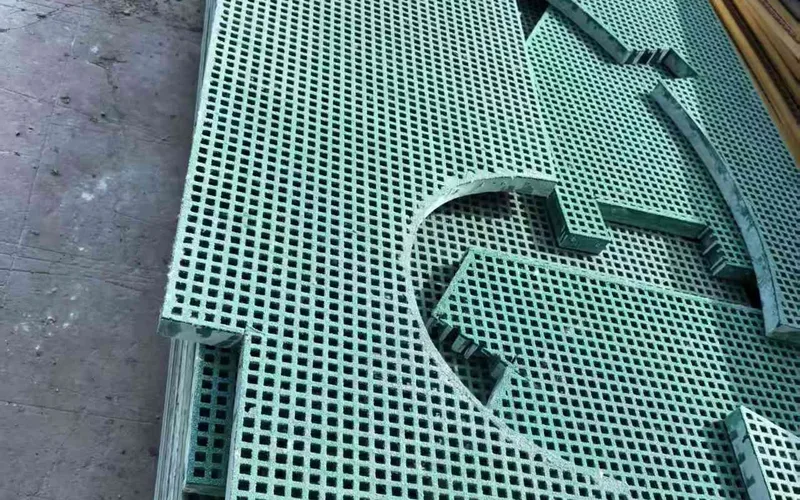
Reinstatement and Inspection Close the Sequence
The panel is not back in service when it has simply been placed over the opening. Check the correct location and orientation, bearing support, edge gaps, joint alignment, release-hardware quantity and panel restraint. Inspect any hinge or lift point. Remove temporary controls only after the inspection is complete.
A named acceptance owner closes the record. If the same piece has to be changed, repaired or replaced, keep the original ID and link the replacement to the controlled change. The field-modification traceability guide explains the record chain.
The handover should also support operation, not only installation. Vital GRP’s RiserDeck guide separates design, installation and operational records. Include the permitted access method, inspection frequency, removable-piece list, refit checks and open-state procedure so the next maintenance team does not have to reconstruct the design intent.
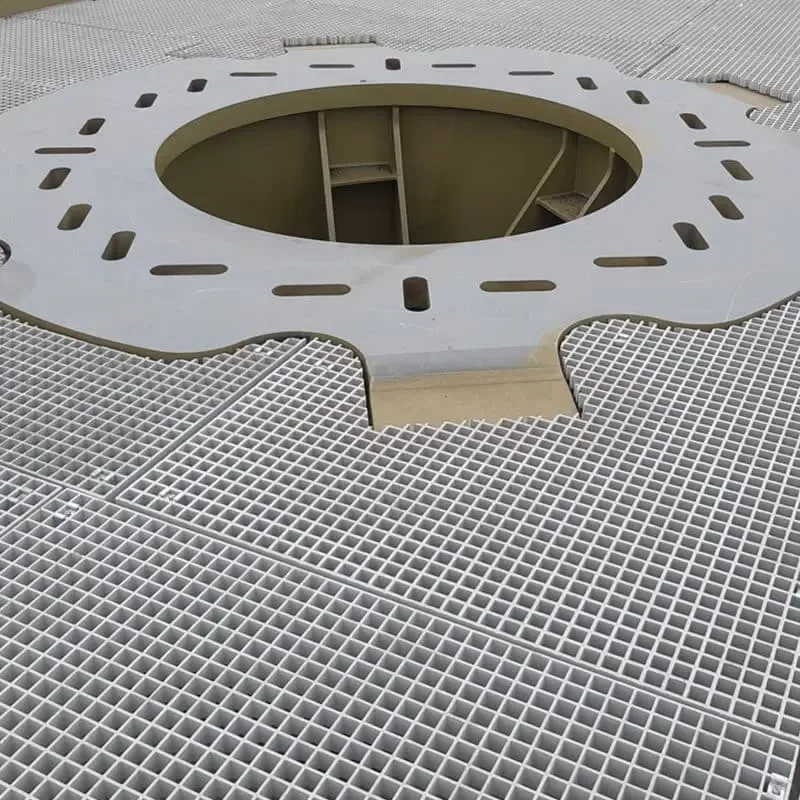
Our Factory View: Make the Maintenance Route Repeatable
We can fabricate the selected riser pieces, openings, edge treatment, handling features and identification to the approved schedule. We can supply the hardware detail and estimated finished-piece mass. We cannot decide the project’s fall-protection arrangement, maintenance permit or structural adequacy from a photograph of an open shaft.
The best access panels are boring to use: the same piece lifts in the same direction, the hardware count is obvious, the refit checks are short and the open void is protected by a known project measure. Our review aims for that repeatability rather than presenting an untethered panel as “removable.”
Access vocabulary
Removable Riser Panel Terms
- Maintenance action
- The defined task performed through the riser floor, including inspection, valve operation, tool use, instrument reading or equipment removal.
- Fixed panel
- A grating piece intended to remain installed during routine operation. It can still be removable for major work, but that is not its normal use.
- Lift-out panel
- A complete piece released from its fixings and lifted from the floor. Its mass, handles, route, storage and reinstatement orientation must be defined.
- Hinged access panel
- A restrained piece that opens around a designed hinge or pivot. The hinge, open position, stop, support and clear opening are part of the detail.
- Temporary cover
- A separate cover or barrier placed while the service is not being accessed. It is not the same as the permanent walking panel or its structural support.
- Open state
- The condition after a panel has been released or lifted. Fall exposure, barriers, access control, tools, lighting and removed parts need a project plan.
- Release hardware
- Fasteners or devices intended to allow the panel to open. A standard panel clip is not automatically a quick-release device.
- Reinstatement
- Returning the correct piece to the correct location, restoring bearing, gaps, orientation, hardware and restraint, then inspecting the result.
Before fabrication
When a Riser Panel Is Ready for Access Review
Specify this if…
- The maintenance task and the person's position are defined.
- The required tools and equipment removal route are known.
- The panel can be handled within the available headroom and access route.
- Release hardware, temporary exposure and storage are assigned.
- The panel has an ID, orientation and reinstatement sequence.
- The support and open-state safety design remain with named parties.
Look elsewhere if…
- A panel is called removable only because a few fasteners were left out.
- No one knows how a single person can lift and control the piece.
- The open void has no barrier, cover or access-control strategy.
- The piece can be refitted backwards or in the wrong bay.
- The hinge or lift path conflicts with pipes, rails or headroom.
- A loose panel is expected to provide fall protection.
Access type
Fixed, Lift-Out, Hinged or Temporary Cover
| Access type | When it may fit | Information still required |
|---|---|---|
| Fixed panel | Normal use does not need routine access | Permanent restraint, piece ID and planned procedure for exceptional removal |
| Lift-out panel | The full piece can be released and moved clear | Mass, handle, lift direction, headroom, route, storage and orientation |
| Hinged panel | The piece can open around a designed edge without blocking the task | Hinge design, support, stops, restraint, open position and clear access |
| Smaller lift-out infill | The service access is localized within a larger panel field | Infill bearing, edge gaps, different ID, restraint and reintroduction |
| Temporary cover | The void needs protection between maintenance activities | Cover strength, fit, restraint, lifting, storage and who installs it |
| Temporary construction cover | The final riser arrangement is not yet installed or services follow later | Design, access control, removal point and responsibility through handover |
Operation record
Fields for a Removable Riser Panel Schedule
| Sequence field | What to record | Why it controls the detail |
|---|---|---|
| Location and piece ID | Shaft, floor, bay and panel identifiers | Connects the maintenance record to the actual piece |
| Maintenance task | Action, service accessed, frequency and duration | Establishes how often the panel must open |
| Person and tools | Personnel count, posture, tools, instruments and equipment | Defines clear opening and handling space |
| Isolation and preparation | Service or energy isolation before opening | Prevents the panel being treated as the only control |
| Panel mass | Finished mass, handles and maximum acceptable lift for the site | Helps determine whether the access type is practicable |
| Lift path | Direction, headroom, route and temporary storage | A panel can fit the opening yet still be impossible to move |
| Open-state control | Barrier, cover, access control, lighting and responsible owner | Keeps the non-walking state visible and controlled |
| Release hardware | Device, quantity, captive status and tools | Makes release and refit repeatable |
| Reinstatement | Orientation, bearing, gaps, fasteners and inspection | Confirms the correct piece is safely restored |
| Acceptance | Person, evidence and permit or record reference | Connects operation and handover |
Eight-step sequence
From Maintenance Task to Reinstated Panel
Record the task, equipment, posture, tools and expected frequency.
Compare whether the complete panel, an infill, a hinge or a separate cover fits the task.
Match the finished panel and handling route to the site's lift plan and access constraints.
Check headroom, lift direction, edges, valves, rails and where the piece will be stored.
Assign barrier, cover, access control, lighting, tool control and the responsible owner.
Give every piece an ID, top face and direction that survive packing and service.
Remove only specified hardware, keep parts controlled and reinstate in the written order.
Check bearing, gaps, hardware, restraint and the removal of temporary controls before return to use.
Before release
Removable Riser Panel Checklist
- Maintenance action documented — The task, frequency, tools and equipment route are known.
- Access type selected — Fixed, lift-out, hinged, infill or temporary cover has a reason.
- Mass and handling verified — The finished piece fits the handling method and available route.
- Lift direction and headroom checked — The panel can move clear of the opening without obstruction.
- Open-state control assigned — Barrier, cover, access and temporary exposure have an owner.
- Panel ID and orientation marked — The same piece returns to the same location and direction.
- Release hardware identified — Quantity, tools, captive status and replacement parts are recorded.
- Stored-parts location defined — Removed panels and fasteners cannot be misplaced or mixed.
- Reinstatement sequence written — Bearing, gap and hardware checks occur before removal of temporary controls.
- Post-refit inspection assigned — An acceptance owner closes the open condition.
Scope boundary
What a Removable Panel Is Not

Removable is not unfastened
A controlled panel still has defined release hardware, restraint and a refit state.
A panel is not a barrier
Once the panel is open, project fall protection and access arrangements govern the void.
A hinge is not automatically suitable
The hinge, stops, support and open footprint must match the actual shaft and task.
A refit is not complete when the panel lands
Bearing, gaps, hardware, restraint and inspection have to be restored.
Access review
Send the Maintenance Action and Panel Sequence
- Molded and pultruded grating produced in house
- Full panels or factory cut-to-size pieces
- No fixed minimum order quantity
Removable Riser Panel Questions
What makes a riser panel truly removable?
How heavy should a removable riser panel be?
Is a hinged panel always easier than lift-out?
Can a removable panel protect the open void?
Do removed fasteners need to stay with the panel?
How do we prove the panel was reinstated correctly?
Who approves the maintenance method?
This content was prepared and reviewed by Dengtai Industry’s technical and production team using the project conditions, available product data and applicable documents. Limits that require design, testing or approval are identified in the content. Content last checked: