Car wash drainage zoning
Car Wash Drain Grating: Pedestrian and Vehicle Load Zones
Mark each vehicle path, walking edge, conveyor trench and maintenance access. Then record the wheel reaction, support opening, drainage, wash chemicals, surface and removal method for that zone instead of applying one grating to the whole bay.
Prepared by
Dengtai Industry
Published
·
Reviewed

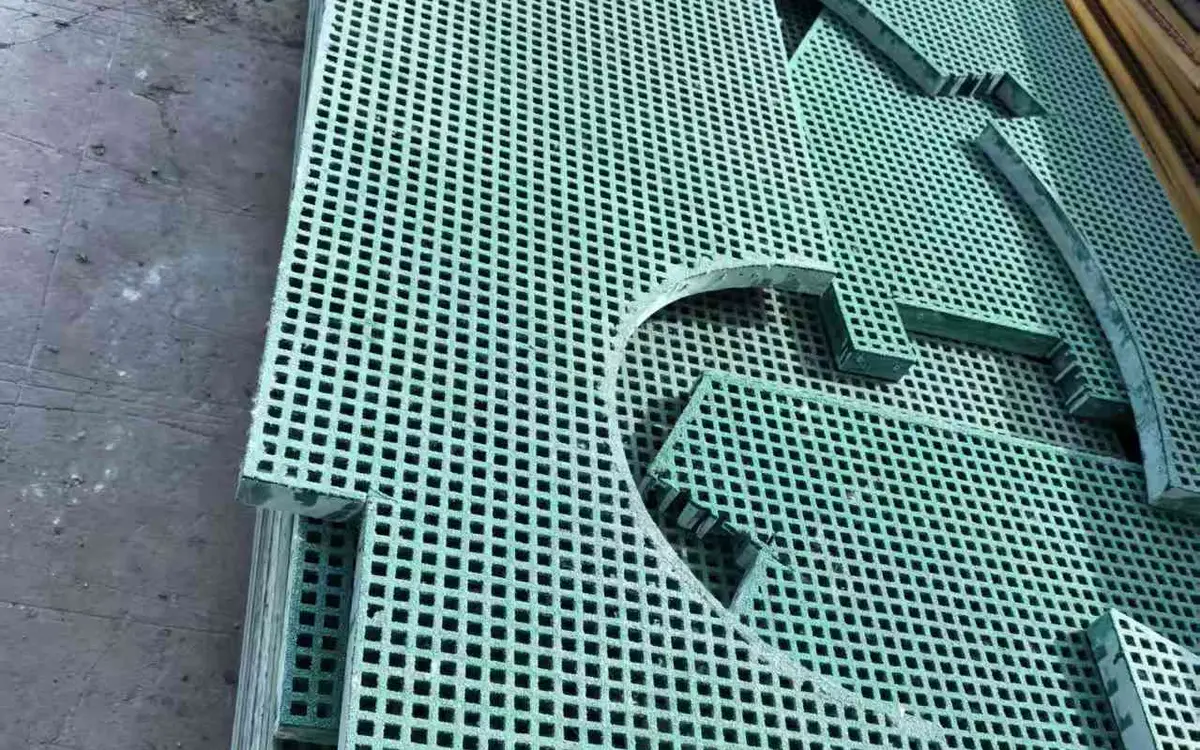
A drainage cover must suit its own opening, traffic zone and cleaning condition. Photo: Dengtai Industry.
Layout vocabulary
Car Wash Grating Load-Zone Terms
- Duty zone
- A defined part of the car wash where a specific pedestrian, vehicle, conveyor, cleaning or equipment-maintenance condition applies.
- Vehicle crossing
- The path where a tyre rolls over a drain cover or grating. It needs the loaded wheel reaction, contact area, direction and support condition.
- Wheel reaction
- The force transmitted through an individual wheel in the loaded condition. Gross vehicle weight divided by a nominal number of wheels is not a substitute.
- Pedestrian route
- A walking path intended for customers or staff. It should be separated from tyre paths where possible and assessed for wet grip, net opening and cleaning.
- Conveyor trench
- A drainage or equipment trench under or beside a conveyor. The grating must provide the required access while retaining a supported frame and removable sections.
- Reclaim or equipment area
- A service zone around pumps, filters, blowers, control equipment or water reclamation. Exposure and maintenance access can differ from the wash bay.
- Clear opening
- The unsupported distance across the drain, pit or frame. It is not the outside width of the trench or the width of the delivered cover piece.
- Cover duty
- The combined load, drainage, surface, exposure and handling condition for one cover piece. One installed bay can contain several cover duties.
Before selection
When a Car Wash Needs a Zoned Grating Schedule
Specify this if…
- Vehicle paths, pedestrian routes and equipment access can be marked on one plan.
- Each vehicle zone can be described with loaded wheel reaction, tyre contact and direction.
- Clear openings, frames and supports can be shown.
- Conveyor rails, equipment reactions and movement can be stated where present.
- Drainage flow, debris and cleaning access are stated.
- Routine solids, road salt and any freeze-thaw condition are identified.
- Wash detergents and the hottest water contact condition can be supplied.
- Removable trench and equipment-access sections can be identified.
- The required load, chemical and slip evidence can be named.
Look elsewhere if…
- The whole wash bay is being described only as “heavy duty”.
- Gross vehicle weight is the only load input.
- The panel depth is being selected before the clear opening and frame.
- A pedestrian panel is allowed into an uncontrolled vehicle path.
- A resin name is being treated as proof of detergent compatibility.
- The cover must be lifted but its mass, restraint and storage are unknown.
Duty map
Car Wash Pedestrian, Vehicle and Trench Zones
| Zone | What crosses or reaches it | Main inputs | Evidence boundary |
|---|---|---|---|
| Customer walkway | Feet, wet clothing, buckets and cleaning tools | Grip, opening, drainage, guards, lift weight | A pedestrian product does not become a vehicle cover |
| Car tyre crossing | Loaded car wheel over a trench or pit | Wheel reaction, tyre contact, track, direction and clear span | Verify the exact constructed cover and frame |
| Conveyor trench | Conveyor, service access and occasional vehicle contact | Rails, clear opening, support, removable pieces and open-state protection | A visible cover does not prove a wheel-load condition |
| Self-service bay | Mixed pedestrian movement, vehicles and spray | Separation, drainage, wet grip and traffic control | No assumption that users avoid a weak cover |
| Reclaim/equipment area | Pumps, filters, maintenance tools and process water | Chemical exposure, access clearance, support and removability | Detergent compatibility requires project-specific evidence |
| Detail / vacuum island | Pedestrians, small trolleys and cleaning equipment | Small-wheel traffic, dropped items, drainage and cleaning | Pedestrian duty is not a vehicle duty |
Engineering inputs
How Wheel, Pedestrian and Wash Conditions Differ
| Condition | What to record | What cannot replace it |
|---|---|---|
| Vehicle wheel | Loaded wheel reaction, tyre footprint, position and travel direction | The rest of the car or an unspecified “vehicle-rated” label |
| Pedestrian | Walking route, footwear, cleaning, slope and fall boundary | A vehicle load calculation or a general non-slip description |
| Wash water | Flow, solids, foam, debris and cleaning method | A larger opening without checking slip and support |
| Conveyor and service equipment | Rail support reactions, equipment movement, vibration and fixing interface | A cover overlap or an assumed share of the conveyor structure |
| Routine wash solids | Hair, wax, sand, wrappers, foam, road salt and cleaning frequency | A visually small mesh or an open-area percentage alone |
| Detergent and additives | Product SDS, concentration, temperature and spill/undiluted contact | A generic corrosion-resistant or chemical-resistant claim |
| Surface | Concave, gritted, covered or solid-top process and sample reference | A visual texture or a class from another specimen |
| Removable cover | Mass, grip, release method, frame seat, storage and reinstatement | Lightweight construction alone |
Zone record
Fields for a Car Wash Drain Grating Schedule
| Wash-bay field | What to record | Why it changes the cover |
|---|---|---|
| Zone ID | Bay, walkway, trench, equipment area and drawing revision | Keeps all duties visible |
| Route | Vehicle and pedestrian paths, barriers and transitions | Shows which traffic enters each cover |
| Governing wheel | Loaded wheel reaction, tyre contact, track and direction | Defines the vehicle load question |
| Trench geometry | Clear opening, frame, bearing width and supports | Defines how the cover reaches the structure |
| Conveyor interface | Rail reactions, moving loads, vibration, fixing scope and service access | Prevents the grating from sharing an unconfirmed conveyor load path |
| Product | Construction, depth, mesh or bar direction, resin and surface | Connects the evidence to the offered configuration |
| Water and debris | Flow, solids, hair, foam, sand, cleaning method and access | Prevents a structurally stronger cover from blocking the drain |
| Climate and seasonal duty | Road salt, slush, freeze-thaw, pressure washing and weekly cleaning | Connects surface, edge sealing and drainage review to actual operation |
| Chemicals | Detergent SDS, concentration, hottest water and undiluted exposure | Supports resin and surface review |
| Surface | Wet grip requirement, sample and required slip-test scope | Separates appearance from measured slip resistance |
| Handling | Piece mass, lift points, restraint, storage and refit | Makes maintenance practical |
| Evidence | Load, chemical, slip, drawing and inspection references | Connects quotation to the exact zone |
Worked example
An Illustrative Car Wash Grating Schedule
| Illustrative cover | Zone | Primary duty | Open item |
|---|---|---|---|
| CW-01 | Customer walkway | Wet pedestrian access and debris control | Slip evidence, opening and cleaning method |
| CW-02 | Car tyre crossing | Wheel load over a defined clear opening | Loaded wheel reaction, contact area and frame review |
| CW-03 | Conveyor trench access | Removable service cover | Piece mass, lifting, open-state control and reinstatement |
| CW-04 | Reclaim equipment area | Pump or filter maintenance | Detergent, temperature, removable access and equipment clearance |
Seven-step layout
How to Plan Car Wash Drain Grating
Mark the vehicle path, pedestrian route, conveyor, trench, equipment and wash-chemical areas.
Give every area a zone ID and state what actually crosses or reaches it.
Capture the loaded wheel reaction, tyre contact, track, direction, turning and braking.
Set the clear opening, frame, bearing, supports and connection between cover pieces.
Record detergent SDS, concentration, hottest water, debris, cleaning and slip requirement.
Define removable covers, lift points, mass, storage, restraint and reinstatement.
Carry the zone IDs into quotation, fabrication, packing, installation and maintenance.
A car wash should not be treated as one uniform “heavy-duty” floor. Customer walkways, car tyre crossings, conveyor trenches and reclaim equipment create different load, drainage, chemical and handling conditions. A single product title cannot answer those zones without a plan showing where each condition applies.
This page is the car-wash zoning method. The general drain-grating load guide explains how to develop a wheel-load and frame review. The drain-cover product guide compares open, mini-mesh, covered and solid-top formats. The surface acceptance page handles physical samples and separate slip evidence.

Start With a Zoned Wash-Bay Plan
The first plan should show how a car enters, which wheels cross a trench, where customers or staff walk and how conveyor or reclaim equipment is serviced. Zone boundaries should coincide with barriers, edges, changes in cover or changes in support condition.
Strongrate’s car-wash guidance uses a useful principle: select the cover by what crosses each pit, trench or walkway, and treat wheel crossings separately from pedestrian surfaces. It also connects automotive wheel loads to the actual support span, tire contact and direction, while warning that general pedestrian data and the term “heavy duty” are insufficient.
National Grating’s car-wash overview discusses drainage, vehicle weight, corrosion, non-slip surfaces and maintenance. Those are relevant conditions, but the product page does not remove the need for the exact wheel, frame and support record. We translate the peer themes into a zone schedule rather than a universal heavy-duty promise.
A Vehicle Crossing Needs a Wheel Reaction, Not Gross Vehicle Weight
The load from a tyre enters the grating through a contact patch at a particular location and direction. Record the loaded wheel reaction, tyre contact dimensions, track, approach and turning/braking condition. The front and rear wheels can carry different loads, and an uneven approach can shift the governing point.
The clear span belongs to the frame and trench, not the length of the cover. If supports do not line up with the actual wheel path, the structurally governing condition can be hidden behind a nominal panel class.
The exact cover assembly must match the evidence: panel construction, depth, mesh or bar direction, frame, bearing, fixings and installation. A calculation or test for a different grating or frame does not automatically cover this car wash.
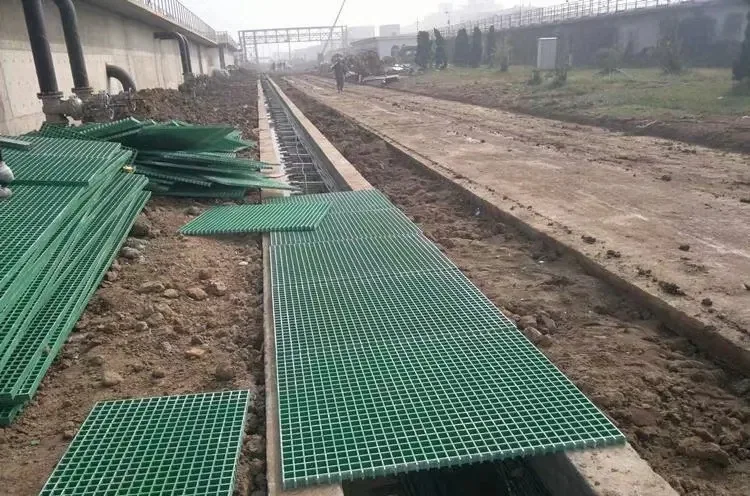
The Pedestrian Route Should Stay Outside Wheel Paths
A pedestrian grating can be selected for wet grip, manageable cover weight, drainage and small dropped objects. It is not automatically suitable for a tyre crossing because it looks thicker or is described as anti-slip.
Where possible, separate the walking route with layout, barriers or a change of level. If customers or workers must share an area with moving vehicles, the project should treat that as a controlled traffic area rather than relying on surface friction.
The net opening also matters. A smaller upper mesh can reduce what falls into the trench while changing drainage and cleaning. Record hair, sand, wrappers, foam and cleaning tools instead of using a generic “debris” label.
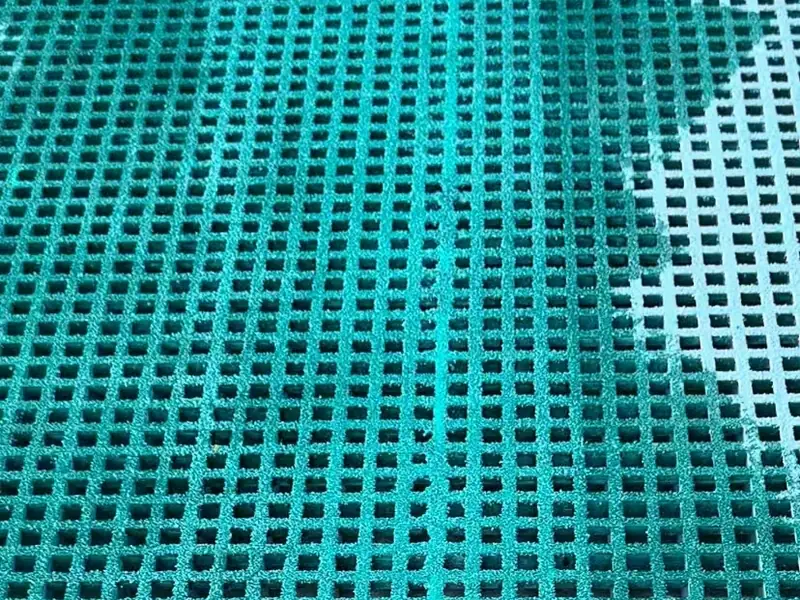
Conveyor Trench and Equipment Pits Need Open and Closed States
Conveyor trenches often need removable covers for cleaning, jam clearance and equipment access. The cover piece must fit a defined frame, have a manageable mass, provide a grip or lift point and be restrained when closed.
The open state is a separate condition. The project defines temporary barriers, lockout or operating controls and who is allowed to expose the trench. A strong cover does not make the open pit safe.
American Grating’s car-wash case pages describe fitted fiberglass conveyor-trench covers made for particular wash systems, including color-matched covers in one example and a tested load solution in another. Those are useful illustrations that the cover is tied to the specific trench and loading condition. They are not evidence for every FRP panel or for our factory’s product.
Conveyor equipment also introduces a second load source. Record rail reactions, drive or motor mounting, moving and vibrating components, the fixing interface and any need to remove the cover while the conveyor is locked out. The grating should not be assumed to share the conveyor frame or to stabilise it unless that connection is part of the project design. Vehicle traffic and conveyor service may occur over the same trench, but they remain separate load cases with separate evidence.

Wash Solids and Cold-Weather Cleaning Change Drainage Duty
“Debris” is too broad for a car wash. Hair, wax, sand, wrappers, foam, wheel-cleaning residue and material washed from vehicle bodies behave differently in the drain. A smaller upper mesh can keep wrappers or larger solids out of the trench while retaining hair and silt that need more frequent cleaning. Record what is caught, what passes, how the trench is cleaned and which cover pieces must be removed.
In cold climates, road salt, slush and freeze-thaw add another exposure and cleaning condition. Salt-laden water, pressure washing and seasonal de-icing methods should be included in the chemical, fixing, edge-sealing and drainage review. The project should state whether the cover is washed in place, lifted for cleaning or used where slush can freeze over the surface.
The surface and treatment guide and chemical-resistance method hold these details against the actual product sample. An open area, a small mesh or a gritted finish is not by itself proof of drainage, cleaning or winter performance.
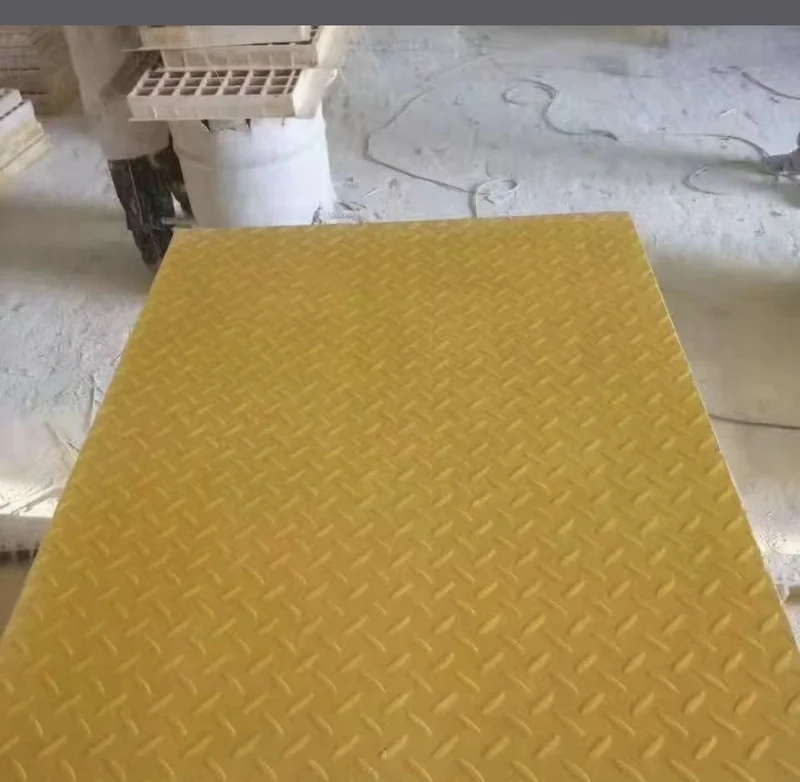
Wash Chemicals, Water Temperature and Surface Are Separate Requirements
Collect the SDS for detergents, pre-soaks, wheel cleaners, waxes and descalers. Record in-use concentration, the hottest water or steam condition and any undiluted contact during dosing or spills. “FRP is chemical resistant” is not enough because resins differ and mixtures can behave differently from single ingredients.
The walking surface is another field. A gritted or concave sample can be approved visually, but a slip class or coefficient of friction requires a named specimen and test condition. Soap, oil, wax and cleaning residues change the condition; a dry laboratory value should not be presented as the wet car-wash result.
UV exposure and cleaning also belong here. Outdoor or brightly glazed areas may need a resin or pigment discussion, and pressure washing must be compatible with the surface and edge treatment.
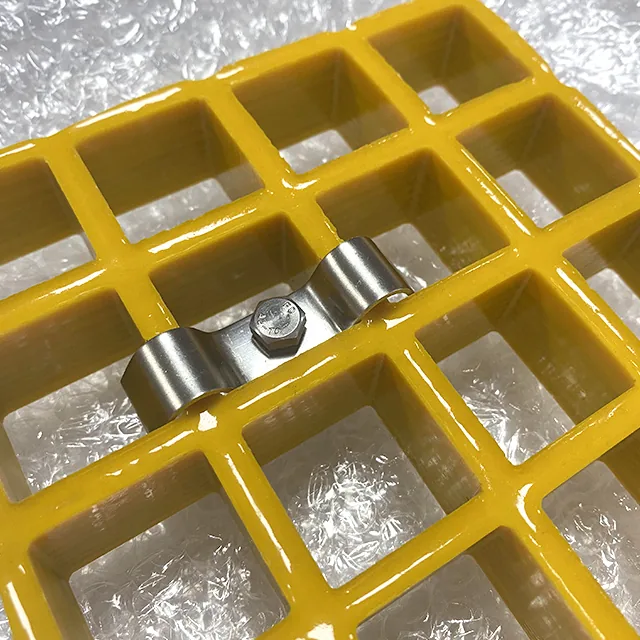
Our Factory Role: Manufacture the Zone Schedule, Not Guess It
We can review the panel construction, produce identified covers and walkway pieces, coordinate colors and surfaces, cut openings and pack pieces by zone. We need the actual clear openings, frame details, wheel cases and chemical exposure to compare the requested product with available evidence.
Our factory review uses the zone map as a check against the piece list. We look for a cover that spans two duty zones without a physical transition, a removable piece whose lift path crosses a rail, and a conveyor detail that depends on an undocumented frame connection. Those items are corrected on the schedule before cutting and packing.
When the information is missing, our quotation should leave the affected zone open rather than call the whole car wash heavy duty. That approach may produce more questions at RFQ stage, but it prevents a cheaper pedestrian cover from entering a vehicle crossing or an unverified resin from entering a reclaim area.
The downloadable zone schedule is intended to travel with the wash-bay plan. Use one zone ID across layout, quotation, fabrication, packing, installation and maintenance. If the vehicle path, frame or detergent changes, the affected zone records should be reissued.
Before quotation
Car Wash Drain Grating Checklist
- Wash-bay layout — Vehicles, pedestrians, conveyors, trenches, pits and equipment access are marked.
- Zone schedule — Every cover has a zone ID and a separate duty statement.
- Wheel data — Loaded wheel reaction, tyre footprint, track and direction are recorded where vehicles cross.
- Clear opening and frame — Opening, bearing, support and connection details are shown.
- Conveyor reactions recorded — Rail support, equipment movement, vibration and fixing scope are stated separately.
- Product row — Construction, depth, mesh or bar direction, resin and surface are identified.
- Drainage records — Flow, debris, cleaning access and retainable solids are addressed.
- Seasonal duty recorded — Road salt, slush, freeze-thaw and cleaning frequency are identified where applicable.
- Chemical exposure — Detergent or additive SDS, concentration, temperature and spill conditions are provided.
- Slip requirement — Surface sample and any test method, condition and acceptance value are named.
- Removal and restraint — Cover mass, lift points, fixing, storage and reinstatement are defined.
- Evidence scope — Required load, chemical, slip and inspection documents match the actual cover.
Responsibility boundary
What Car Wash Drain Grating Does Not Approve

The grating is not the trench structure
The concrete, steel frame, embedment and support load path remain part of the installed system.
The panel is not the vehicle
A vehicle class requires a defined wheel reaction, contact area, span and exact grating and frame evidence.
A gritted sample is not a slip result
Soap, oil, cleaning chemicals, footwear, slope and test method remain separate requirements.
A removable cover is not an open-hole control
The project still needs barriers, signs, procedures or other controls while the pit is exposed.
Map every duty zone
Send the Wash-Bay and Drainage Plan
- Molded and pultruded grating produced in house
- Full panels or factory cut-to-size pieces
- No fixed minimum order quantity
Car Wash Grating Load and Drainage Questions
Can FRP grating be used for car wash drains?
Can a car drive on fiberglass grating?
Why separate pedestrian and vehicle zones?
Which resin is suitable for car wash chemicals?
Does a gritted surface guarantee anti-slip performance?
How should conveyor trenches be covered?
Does the conveyor change the grating load review?
This content was prepared and reviewed by Dengtai Industry’s technical and production team using the project conditions, available product data and applicable documents. Limits that require design, testing or approval are identified in the content. Content last checked: