FRP cover surface selection
Chequered or Gritted Cover Plate for FRP Grating?
Chequered and gritted surfaces solve different problems in feel, cleaning, wheel contact and wear. Neither name proves slip resistance, and neither describes the base, connection or complete finished assembly beneath it.
Prepared by
Dengtai Industry
Published
·
Reviewed

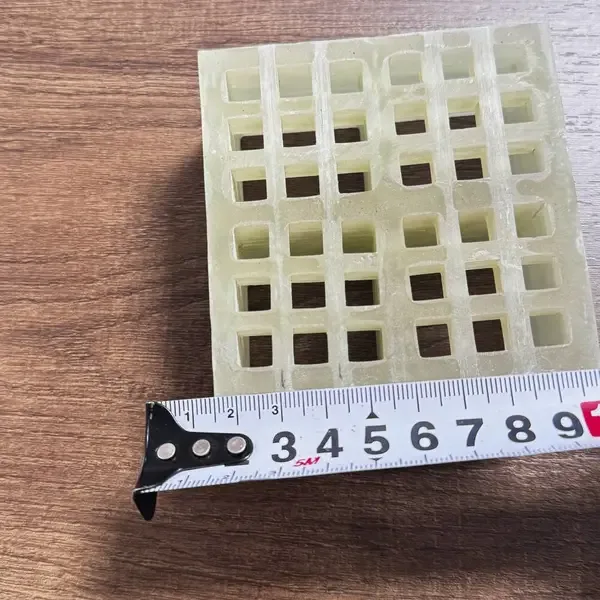
The pattern is visible; the service duty and test evidence still need to be stated. Photo: Dengtai Industry.
Surface definitions
Chequered, Gritted and Tested Slip Resistance
Texture, product construction and measured performance are three different fields.
- Chequered surface
- A repeating raised pattern formed into the plate or cover. Pattern type, raised height, pitch and direction are separate fields.
- Gritted surface
- Mineral grit applied or incorporated at the walking face to create a particulate texture. Grit grade, bond, coverage and wear behaviour must be stated.
- Texture
- The physical relief of the walking face. Texture helps describe how a surface feels and cleans, but does not by itself establish a numerical slip result.
- Slip resistance
- A performance result measured by a stated method under stated conditions. The surface, contaminant, footwear, test direction and acceptance value belong to it.
- Cover plate
- The continuous upper layer of a covered grating assembly. Its top texture is only one part of the product.
- Surface sample
- A representative piece used to agree colour, pattern or grit, appearance and measurable texture. A visual sample is not automatically a test specimen.
Side-by-side
Chequered vs Gritted FRP Cover Surface
Compare cleaning, wheel feel, wear and evidence—not only the visual pattern.
Swipe horizontally to view all columns.
| Decision point | Raised chequered surface | Gritted surface |
|---|---|---|
| How texture is created | A repeating raised pattern formed into the product | Mineral grit creates a particulate top texture |
| Main visual character | Regular pattern and direction | More uniform, granular appearance |
| Contaminant behaviour | Recesses can collect mud, oil or residue | Fine grit can trap powder and be harder to brush clean |
| Cleaning | Brush and jet direction should follow the pattern | Grit bond, pressure and cleaning chemicals need review |
| Wheel and footwear feel | Raised edges are noticeable underfoot and small wheels | Grit may reduce pattern-edge impact but adds rolling resistance |
| Wear path | Pattern peaks can flatten, polish or chip | Grit can wear, polish or detach from the bond |
| Repair expectation | Local pattern damage is difficult to recreate exactly | Applying paint or loose grit is not a matched repair |
| Evidence required | Pattern, raised height, resin, assembly and any slip test | Grade, bond, coverage, resin, assembly and any slip test |
Fit check
When a Patterned or Gritted Surface Fits
The surface must suit the contaminant, traffic, cleaning and acceptance method together.
Specify this if…
- The project can define the contaminant, cleaning method and expected traffic.
- A representative sample can be reviewed before order.
- The full cover assembly is specified separately from the top texture.
- The project accepts that pattern or grit is not automatically a slip class.
- Wheel or footwear requirements can be checked on the installed joint detail.
- The required test method and acceptance result are stated where certification is required.
Look elsewhere if…
- The supplier can only offer “anti-slip” without identifying the surface.
- Grit grade, pattern direction or raised height is omitted.
- A product photo is being used to approve a different delivered surface.
- The surface will be selected without considering cleaning residue and wear.
- A certified slip result is required but no tested product, method or condition is supplied.
- The cover is specified without the base, interface, joints and fixing arrangement.
Start With the Manufacturing Route
The word surface can describe at least three things: a repeating pattern formed into a plate, grit added to a walking face, or an applied coating. They do not have the same texture, wear path or repair method.
For a covered product, the first question is therefore not “chequered or gritted?” but:
- Is the walking face part of a solid plate or cover?
- Is there a grating base underneath?
- Is the texture a raised pattern, mineral grit, or another applied finish?
- How will the surface be cleaned?
- What must it do under feet, bare feet or wheels?
- Is a numerical slip result required?
The answers decide whether a surface sample is enough, or whether a tested product and a complete assembly record are needed.

What a Raised Chequered Surface Does
A chequered face uses a repeating raised pattern. The exact pattern may be diamond, tear, square or another agreed form. Four fields need to be written down:
- the pattern name or drawing;
- pattern scale and repeat;
- raised height above the plate surface;
- direction relative to the route.
The raised edges create local contact and visible channels. Those channels can help water or debris sit away from the highest points, but they can also hold oil, mud or residue. Cleaning direction matters because a brush or jet may need to follow the pattern.
What the pattern does not prove
A raised pattern does not establish:
- a slip class;
- a barefoot comfort result;
- resistance to every oil or chemical;
- low rolling resistance for a caster;
- a repair method after the peaks wear.
When footwear or wheels are small, the pattern edge becomes part of the contact problem. A pattern that feels effective under a boot may increase vibration or resistance under a hard caster. The trolley route guide keeps that check separate from the slip decision.
What a Gritted Surface Does
A gritted surface uses mineral particles at the walking face. The project should identify:
- grit grade or particle range;
- how the grit is bonded or incorporated;
- coverage and colour;
- resin system;
- cleaning and wear expectations.
Fine grit can create a more uniform tactile texture, but fine particles may also trap powder, fibres or sticky residue. Coarse grit can feel more pronounced and may increase cleaning or wheel resistance. The term “grit” alone does not identify any of these properties.
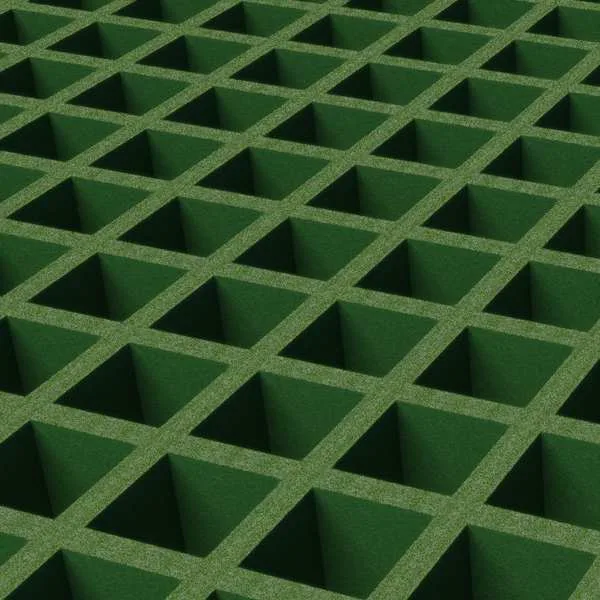
Separate Surface Texture From Slip Performance
Slip resistance depends on more than the top pattern. The same surface can produce different results when:
- the contaminant changes from water to oil or food residue;
- footwear changes from safety boots to bare feet;
- the direction of travel changes;
- the test plane includes joints or frame transitions;
- wear removes the highest texture.
A project requiring a numerical result should state the standard, mode, contaminant, footwear or slider, test direction and acceptance value. The supplier should identify the exact tested configuration.
Slip standards also differ by market and test geometry. A numerical result from a horizontal wet test, an inclined ramp with oil, or a barefoot assessment is not directly interchangeable. The governing project specification should name the method and condition, rather than comparing unlabelled scores from different test programmes.
A product sample can answer colour, roughness, pattern feel and workmanship. It can expose an obvious mismatch between the requested and delivered texture. It does not become a certified slip result merely because someone walked on it.
Choose by Contaminant and Cleaning, Not Appearance
Water and outdoor rain
Rapid water shedding matters, but a closed cover changes the route. Water must have a slope or a path to an outlet. A pattern may create local channels, while grit may hold a thin film. Neither should hide the surrounding drainage design.
Oil, grease and syrupy residue
Oil can collect in pattern recesses or coat grit. Describe the cleaning agent, temperature, pressure and brush. Where solvent cleaning is used, the cleaning agent must be compatible with the resin, colour and any grit bond.
Fine powder, fibres and food waste
Fine grit can trap material at the surface, while pattern channels can hold it in defined lines. Access for brushing and washing should be part of the selection. A high-pressure jet can remove debris but may damage a vulnerable surface if pressure, angle and distance are uncontrolled.
Ice, mud or abrasive grit tracked from outside
Tracked material is different from grit manufactured into the surface. Both can increase wear. The inspection plan should distinguish:
- foreign debris on the surface;
- normal pattern flattening;
- grit loss from the bonded surface;
- cracking or delamination in the cover itself.
Consider Footwear and Skin Contact
A rough-looking surface is not automatically comfortable. Raised pattern edges can be felt by bare feet; grit can be abrasive. Public pool decks, amenities and accessible routes should be assessed with the actual footwear or barefoot use in mind.
Where a sample is available, compare it:
- with wet and dry hands or a soft cloth;
- under the intended footwear;
- in the intended cleaning state;
- with a small wheel if trolley traffic is proposed.
This is a practical comparison, not a numerical approval. When accessibility, barefoot use or slip performance is regulated, use ADA opening guidance and the project’s test requirement together.
Road-Test the Surface With a Real Wheel
A cart may use small hard casters, broad rubber wheels or a mix of fixed and swivelling wheels. On a chequered surface, the wheel can ride across raised edges. On grit, rolling resistance and vibration may change. At a joint, a wheel may drop into a gap even when the panel field is continuous.
Use a route mock-up where the consequence is important. Test:
- the empty and loaded cart;
- straight movement and turning;
- the smallest and hardest wheel;
- crossing a production joint;
- starting and stopping;
- repeated passes over the same path.
The result tells you whether the proposed surface is practical. A separate structural check still determines whether the wheel load and deflection are acceptable.
Inspect Wear and Define Repair Limits
Texture has a service life. Inspect a worn sample against the approved sample and record:
- pattern peak height or grit presence;
- colour and gloss change;
- contaminant staining;
- loose grit or visible detachment;
- cracks, chips, edge damage or interface separation;
- whether the route has changed since installation.
Cleaning may restore appearance but cannot rebuild a worn pattern or replace detached grit. A coating that adds grit in the field must be assessed as a new surface system; it should not be described as restoring the original product.
Compare the Procurement and Repeatability Consequences
Pattern and grit can change the quotation and the production record even when the visible plate size is identical. Compare the complete scope rather than a surface surcharge:
- whether the requested texture uses an available mould, tool or surface process;
- plate body, cover assembly, base grating and interface scope;
- the sample required before batch production;
- pattern direction, grit grade and colour reference;
- repeatability of the approved sample in later production;
- masking, polishing, cleaning and packing operations;
- minimum batch or special-process economics;
- replacement-panel matching and piece identification;
- inspection records and any slip-test evidence.
Our factory does not publish one universal price uplift for “chequered” or “gritted.” The quotation follows the actual construction and process scope. A buyer should also identify whether an offer is for a loose plate, a cover bonded to a grating base, or a complete fabricated assembly with edges and fixings.
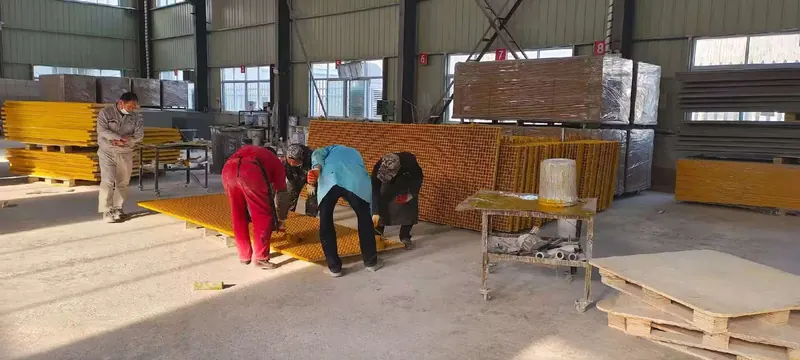
For a replacement or staged project, send the previous pattern or grit reference, the current photo in neutral lighting and the original drawing revision. This improves comparison. It still may not guarantee an exact visual match after wear, colour change or a change of manufacturing batch.
How Our Factory Defines a Covered Surface
Our factory works with patterned flat and grit flat formats and quotes covered assemblies from the project drawing. The complete review keeps the surface connected to:
- the base structure and overall height;
- the cover-to-base interface;
- the panel joints and edge treatment;
- drainage and access;
- the fixing and lifting arrangement;
- the sample and document scope.
We do not quote a “chequered plate” or “grit plate” name as though it defines every field. Two yellow covered panels can have different pattern height, grit grade, resin, thickness, interface and support conditions.
For the broader construction decision, use the covered grating guide. For the specific chequered-cover assembly, use FRP grating with chequered plate.
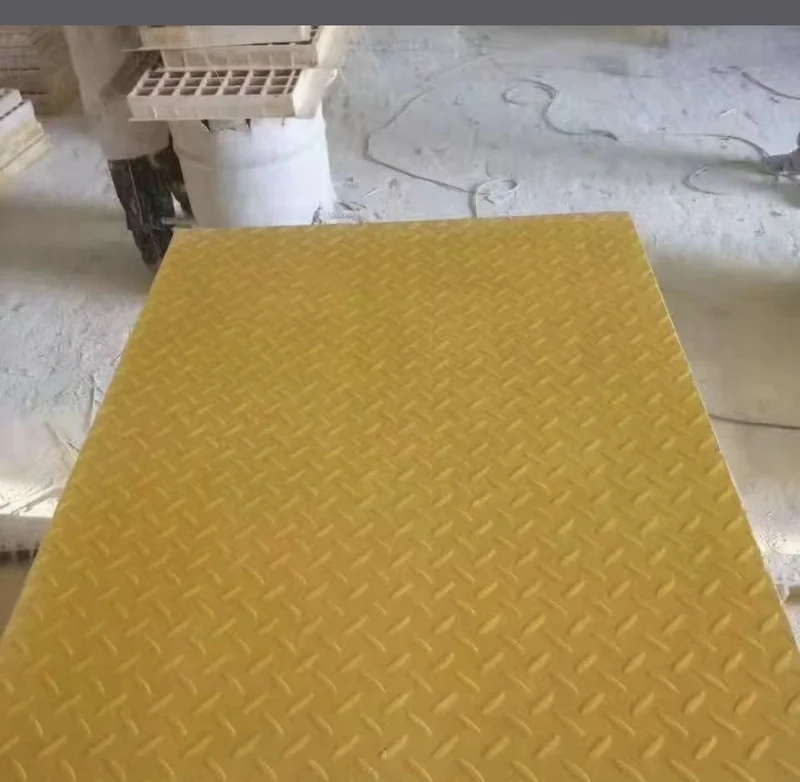
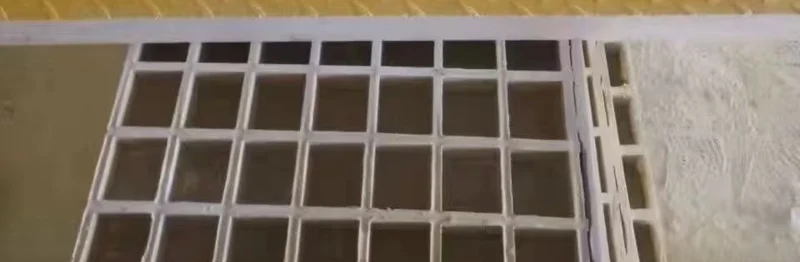
Compare Samples With a Controlled Record
A useful sample pack records:
| Field | What to record |
|---|---|
| Construction | Solid plate or cover over grating |
| Surface family | Chequered pattern, gritted or another agreed finish |
| Texture | Pattern dimensions and direction or grit grade |
| Resin and colour | Offered grade, colour reference and surface combination |
| Drawing revision | Configuration and sample reference |
| Evidence | Visual approval, dimensional record or tested performance |
| Limits | What the sample does not prove |
Do not let one person approve colour while another approves the texture and a third approves the structure. One revision should connect all three.
What to Send With a Surface Inquiry
Send:
- the complete product construction;
- the surface family and required grade;
- the contaminant and cleaning method;
- the footwear, barefoot use or wheel details;
- wet, dry and residue conditions;
- the required slip test and acceptance value;
- the pattern or grit reference;
- the sample and drawing revision;
- the finished size, joints, fixings and environment.
If some fields are unknown, mark them as unknown. The supplier can propose a direction, but should not invent the service condition.
Final Decision Rule
Choose the surface only after the product duty is understood:
- Open grid, grit or pattern when through-drainage and ventilation remain primary.
- Mini mesh when a smaller opening can improve foot or small-object control while staying open.
- Covered grating with a patterned top when a continuous surface and a defined raised texture are required.
- Covered grating with a gritted top when a more granular texture is preferred after contaminant, cleaning and wheel review.
- A standalone plate only when its own support, stiffness and fixing basis suit the duty.
The final quotation should name both the surface and the assembly. That is the only way to compare the same physical product and the same evidence.
Surface schedule
Fields for an FRP Cover Surface Order
These fields keep the texture tied to a real product and test scope.
Request a Project Quote| Specification | Value |
|---|---|
| Surface family | Chequered or gritted Both are finishes within a complete cover or plate product; the name alone is not a product code. |
| Pattern or grit definition | Type, scale and direction Record pattern shape and raised height, or grit grade, bond and coverage as applicable. |
| Resin and colour | Offered resin family and colour reference Surface appearance and chemical suitability are separate acceptance fields. |
| Cleaning regime | Agent, temperature, pressure and brush State the actual routine, including residue, oils, powders and wash frequency. |
| Traffic | Footwear, barefoot use, wheels and frequency Check texture and joints against the route, not only a flat sample. |
| Slip evidence | Method, condition and acceptance value A texture photo does not replace a test result. |
| Wear and repair | Inspection points and repair limit Define what wear, flattening or grit loss means for acceptance. |
| Complete assembly | Base, interface, cover, edges and fixings The top surface is quoted as part of the covered product, not as a loose label. |
Request a surface review
Describe What Contacts and Cleans the Surface
Name the contaminant, footwear, wheels, cleaning and evidence requirement.
- Molded and pultruded grating produced in house
- Full panels or factory cut-to-size pieces
- No fixed minimum order quantity
Chequered vs Gritted FRP Surface Questions
Is a chequered FRP surface better than a gritted surface?
Does a gritted cover guarantee slip resistance?
Can grit be applied to an open grating instead of a cover?
Which surface is easier to clean?
Can the pattern or grit damage be repaired on site?
What should be included in a surface sample approval?
Will a replacement panel match my existing surface?
This content was prepared and reviewed by Dengtai Industry’s technical and production team using the project conditions, available product data and applicable documents. Limits that require design, testing or approval are identified in the content. Content last checked: