Molded grating RFQ guide
Specifying Resin and Structure in a Molded Grating RFQ
A molded grating quotation is not complete when it names a resin family but omits the panel structure, support span, load and deflection—or when it defines the panel but leaves out chemical exposure, temperature, fire, surface and required evidence.
Prepared by
Dengtai Industry
Published
·
Reviewed

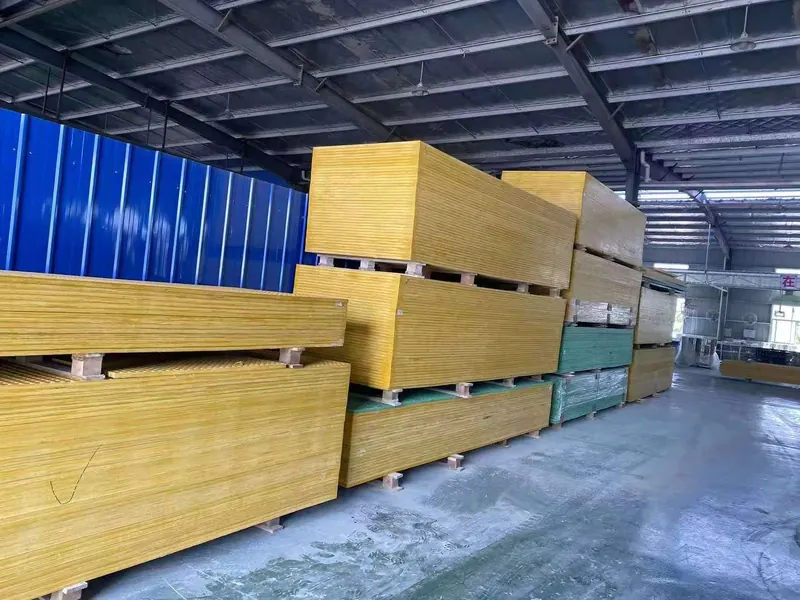
The sample identifies the visible construction. The RFQ must connect it to the resin grade, exposure, structural duty and evidence. Photo: Dengtai Industry.
RFQ terms
Structure, Resin, Grade and Formulation Are Not Synonyms
Clear terminology prevents a resin family name from being mistaken for a complete offered product.
- Structural axis
- The molded construction, depth, mesh, support arrangement, clear span, load, deflection limit, pieces and fabrication scope that determine whether the panel can perform its access duty.
- Exposure axis
- The chemicals, concentration, temperature, contact type, frequency, cleaning regime, fire or smoke criteria, UV, electrical, slip and appearance requirements that drive the material system.
- Resin family
- The broad chemistry, such as polyester, vinyl ester or phenolic. A family name is not a complete grade or formulation.
- Resin grade
- The identified resin product supplied by a resin manufacturer. Its naming and traceability are needed when a project specification, report, substitution review or acceptance criterion names a specific grade.
- Formulation
- The complete production system used to make the grating, including resin grade, reinforcement, fillers, pigment and functional additives. The formulation or supplied product must match the evidence claimed.
- Offered combination
- A molded product row, resin system, surface, color, fabrication and document scope that the factory confirms can be supplied together. Separate preferences do not guarantee a combined configuration.
- Evidence match
- The connection between a test, certificate, load table or chemical-resistance statement and the product, grade, preparation and conditions actually proposed.
Two-axis specification
The Structural and Exposure Questions Must Both Be Answered
One axis determines whether the panel works; the other determines whether the material suits the service.
Swipe horizontally to view all columns.
| Question | Structural axis | Exposure and compliance axis |
|---|---|---|
| Main question | Can this panel span between the actual supports under the required load and deflection limit? | Is this resin, surface and finished configuration suitable for the chemicals, temperature and acceptance requirements? |
| Primary inputs | Depth, mesh, bar structure, support, span, load, deflection and temperature duration. | Chemicals, concentration, contact type, temperature, cleaning, fire, smoke, UV, electrical and slip. |
| Common mistake | Requesting a “strong” thickness without a support or load case. | Requesting a “chemical” or “premium” resin without naming the exposure. |
| What a family name proves | Product type only; it does not identify the structural row. | Broad chemistry only; it does not prove grade, formulation or compatibility. |
| Required evidence | Load table or calculation for the offered construction and support condition. | Test report, chemical-resistance evidence or certificate tied to the offered product and conditions. |
| Factory action | Check the engineering row, support inputs and fabrication route. | Confirm the resin grade, offered combination and document scope. |
Specification review
When to Use a Combined Resin-and-Structure RFQ
Use the combined format whenever panel performance and material suitability depend on different project inputs.
Specify this if…
- Use this RFQ when both the installed duty and the process exposure are known or can be marked unknown.
- Use it when comparing quotations that use different panel constructions or resin families.
- Use it when a project names a resin grade, fire test, chemical environment or certificate.
- Use it when the same walkway passes through several service zones with different exposure.
Look elsewhere if…
- Do not choose a resin from a product photograph, color or one generic “chemical resistant” phrase.
- Do not assume a thicker panel fixes chemical compatibility.
- Do not assume a higher-grade resin fixes excessive deflection.
- Do not compare two quotations if the panel row, surface, fabrication or document scope differ.
- Do not turn an unknown concentration or temperature into a convenient assumed value.
RFQ matrix
Information Needed for One Molded Grating Quote
The fields below connect the finished panel, structural duty, exposure, evidence and delivery.
Swipe horizontally to view all columns.
| RFQ field | Why the factory needs it | Example form |
|---|---|---|
| Molded row | Resin and structure cannot be checked against an unidentified panel. | Molded; depth; square, rectangular or mini mesh; bar/pitch references already known. |
| Finished form | Full panels and cut pieces carry different fabrication, loss and packing requirements. | Panel sizes or finished-piece list with quantities, openings and edge treatment. |
| Support and span | A structural recommendation depends on how the complete piece is supported. | Frame plan, clear span, bearing, joints, free edges and cantilevers. |
| Load and deflection | The same panel can pass one load condition and fail another. | Uniform, point, line or wheel load; footprint and position; deflection criterion. |
| Chemicals and mixture | “Process water” or “acid” does not identify concentration or mixed service. | Chemical names, concentration range and mixture notes. |
| Temperature and contact | Continuous heat, peaks and cleaning cycles can change the review. | Normal and peak temperature; splash, vapor, immersion or intermittent spill. |
| Surface and functional grade | Walking surface, color, electrical and fire requirements are separate choices. | Concave, grit or other finish; color; fire/smoke, anti-static or slip requirement. |
| Evidence and delivery | The final quotation must separate technical scope from packing and freight. | Required report, certificate or witness point; trade term, packing and destination. |
A molded grating RFQ should specify the structure and the resin as two connected but separate decisions. The structure answers whether the panel can span the supports under the load and deflection requirement. The resin and surface answer whether the material and finish suit the chemicals, temperature, fire, slip and other service conditions.
Neither decision substitutes for the other. A stronger panel does not make an unsuitable resin compatible, and a higher-grade resin does not correct excessive deflection or missing bearing.

The Two Axes of a Molded Grating RFQ
Structural Axis
Define:
- molded construction;
- nominal depth;
- square, rectangular or mini mesh;
- bar and pitch information;
- full panel or finished-piece sizes;
- supports, bearing, joints and clear span;
- uniform, point, line or wheel load;
- load position and contact footprint;
- deflection limit;
- temperature and load duration;
- cuts, openings, fixings and edge treatment.
This axis determines whether the proposed row works. It also allows the quotation to include the correct panel format, fabrication route and inspection scope. Review the support-layout guide when the frame or clear span is not yet documented.
Exposure and Compliance Axis
Define:
- chemical names and mixtures;
- concentration ranges;
- normal and peak temperature;
- peak duration;
- splash, vapor, immersion or intermittent spill;
- cleaning chemicals and methods;
- UV exposure;
- required fire or smoke performance;
- slip, color and surface requirements;
- anti-static or electrical requirements;
- test methods, certificates and acceptance criteria.
This axis determines the resin grade, formulation, finish and evidence that must be reviewed.
Start With the Structural Duty, Not a Resin Label
A common RFQ says, “quote vinyl ester grating, 38 mm.” That does not define the finished panel or prove suitability.
The missing questions include:
- What is the clear span between supports?
- Which edges are supported?
- What load is applied, over what footprint?
- What deflection limit applies?
- Is the load temporary or sustained?
- Does the panel include joints, cutouts or cantilevers?
- Does the support table cover the proposed structure?
The load and span guide explains why depth alone is not a load rating. The depth and mesh need to belong to the exact row under review.
Then Describe the Exposure Completely
“Chemical plant,” “wastewater” or “marine” is an application name, not a chemical exposure.
For each area, record:
- each chemical or process mixture;
- concentration and units;
- normal and maximum temperature;
- whether exposure is continuous or intermittent;
- splash, condensation, vapor, immersion or dry dust;
- cleaning and spill recovery;
- possible mixtures created by the process.
The same plant can contain zones with very different duties. A walkway beside a tank, over a trench and in a washdown aisle should not automatically receive the same resin recommendation. The chemical resistance guide explains the evidence needed for compatibility.
Why a Resin Family Name Is Not Enough
Polyester is a family, not a complete grade. Vinyl ester is also a family. Phenolic describes a different broad chemistry direction. The final review needs the actual resin grade and the production formulation used for the offered grating.
We do not treat a generic family name as proof of chemical compatibility or fire performance. Ask:
- Which grade is being offered?
- Is that grade available with the requested molded row and surface?
- What evidence names or covers the offered formulation?
- Does the proposed substitution match the project-approved grade?
The existing resin selection guide compares the broad selection directions. This page focuses on how to carry those decisions into an actual RFQ.
When the original wording only says “polyester”, use the polyester resin-name map to keep orthophthalic and isophthalic chemistry separate from a generic grade claim. When “epoxy” and “vinyl ester” are both present, resolve the offered system with the epoxy versus vinyl ester guide before fixing the RFQ row.
Resin and Structure Interact, but Do Not Replace Each Other
Temperature and sustained loading are a useful example. The structural response depends on the panel geometry and support condition, while the resin formulation and service temperature influence the applicable material performance. A chemical review may also require a temperature that is higher than the ordinary structural table basis.
The RFQ should therefore connect:
- the structural load duration;
- normal and peak service temperature;
- the resin’s applicable conditions;
- the required long-term evidence.
Review temperature and sustained loading when the installation is hot, continuously loaded or exposed to thermal cycling.
Surface, Color and Functional Requirements Are Separate
Do not use surface appearance as a proxy for resin chemistry.
A grit surface may improve grip, but it does not make the resin chemically resistant. A dark color does not make a panel anti-static. A phenolic resin name does not automatically establish a complete fire rating. Metal clips and fasteners remain part of an electrically conductive or corrosive assembly.
Record each requirement separately:
- walking surface and slip criterion;
- color reference;
- fire or smoke test;
- anti-static or earthing requirement;
- UV or appearance target;
- compatible edge sealer and coating.

Confirm That the Combination Is Available
An RFQ can list several individually desirable requirements and still describe a combination the factory does not supply together.
For example, a project may ask for:
- one panel depth and mesh;
- a named resin grade;
- a specific top surface;
- anti-static performance;
- a color;
- cut pieces and sealed edges;
- a particular test report.
The quotation should confirm the complete combination, not just reply to each field in isolation. If one item is unavailable, do not silently substitute it. Show the proposed change and its effect on structure, evidence or approval.
Compare Quotations on the Same Two Axes
Two quotations are comparable only when they use the same:
| Comparison field | What to verify |
|---|---|
| Panel row | Construction, depth, mesh, bar structure and orientation |
| Finished form | Full panels or pieces, dimensions, openings and edge scope |
| Support condition | Span, bearing, joints, restrained edges and supporting evidence |
| Load case | Uniform, point, line or wheel load, position and deflection limit |
| Resin system | Family, grade and formulation reference |
| Surface and color | Agreed finish and separate functional requirements |
| Evidence | Reports, tables or certificates that match the offered combination |
| Commercial scope | Cutting, sealing, inspection, packing, delivery and validity |
If any field differs, record it as a technical difference rather than a price difference.
How We Review a Molded Grating RFQ
Our review separates the request into two workstreams:
- Check the panel geometry, support, load, deflection and fabrication.
- Check the chemicals, temperature, contact type and functional requirements.
- Confirm whether one offered resin, structure and finish combination covers both.
- Match load, chemical and fire or electrical evidence to that combination.
- Quote the fabrication, inspection, packing and delivery scope.
- List any unresolved input that still needs clarification.
This sequence prevents a sales description from being used as engineering evidence.
A Useful RFQ Template
Use this structure:
Supply molded FRP grating in [depth] with [mesh], as [full panels or listed pieces]. The panel is supported by [support layout] with [clear span] and bears over [width]. It must carry [load type, value, footprint and position] within [deflection limit]. The service exposure is [chemicals, concentration, temperature and contact]. Required surface and functional performance are [slip, color, fire, anti-static, UV]. Provide [load table, test report, certificate or record] that applies to the offered product. Include [cutting, sealing, inspection, packing, trade term and destination].
This paragraph is not a completed specification by itself, but it exposes every major missing input.
Common RFQ Mistakes
- Naming only the resin family and no grade.
- Naming a panel depth and no support or load.
- Using one chemical-resistance answer for the entire plant.
- Omitting concentration, temperature or contact duration.
- Treating fire, anti-static and slip as resin names.
- Assuming a particular resin is available in every panel and finish.
- Accepting a report without matching its sample and conditions.
- Comparing quotations with different fabrication or document scope.
What the Quotation Should State
The final quotation should identify:
- the molded product row and finished pieces;
- resin name or grade basis;
- surface and color;
- support and load assumptions;
- fabrication and edge-treatment scope;
- required evidence and its limits;
- packing, delivery and commercial validity;
- open technical items that require approval.
The Manufacturer Rule for a Resin-and-Structure RFQ
Describe the duty and the exposure with the same precision. Shortlist a molded structure that can carry the load, shortlist a resin grade that can serve the environment, then confirm that one offered combination supports both decisions and carries the required evidence.
Do not ask resin to solve a structural problem or thickness to solve a chemical one.
Review sequence
How We Review a Molded Grating Resin and Structure Request
The structural and exposure inputs are checked independently before the factory confirms one combined offer.
Start with supports, span, load and deflection rather than an assumed panel depth.
Record every chemical, concentration, temperature and contact condition that can affect the resin.
Add surface, color, fire, slip, UV or anti-static requirements without treating them as resin proof.
Check that the requested structure, resin, surface and fabrication are actually available together.
Review reports and tables against the offered product and stated test conditions.
State cutting, sealing, documents, packing, delivery and exclusions on the same offer.
Factory evidence
What the Quotation and Documents Must Match
The offered panel, the test sample and the project conditions must remain connected.

Offered combination
The quotation should identify the panel row, resin basis, surface and fabrication together rather than as unrelated options.
Structural boundary
The support, span, load and deflection basis remains attached to the structural recommendation.
Exposure boundary
A chemical or fire statement applies only to the product, grade and conditions named in its source.
Grade traceability
Where a project names or approves a resin grade, a vague family substitution is not treated as equivalent.
Evidence scope
Our report can support the tests and sample it records; it is not a universal rating for every molded row or exposure.
Commercial transparency
Cutting, sealing, inspection, documents, packing and delivery are stated separately in the quotation.
RFQ checklist
What to Include in a Molded Grating Resin RFQ
Send all known inputs and identify unresolved values instead of replacing them with assumptions.
- Application and location — Walkway, platform, cover, treatment zone, marine exposure or other operating context.
- Panel or finished-piece schedule — Full-panel sizes or piece list, quantities, openings and cut-edge treatment.
- Support and load inputs — Support drawing, clear spans, bearing, load cases, deflection limit and temperature duration.
- Chemicals and concentration — Names, mixtures, concentration ranges and any proprietary process chemistry.
- Temperature and contact — Normal and peak temperature, peak duration, splash, vapor, immersion and cleaning cycle.
- Functional requirements — Fire, smoke, slip, anti-static, UV, color, surface or other project criteria.
- Existing specification — Named resin grade, standard, test method, acceptance criterion or approved supplier list.
- Documents and delivery — Required reports, inspection records, certificates, packing, trade term and destination.
Request a quote
Send the Structural and Exposure Conditions Together
Include the panel or piece schedule, frame and loads, chemicals, temperature and required evidence.
- Structure and exposure reviewed together
- Existing grade and test method accepted
- Unknown values marked without guessing
Molded Grating Resin Specification Questions
Which resin should I specify for molded grating?
Can I choose resin and thickness separately?
Is a thicker panel better for chemical resistance?
Is vinyl ester always required for wastewater?
Does a resin data sheet approve the finished grating?
Can phenolic resin guarantee fire compliance?
What if the process temperature or concentration is unknown?
What documents should an RFQ request?
This content was prepared and reviewed by Dengtai Industry’s technical and production team using the project conditions, available product data and applicable documents. Limits that require design, testing or approval are identified in the content. Content last checked: