Chemical exposure schedule
Vinyl Ester FRP Grating: Completing a Chemical Exposure Schedule
Vinyl ester identifies a resin family, not a chemical approval. Record the process zone, medium, concentration, temperature, contact, cleaning and finished product so the proposed grade can be checked against the actual duty.
Prepared by
Dengtai Industry
Published
·
Reviewed

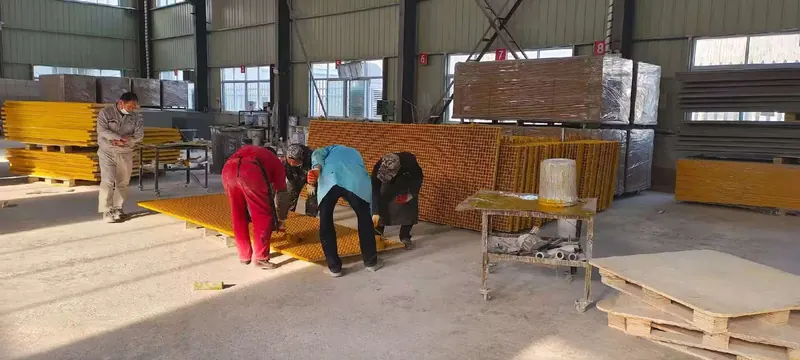
Vinyl ester may be the starting direction for a corrosive or wet area; the schedule determines whether it is supportable. Photo: Dengtai Industry.
Schedule fields
Six Values That Turn Vinyl Ester into a Reviewable Question
Missing one field can change the material recommendation and the evidence required.
- Vinyl ester resin
- A thermosetting resin family used in composite grating. The family name does not identify the specific grade, reinforcement, cure, surface or evidence for the finished product.
- Exposure schedule
- A structured record of what the grating meets, where, at what concentration and temperature, for how long, in what contact mode and with what cleaning.
- Process zone
- One area with its own medium and operating condition. Storage, dosing, aeration, disinfection, wash-down and drainage areas should not be merged into one plant-wide exposure.
- Contact mode
- Splash, spillage, vapor, condensation, immersion or dry exposure. The same chemical can create a different review question in each mode.
- Normal and peak condition
- The routine value and the higher or shorter event, including its duration. A peak temperature without its duration is incomplete.
- Effective evidence
- The document that actually supports the proposed grade and configuration, such as a resin supplier guide, laminate test or finished-product report.
When to use this
When a Vinyl Ester Request Needs a Full Exposure Schedule
The more process areas, chemicals and cleaning steps involved, the less useful a plant-wide resin label becomes.
Specify this if…
- The grating serves a chemical, wastewater, marine, wash-down or other corrosive process area.
- Several plant zones have different media, temperatures, cleaning chemicals or contact modes.
- An existing specification names a vinyl ester grade, a supplier product or a required test method.
- A resin substitution or equivalent is proposed and needs documented review.
- The project must state what remains untested before quotation or production.
Look elsewhere if…
- The request uses only a plant name or the word wastewater to describe the exposure.
- A vinyl ester family name is being treated as approval for every chemical in the plant.
- Only acid or alkali category and pH are given without chemical names and conditions.
- A supplier table for another manufacturer’s grade is being used as proof for the proposed product.
Evidence types
What Each Vinyl Ester Document Can Support
Identify the document before treating its conclusion as product approval.
| Evidence | What it can support | What it still leaves open |
|---|---|---|
| Resin supplier guide | The named resin grade in listed media under stated conditions | Our finished grating, a different grade or an untested mixture |
| Laminate test | A specific laminate build-up and test exposure | A panel with different reinforcement, thickness, surface or cure |
| Finished-product report | The product configuration and exposure recorded for the tested item | Other constructions, process areas or acceptance criteria |
| Project specification | The medium, environment, test method and approval route required by the buyer | Chemical suitability unless the proposed product is checked against that requirement |
| Certificate of conformity | That a defined supply conforms with stated order requirements | Compatibility with a medium that was never part of the assessed scope |
Build sequence
Complete the Schedule Before Selecting the Grade
Describe the exposure first, then tie the proposed product to its evidence.
Mark the grating location and the process operating in that area instead of assigning one resin to the whole facility.
Record chemical names, concentration, mixtures, pH only as supporting data and the units supplied.
State normal and peak values, peak duration and whether the grating is loaded during the peak.
Note splash, vapor, condensation, immersion, spill history, cleaning chemicals, rinse method and frequency.
Tie the vinyl ester grade to molded or pultruded structure, mesh or bar profile, surface, edge treatment and fixing material.
Identify the relevant guide, test or report, its scope and the assumptions that the project still has to accept.
A Resin Family Is Not a Chemical Review
Vinyl ester is a useful starting direction where chemical, marine or aggressive wash-down exposure governs. It is not a compatibility certificate for every vinyl ester product, every chemical or every finished grating. The proposed grade, reinforcement, cure, surface and cut-edge treatment all belong to the product being reviewed.
The practical task is to connect the process condition to that product. “Vinyl ester grating for wastewater” identifies a candidate family. “Molded vinyl ester grating at this walkway, exposed to this concentration at this temperature, through this contact mode and cleaning routine, supported by this evidence” is a question that can be reviewed.
If the project also uses terms such as epoxy, epoxy vinyl ester or bisphenol A vinyl ester, resolve those names first with the epoxy and vinyl ester grating specification guide. The chemical exposure schedule can then review the correct grade and product.
Where another area of the same specification uses polyester, keep the names separate with the polyester resin-type map. For a treatment plant with several zones, record each medium and finished-piece group in the wastewater work-area RFQ schedule.

Write One Exposure Schedule for Each Process Area
A treatment plant, chemical facility or marine structure is rarely one chemical environment. Storage, dosing, aeration, disinfection, drainage and maintenance areas can differ in medium, temperature and contact. Prepare one schedule for each drawing area that has a different condition.
Chemical names come before category labels
Record the chemical names, concentration and units. Where several chemicals are present, identify the mixture rather than only the individual ingredients. A pH value may help describe acidity or alkalinity, but it does not identify the chemical, its concentration or the effect of a mixture.
Where the composition varies, provide the normal and worst credible range and mark what remains unknown. A plant chemical inventory is a starting point; the review needs the substances that can actually reach the grating through process contact, vapor, spillage or cleaning.
Temperature needs duration and context
Record normal operating temperature, peak temperature and how long the peak lasts. Add cleaning-water temperature and any process upset that can create a higher short-term condition. State whether the grating remains loaded during the peak.
A resin’s heat-deflection temperature is not the continuous service temperature of the finished grating in a chemical environment. The temperature and creep guide explains why load, duration and deflection also belong to the structural review.
Splash, vapor and immersion are different exposures
Identify how the medium reaches the grating. Occasional splash that is rinsed away is not the same as continuous condensation on the underside, a recurring spill pool or immersion. Record frequency and approximate duration for each contact mode.
Cleaning is part of the schedule. State the cleaning chemical, dilution, temperature, pressure, frequency and rinse method. A hot cleaning solution can govern even when the normal process liquid is comparatively mild.
The load has to stay visible
Chemical resistance is not assessed in isolation from the structure. Record what the grating carries and whether the load remains applied during temperature or chemical exposure. A continuously loaded panel in a warm, wet chemical area creates a combined condition that should not be described by the resin name alone.
A schedule template to copy
The format can be simple, provided the values and unknowns stay visible:
| Schedule field | What to enter | Why it changes the review |
|---|---|---|
| Drawing area | Piece mark, platform or zone reference from the layout | Keeps the process condition attached to the correct grating item |
| Medium | Chemical names, mixture, concentration and units | A family or pH value does not identify the compatibility question |
| Temperature | Normal, peak, duration and whether the grating is loaded | Exposure severity changes with temperature, time and stress |
| Contact | Splash, spill, vapor, condensation, immersion or dry | Each mode creates a different route and duration of contact |
| Cleaning | Chemical, dilution, temperature, frequency, pressure and rinse | Maintenance can govern when the normal process looks mild |
| Product | Molded or pultruded, thickness/profile, surface, edges and fixings | The evidence must describe the actual product in contact with the medium |
| Evidence | Resin guide, laminate test, product report or project specification | Identifies what the proposed claim is based on |
| Open item | Unknown value, owner and action required | Prevents an assumption from disappearing into the quotation |
Resolve the Vinyl Ester Product Behind the Name
After the exposure schedule is written, resolve the proposed material. Start with the actual vinyl ester family and named grade. Where a supplier product code or project specification exists, keep it in the inquiry rather than translating it into “vinyl ester” and losing the distinction.
Grade and formulation
Two vinyl esters can have different chemical, mechanical and fire data. Ask for the complete grade and material description, and confirm whether the proposed grade is the one supported by the document being offered. A resin data sheet or supplier compatibility guide belongs to that grade, not to every vinyl ester.
Molded, pultruded and finished configuration
The finished grating changes the review scope. Record molded, pultruded or mini-mesh construction; thickness or bearing-bar section; mesh or bar spacing; surface; colour; and any cover layer. Cut edges, drilled faces and fixing materials can present different surfaces to the exposure and should be included where relevant.
The exposed materials can differ at a cut edge, a grit-covered walking surface, a plate cover or a stainless fixing. For an aggressive splash, wash-down or vapor area, identify which of those interfaces sees the medium and what treatment or material is proposed. A sealed edge protects exposed laminate, but the sealer itself must be compatible with the specified exposure.
Our chemical resistance guide explains how a resin guide, a laminate test and a finished-product report support different claims. The quality and documentation guide explains how order records and certificates fit around that evidence.
Use Unknowns and Substitutions as Controlled Inputs
An unknown concentration or peak duration should remain visible. Mark it as unknown and state who will supply it. Do not replace the missing value with a broad statement such as “suitable for wastewater” or “chemical resistant.”
The same rule applies to substitutions. If a project specifies one grade and the offer proposes another, record the original requirement, the proposed product, the evidence attached to it and the party that must approve the change. A resin substitution can change chemical suitability, mechanical data, fire evidence and price even when the panel dimensions stay the same.
There are three honest outcomes to the review:
- Supported for the stated conditions. The named product and evidence cover the exposure as written.
- Partially supported with an open condition. One field remains uncertain and is identified for the project authority.
- Not covered. The condition is outside the available evidence, so the options are a different candidate, an agreed test or a written project decision.
None of those outcomes becomes a generic “chemical resistant” approval. The wording should stay connected to the actual medium and configuration.
Compare Vinyl Ester Grating Quotes on the Same Duty
Compare quotations using the same exposure schedule, product construction, surface, fabrication, fixing material and document scope. A lower-priced vinyl ester panel is not equivalent if it changes the grade, reinforcement, surface, edge treatment or required report.
Ask each quotation to identify the proposed resin grade, the finished grating configuration and the evidence that will be supplied. If the condition is untested, the quotation should say so and identify the option: a more conservative candidate, an agreed test, or acceptance by the project’s technical authority.
When quotations look similar, compare the assumptions line by line. One vendor may price a standard panel from its catalogue, while another includes cut edges, a different surface, stainless fixings or a product-specific report. Those are different supply scopes. The chemical resistance guide provides the document-comparison method, while this page keeps the process schedule in front of the commercial comparison.
What to Do When the Exposure Is Not Covered
Do not move directly from an untested condition to the cheapest vinyl ester offer. First confirm the product grade and the exact exposure field that lacks evidence. Then ask whether a documented equivalent-grade guide covers the medium closely enough for screening, whether a laminate or finished-product test is required, or whether the project’s technical authority will accept the stated assumption.
If a test is required, define the specimen, resin grade, construction, surface, medium, concentration, temperature and duration before requesting the quotation. Testing a generic coupon without connecting it to the supplied product can create another document that is difficult to apply.
If the project accepts an assumption, record it beside the order. The acceptance should identify the condition, the responsible decision-maker and the limitation. A verbal “we will not immerse it” is not enough when the drawing places the panel over a splash zone or continuous vapor.
Review the Installed Condition Against the Same Schedule
The exposure schedule is also a basis for service inspection. Record the approved cleaning agents and normal process conditions so maintenance or production changes can be compared with what was originally reviewed. A new disinfectant, hotter wash-down, solvent, spill or immersion event can create a new review requirement even when the grating itself has not changed.
During inspection, visible blistering, cracking, chalking, color change, exposed fiber, edge damage or coating loss should trigger a condition review rather than an automatic recoating decision. Record the affected piece or platform, process area, appearance, cleaning history and photographs. The maintenance and service-life guide explains how to distinguish a maintenance observation from a structural or material approval.
When the inspection condition differs from the approved schedule, return to the same fields: medium, concentration, temperature, contact, cleaning, product configuration and evidence. Repair or replacement should use a resin and edge treatment consistent with the accepted exposure.
Keep the Schedule Current Through Ordering
A resin review becomes out of date when the process, cleaning agent, temperature, grade or product configuration changes. Return those changes to the exposure schedule and identify the affected drawing items. A change from molded to pultruded, a new cover layer, a different fixing material or a substitute resin can move the supply outside the evidence originally checked.
The final order should keep the exposure schedule and piece references with the approved product description. That makes it possible to check whether the quotation, drawing, fabrication record and supplied evidence still describe the same vinyl ester grating.
Send One Schedule With the Drawing
Keep the drawing location and exposure schedule linked. Mark the process area and piece or platform identity so the resin direction can be reviewed against the correct grating items. One general resin note for an entire plant is difficult to audit when the actual zones differ.
Send the chemicals and conditions first, then add the drawing, required documents and proposed product. The review can separate the resin direction, structural duty and evidence scope without hiding an unresolved assumption inside the price.
Technical Sources and Their Limits
The manufacturer and distributor material reviewed for this page helps identify the questions a project schedule should answer:
- Fiberglass Grating Pros identifies changes in concentration, temperature spikes, mixtures, vapor, splash, cleaning and load as factors affecting laminate suitability.
- Grating Pacific shows that named resin systems carry their own product descriptions and approvals.
Those sources describe their own products or general screening factors. Their temperatures, ratings and approvals are not transferred to Dengtai grating; the supplied grade and finished-product evidence still have to be confirmed.
Project inputs
What to Send With a Vinyl Ester Grating Inquiry
A complete schedule lets the resin and structural reviews use the same process data.
- Area and function — The drawing location, what the grating supports and whether the area is walkway, platform, stair, cover or trench.
- Chemical record — Every known chemical, concentration, mixture, pH where relevant and the unit used.
- Temperature record — Normal and peak temperatures, duration of each peak and cleaning-water temperature.
- Contact record — Splash, spillage, vapor, condensation, immersion or dry exposure, including frequency and likely duration.
- Cleaning and maintenance — Cleaning and disinfection agents, dilution, wash-down pressure, frequency, rinsing and recovery method.
- Finished configuration — Molded or pultruded product, thickness or bearing-bar profile, surface, colour, cut edges, fixings and covers.
- Load and duration — The structural duty and whether it remains applied during chemical and temperature exposure.
- Required evidence — The standard, material guide, finished-product report or project approval that the buyer will accept.
Factory review
The Grade and Finished Product Must Agree
Chemical suitability does not transfer automatically between resin products or grating constructions.

Resolve the grade, not only the family
Two vinyl ester products can have different chemical, mechanical and fire data.
Resolve the finished product
Molded, pultruded, surface and cut-edge details belong inside the evidence scope.
Keep unknowns visible
An unknown concentration, temperature or mixture must remain open rather than be filled with a generic approval.
Review route
From Process Zone to Reviewed Vinyl Ester Supply
Unknowns stay visible until the responsible party accepts or closes them.
Identify where each grating item sits and the process condition at that location.
Check the proposed vinyl ester grade, construction, surface and available evidence.
Separate what is supported, what is assumed and what must be tested or accepted by the project.
Keep resin, structure, fabrication, fixings, packing and required documents in one commercial scope.
A later change in medium, temperature, cleaning or grade returns to the review.
Request a review
Send the Chemicals, Temperature and Contact
Attach the drawing and process information; mark missing values as unknown.
- Molded and pultruded grating produced in house
- Full panels or factory cut-to-size pieces
- No fixed minimum order quantity
Vinyl Ester FRP Grating Chemical Exposure Questions
Is vinyl ester grating suitable for every chemical?
Is vinyl ester always better than polyester?
Can I send the plant name instead of chemical details?
Should splash and immersion be recorded separately?
Do I need peak temperatures or only normal operation?
What if the exact chemical mixture is unknown?
What documents can be provided?
This content was prepared and reviewed by Dengtai Industry’s technical and production team using the project conditions, available product data and applicable documents. Limits that require design, testing or approval are identified in the content. Content last checked: