Molded grating fabrication guide
From Molded Panel to Finished Pieces: A Fabrication Record
A useful fabrication record connects one source-panel configuration to one approved drawing, then follows the nesting, cut pieces, edge treatment, inspection, marks and packing through dispatch.
Prepared by
Dengtai Industry
Published
·
Reviewed

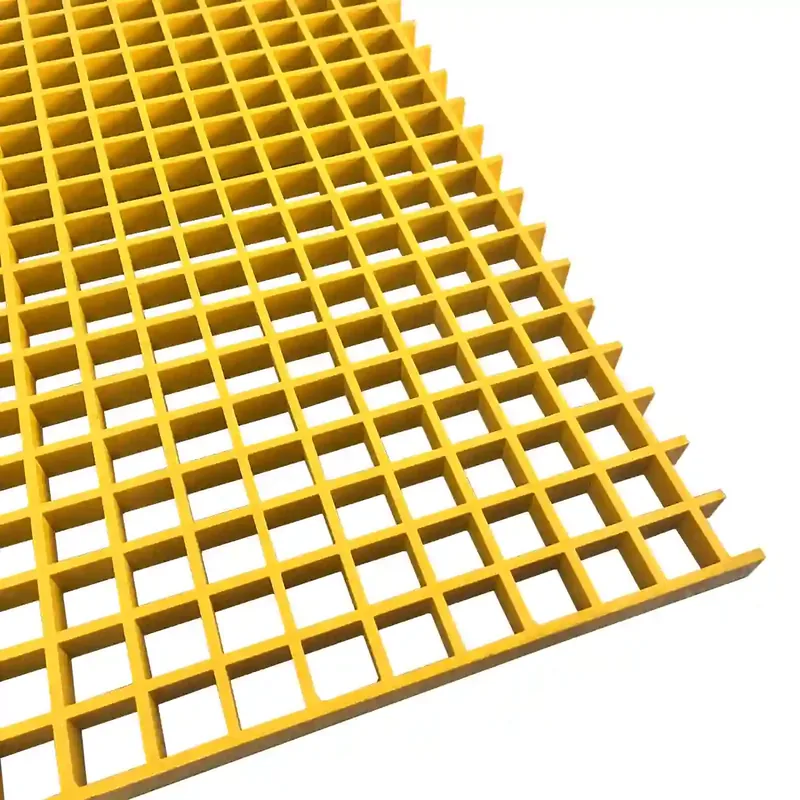
Factory-cut pieces from our works. The production record should connect each finished item to its source configuration and drawing revision. Photo: Dengtai Industry.
Record terms
Order, Drawing and Piece Identity Must Stay Connected
A record becomes useful when each field points back to the same controlled order.
- Fabrication record
- The controlled set of identifiers, drawings, measurements, operation records and release decisions that connects the supplied source product to the finished pieces.
- Source-panel identity
- The product row, batch or lot reference where available, full-panel dimensions, depth, mesh, resin, surface, color and any other field that connects the starting material to the order.
- Drawing revision
- The exact approved drawing or cut-list revision used for nesting, cutting, opening and inspection. A later change should create a new controlled revision.
- Piece mark
- A unique identifier for a finished piece. It can connect the drawing, nesting plan, cut record, inspection result, packing list and installation position.
- First-piece check
- The initial cut or fabricated piece checked before repeating the method. It records what was measured, what tool was used and whether the approved result was reproduced.
- Fabrication release
- The recorded decision that a piece may proceed to the next stage or dispatch. It should identify any hold, deviation or approved change.
- Demonstration record
- An illustrative record showing useful field names and workflow without claiming to represent a real customer order or production batch.
Evidence boundary
What a Fabrication Record Can and Cannot Prove
Production traceability is valuable, but it is not a universal structural or material certificate.
Swipe horizontally to view all columns.
| Record question | What a controlled record can support | What needs another document or decision |
|---|---|---|
| What was ordered? | The order, source configuration and approved drawing revision can be connected. | Structural suitability still requires data for the actual support and load condition. |
| What was cut? | The nesting, cut dimensions, opening positions and first-piece check can be recorded. | A record does not approve a later field change or missing support. |
| What edge treatment was used? | The sealer product, batch, preparation, application area and cure record can be retained. | Sealing does not restore removed bars or prove chemical compatibility for every environment. |
| Was the piece inspected? | The check, measured values, defect status, inspector and release can be recorded. | A fabrication inspection is not automatically a third-party load, fire or chemical test. |
| What was packed? | The piece marks, quantities, packing list and package identifiers can be connected. | Transport damage and site modifications remain separate records. |
Record scope
When a Molded Grating Fabrication Record Matters Most
Use the strongest record where finished piece identity, edge treatment and release decisions affect installation.
Specify this if…
- Use a fabrication record when an order includes multiple finished sizes, orientations or openings.
- Use it when piece marks must match a site layout or packing list.
- Use it when cut-edge sealing, agreed inspection or dimensional verification is part of the order.
- Use it when a customer needs to trace a delivered piece back to the approved revision.
Look elsewhere if…
- Do not label an illustrative form as a real customer record.
- Do not claim batch traceability when no supporting batch or lot identifier exists.
- Do not treat a packing photo as proof of dimensions or edge treatment.
- Do not use a historical report as a production record for a different order.
- Do not accept an unreviewed field change because a record already has a piece number.
Record chain
Fields That Connect the Panel to the Packing List
The record should let a reviewer follow one piece backwards and forwards without relying on memory.
Swipe horizontally to view all columns.
| Record field | Why it belongs in the chain | Example entry |
|---|---|---|
| Order and revision | Connects all production records to the exact approved request. | Customer PO / quotation reference / drawing revision A |
| Source configuration | Defines the product that the fabrication operations started from. | Molded; 38 mm; 38 x 38 mm; actual panel size; resin and surface references |
| Source batch or lot | Supports traceability when the factory system records a batch or lot. | Batch/lot reference where available; otherwise record “not available” |
| Nesting and piece list | Shows the finished pieces, orientation, opening positions and material plan. | Panel layout file and piece schedule with quantities |
| First-piece result | Prevents an unverified setup from being repeated across the order. | Dimensions, datum, tool/blade and pass-hold decision |
| Edge treatment | Records the exposed faces, material and cure basis. | Sealer product, batch, prepared faces and cure condition |
| Inspection and mark | Ties the measured condition and defect status to the physical item. | Inspection result, inspector, date and piece mark |
| Packing and release | Connects the released item to the package and dispatch documents. | Packing list, bundle reference, release note and photo reference |
A molded grating fabrication record should connect the source panel, the approved drawing and every finished piece through cutting, edge treatment, inspection, marking and packing. It is not one photo or one part number. It is a chain of identifiers and release decisions.
The strongest record starts with the product actually used and ends with the item actually packed. Any missing link should be stated rather than filled with an assumed value.

The Source Panel Is Part of the Finished Product
The fabrication record should begin with the selected molded row:
- construction and panel family;
- depth and mesh;
- bar or pitch reference;
- resin basis;
- surface and color;
- full-panel size;
- batch or lot reference where available.
Two panels that look similar can belong to different rows. A record that says only “yellow 38 mm grating” is not enough to reconstruct the product. The molded grating product range lists the fields that belong in the configuration.
Link the Order to One Drawing Revision
The production schedule should identify:
- customer purchase order;
- supplier quotation;
- the product configuration;
- the drawing or cut-list revision;
- the finished-piece list;
- the edge-treatment and inspection scope.
When the customer changes a dimension, opening, surface or marking requirement, update the controlled revision. Do not continue cutting from the old drawing because the original order number is unchanged.
The full-panel and cut-piece guide explains how the finished-piece schedule and source-panel area belong to one commercial review.
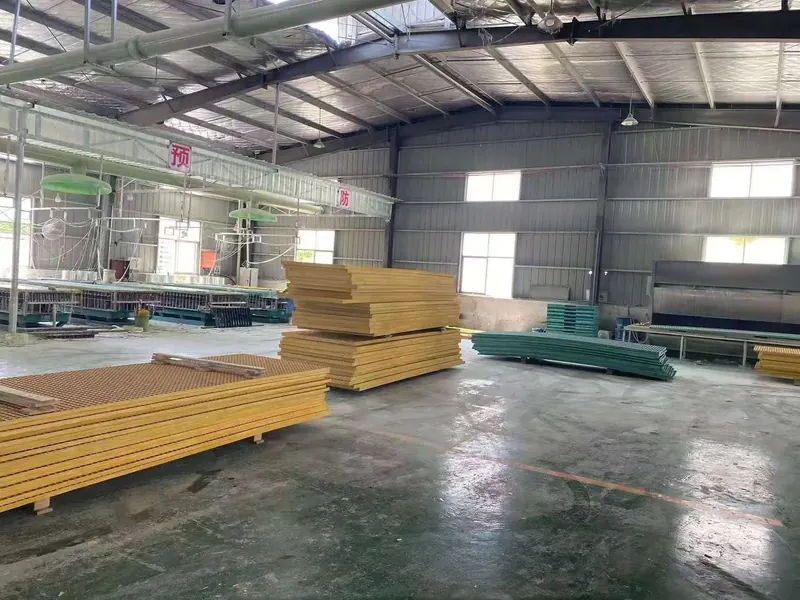
Nesting Creates the Piece-Level Map
Nesting should show:
- every piece mark;
- finished dimensions and quantity;
- mesh or top-face orientation;
- openings and notches;
- source-panel allocation;
- relevant restrictions on rotation or edge trim.
The piece mark is the key that survives through cutting, edge treatment, inspection and packing. Labels should match the packing list so a site team can identify the piece without guessing from shape.
First-Piece Check Before Repetition
The first fabricated piece is a process control. Record:
- the setup and approved drawing revision;
- the reference datum;
- measured finished dimensions;
- opening or notch result;
- mesh orientation and top face;
- edge condition;
- the decision to continue or revise the method.
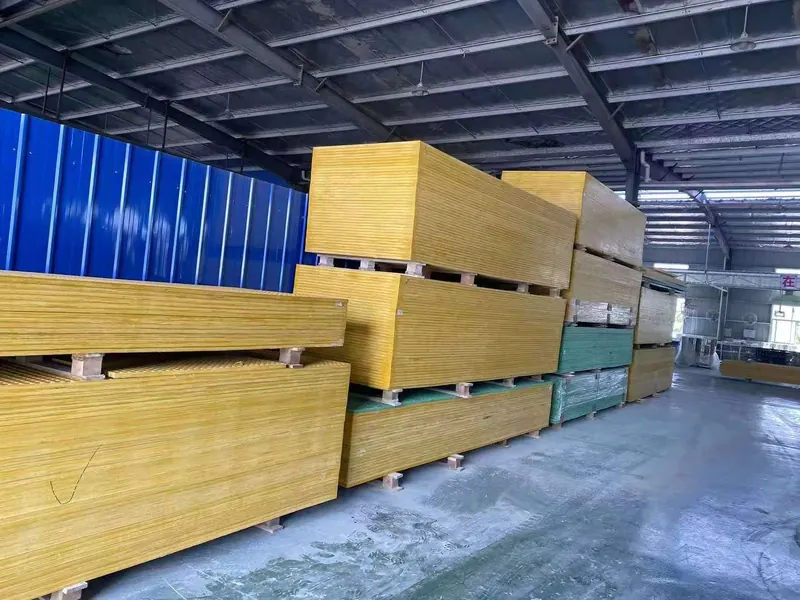
Do not use a photograph as the only first-piece record. A picture can show shape and workmanship, but it cannot replace the measured value or the acceptance decision.
Cutting and Edge Treatment Are Separate Records
The cut record should identify what was changed. The edge-treatment record should identify the exposed face and the protection applied.
For a sealed edge, record:
- which faces or hole walls are included;
- surface preparation;
- sealer product and batch;
- mixing details where applicable;
- application condition;
- cure basis;
- inspection for coverage, cracks and incomplete areas.
The sealer protects the cut face. It does not restore interrupted bars or prove structural support. Use the molded site-cutting and edge-sealing record for the field record fields.

Inspection and Marking
The inspection entry should connect to the same piece mark and revision. Depending on the agreed scope, it can record:
- finished dimensions;
- opening shape and position;
- flatness or visible condition;
- surface or color check;
- edge treatment;
- crack, chip, void or exposed-fiber observations;
- inspector and date;
- accepted, held or rework status.
The ordinary factory appearance check and a project-specific dimensional or test requirement are different scopes. Review the quality and documentation guide before assuming that one record covers the other.
What a Real Record Should Not Claim
Do not state that the order has:
- batch traceability when no batch or lot reference was recorded;
- exact resin-grade traceability when only a generic family was ordered;
- a full-panel load rating because a material-level report exists;
- chemical or fire compliance when the test was not matched;
- complete dimensional inspection when only an appearance check was performed;
- a customer-specific record when using a demonstration template.
How to Build a Useful Demonstration Record
When a public example is needed, label it clearly:
- “Demonstration only — not a customer order”;
- identify which fields are illustrative;
- avoid real customer names, project addresses and drawing numbers;
- keep the field structure realistic;
- show where an unavailable batch or evidence reference should be recorded;
- do not assign a release date as though production occurred.
A labelled demonstration can explain the process without misrepresenting evidence.
Demonstration Record Example
The following record is deliberately marked DEMO—not a customer order. It shows the level of connection expected from a real production record without inventing a completed sale.
| Record field | Demonstration entry |
|---|---|
| Record status | DEMO ONLY — not released or supplied |
| Record ID | DEMO-MG-FAB-1031 |
| Order reference | Demonstration PO not associated with a customer |
| Source configuration | Molded FRP grating; 38 mm; 38 x 38 mm; 1220 x 3660 mm source panel |
| Resin and finish | Product codes to be filled from the approved quotation |
| Drawing revision | DEMO-A, for workflow illustration only |
| Nesting | DEMO-NEST-01; source-panel allocation and piece marks shown |
| Piece schedule | P01, P02, P03 and quantities linked to the demonstration layout |
| First-piece result | Enter actual dimensions, tool, datum and pass/hold decision |
| Edge-treatment record | Sealer product, batch, surfaces and cure condition to be entered |
| Inspection | Enter actual observations, inspector and disposition |
| Packing and release | DEMO-PACK-01; release status remains “demonstration only” |
The blank or placeholder fields are intentional. A real record should contain traceable values, not copy these demonstration entries. The example demonstrates how a reviewer can move from the order to the source panel, finished piece, edge treatment, inspection and package.
If the form is published as a customer-facing template, use a separate file name, a visible “DEMO” watermark or status field and a version number. Do not allow a template to carry a release date that can be mistaken for production acceptance.
Read the Record in Both Directions
A useful record can be followed:
- forward: order → source panel → nesting → finished piece → edge treatment → inspection → package;
- backward: delivered piece mark → inspection → cutting and sealing → drawing revision → source-panel configuration.
This bi-directional reading exposes missing links. If a piece mark points to a drawing but not to an inspection entry, the record is incomplete. If a report exists but cannot be tied to the offered product, it remains a separate document.
Control Changes During Fabrication
When the drawing or order changes, record:
- what changed;
- why the change was requested;
- who approved it;
- the new revision;
- which pieces were already produced under the previous revision;
- whether those pieces are acceptable, held or replaced;
- the effect on nesting, edge treatment, inspection, packing and price.
A change made after cutting can leave both old and new geometry in one delivery. The record should prevent those pieces from being mixed without an accepted disposition.
Common Fabrication-Record Mistakes
- Recording only the finished size and not the source configuration.
- Using one packing-list reference for several unrelated drawing revisions.
- Linking photos to file names without piece marks.
- Recording the cut but not the edge treatment.
- Recording the sealer but not the surfaces covered.
- Issuing a piece number without a corresponding inspection entry.
- Treating a material-level report as a production record.
- Continuing after a revision change without updating the chain.
What a Buyer Should Receive
The exact package depends on the order, but a useful handover can include:
- approved drawing and revision;
- finished-piece and packing schedule;
- source configuration reference;
- available batch or lot information;
- edge-treatment record;
- agreed inspection records;
- piece marks and packing labels;
- release status and any agreed deviations;
- applicable test or conformity documents with their limits.
The receiving inspection guide explains how to use these records when the consignment arrives.
Adapt the Record to the Supply Route
The same field structure should scale with the order:
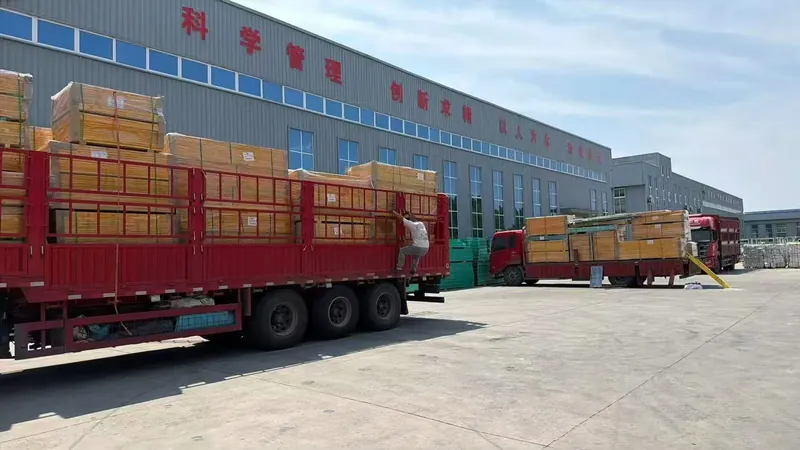
- Full-panel order: the core evidence is the product configuration, quantity, available batch or lot reference, appearance inspection and packing list. A detailed piece map is only needed if the project also defines a special inspection or marking scope.
- Factory-cut order: add the approved drawing revision, nesting, finished-piece marks, first-piece check, opening details, edge treatment, dimensional inspection and packing identification.
- Mixed order: identify which pieces were released for fabrication and which full panels remain as source stock. The packing list must not blur the two scopes.
This prevents a simple panel order from being burdened with records it does not need, and prevents a complex fabricated order from relying on a packing list alone.
Request the Record With the Order
State the record requirement before production:
- which fields must be completed;
- which measurements need an instrument and datum;
- which edge faces need treatment records;
- which inspection or witness points apply;
- which documents must match the offered product;
- how photos will be named and linked;
- whether a template must use a controlled revision.
Waiting until shipment to request a detailed record can leave the factory unable to recover earlier production information. The record should be designed while the inspection and fabrication steps can still capture the data.
The Manufacturer Rule for Fabrication Records
Record what was actually ordered, sourced, cut, treated, checked and packed. Keep the customer order, drawing revision and piece marks connected. If batch, inspection or test evidence is unavailable, state the limitation.
A record is valuable because it can be followed—not because it uses formal-looking fields.
Production sequence
How We Build a Traceable Fabrication Record
Each stage produces or preserves an identifier that the next stage can check.
Confirm the quotation, purchase order, product row and drawing revision before production.
Identify the panel configuration and the available batch or lot reference.
Link every piece mark, size, orientation and opening to the approved layout.
Record the setup, dimensions, edge condition and decision to continue.
Link the sealer, preparation, applied faces and cure to the affected pieces.
Record the result, apply the piece mark and keep it through packing and dispatch.
Factory evidence
What Our Factory Can Record and What It Cannot Invent
We retain the available product, fabrication and inspection information without claiming unavailable batch or test evidence.

Source link
We retain the available product configuration and batch or lot reference for the panels used.
Controlled revision
Cutting and inspection follow the approved drawing or cut-list revision.
Piece traceability
Piece marks can connect the finished item to the nesting, inspection, packing list and site layout.
Treatment record
The agreed cut faces, sealer product, application and cure basis are recorded separately.
Inspection boundary
An appearance or dimensional record is not presented as a load, chemical or fire test.
Honest limitations
If a batch, grade, test or inspection record is unavailable, it is identified as unavailable rather than inferred.
RFQ checklist
What to Define Before a Fabrication Record Is Created
State the item, drawing, edge scope, inspection and handover requirements before production.
- Customer and order reference — Purchase order, quotation and the party responsible for approval.
- Product configuration — Construction, depth, mesh, resin, surface, color and full-panel format.
- Approved drawing or cut list — The exact revision with piece marks, finished sizes, openings and orientation.
- Edge treatment scope — Which faces are sealed, with which product and method, and how cure is checked.
- Inspection requirements — Appearance check, dimensions, mass, tests, witness points and acceptance criteria.
- Marking and packing — Piece labels, bundle identification, protection and packing-list format.
- Evidence required — Which records, photos, certificates or reports should accompany the released pieces.
- Destination and handover — Trade term, port or address, document language and who receives the records.
Request a quote
Send Your Panel and Fabrication Schedule
Include the source configuration, finished-piece list, drawing revision and records required.
- Source panels and finished pieces connected
- Drawing revision and piece marks retained
- Demo values separated from actual evidence
Molded Grating Fabrication Record Questions
What is a molded grating fabrication record?
Does every order need a fabrication record?
Can a photograph replace the fabrication record?
Does a piece mark prove the piece was inspected?
Can the factory guarantee source-batch traceability?
Does a fabrication record prove load or chemical performance?
How should a demonstration record be labelled?
This content was prepared and reviewed by Dengtai Industry’s technical and production team using the project conditions, available product data and applicable documents. Limits that require design, testing or approval are identified in the content. Content last checked: