Outdoor weathering review
Outdoor FRP Grating: UV Exposure, Color and Evidence
Colour is a visual choice, not a UV rating. Define the outdoor environment, resin and surface construction, test method and acceptance requirement before treating a sample or a product brochure as evidence of long-term weathering.
Prepared by
Dengtai Industry
Published
·
Reviewed

The colour seen on site today is not proof of its long-term UV performance. Photo: Dengtai Industry.
Weathering vocabulary
UV Resistance, Weathering and Colour Are Different Claims
Define the change being measured before accepting an outdoor-performance statement.
- UV resistance
- The ability of a defined resin and surface construction to resist specified ultraviolet exposure and its consequences, supported by named test or service evidence.
- Weathering resistance
- Performance under combined sunlight, moisture, temperature, salt, chemicals, abrasion and cleaning. It is broader than UV exposure alone.
- Chalking
- A powdery surface change caused by degradation of the exposed resin layer. It is an appearance and surface condition that must be assessed with the construction.
- Colour change
- A measured or agreed difference from a reference colour. A photograph can record appearance, but a named colour instrument and method are needed for a quantified result.
- Gloss change
- A change in surface reflection under a stated measurement method. It may reveal weathering even where the colour change is modest.
- Fiber exposure
- Loss or removal of the protective resin-rich surface so reinforcement becomes visible. It may indicate surface degradation and needs further assessment.
- Accelerated weathering
- Laboratory exposure intended to simulate selected effects under controlled conditions. Cycle hours are not a direct conversion into project years.
- Natural exposure
- Outdoor exposure in a stated location and mounting arrangement. It reflects local sun, moisture and pollution, but takes real time and remains site-specific.
- Colour approval
- Acceptance of a sample against a colour reference under agreed viewing conditions. It does not establish UV resistance unless separate weathering evidence is supplied.
When to use this review
When Outdoor FRP Grating Needs a Weathering Evidence Plan
Colour selection and UV performance should be recorded on separate lines of the order.
Specify this if…
- The grating will remain outdoors and appearance, surface protection or service life is important.
- The project names a UV test, colour target, gloss requirement or weathering standard.
- A custom or safety colour is required and must be repeated across batches.
- Salt, chemicals, abrasion or frequent cleaning combine with sunlight.
- The buyer needs to know whether the proposed evidence is a sample approval, accelerated test or service record.
Look elsewhere if…
- “UV resistant” is being treated as a permanent colour guarantee.
- A dark colour is being treated as UV protection or anti-static performance.
- Test hours are being converted directly into a service-life promise.
- A generic resin or additive description is being applied to an unidentified finished product.
Claims and proof
Outdoor FRP Grating Claims and Their Evidence
Separate a visual sample from a measured weathering result.
| Statement | What it can mean | What the evidence must state |
|---|---|---|
| “UV-resistant colour” | A resin, pigment or surface system intended for outdoor service | Resin grade, pigment, stabiliser or topcoat, test method, specimen and result |
| “Will not fade” | A marketing promise unless bounded by a defined colour and test | Exposure spectrum, duration, measurement method, tolerance and excluded conditions |
| Accelerated test: 750 hours | A sample exposed under a named laboratory cycle | Irradiance, cycle, specimen, measured result and relevance to the site |
| “Five-year outdoor record” | Observed performance at named sites and conditions | Mounting, cleaning, chemical exposure, inspection method and missing data |
| “Same resin family” | A shared broad chemistry | Grade, pigment, stabiliser, surface protection, cure and finished-product identity |
Evidence fields
What an Outdoor UV and Colour Order Must Identify
The resin, pigment, surface, specimen and exposure all change what can be claimed.
| Evidence field | What we need | Why it changes the result |
|---|---|---|
| Resin grade | Named resin and formulation information | Different grades can use different stabiliser and surface strategies |
| Pigment and colour | Standard colour or sample reference, batch and approval light | The same resin can produce different visual change depending on pigment |
| Protective surface | Rich resin layer, gelcoat, surface veil or coating | Protection may sit in the resin, at the surface or in an applied layer |
| Product construction | Molded or pultruded, thickness, surface texture and reinforcement | A coating or resin result does not automatically cover another construction |
| Exposure | Location, orientation, salt, chemicals, moisture, temperature and cleaning | A dry inland facade and a wet marine deck are different duties |
| Test or service record | Method, apparatus, cycle, specimen, measurements and acceptance criteria | The project needs a result with a scope, not an adjective |
| Maintenance | Cleaning products, frequency, inspection and repair response | Abrasion and harsh cleaners can change the exposed layer |
Review sequence
How to Review UV and Colour Evidence for Outdoor Grating
Six steps from the site exposure to an agreed inspection and maintenance record.
Record location, orientation, sun, moisture, salt, chemicals, temperature, abrasion and cleaning before choosing a weathering claim.
Separate visibility, appearance and colour matching from UV performance. Agree a reference under stated lighting.
Record the named resin, pigment, UV stabiliser, surface-rich layer, veil or coating and the finished product construction.
Decide whether the project needs an appearance sample, accelerated weathering report, natural-exposure record, mechanical check or a combination.
Check specimen, method, cycle, measurements, result and exclusions. Do not convert exposure hours into a warranty period.
Agree how chalking, gloss, colour, cracking and exposed fiber will be monitored and what action follows.
Colour Is an Order Choice, Not a UV Certificate
Outdoor FRP grating buyers often ask for “UV-resistant yellow,” “non-fading grey” or “the most weather-resistant colour.” Those are three different questions. The colour controls appearance, visibility and sometimes heat absorption. UV resistance describes how a specific resin and protective surface behave under a defined exposure. A colour sample can approve the appearance at dispatch; it does not prove what will happen after years outdoors.
The useful starting point is the change the project cares about. Is the concern a visible colour shift, gloss loss, chalking, exposed glass fiber, loss of a functional surface or a measured mechanical property? Once that is named, the resin, pigment, surface, specimen and test method can be aligned.
This guide is a Dengtai Industry RFQ and evidence checklist for outdoor grating. It does not turn a generic UV additive or a competitor’s accelerated test into a guarantee for our finished panel.

What Weathering Does to an FRP Surface
An unprotected exposed surface can chalk, lose gloss, change colour or develop visible fiber before a structural problem becomes obvious. The relevant surface may be a resin-rich layer, a gelcoat, a surface veil, a coating or another finish. The same consequence can come from different mechanisms, and appearance alone does not tell the whole condition.
A lighter surface can look different from a dark one under dirt, wear and sunlight. A dark surface can absorb more heat, but dark colour does not prove UV protection, conductivity or a particular resin grade. Conversely, a light colour may make dirt or chalking more visible. Those are appearance and maintenance considerations, not a performance class.
Use photographs to communicate location and visible change, not to certify colour retention. Under different lighting, camera processing and wetness, the same panel can look much lighter or darker. A quantified colour result needs a reference, instrument, viewing geometry and stated procedure.
Resin, Pigment and Protective Surface All Matter
UV performance is controlled by a system, not by the resin family name alone. The formulation may include UV absorbers, hindered amine light stabilisers, pigments, fillers and a surface-rich layer. A gelcoat, surface veil or compatible topcoat may add another protective route. The type and quantity of each component should be confirmed by the resin or coating supplier for the specific process.
The finished construction also matters:
- molded and pultruded products can expose different resin-rich surfaces;
- a gritted or covered surface can expose a different material at the top;
- a cut edge removes the original surface and may need sealing;
- a coating can protect the surface but can also wear, chalk or need repair; and
- colour batches may vary within an agreed limit without a UV result changing.
If the supplier changes the grade, pigment, surface veil, coating or cure, re-open the weathering question. A test on one formulation is not a transferable approval for a visually similar finished panel.
Field Cutting and Edge Protection Belong to the Weathering Plan
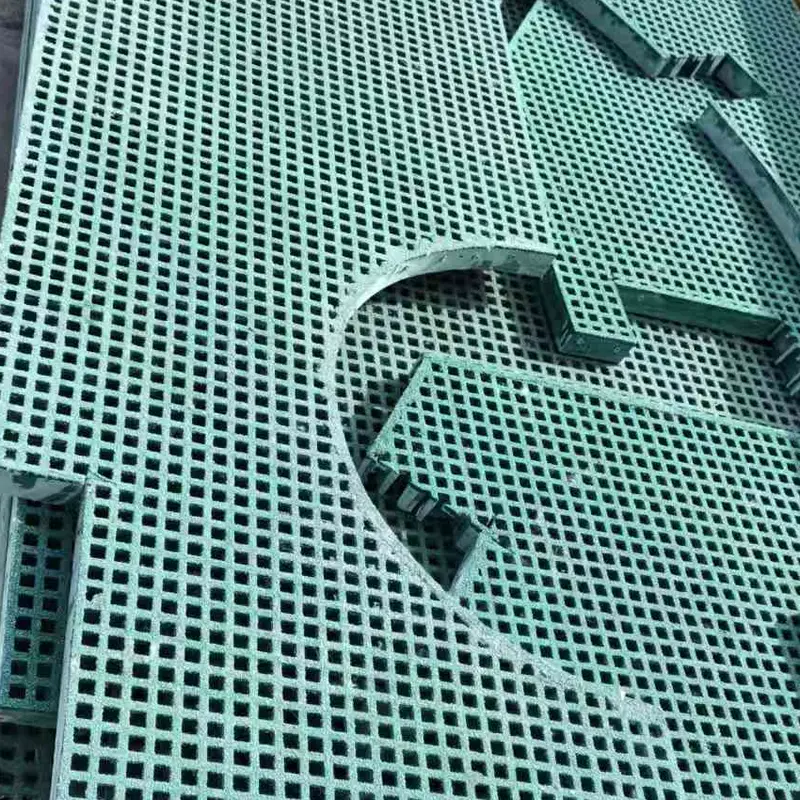
An outdoor panel may be approved as supplied and then be cut, drilled or notched on site. Those operations expose a new edge and can remove the original resin-rich surface, surface veil or protective coating. If the modified edge is left open, it has to be inspected for exposed fibre, cracks, contamination and poor sealing.
Include field modifications in the order record:
- which pieces will be cut or drilled, and who is responsible;
- the approved method and the condition of the cut edge;
- the compatible edge-sealing product, batch and cure;
- how dust and moisture are removed before sealing;
- whether the tested sample included a comparable modification; and
- who inspects and accepts the edge after installation.
A factory sample that was not cut does not automatically demonstrate the condition of a site-modified edge. Where the project relies on a weathering claim, state that difference in the evidence record rather than leaving it implicit.
Natural Exposure and Accelerated Weathering Are Different Evidence
Natural exposure records what happened at a named location and mounting arrangement over time. Accelerated weathering uses a laboratory apparatus and a defined cycle to produce a controlled comparison faster. Neither is automatically a service-life warranty.
When reading accelerated evidence, check:
- the test standard and apparatus;
- the lamp spectrum and irradiance;
- wet and dry cycle, temperature and humidity;
- the sample construction and colour;
- the measurement intervals and what was measured; and
- the acceptance criterion for colour, gloss, chalking, cracking or mechanical change.
Common methods include ISO 4892-2 for xenon-arc exposure and ASTM G154 or G155 for fluorescent UV or xenon-arc apparatus. The standard name alone is not enough: the report must also identify the cycle, irradiance, temperature, humidity and measured property. Fibergrate publishes an example in which its sample and another manufacturer’s polyester sample were compared under a xenon-arc weathering test and photographed at defined exposure intervals. That is useful evidence for its own tested samples. It is not a result for our resin, colour or construction, and the exposure hours are not a simple number of outdoor years.
What a Weathering Record Should Let the Buyer Decide
A useful weathering record should allow someone who was not present at the test to understand what changed, how it was measured and whether the proposed product is close enough to the tested item. It should identify:
- the specimen, including resin grade, pigment, surface protection and construction;
- the reference condition before exposure;
- the weathering apparatus and complete cycle;
- the measurement intervals and instrument or rating method;
- the actual result, not only a pass/fail conclusion;
- the acceptance criterion used by the testing party; and
- every relevant difference between the tested specimen and the proposed order.
That information lets the buyer decide whether the evidence addresses colour, gloss, chalking, fiber exposure or mechanical retention. It also lets a second engineer compare two suppliers properly. A test on a different colour, surface coat or resin grade remains useful background, but it does not automatically approve the proposed product.
For a natural-exposure record, add location, orientation, mounting, cleaning history and inspection dates. Natural exposure has the advantage of a real environment, but it still applies to that location. A coastal installation with salt and persistent dampness is not interchangeable with a dry inland roof exposed to the same sunlight.
What to Do When No Weathering Test Exists
Some good outdoor specifications do not require a quantified UV test. In that case, do not turn the absence of a test into an implied class. Record the selected colour and surface, approve a physical sample and describe the expected maintenance and inspection route. Call the result an appearance and construction selection, not a measured weathering performance.
If the project requires a quantified result, agree the test before production. State whether the specimen is a coupon, an offcut, a full panel or a finished covering layer, and whether the test is performed by the factory, a resin supplier or an independent laboratory. The project also needs to decide what happens if the result meets its target only on a different colour or surface.
This approach gives the customer a clear choice: select from an approved sample with a maintenance plan, or pay for product-specific weathering evidence. It avoids a common problem where the quotation says “UV resistant” but neither party can identify what was tested or what would count as a failure.
What Should a Colour Test Measure?
Agree the measured characteristics before selecting a test. Depending on the project, the evidence may include:
| Property | What it can record | What it does not automatically establish |
|---|---|---|
| ΔE colour difference | Change from a named reference under stated measurement conditions | Structural condition or a universal fade period |
| Gloss change | Surface reflection loss under a stated geometry | Colour acceptance or fiber exposure |
| Chalking rating | Surface powder and resin breakdown against a defined scale | Remaining mechanical capacity |
| Microscopic surface condition | Cracks, pits or fiber exposure in the examined area | Whole-panel structural capacity |
| Mechanical retention | A named strength or stiffness measurement after exposure | Load capacity at another span, temperature or construction |
A visual sample approval can still sit beside this list. It confirms the agreed appearance, but should be labelled as such. Do not call a sample “UV tested” unless a separate test was performed.
Colour Selection for Outdoor Projects
The factory’s common colours can be selected or custom colours discussed, subject to the actual resin and surface combination. For outdoor projects, separate:
- Visibility: yellow can make a walkway stand out, while green or grey may suit other sites.
- Heat and touch: a dark surface can warm differently under sun, so assess the actual application.
- Colour approval: agree a physical sample and lighting condition.
- Batch variation: confirm whether a repeat order and a custom batch need a new sample.
- Weathering evidence: obtain a test or service record that identifies the colour and product, not just a generic “light-stable” statement.
An appearance change may be commercially important without being a safety failure. Conversely, a panel that has lost its protective surface may need investigation even if the colour still looks acceptable. Keep the two decisions separate.
Where Outdoor Exposure Meets Cleaning and Chemical Duty
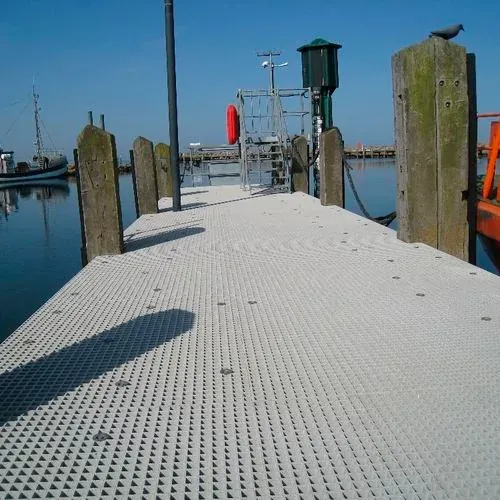
UV is one part of the environment. A coastal or industrial installation can combine sunlight, salt, moisture, process chemicals and cleaning. A compound can be acceptable at room temperature under UV but unsuitable near a compatible chemical cleaning agent. A surface coating can reduce UV effects while being incompatible with abrasion or a solvent.
For a wet outdoor area, describe:
- sun exposure and orientation;
- rain, condensation and standing water;
- salt or chemical splash;
- cleaning agents and frequency;
- temperature and freeze/thaw movement where relevant; and
- traffic, grit and inspection access.
The resin selection guide and maintenance guide carry those non-UV conditions into the product and service review.
Factory Inspection and Project Evidence
Our regular factory appearance check covers visible surface condition within the order scope. A colour sample can be kept for production reference. If the order requires quantified colour change, gloss, chalking, microscopic examination or a weathering test, that requirement must be written into the inspection or test scope and performed on an identified specimen.
The quality and documentation guide explains why a sample report, certificate of conformity and project test are not interchangeable. For an outdoor order, the product description should identify the resin, colour, surface protection and reference sample, plus the applicable weathering claim and its evidence.
Our Manufacturer View
We can discuss standard and custom colours as a factory configuration. We can also review whether the resin and surface route should include UV stabilisation or a protective layer based on the exposure. We do not assign a universal fade period or say that a colour is permanently UV-safe. If a project needs a quantified weathering result, the specimen, method, laboratory and acceptance criterion have to be agreed before production.
The practical specification is therefore not “outdoor colour.” It is a defined panel, named resin and pigment, agreed surface protection, reference sample, required evidence and maintenance plan.
Technical Sources and Scope
- Fibergrate’s UV performance comparison shows why resin formulation, chalking and fiber protection need to be examined in a defined weathering test.
- Strongwell’s grating selection guidance separates appearance and topcoat choices from design criteria and product selection.
- Bedford’s resin-system guide treats UV protection as a formulation and product-line question rather than a colour name.
- Mach’s note on sun exposure illustrates common market advice about resin-rich layers and UV absorbers; its blanket material statements are not adopted as our test result.
These sources describe other manufacturers or general market practice. Their colours, test specimens, exposure hours and material statements are not transferred to Dengtai products.
Project checklist
Outdoor FRP Grating UV and Colour Checklist
The inputs that turn “outdoor grade” into a reviewable product requirement.
- Installation location and orientation — Latitude or project location, horizontal or sloped exposure, shade, reflected sunlight and installation height.
- Moisture and salt — Rain, washdown, condensation, seawater splash, coastal atmosphere and drying conditions.
- Chemicals and cleaning — Process chemicals, cleaners, disinfectants, abrasion and frequency of cleaning.
- Temperature — Normal and peak surface or air temperature, duration and repeated cycles.
- Colour and appearance — Standard or custom colour, reference sample, visible-face expectation and acceptable variation.
- Resin and surface construction — Named grade, pigment, UV additives, surface-rich layer, surface veil or coating.
- Weathering evidence — Natural or accelerated method, standard, exposure cycle, specimen and measured properties.
- Performance criterion — Required colour difference, gloss retention, chalking limit, fiber exposure or mechanical retention.
- Inspection and maintenance — Who checks the surface, how often, with what method and what triggers cleaning or repair.
Evidence boundaries
Four Boundaries on UV and Colour Claims
Appearance, exposure evidence and structural inspection answer different questions.

Color approval is not a UV report
A sample can agree the appearance and batch reference. Weathering evidence must measure change under a named exposure.
Accelerated hours are not service years
The cycle, spectrum, temperature, moisture and measured endpoint decide what the result means.
Chalking can be visible before structural failure
Record surface condition and decide whether the protective layer remains adequate.
Exposed fiber needs assessment
Do not infer that strength is unchanged simply because the grating still looks intact.
Request a review
Send the Colour, Exposure and Evidence Requirement
Include the location, cleaning method, resin and the property the project expects to remain measurable.
- State whether colour or weathering evidence matters more
- Include location, orientation and cleaning
- Name any required test method or acceptance value
Outdoor FRP Grating UV and Colour Questions
Does a dark FRP grating colour mean better UV resistance?
Does a UV-resistant grating never fade?
Can accelerated test hours be converted into years outdoors?
What does chalking mean?
Can you match a custom RAL colour?
What evidence should I request for a coastal installation?
This content was prepared and reviewed by Dengtai Industry’s technical and production team using the project conditions, available product data and applicable documents. Limits that require design, testing or approval are identified in the content. Content last checked: